Category: Uncategorized

  • Corruption cost NSW Labor $90m

    Earlier this month, the Independent Commission Against Corruption (ICAC) recommended criminal charges be brought against former Labor ministers Eddie Obeid and Ian Macdonald over their involvement in the Mount Penny and Doyles Creek mines.

    It followed the largest corruption investigation in the state’s history.

    Under questioning in budget estimates, Mr Baird said he had asked Treasury, and the Minerals and Resources Department, to look into the costs.

    “You will be appalled at the numbers that have come out of that report,” he told the hearing on Thursday.

    “I sort of sit here and shake my head. If the licences were not issued corruptly or negligently this state would be $90 million better off.”

    Instead, he said the state got “absolutely nothing”.

    “Those resources, our resources, the state’s resources, were effectively given away…

    “We have seen $90 million given away by the former Labor government to their mates.”

    Mr Baird said the $90 million estimate was a conservative figure as the licences were granted in boom times, and there had also been a delay of $50 million in ongoing royalties on an annual basis.

    He said the ICAC hearings amounted to about $2 million.

    “Whether it be seven new schools or 900 teachers, the state has been short changed…

    The treasurer called on the opposition to apologise for allowing the corruption to happen on its watch and short changing the state.

    “I can’t believe the size, I can’t believe the culture that allowed that to happen.”

  • ​Preserving Blue Carbon to Limit Global Climate Change: An Interview with Juha Siikamäki

    ​Preserving Blue Carbon to Limit Global Climate Change: An Interview with Juha Siikamäki

    This article appears in the Resources 2013 digital issue, available exclusively to Resources app subscribers on the iPad, iPhone, and Android. For access to the full digital issue, get the Resources app.

    Juha Siikamäki
    Resources sat down with RFF Associate Research Director and Fellow Juha Siikamäki to discuss his recent work on how protecting coastal mangroves, salt marshes, and sea grass meadows may prevent billions of tons of carbon dioxide emissions from entering the air. In an excerpt from that interview, he emphasizes the importance of incorporating blue carbon into climate policy and describes the conservation challenges ahead.

    Download this interview on iTunes and
    listen to other RFF podcasts here.

    Resources: What exactly is blue carbon, and why is it important?

    Juha Siikamäki: “Blue carbon” refers to carbon that is stored by coastal and ocean environments. Recently, the main focus of the conservation community has been on three different kinds of blue carbon ecosystems: mangroves, salt marshes, and sea grasses. These areas are generally known as carbon sinks. We know that these areas preserve a considerable amount of carbon, but the storage capacity is under threat due to development.

    Their storage capacity is especially significant relevant to their total area. It turns out that the total area—for instance, of mangroves—is relatively small. It’s only about 1 percent of the total area of tropical forests. But on a per-acre basis, the amount of carbon stored in mangroves is multiple times the amount of carbon stored in tropical forests.

    Resources: How did you decide to focus on blue carbon storage?

    Siikamäki: For a long time now, we’ve known that natural systems provide a significant storage capacity for carbon. Recently, there’s been a great deal of discussion and research on tropical forests, focusing on reducing emissions from deforestation and forest degradation (REDD).

    It turns out that, according to most estimates, we can avoid emissions at a relatively low cost by preventing deforestation. It’s less costly to avoid emissions from tropical deforestation than, for example, reducing emissions from an industrial source with fossil fuel combustion. It seems like a win–win strategy.

    We’ve also known that coastal areas are extremely valuable for many reasons. They provide ecological functions; they’re important for fisheries; they’re important for water quality, storm protection, recreation, and so on. We’ve also known that they contain a considerable amount of carbon, but we haven’t known exactly how much.

    The big challenge with coastal conservation is that coastal areas have become especially attractive for development. Coastal areas have been converted for many purposes: agricultural development, tourism, residential development, industrial development, and even fisheries development. And coastal development can create very high returns. The idea is that maybe blue carbon will help strengthen the case for coastal preservation.

    Missing from this debate was any information on the economic potential of avoiding carbon emissions by protecting coastal environments. Exactly how much carbon do these areas store? How much is the carbon worth? How costly would it be to preserve these areas? Our goal when we started this research was to find out to what extent, from an economic perspective, there might be justification for preservation of coastal areas.

    Resources: How do you determine how much carbon is stored by mangroves?

    Siikamäki: We started out from a satellite-based map of mangrove areas globally. Across the 140,000 square kilometers of mangroves that have been identified throughout the world, we divided those areas into small locations—roughly 5.5 by 5.5 miles in area. For each plot, we developed an estimate of mangrove biomass above and below ground. That gave us an estimate of the carbon stored in the biomass. Additionally, we developed estimates of the amount of soil carbon in mangroves. A lot of natural science goes into answering the question.

    Resources: How could blue carbon be incorporated into REDD programs?

    Siikamäki: In principle, the same general framework would work, especially for mangroves. Mangroves are forests. So in that sense there would be a natural fit under the REDD umbrella.

    A few important differences exist between tropical forests and coastal environments, however. In particular, most of the carbon in tropical forests is stored in the living trees and their roots. When we talk about coastal ecosystems, especially mangroves, the situation is very different. The biomass stores carbon, but most of the carbon is stored in the soil as a result of hundreds of years of accumulation and sequestration.

    From the REDD perspective, the difference is quite critical. Rules for other tropical forests do not allow accounting for soil carbon—so REDD effectively rules out mangroves. One of the key next steps to consider is to find ways of accounting robustly for the soil carbon in coastal environments.

    There has been a good bit of work in this area recently. In fact, there is a new voluntary carbon standard designed specifically for accounting for carbon in wetlands.

    Resources: In some of your previous research, you noted that targeting forests for conservation purely based on carbon storage may lead to missed opportunities to save areas rich in plant and animal species. Can you explain how we can combine the goals of forest carbon sequestration and biodiversity preservation?

    Siikamäki: The basic dilemma here is that the areas that are most attractive for preserving carbon may not be the same areas that would be most attractive for preserving biodiversity. There’s some overlap, but these different goals can significantly impact the kinds of areas that we would target for conservation.

    In the context of mangroves, the difference is actually less critical. It turns out that even by focusing on carbon sequestration, we can preserve quite a bit of biodiversity. And the same is true if we focus on biodiversity preservation—the carbon sequestration benefits would be quite significant.

    There is an additional cost of adding biodiversity conservation criteria into carbon-focused programs, but we find it’s quite minimal—around a few dollars per ton of carbon dioxide. To put that in context, we estimate that without any additional emphasis on biodiversity, blue carbon emissions could be avoided at less than roughly $10 per CO2. To assess the economic potential, we compared this to the cost of emissions reductions from industrial sources. We used an estimate of $10 to $20 per ton of carbon dioxide. That’s roughly the market price from the European Union Emissions Trading Scheme, which is the biggest market for carbon emissions permits and offsets.

    Resources: What are some of the major challenges for conserving blue carbon areas in developing economies?

    Siikamäki: There are many challenges. Fish and shrimp farming, for example, are major drivers of mangrove conversion. One of the main challenges with aquaculture is that it’s extremely productive. It creates very high returns. Competing against those returns is difficult. But we find that in many cases, solely focusing on carbon probably would justify the preservation of those areas. That’s a striking result.

    In developing countries, you start dealing with issues related to institutional capacity and governance—the kinds of issues that demand attention when thinking about potentially implementing large-scale conservation programs. One might need to focus on building capacity and developing protocols for monitoring and managing conservation areas. Much work needs to be done at a practical level before one can think about effectively implementing conservation programs.

    Resources: What are the next steps to link blue carbon preservation to climate change mitigation policies?

    Siikamäki: Our work clearly suggests that these areas are of significant value in the context of avoiding emissions. There certainly is a case to be made that a serious effort should be put in place to incorporate them into climate policy via a REDD-like framework.

    Another next step is to start thinking about pilot projects in different locations. Through process, we’ll learn a great deal and identify other issues that still need further consideration. For example, what locations are most attractive? How do you deal with issues related to institutional capacity? There are many concerns, but I do think the evidence is sufficient to move ahead with more advanced policy development and to experiment with actual projects.

    Learn more about the work by RFF researchers on blue carbon, a joint effort of RFF’s Center for Climate and Electricity Policy and Center for the Management of Ecological Wealth.

  • Each Degree of Warming Will Raise Sea Levels 7.5 Feet

    Each Degree of Warming Will Raise Sea Levels 7.5 Feet

    Posted by in Air/Climate, Latest News, Oceans, RSS on July 15, 2013 6:06 pm / no comments


    CORVALLIS, Oregon, July 15, 2013 (ENS) – Global sea levels will rise about 2.3 meters, or 7.5 feet, for every degree Celsius (1.8 degrees Fahrenheit) that the planet warms over the next several thousand years, finds new research that combines all the major causes of sea level rise.

    This international study is one of the first to combine analyses of the four major contributors to potential sea level rise into a collective estimate, and compare it with evidence of past sea-level responses to global temperature changes.

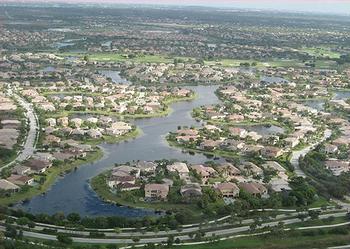
    homes at sea level

    Homes in West Palm Beach, Florida are built at sea level (Photo by Netherlands Diplomatic Missions in the USA)

    Scientists say the four major contributors to sea-level rise on a global scale are: melting of glaciers, melting of the Greenland ice sheet, melting of the Antarctic ice sheet, and expansion of the ocean itself as it warms.

    Several past studies have examined each of these components, the authors of this study say, but this is an early attempt to merge the four different analyses into a single projection.

    The study, funded by the U.S. National Science Foundation and the German Federal Ministry of Education and Research, is published in the current issue of the journal “Proceedings of the National Academy of Sciences.”

    “The study did not seek to estimate how much the planet will warm, or how rapidly sea levels will rise,” said author Peter Clark, an Oregon State University paleoclimatologist.

    “Instead, we were trying to pin down the sea-level commitment of global warming on a multi-millennial time scale. In other words, how much would sea levels rise over long periods of time for each degree the planet warms and holds that warmth?”

    Clark

    Professor Peter Clark (Photo courtesy Oregon State U.)

    “The simulations of future scenarios we ran from physical models were fairly consistent with evidence of sea-level rise from the past,” Clark explained.

    “Some 120,000 years ago,” he said, “it was one to two degrees warmer than it is now and sea levels were about five to nine meters higher. This is consistent with what our models say may happen in the future.”

    The researchers ran hundreds of simulations through their computer models to calculate how the four components would respond to warming, Clark said, finding that the amount of melting and subsequent sea-level response was commensurate with the amount of warming.

    The exception, Clark said, is Greenland, which seems to have a threshold at which the response can be amplified.

    “As the ice sheet in Greenland melts over thousands of years and becomes lower, the temperature will increase because of the elevation loss,” Clark said. “For every 1,000 meters of elevation loss, it warms about six degrees Celsius. That elevation loss would accelerate the melting of the Greenland ice sheet.”

    By contrast, the Antarctic ice sheet is so cold that elevation loss will not affect it the same way.

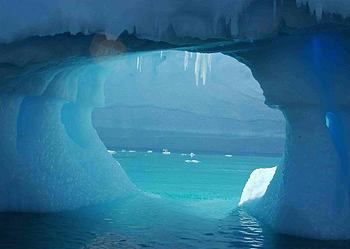
    iceberg

    Tunnel through an iceberg off the coast of Antarctica (Photo by cam17)

    The melting of the ice sheet there comes primarily from the calving of icebergs, which float away and melt in warmer ocean waters, or the contact between the edges of the ice sheet and seawater.

    The authors note that sea-level rise in the past century has been dominated by the expansion of the ocean and melting of glaciers.

    In the future, the biggest contributions may come from melting of the Greenland ice sheet, which could disappear entirely, and the Antarctic ice sheet, which will likely reach some kind of equilibrium with atmospheric temperatures and shrink significantly, but not disappear, the authors predict.

    “Keep in mind that the sea level rise projected by these models of 2.3 meters per degree of warming is over thousands of years,” said Clark, who is a professor in Oregon State University’s College of Earth, Ocean, and Atmospheric Sciences, where he teaches history and dynamics of former glaciers and ice sheets, paleo-sea level, paleoclimatology and abrupt climate change.

    “If it warms a degree in the next two years, sea levels won’t necessarily rise immediately,” said Clark. “The Earth has to warm and hold that increased temperature over time.”

    “However, carbon dioxide has a very long time scale and the amounts we’ve emitted into the atmosphere will stay up there for thousands of years,” he warned. “Even if we were to reduce emissions, the sea-level commitment of global warming will be significant.”

    Copyright Environment News Service (ENS) 2013. All rights reserved.

  • $59m Bureau of Meteorology upgrade to usher in a next-generation weather prediction system

    $59m Bureau of Meteorology upgrade to usher in a next-generation weather prediction system

    • by: Steven Scott National Political Correspondent
    • From: The Courier-Mail
    • August 14, 2013 12:00AM
    sprawling storm

    A $59 million upgrade for the Bureau of Meteorology to be announced by Prime Minister Kevin Rudd will address criticisms we no longer possess the capability to sufficiently predict extreme weather events that threaten Queenslanders. Source: AFP

    KEVIN Rudd will on Wednesday announce a $58.5 million boost to the Bureau of Meteorology, almost two years after receiving warnings it could not properly predict extreme weather.

    The Prime Minister will use a trip to Cairns to release his long-awaited response to a review completed in December 2011 that found the bureau was understaffed and could struggle to deal with another summer of floods and cyclones.

    Labor’s funding pledge will cover a next-generation flood forecasting system and an advanced storm tide prediction system.

    Extra frontline meteorologists and hydrologists will be hired as part of the package.

    Bureau chief says super storm ‘just blew up’

    The Government will also pledge to set up a National Centre for Extreme Weather that will assist other offices during emergencies.

    “Climate change is increasing the frequency and intensity of extreme weather events and we need to be in a better position to respond to these events to ensure people can make decisions to protect their lives, their homes as well as community infrastructure,” Mr Rudd said.

    “In particular, better flood warnings and advanced storm tide prediction is extremely important for Queenslanders in low-lying areas along the coast.”

    The 2011 report written by Chloe Munro, who is now the Clean Energy Regulator, warned the bureau was overstretched and could struggle to accurately predict extreme weather events.

    “The bureau is at the limit of its human capacity to provide a sustainable extreme weather forecasting and warning service,” the report said.

    “This creates risk for the bureau, the Government and the public.”

    Urgently needed upgrades to the bureau’s supercomputer were recently estimated to cost about $40 million.

    Environment Minister Mark Butler conceded the bureau was under-resourced but said the funding boost would address the shortfall.

    “In recent years, widespread severe weather has led to sustained pressure on the Bureau of Meteorology during periods of protracted extreme weather on multiple fronts,” Mr Butler said.

    “This commitment will ensure the bureau has the resources it needs to meet the demands for the essential frontline services the community has come to rely on and trust.”

    ###

    Read more: http://www.couriermail.com.au/national-news/queensland/m-bureau-of-meteorology-upgrade-to-usher-in-a-nextgeneration-weather-prediction-system/story-fnii5v6w-1226696607655#ixzz2bvjECRSC

  • We’re just beginning to understand the wider impacts of neonicotinoids.( MONBIOT )

    DDT 2.0

    Posted: 13 Aug 2013 12:37 AM PDT

    We’re just beginning to understand the wider impacts of neonicotinoids.
    By George Monbiot, published on the Guardian’s website, 5th August 2013

    It’s the new DDT: a class of poisons licensed for widespread use before they had been properly tested, which are now ripping the natural world apart. And it’s another demonstration of the old truth that those who do not learn from history are destined to repeat it.

    It is only now, when neonicotinoids are already the world’s most widely deployed insecticides, that we are beginning to understand how extensive their impacts are. Just as the manufacturers did for DDT, the corporations which make these toxins claimed that they were harmless to species other than the pests they targeted. Just as they did for DDT, they have threatened people who have raised concerns, published misleading claims and done all they can to bamboozle the public. And, as if to ensure that the story sticks to the old script, some governments have collaborated in this effort. Among the most culpable is the government of the United Kingdom.

    As Professor Dave Goulson shows in his review of the impacts of these pesticides, we still know almost nothing about how most lifeforms are affected. But as the evidence has begun to accumulate, scientists have started discovering impacts across a vast range of wildlife.

    Most people who read this newspaper will be aware by now of the evidence fingering neonicotinoids as a major cause of the decline of bees and other pollinators. These pesticides can be applied to the seeds of crops, and they remain in the plant as it grows, killing the insects which eat it. The quantities required to destroy insect life are astonishingly small: by volume these poisons are 10,000 times as powerful as DDT. When honeybees are exposed to just 5 nanogrammes of neonicotinoids, half of them will die. As bees, hoverflies, butterflies, moths, beetles and other pollinators feed from the flowers of treated crops, they are, it seems, able to absorb enough of the pesticide to compromise their survival.

    But only a tiny proportion of the neonicotinoids that farmers use enter the pollen or nectar of the flower. Studies conducted so far suggest that only between 1.6 and 20% of the pesticide used for dressing seeds is actually absorbed by the crop: a far lower rate even than when toxins are sprayed onto leaves. Some of the residue blows off as dust, which is likely to wreak havoc among the populations of many species of insects in hedgerows and surrounding habitats. But the great majority – Goulson says “typically more than 90%” – of the pesticide applied to the seeds enters the soil.

    In other words, the reality is a world apart from the impression created by the manufacturers, which keep describing the dressing of seeds with pesticides as “precise” and “targeted”.

    Neonicotinoids are highly persistent chemicals, lasting (according to the few studies published so far) for up to 19 years in the soil. Because they are persistent, they are likely to accumulate: with every year of application the soil will become more toxic.

    What these pesticides do once they are in the soil, no one knows, as sufficient research has not been conducted. But – deadly to all insects and possibly other species at tiny concentrations – they are likely to wipe out a high proportion of the soil fauna. Does this include earthworms? Or the birds and mammals that eat earthworms? Or for that matter, the birds and mammals that eat insects or treated seeds? We don’t yet know enough to say.

    This is the story you’ll keep hearing about these pesticides: we have gone into it blind. Our governments have approved their use without the faintest idea of what the consequences are likely to be.

    You might have had the impression that neonicotinoids have been banned by the European Union. They have not. The use of a few of these pesticides has been suspended for two years, but only for certain purposes. Listening to the legislators, you could be forgiven for believing that the only animals which might be affected are honeybees, and the only way in which they can be killed is through the flowers of plants whose seeds were dressed.

    But neonicotinoids are also sprayed onto the leaves of a wide variety of crop plants. They are also spread over pastures and parks in granules, in order to kill insects that live in the soil and eat the roots of the grass. These applications, and many others, remain legal in the European Union, even though we don’t know how severe the wider impacts are. We do, however, know enough to conclude that they likely to be  bad.

    Of course, not all the neonicotinoids entering the soil stay there indefinitely. You’ll be relieved to hear that some of them are washed out, whereupon … ah yes, they end up in groundwater or in the rivers. What happens there? Who knows? Neonicotinoids are not even listed among the substances that must be monitored under the EU’s water framework directive, so we have no clear picture of what their concentrations are in the water that we and many other species use.

    But a study conducted in the Netherlands shows that some of the water leaving horticultural areas is so heavily contaminated with these pesticides that it could be used to treat lice. The same study shows that even at much lower concentrations – no greater than the limits set by the European Union – the neonicotinoids entering river systems wipe out half the invertebrate species you would expect to find in the water. That’s another way of saying erasing much of the foodweb.

    I was prompted to write this article by the horrible news from the River Kennet in southern England: a highly protected ecosystem that is listed among the few dozen true chalk streams on earth. Last month someone – farmer or householder, no one yet knows – flushed another kind of pesticide, chlorpyrifos, down their sink. The amount was equivalent – in pure form – to two teaspoonsful. It passed through Marlborough sewage works and wiped out most of the invertebrates in fifteen miles of the river.

    The news hit me like a bereavement. The best job I ever had was working, during a summer vacation from university, as temporary waterkeeper on the section of the Kennet owned by the Sutton estate. The incumbent had died suddenly. It was a difficult job and, for the most part, I made a mess of it. But I came to know and love that stretch of river, and to marvel at the astonishing profusion of life the clear water contained. Up to my chest in it for much of the day, I immersed myself in the ecology, and spent far more time than I should have done watching watervoles and kingfishers; giant chub fanning their fins in the shade of the trees; great spotted trout so loyal to their posts that they had brushed white the gravel of the river bed beneath their tails; native crayfish; dragonflies; mayflies; caddis larvae; freshwater shrimps and all the other teeming creatures of the benthos.

    In the evenings, wanting company and fascinated in equal measure by the protest and the remarkable people it attracted, I would stop at the peace camp outside the gates of the Greenham Common nuclear base. I’ve told the strange story that unfolded during my visits in another post.

    Campaigners seeking to protect the river have described how, after the contamination, the river stank from the carcases of the decaying insects and shrimps. Without insects and shrimps to feed on, the fish, birds and amphibians that use the river are likely to fade away and die.

    After absorbing this news, I remembered the Dutch study, and it struck me that neonicotinoid pesticides are likely, in many places, to be reducing the life of the rivers they enter to a similar extent: not once, but for as long as they are deployed on the surrounding land.

    Richard Benyon, the minister supposed to be in charge of protecting wildlife and biodiversity, who happens to own the fishing rights on part of the River Kennet, and to represent a constituency through which it passes, expressed his “anger” about the chlorpyrifos poisoning. Should he not also be expressing his anger at the routine poisoning of rivers by neonicotinoids?

    Were he to do so, he would find himself in serious trouble with his boss. Just as they are systematically poisoning our ecosystems, neonicotinoids have also poisoned the policies (admittedly pretty toxic already) of the department supposed to be regulating them. In April, Damian Carrington, writing in the Observer, exposed a letter sent by the minister in charge of the Department for Environment, Food and Rural Affairs (Defra), Owen Paterson, to Syngenta, which manufactures some of these pesticides. Paterson promised the company that his efforts to prevent its products from being banned “will continue and intensify in the coming days”.

    And sure enough, the UK refused to support the temporary bans proposed by the commission both in April and last month, despite the massive petitions and the 80,000 emails on the subject that Paterson received. When Paterson and Deathra were faced with a choice between the survival of natural world and the profits of the pesticides companies, there was not much doubt about how they would jump. Fortunately they failed.

    Their attempt to justify their votes led to one of the most disgraceful episodes in the sorry record of this government. The government’s new chief scientist, Sir Mark Walport, championed a “study” Deathra had commissioned, which purported to show that neonicotinoids do not kill bees. It was not published in a peer-reviewed journal, nor could it be, as as any self-respecting scientist, let alone the government’s chief scientist, should have been able to see in a moment that it was complete junk. Among many other problems, the controls were hopelessly contaminated with the pesticide whose impacts the trial was supposed to be testing. The “study” was later ripped apart by the European Food Safety Authority.

    But Walport did still worse, making wildly misleading statements about the science, and using scare tactics and emotional blackmail to try to prevent the pesticides from being banned, on behalf of his new masters.

    It is hard to emphasise sufficiently the importance of this moment or the dangers it contains: the total failure of the government’s primary source of scientific advice, right at the beginning of his tenure. The chief scientist is not meant to be a toadying boot-licker, but someone who stands up for the facts and the principles of science against political pressure. Walport disgraced his post, betrayed the scientific community and sold the natural world down the river, apparently to please his employers.

    Last week, as if to remind us of the extent of the capture of this government by the corporations it is supposed to be regulating, the scientist who led the worthless trials that Walport and Paterson cited as their excuse left the government to take up a new post at … Syngenta. It seems to me that she was, in effect, working for them already.

    So here we have a department staggering around like a drunkard with a loaded machine gun, assuring us that it’sh perfectly shafe. The people who should be defending the natural world have conspired with the manufacturers of wide-spectrum biocides to permit levels of destruction at which we can only guess. In doing so they appear to be engineering another silent spring.

    www.monbiot.com

    You are subscribed to email updates from George Monbiot
    To stop receiving these emails, you may unsubscribe now.
    Email delivery powered by Google
    Google Inc., 20 West Kinzie, Chicago IL USA 60610
  • Tony Abbott denies saying same-sex marriage is ‘fashion of the moment’

    ” WHO SHOULD WE BELIEVE/ ANYTHING FOR VOTES”

    «»

    Tony Abbott denies saying same-sex marriage is ‘fashion of the moment’

    By chief political correspondent Emma Griffiths

    Updated 6 minutes ago

    Opposition Leader Tony Abbott has moved to defuse criticism that he described same-sex marriage as the “fashion of the moment” by saying he was speaking more broadly about social change.

    The brouhaha comes barely a day after Mr Abbott triggered controversy by saying a female candidate had “sex appeal” – a description he has since put down to a “dorky dad moment”.

    This morning, when asked about the issue of gay marriage on Sydney Radio 2SM, Mr Abbott reiterated his view that marriage is between a man and a woman and went on to discuss the importance of tradition in the debate.

    “My idea is to build on the strength of our society and I support, by and large, evolutionary change,” he said.

    “I’m not someone who wants to see radical change based on the fashion of the moment.”

    I’m not someone who wants to see radical change based on the fashion of the moment.

    Opposition Leader Tony Abbott


    Deputy Prime Minister Anthony Albanese has described the statement as “deeply offensive” and “out of touch”.

    “This is an extraordinary comment and an insight, once again, into Tony Abbott’s character,” he said.

    “To define sexual orientation as fashion of the moment will be deeply offensive to many Australians.”

    He said the comments show Mr Abbott is not ready to be prime minister.

    “What he needs to do is reflect modern Australian values in 2013 rather than values that may have had a place in the past, but really don’t sit with modern Australia,” he told ABC News 24.

    But Mr Abbott said this afternoon that he was “not suggesting” gay marriage was a passing fad.

    “We’d really moved beyond the subject of same-sex marriage in that discussion,” he said.

    “We were talking about tradition more generally.

    “The point I was making really was that conservatives tend to hasten slowly – regardless of the issue.”

    He went on to explain why he did not believe marriage equality was inevitable, likening the push to the failed bid for Australia to become a republic.

    “There were many a few years ago who kept telling us a republic is inevitable,” he said.

    “If this country lasts for a thousand years quite possibly at some point we might be a republic but I don’t think a republic is inevitable any time soon and similarly I don’t see same sex marriage as inevitable.”

    Abbott concedes ‘sex appeal’ remark was ‘old-fashioned’

    However, Mr Abbott has conceded his comments yesterday that a female Liberal candidate had “sex appeal” were “old-fashioned”.


    Yesterday afternoon he described Fiona Scott, who is running in the Western Sydney seat of Lindsay, as being “young, feisty” with “a bit of sex appeal”.

    Prime Minister Kevin Rudd has taken aim at the statement.

    “If any male employer stood up in a workplace anywhere in Australia and pointing to a female staff member, said, ‘This person is a good staff member because they’ve got sex appeal’, I think people would scratch their heads, at least,” Mr Rudd said.

    “And I think the employer would be finding themselves in serious strife.

    “In modern Australia, neither sexism, nor racism, nor homophobia has any place whatsoever and I believe people look to our national leaders to set that sort of example.”

    But Mr Abbott has dismissed the Prime Minister’s criticism.

    This is an extraordinary comment and an insight, once again, into Tony Abbott’s character.

    Deputy Prime Minister Anthony Albanese


    “I’ll leave Mr Rudd to hyperventilate. I think I’ve more than addressed that issue,” he said.

    This morning, Mr Abbott refined his comments about Ms Scott – saying she had “the X-factor” and put his earlier description down to him being “exuberant”.

    “I was a bit exuberant and maybe a bit old-fashioned in some respects,” he said.

    Still facing questions this afternoon about the issue, Mr Abbott said Ms Scott is “smart, she’s hardworking, she knows the electorate inside out and gee whiz, she’s putting up a good show out there in Lindsay and the Labor Party are understandably very worried”.