A Guatemalan farmer checks his maize crop. Photograph: Amanda Koster/Corbis
If the world is to grow enough food for the projected global population in 2050, agricultural productivity will have to rise by at least 60%, and may need to more than double, according to researchers who have studied global crop yields.
They say that productivity is not rising fast enough at present to meet the likely demands on agriculture.
The researchers studied yields of four key staple crops – maize, rice, wheat and soybeans – and found they were increasing by only about 0.9% to 1.6% a year. That would lead to an overall increase of about 38% to 67% by 2050, which would only be enough to feed the population if the lower end of the estimate of yields needed and the maximum yield increase turns out to be the case.
The study’s findings are also likely to fuel debate over the efficacy of genetically modified crops, which some scientists have argued may be needed in future to feed the rapidly growing global population, which is expected to reach at least 9 billion by 2050.
Deepak Ray, who led the new research, said that some countries were faring far worse than others. For instance, in Guatemala, the productivity of the maize agriculture is declining, while the population is growing.
The slow increase in agricultural productivity around the world stands in marked contrast to the “green revolution” that led to a huge increase in crop yields in Asia in the 1960s to 1970s, with the widespread use of new artificial fertilisers, pesticides and growing techniques. The green revolution enabled high population growth and sparked unprecedented economic growth in many Asian countries. Signs that its effects have petered out could be a warning that future population growth may be harder to accommodate.
There is also a danger that large swathes of pristine land — including forests — could be cleared for agriculture to compensate for the slow growth in yields, with potentially damaging effects on the climate and on ecosystems. Fertile agricultural land is at a premium in most countries, and overuse, water scarcity and soil degradation are taking further tolls.
However, the authors of the study only examined crop yields — they emphasised that there should be other ways to improve the world’s food supply, including increasing efficiency and cutting the massive waste of food that takes place in both developed and developing countries.
Jon Foley, co-author of the paper, said: “Clearly, the world faces a looming agricultural crisis, with yield increases insufficient to keep up with projected demands. The good news is, opportunities exist to increase production through more efficient use of current arable lands and increased yield growth rates by spreading best management practices. If we are to boost production in these key crops to meet projected needs, we have no time to waste.”
A former Logan City council worker says he was told to dump asbestos cement in general landfill and fears hundreds of people may have been exposed to the deadly fibres.
Scott Campbell was in charge of a team of men who laid footpaths across the Logan region, south of Brisbane.
From 1999 to 2003, his team replaced old asbestos Telstra pits with plastic pits.
He says he was exposed to deadly asbestos fibres every day as he laid down nearly half the footpaths in Logan suburbs.
“When you’re doing footpaths you just scrape the grass off the top and a lot of time you hit these pits,” he said.
“Because they’re only five to 10 millimetres thick, they just explode.”
Despite raising concerns, Mr Campbell says the workers were not given safety gear and were told to dump asbestos cement in general landfill.
“You’ve got to compete with contractors so you’ve got to do everything on the sly – you’ve got to take shortcuts and that’s the way it was handled,” he said.
Crews smash asbestos pit in front of school
He says hundreds of asbestos pits were mishandled.
In one instance, crews hit a pit in front of Crestmead State School as children were leaving to go home for the day.
He says they often disturbed old asbestos pits in front of passers-by.
“Because council had a lot more overheads than contractors, we had to cut a lot more corners to compete in the open market with contractors,” he said.
Mr Campbell now worries he will contract an asbestos-related disease.
A spokesman for Logan City Council says it takes both the safety of employees and correct asbestos handling and management procedures very seriously.
“Council is not aware of the specific allegations being raised, however would be happy to investigate the detailed allegations should the former employee wish to raise them directly with council,” the spokesman said.
More workers falling ill from asbestos exposure
The ABC has also learnt that a growing number of former Telstra workers are contracting deadly asbestos-related diseases.
Raymond Colbert from the Asbestos Related Disease Support Society Queensland says the overall number of workers falling ill from asbestos is steadily on the rise.
“[There’s] a lot more places it’s coming from now. You’ve got the people who are disturbing the existing product and they’re doing it without that training and without that supervision,” he said.
Among those are Telstra staff who built or maintained the pits.
“They should be sent a letter: ‘You may have been exposed, monitor your health’ and all that is is getting regular chest x-rays,” he said.
More than 120 compensation claims have been made to Telstra in the past decade. Eighty people have received payouts and 11 claims are still pending.
A Telstra spokesman says the telco aims to manage compensation claims of any type to ensure they are handled sensitively and expeditiously.
“We handle asbestos claims on a case-by-case basis and claims are met from general operating costs,” the spokesman said.
Asbestos support group solicitor Thady Blundell says there is serious concern about Telstra workers.
“We’re starting to see people now develop asbestos disease who were exposed in the ’70s and ’80s, so there’s been a regular incidence of asbestos disease amongst Telstra workers,” she said.
“These pits and pipes were used all over the country.”
THE Senate will be effectively abolished as a watchdog for the people if the coalition wins control of both houses of parliament at the upcoming election, former Greens leader Bob Brown says.
Mr Brown says the Liberals are gunning for the Greens’ seats in the upper house, particularly those in Western Australia and South Australia.
With the opinion polls pointing to a coalition landslide in September, Mr Brown said there was a real chance a Tony Abbott led government would be able to push through legislation at will.
“That’s a very worrying thought,” he told reporters in Adelaide on Friday.
“That’s why it’s so critical the electorate recognises the danger to the Senate of an Abbott clean sweep.
“The Senate would be effectively abolished as a watchdog of the people.
“That’s something Australians generally don’t want.”
A strong swing to the coalition in the South Australian Senate vote could result in the Liberals picking up a third seat, at the expense of Greens Senator Sarah Hanson-Young.
Labor would likely retain two seats and independent Nick Xenophon was also certain to be returned.
Senator Hanson-Young said she also expected Senator Xenophon to retain his seat and her battle would be against a “Cory Bernardi lookalike”, in reference to the sitting Liberal senator who has caused controversy with his comments over gay marriage, forcing him to stand down as a parliamentary secretary last year.
Liz Gobeski soaks up the sun on the beach at Point Woronzof as a Polar Air Cargo jet comes in for a landing at Ted Stevens Anchorage International Airport as the temperature reached into the 80’s in Anchorage, AK on Tuesday, June 18, 2013. (AP Photo/Anchorage Daily News, Bob Hallinen)
By Yereth Rosen
ANCHORAGE, Alaska, June 20 (Reuters) – With a heat wave gripping Alaska, strange things have been happening under the midnight sun.
Anchorage residents, who a month ago shivered through an unseasonably cold spring and a surprise May snowstorm, have donned swimsuits and depleted stores of fans to ward off record heat in the state’s largest city.
Temperatures have run as much as 20 degrees Fahrenheit above normal, with daytime highs in Anchorage climbing into the 80s in recent days, and the sudden onset of atypical warmth has been blamed for unleashing wildfires and flooding alike.
Moose have been spotted near lawn sprinklers around Anchorage and at least one invaded someone’s kiddie pool. Pet reptiles, normally confined to heated indoor spaces because of Alaska’s cold outdoors, are making rare public appearances.
Park managers at Goose Lake, one of Anchorage’s few outdoor swimming spots, had to eject a pet iguana named “Godzilla,” along with some pet snakes and a turtle that patrons brought to the crowded sandy shoreline, said Doreen Hernandez, the city aquatic superintendent who has been working at the site.
Pets are not allowed at Goose Lake for health reasons, although she conceded that the rule is usually applied to dogs.
“We don’t have a sign that says `No Snakes,’” she said.
Heat records have been broken around the state, with an all-time record high of 96 degrees reached on Tuesday in Talkeetna, the tiny town famous as the jumping-off site for Mount McKinley expeditions. The previous record high there was 91 degrees.
SIZZLING SOLSTICE
The heat spell has come at the peak of Alaska’s summer, just before the solstice, a time of nearly round-the-clock daylight as the sun barely grazes the horizon overnight.
In Valdez, operators of the Trans-Alaska Pipeline marine terminal halted oil-tanker loading for 4 1/2 hours late Monday night and early Tuesday morning as a precaution after temperatures at the terminal hit 92 degrees.
“Our systems aren’t used to operating in that heat,” said Katie Pesznecker, a spokeswoman for operator Alyeska Pipeline Service Co.
Meteorologists blame the anomaly on rapid shift in atmospheric wind patterns. The system that brought cold air from the north during the spring changed suddenly, sending in hot air from the south and southeast.
The rapid heat-up caused considerable flooding of mountain streams, said Tom Pepe, an Anchorage-based meteorologist for the National Weather Service.
“You get big pieces of ice that jam up small parts of rivers,”
Flooding along the Yukon River late last month caused severe damage in several Native Alaskan villages, most notably the Athabascan community of Galena, where nearly all residents were evacuated by aircraft.
Property damage along the river was estimated at $10 million, said Tony Luiken, a state emergency management spokesman. The governor has declared a disaster.
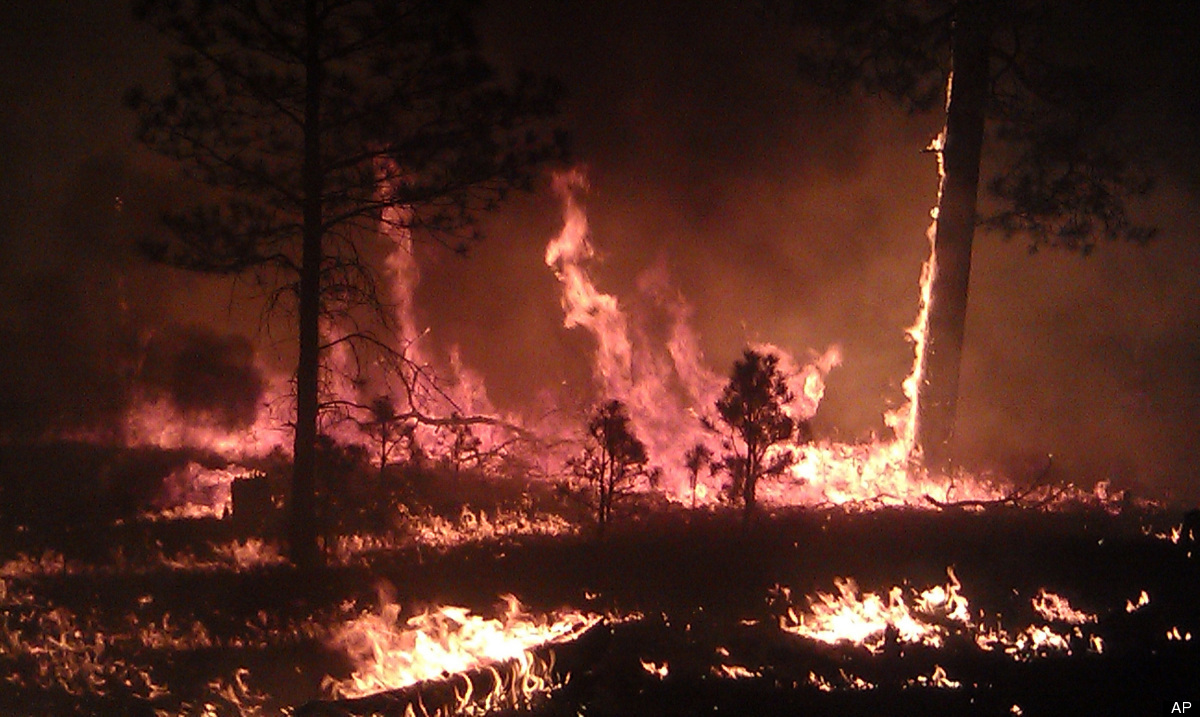
The heat wave also has stoked numerous wildfires, many ignited by dry-lightning strikes fueled by ample dry brush.
A lightning-sparked wildfire straddling the Tetlin National Wildlife Refuge and Wrangell-St. Elias National Park tripled in size in one day, and was last measured at more than 25,000 acres, the National Park Service said on Wednesday. (Editing by Steve Gorman and Maureen Bavdek)
Labor’s unpopularity could be a disaster for the Greens in the Senate too
The publicly available opinion polls are in agreement about the fate of the Labor government. A landslide defeat in the House of Representatives is looming, the magnitude of which might place Julia Gillard alongside Bert Evatt, Arthur Calwell, Gough Whitlam (twice) and Paul Keating as federal Labor’s…
The impending disaster for Julia Gillard’s government at the federal election could also spell trouble for the hopes of the Greens in the Senate. AAP/Alan Porritt
The publicly available opinion polls are in agreement about the fate of the Labor government. A landslide defeat in the House of Representatives is looming, the magnitude of which might place Julia Gillard alongside Bert Evatt, Arthur Calwell, Gough Whitlam (twice) and Paul Keating as federal Labor’s biggest electoral losers.
Little, however, has been said about the Senate contest. Opposition leader Tony Abbott clearly foresees an outcome that might frustrate his future government and has promised a double dissolution election if this should happen.
The current polling data indicates that the disaster Labor is facing in the lower house will also impact on the Senate, notwithstanding the different electoral systems being used. What’s more, Labor’s poor performance has the potential to seriously affect the Greens as well.
Forecasting Senate outcomes can be difficult given the complexity of the voting system, the potential for a vast number of candidates to nominate, and the lack of information about how preferences will be directed by the various parties. It is also difficult to find opinion poll data broken down by states. Using the polling data below, some preliminary predictions about the Senate can be made.
Table 1: AC Nielsen polling by state. AC Nielsen/Fairfax polling
Click to enlarge
The table above uses the same polling data used by Fairfax last week to make claims about the state variations that might occur within the national swing as voters make their choices for the House of Representatives. In other words, these polls did not ask voters about their Senate voting intentions.
Psephologist Malcolm Mackerras’ argument that, in normal circumstances, half-Senate election results usually end up seeing the collective left-of-centre (Labor, Greens) and the collective right-of-centre (Liberal, National, DLP, Family First and so on) sharing three seats each is a useful starting point. As the LNP Coalition rarely has serious competition from minor right-of-centre parties, the joint ticket usually wins three seats in each state.
Labor, however, has lost ground to its competitive minor parties: the Australian Democrats for much of the 1980s and 1990s and more recently to the Greens. Therefore, a contemporary “normal” pattern involves Labor winning at least two seats in each state, with Labor and the Greens fighting for the third left-of-centre seat.
As part of this process, the successful left-of-centre minor party has had to rely on a flow of surplus Labor votes to secure a seat. The importance of Labor’s preference direction was demonstrated in 2004 when Family First’s Steve Fielding won a Senate seat for Victoria owing to being preferenced ahead of the Greens on the Victorian Labor Senate ticket.
For Labor to be in a position to assist the Greens – or whoever it prefers – to win a seat, its Senate ticket must poll more than at least 28.8% of the primary vote.
Table 2: poll data as Senate quota by state.
Click to enlarge
To assist in making predictions, the data in Table 1 is calculated in Table 2 as a quota, with the parties winning a seat for every full quota achieved. The table also expresses the quota as an aggregated left-of-centre compared with right-of-centre result which can assist in indicating how the numbers might fall in terms of a left-right contest.
The first important thing to note from this table is that in three states, the combined left-of-centre does not have enough support for three seats, whereas the right-of-centre has more than enough for four. If nothing else, these data are indicating a significant shift to the right-of-centre in terms of outcome of seats, although it is not clear which of the parties will win these seats.
Both Table 1 and Table 2 show that in three states Labor is polling under the 28.8% threshold needed to secure two seats, let alone provide some surplus to help the Greens.
The 2011 Senate being sworn-in: what will the Senate after July 1, 2014, look like? AAP/Alan Porritt
It should be borne in mind that the above data may be worse than it appears. If the past is any guide, Labor’s primary Senate vote will be less than its national lower house vote (the average difference since 1949 is negative 3%), while the Greens can expect to poll better in the Senate than the House of Representatives (a difference of plus 1%). This won’t help the Greens, for in all likelihood Labor will need Green preferences to secure a second seat in Queensland and NSW.
The situation in South Australia is complicated by the fact that independent senator Nick Xenophon is up for re-election. If Xenophon were to poll in excess of the quota and had surplus to distribute, the Greens’ Sarah Hanson-Young might be returned. Were Xenophon to poll less than 14.4%, however, Hanson-Young would be stranded and her preferences would elect the second Labor candidate.
In Queensland the presence of populist parties such as the Katter Australia Party (KAP) and the Palmer United Party (PUP) are the wildcards. If the primary vote of Labor and the Greens is added together, the collective left-of-centre only has enough support to win 2.7 quotas. Meanwhile, the aggregated LNP and other right-of-centre (KAP, PUP, and all others) results in 4.19 quotas. Queensland will thus return two left (most likely Labor) and four right (most likely three LNP and probably one of the populist right, most likely from the KAP) to the Senate.
The situation for Labor and the Greens is better in Victoria, where Labor will win two seats and the Greens one. No data has been given for Tasmania, where the Greens would nonetheless be confident of picking up one seat, and Labor two seats. The Liberals would have expectations of three seats, and this would be a gain: in 2007, the Liberals won only two seats.
Table 3: Senate predictions.
Click to enlarge
Table 3 sets out tentative predictions for the Senate based on the available polling data. The predicted outcome in Tasmania is purely speculative, however, given the lack of specific polling data.
The overarching theme of this table is that the Senate will shift to the right, and that Tony Abbott could be within a whisker of winning control of the Senate. These figures and the speculation about the outcome in Tasmania would result in the three “others” – existing DLP senator John Madigan, Nick Xenophon (predicted to be re-elected) and a right-of-centre senator from Queensland, possibly from the KAP – holding the balance of power.
The prediction of the Greens’ success in Victoria and Tasmania can be made with confidence, but the situation in Western Australia is critical to everything. According to the Fairfax polls, Labor should win two and the Greens one seat. The result will be very close, however, and the possibility of the Liberal-National joint ticket picking up a seat at the expense of the Greens is a real possibility.
If that happens, the Liberal-National government will take control of the Senate on July 1, 2014, and Tony Abbott will not have to worry about a double dissolution election.
7 June 2012 Scientists tip 2025 for possible planetary collapse by Will Parker
Based on an evaluation of more than 1,000 previous studies, a new meta-review by an international group of 18 scientists suggests the Earth is perilously close to a tipping point where resource consumption, ecosystem degradation, climate change, biodiversity loss and population growth will trigger massive changes in the biosphere.
“The last tipping point in Earth’s history occurred about 12,000 years ago when the planet went from being in the age of glaciers, which previously lasted 100,000 years, to being in its current interglacial state. Once that tipping point was reached, the most extreme biological changes leading to our current state occurred within only 1,000 years. That’s like going from a baby to an adult state in less than a year,” explains Arne Mooers, professor of biodiversity at Simon Fraser University and one of the paper’s authors. “Importantly, the planet is changing even faster now. The odds are very high that the next global state change will be extremely disruptive to our civilization.”
The work, appearing in Nature, reads somewhat like the screenplay for a disaster movie, with the authors making urgent calls for unified global action. “Humans have not done anything really important to stave off the worst because the social structures for doing something just aren’t there,” said Mooers. “My colleagues who study climate-induced changes through the Earth’s history are more than pretty worried. In fact, some are terrified.”
The paper notes that studies of ecosystems show that once 50 percent or more of an area has been altered, the entire ecosystem can tip irreversibly into a state far different from the original, in terms of the mix of plant and animal species and their interactions. This situation typically is accompanied by species extinctions and a loss of biodiversity. Currently, to support a population of 7 billion people, about 43 percent of Earth’s land surface has been converted to agricultural or urban use, with roads cutting through much of the remainder. Current trends suggest that half the Earth’s land surface will be human-transformed by 2025.
“It really will be a new world, biologically, at that point,” warns Anthony Barnosky, professor of integrative biology at the University of California, Berkeley, and lead author of the new paper. “The data suggests that there will be a reduction in biodiversity and severe impacts on much of what we depend on to sustain our quality of life, including, for example, fisheries, agriculture, forest products and clean water. This could happen within just a few generations.”
Another co-author, Elizabeth Hadly from Stanford University, thinks we may already be past these tipping points in particular regions of the world. “I just returned from a trip to the high Himalayas in Nepal, where I witnessed families fighting each other with machetes for wood – wood that they would burn to cook their food in one evening. In places where governments are lacking basic infrastructure, people fend for themselves, and biodiversity suffers. We desperately need global leadership.
 Email
Email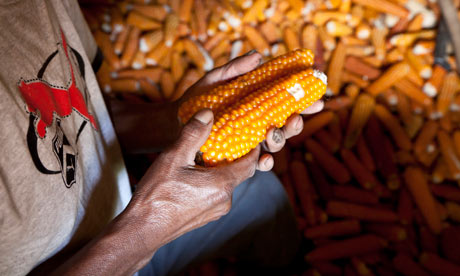






 Based on an evaluation of more than 1,000 previous studies, a new meta-review by an international group of 18 scientists suggests the Earth is perilously close to a tipping point where resource consumption, ecosystem degradation,