Author: Neville

  • Before the last home is torched AVAAZ

    2 of 35
    Why this ad?
    EA Solar Panelsenergyaustralia.com.au/solarsaver – Quality Solar Systems from $2,399 We are the Solar Power Experts!

    Before the last home is torched

    Inbox
    x

    Allison Johnson – Avaaz.org

    12:16 AM (14 hours ago)

    to me
    Dear friends,

    Heavily armed police just burned 1,000 homes to the ground to force indigenous families out of the Kenyan forest. The World Bank has given millions to the forest police, but is staying quiet. If enough of us supercharge the community’s desperate call for help, we can force the World Bank to demand the government halts these vicious land grabs. Sign now:

    SIGN THE PETITION

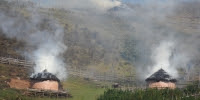
    Heavily armed police just burned 1,000 homes to the ground to force indigenous families out of the Kenyan forest where they’ve lived for centuries. This desperate community needs our help to save their homes — and the forest — before it’s destroyed forever.

    The World Bank has given millions of our tax dollars to the Kenyan forest police who are annihilating this ancient community. And — with new funding at stake this year — the Bank has massive leverage over the government. So far the Bank is staying mum, but if enough of us supercharge the community’s call for help, we can force it to demand this horror stops.

    World Bank President Jim Yong Kim says he wants to change the Bank. Let’s hold him to his word, demanding that he call on the Kenyan government to stop these vicious land grabs and commit to new human rights standards for all future grants. When a million of us sign, we’ll grab Kim’s attention by showing burning homes outside the Bank’s Washington HQ. Add your name, then send Kim a message, now:

    http://www.avaaz.org/en/stop_the_forced_evictions_loc/?bhPqncb&v=35536

    The Sengwer people have lived in the majestic Embobut forest for centuries and their rights to their ancestral lands are protected under the Kenyan constitution and international law. They’ve already won a court order to stop the evictions, but the government has ignored it, claiming they need to clear the forest to protect water sources for nearby towns. The Sengwer fear that next, the forest will be decimated for profit.

    The Bank has backed many impressive initiatives, but for too long has blamed the governments and companies it lends to when destructive projects force people off their land. But the tide is turning. After an outcry, the Bank pulled back from projects that were driving 30,000 Cambodians a year from their homes. And it admitted it ignored its own policies when it funded a Honduran palm oil company accused of brutal evictions and assassinations. The Bank is now investigating the Sengwer scandal, but far too slowly to save Kenya’s ancient forest peoples.

    The US Congress has just called on the Bank to stop evictions, or risk losing US money. It’s the perfect moment to stop this brutal land grab in Kenya and get the institution to take human rights seriously. Sign now — when a million of us are on board, we’ll deliver our message straight to President Kim:

    http://www.avaaz.org/en/stop_the_forced_evictions_loc/?bhPqncb&v=35536

    After the Tanzanian government announced plans to kick thousands of Maasai families off their lands to build a hunting reserve, almost two million Avaaz members stood with their community. We kept pushing for over a year until finally the Prime Minister allowed them to stay, helping end a 20 year land battle. The Maasai say they couldn’t have done it without us — now let’s do it again, for the Sengwer people.

    With hope,

    Allison, Alex, Joseph, Emilie, Alice, Sayeeda, Ricken and the rest of the Avaaz team

    More information:

    Kenya: KFS Guards Burn Down Homes in Embobut Forest (The Star)
    http://allafrica.com/stories/201401200456.html

    Kenyan families flee Embobut forest to avoid forced evictions by police (The Guardian)
    http://www.theguardian.com/global-development/2014/jan/07/kenya-embobut-forest-forced-evictions-police

    Kenya defies its own courts (Forest Peoples Programme)
    http://www.forestpeoples.org/topics/legal-human-rights/news/2014/01/kenya-defies-its-own-courts-torc…

    U.S. pushes for outside oversight of World Bank (Washington Post)
    http://www.washingtonpost.com/business/economy/us-pushes-for-outside-oversight-of-world-bank-opposes-push-toward-big-hydro/2014/01/24/fb41bb7c-8516-11e3-8099-9181471f7aaf_story.html

    Kenya / Embobut Forest: UN rights expert calls for the protection of indigenous people facing eviction (UN)
    http://www.ohchr.org/EN/NewsEvents/Pages/DisplayNews.aspx?NewsID=14163&LangID=E

    Indigenous Kenyans evicted in the name of ‘conservation’ (New Internationalist)
    http://newint.org/features/web-exclusive/2014/01/23/sengwer-forest-evictions/

    Support the Avaaz Community!
    We’re entirely funded by donations and receive no money from governments or corporations. Our dedicated team ensures even the smallest contributions go a long way.
    Donate Now


  • As Drought Hits, Fracking Poses Threat to Water Supply

    Adbar

    As Drought Hits, Fracking Poses Threat to Water Supply

    By Nick Cunningham | Thu, 06 February 2014 22:46 | 2

    Benefit From the Latest Energy Trends and Investment Opportunities before the mainstream media and investing public are aware they even exist. The Free Oilprice.com Energy Intelligence Report gives you this and much more. Click here to find out more.

    A new report finds that hydraulic fracturing is posing a growing risk to water supplies in several regions around the country. Only, instead of groundwater contamination that so often makes the headlines, it is from the massive consumption of fresh water in water-parched areas like Texas, Colorado, and California. Hydraulic fracturing (“fracking”) requires millions of gallons of water to frack single well, and in places that are suffering epic droughts, fracking is increasingly competing for access to water with other uses.

    The report, “Hydraulic Fracturing and Water Stress,” comes from Ceres, a network of investors, companies, and public interest groups that pushes investor money towards sustainable practices. Ceres finds that about three-quarters of all the 39,294 wells hydraulically fractured between January 2011 and May 2013 (the time period they studied) have occurred in water scarce areas, and more than half in areas suffering from drought.

    Select the reports you are interested in:

    NO-SPAM: Under no circumstances will we EVER rent, sell or give away your email

    Related article: Natural Gas Locomotives Soon in North America?

    Nowhere is the nexus of fracking and water starker than in the Eagle Ford Shale in south Texas, which produces over 1.2 million barrels of oil and 6 billion cubic feet of natural gas per day. The Eagle Ford suffers from the biggest water challenges out of any shale play in the United States. It has the highest water consumption out of any other shale formation in the country right now. Over 90% of the water used in the affected counties comes from groundwater, as opposed to surface water, contributing to the depletion of aquifers.

    The report finds that, “Texas is ground zero for water sourcing risks due to intense shale energy production in recent years.” And the problem of water use is compounded by the fact that Texas has been suffering from several years of meager rainfall. As Ceres notes, “over two-thirds of Texas continues to experience drought conditions, key groundwater aquifers are under stress and the state’s population is growing.”

    Agriculture and the consumption of water in cities remain the largest sources of water consumption, much more than fracking, but drilling for oil and gas often occur in small communities in dry areas, and thus have an outsized influence over the consumption pattern of water. Competing interests, such as cattle ranching, farming, other industry, and residential use, are finding water more and more a cherished commodity to come by. There are 29 communities in Texas with a presence of oil and gas drilling that are in danger of running out of water within days.

    Related article: Why Current Solutions to Solving our Energy Problems Won’t Work

    Ceres also looked at individual companies with the most exposure to water sourcing risk. For example, Anadarko Petroleum (NYSE: APC) leads the pack with more than 70% of its wells located in high water stress areas. Anadarko used over six billion gallons of water over the study period. Chesapeake Energy (NYSE: CHK) was the biggest user of water out of all the operators measured in the report, but with much of its drilling operations focused in the relatively wet Marcellus Shale, its risk exposure wasn’t as bad as Anadarko’s. The report offers a warning to investors: should these companies be cut off from access to water due to inadequate water supply or water restrictions by local governments, their operations – and therefore their profitability – could be put at risk.

    The Ceres report provides a series of recommendations which include recycling of water used during fracking (a practice already becoming more commonplace among drillers); using wastewater or brackish water; disclosing more information, not only on water use from the company perspective, but also on water availability and requirements for the basin as a whole; and tougher regulations governing the use of water in dry regions.

    The competition between water use for fracking and other uses is not new, particularly in dry areas, but with oil and gas production in Texas expected to double over the next five years, the issue will only grow in its importance.

  • Fish biomass in the ocean may be 10 times higher than estimated: Stock of mesopelagic fish changes from 1,000 to 10,000 million tons

    Featured Research

    from universities, journals, and other organizations

    Fish biomass in the ocean may be 10 times higher than estimated: Stock of mesopelagic fish changes from 1,000 to 10,000 million tons

    Date:
    February 7, 2014
    Source:
    Spanish National Research Council (CSIC)
    Summary:
    With a stock estimated at 1,000 million tons so far, mesopelagic fish dominate the total biomass of fish in the ocean. However, scientists have found that their abundance could be at least 10 times higher. The results are based on the acoustic observations conducted during the circumnavigation of the Malaspina Expedition.

    This image shows a fish captured during Malaspina Expedition circumnavigation between Auckland and Honolulu.
    Credit: CSIC / JOAN COSTA

    With a stock estimated at 1,000 million tons so far, mesopelagic fish dominate the total biomass of fish in the ocean. However, a team of researchers with the participation of the Spanish National Research Council (CSIC) has found that their abundance could be at least 10 times higher. The results, published in Nature Communications journal, are based on the acoustic observations conducted during the circumnavigation of the Malaspina Expedition.

    Mesopelagic fishes, such as lantern fishes (Myctophidae) and cyclothonids (Gonostomatidae), live in the twilight zone of the ocean, between 200 and 1,000 meters deep. They are the most numerous vertebrates of the biosphere, but also the great unknowns of the open ocean, since there are gaps in the knowledge of their biology, ecology, adaptation and global biomass.

    During the 32,000 nautical miles traveled during the circumnavigation, the researchers of the Malaspina Expedition (a project led by CSIC researcher Carlos Duarte) took measurements between 40°N and 40°S, from 200 to 1,000 meters deep, during the day.

    Duarte states: “Malaspina has provided us the unique opportunity to assess the stock of mesopelagic fish in the ocean. Until now we only had the data provided by trawling. It has recently been discovered that these fishes are able to detect the nets and run, which turns trawling into a biased tool when it comes to count its biomass.”

    Transport of organic carbon

    Xabier Irigoyen, researcher from AZTI-Tecnalia and KAUST (Saudi Arabia) and head of this research, states: “The fact that the biomass of mesopelagic fish (and therefore also the total biomass of fishes) is at least 10 times higher than previously thought, has significant implications in the understanding of carbon fluxes in the ocean and the operation of which, so far, we considered ocean deserts.”

    Mesopelagic fish come up at night to the upper layers of the ocean to feed, whereas they go back down during the day in order to avoid being detected by their predators. This behaviour speeds up the transport of organic matter into the ocean, the engine of the biological pump that removes CO2 from the atmosphere, because instead of slowly sinking from the surface, it is rapidly transported to 500 and 700 meters deep and released in the form of feces.

    Irigoyen adds: “Mesopelagic fish accelerate the flux for actively transporting organic matter from the upper layers of the water column, where most of the organic carbon coming from the flow of sedimentary particles is lost. Their role in the biogeochemical cycles of ocean ecosystems and global ocean has to be reconsidered, as it is likely that they are breathing between 1% and 10% of the primary production in deep waters.”

    According to researchers, the excretion of material from the surface could partly explain the unexpected microbial respiration registered in these deep layers of the ocean. Mesopelagic fishes would act therefore as a link between plankton and top predators, and they would have a key role in reducing the oxygen from the depths of the open ocean.


    Story Source:

    The above story is based on materials provided by Spanish National Research Council (CSIC). Note: Materials may be edited for content and length.


    Journal Reference:

    1. Xabier Irigoien, T. A. Klevjer, A. Røstad, U. Martinez, G. Boyra, J. L. Acuña, A. Bode, F. Echevarria, J. I. Gonzalez-Gordillo, S. Hernandez-Leon, S. Agusti, D. L. Aksnes, C. M. Duarte, S. Kaartvedt. Large mesopelagic fishes biomass and trophic efficiency in the open ocean. Nature Communications, 2014; 5 DOI: 10.1038/ncomms4271

    Cite This Page:

    Spanish National Research Council (CSIC). “Fish biomass in the ocean may be 10 times higher than estimated: Stock of mesopelagic fish changes from 1,000 to 10,000 million tons.” ScienceDaily. ScienceDaily, 7 February 2014. <www.sciencedaily.com/releases/2014/02/140207083830.htm>.

  • [New post] Seat #17: Adelaide THE TALLY ROOM

    3 of 37
    Why this ad?
    Get 3 Local Solar Quotessolarquotes.com.au/_3_Best_Quotes – 1 Form + 2 Minutes = 3 Free Quotes. Save Time & Money Now!

    [New post] Seat #17: Adelaide

    Inbox
    x

    The Tally Room donotreply@wordpress.com

    12:00 PM (1 hour ago)

    to me

    New post on The Tally Room

    Seat #17: Adelaide

    by Ben Raue

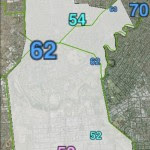
    Adelaide1-2PPAdelaide is a very marginal Liberal seat, covering the Adelaide city centre.

    The Liberal Party’s Rachel Sanderson won the seat off the ALP’s Jane Lomax-Smith in 2010. She is being challenged by Labor’s David O’Loughlin, the current lord mayor of Adelaide. Sanderson holds Adelaide by a 4.2% margin.

    Read more

     
  • California Drought Inbox x NASA Science News

    Inbox
    x
    NASA Science News noreply@nasascience.org
    9:03 AM (1 hour ago)

    to NASA
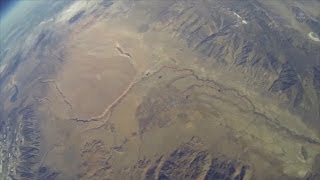
    NASA Science News for Feb. 7, 2014California is experiencing an extreme drought–by some measures the deepest in more than a century. NASA researchers are investigating the underlying causes as satellites, aircraft, and high-altitude balloons collect sobering images of the desiccating landscape.

    VIDEO: http://www.youtube.com/watch?v=e5HwRXsw2Q8

    FULL STORY: http://science.nasa.gov/science-news/science-at-nasa/2014/07feb_drought

  • The why and how of radical emissions reductions (2): Corinne Le Quere

    1 of 4
    Why this ad?
    DreamstimeRoyalty Free Stock Images – Over 20M Stock Photos From as Little as $0.20 or Free.
     Courtesy of David Spratt

    climate code red

    Inbox
    x
    Climate Code Red noreply@blogger.com via google.com
    8:25 PM (1 minute ago)

    to me

    climate code red


    The why and how of radical emissions reductions (2): Corinne Le Quere

    Posted: 06 Feb 2014 07:34 PM PST

    Second in a series | Part 1

    On 10-11 December 2013, a Radical Emissions Reduction Conference was held at the Royal Society, London under the auspices of the Tyndall Centre for Climate Change Research at the University of East Anglia. In this blog, we look at a presentation by Professor Corinne Le Quere, of the Tyndall Centre for Climate Change Research, University of East Anglia on “The scientific case for radical emissions reductions”.

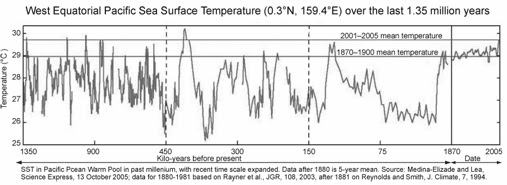
    Le Quere framed “radical emission reductions” as reductions consistent with a two-in-three chance of keeping global warming to less than 2 degrees Celsius (°C), saying that there is no surety that 2°C is a safe threshold, but according to the geological record, there have been periods of up to 2°C warming during the past 800,000 years that did not trigger any “nasty or unexpected” feedbacks, though sea-levels were 5–10 metres higher than today.

    [Note by CCR: Readers of this blog will know well that with less than 1°C of warming so far, there is a good deal of evidence that climate change is already dangerous ,and of the view of leading scientists that 2°C hotter is not an acceptable climate target but a disaster.  In addition, the record is not clear that the warming reached 2°C, with the chart (below), for example, showing sea-surface temperatures in the West Equatorial Warm Pool reached no more than 1.5°C over pre-industrial, around 400,000 years ago.]

    Le Quere told the conference there were no analogues for 4-to-5°C warming in geological record, though there have been coolings of that magnitude, during the last glaciation 20,000 years ago, when environments were transformed. The UK, for example, was covered by ice a mile thick, which may gives an idea of the change that may occur in a world of 9 billion people.

    Thresholds and effects in climate system, such as methane from permafrost and sediments, and Amazon dieback, are poorly known and we don’t really know at what level of warming these occur.

    Warming that has occurred is committed for up to 1000 years. Le Quere said if emissions cease now we get no further warming. Future warming is from future emissions, and near-term emissions cuts decrease the rate of warming immediately.

    [Note by CCR: It is true that if just the present level of atmospheric carbon dioxide is maintained, warming would not exceed 1.4C. However there are other warming gases such as nitrous oxide which have a lifetime of a century and, as well, warming is at present being temporarily reduced by the large amounts of cooling sulphates produced by burning fossil fuels that would cease if emissions were zeroed. See Faustian bargain revisited: study finds zeroed emissions will add 0.25-0.5C of warming as aerosol cooling is lost. ]

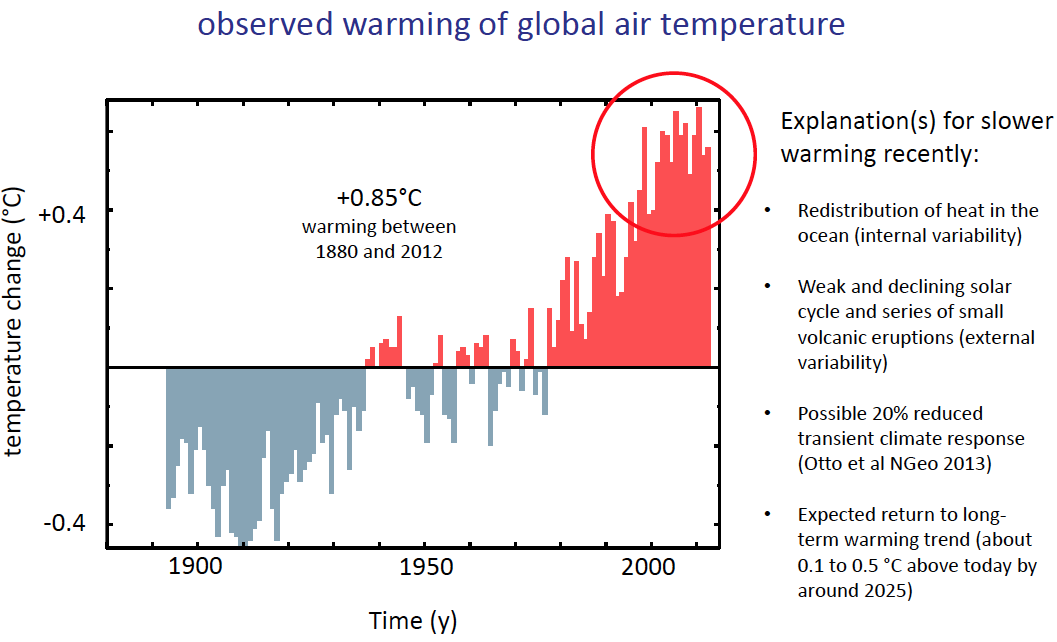
    Le Quere said that since 1880, global warming has been 0.85C, with warming in the past 15 years slower than 15 years prior. The factors are listed here:

    However there is an expectation of return to the longer-term warming trend, with additional warming of 0.1–0.5°C by 2025 compared to today.

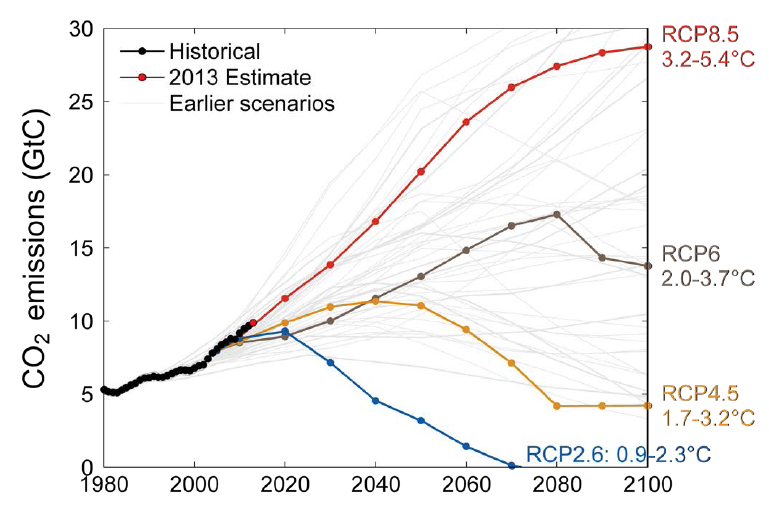
    Looking at emissions so far, against four IPCC scenarios, we are now following the highest and most carbon-intensive scenario (RCP8.5) which leads to 3.2–5.4°C of warming.

    CO2 emissions and projected climate change. Sources: Le Quéré et al. 2013; Peters et al. 2013; Global Carbon Project; CDIAC data

    Our emissions could change rapidly because there are tipping points in society, such as reaction to extreme events, and the likelihood they will recur and increase in severity. The people who are directly affected and pay during these extreme events will do their own sums and determine what it means for their own budgets not to mitigate climate change.

    There have been many such large-scale events, including the 2005 European heatwave, the 2010 crop failure in Russia, the 2012 crop failure in the USA, the Australian 2013 heatwave, and Hurricane Sandy. Although Sandy itself cannot be attributed to climate change, 20 cm of the 1metre storm surge that invaded the subway of New York is directly attributed to climate change. This was the most expensive damage caused by the hurricane, which cost $60 billion in damage in total.

    Academic community must be ready to step in to offer solutions and examples at time when mentality changes, as a result of realisations of the costs caused by damage from continuing emissions.

    So the purposes of the Radical Emissions Conference:

    1. Explore answers to some important questions, including:

    • can a prosperous society be aligned with rapidly reducing demand?
    • which policy options efficiently, effectively and equitably delivery?
    • where can we find example of radical change and why have they worked?
    • what are the impacts and opportunities for scaling up radical change?

    2. Identify key triggers, barriers and/or opportunities, and develop an agenda to progress beyond the Conference.

    3. Generate momentum for radical change thinking, and share ideas and experience between academics and practitioners.

    T