Author: Neville

  • Americans’ Mental Health is Latest Victim of Changing Climate (Op-Ed)

    Americans’ Mental Health is Latest Victim of Changing Climate (Op-Ed)

    Marlene Cimons   |   January 31, 2014 02:51pm ET
    Expertvoices_02_ls_v2[2]
    man, stress, unhappy, depressed, mental health
    Credit: Depression photo via Shutterstock

    Freelance writer Marlene Cimons is a former Washington reporter for the Los Angeles Times who specializes in science and medicine. She writes regularly for the National Science Foundation, Climate Nexus, Microbe Magazine, and the Washington Post health section, and she is an adjunct professor of journalism at the University of Maryland, College Park. Cimons contributed this article to LiveScience’s Expert Voices: Op-Ed & Insights.

    For months after Hurricane Sandy sent nearly six feet of water surging into her home in Long Beach, N.Y. — an oceanfront city along Long Island’ s south shore — retired art teacher Marcia Bard Isman woke up many mornings feeling anxious and nauseated. She had headaches, and inexplicable bouts of sadness. She found herself crying for no apparent reason.

    “I would feel really sad, and that’s just not me,” she said. “I felt like the joy was out of my life. I still haven’t recaptured it.”


    What Isman is experiencing is one of the little-recognized consequences of climate change, the mental anguish experienced by survivors in the aftermath of extreme and sometimes violent weather and other natural disasters. The emotional toll of global warming is expected to become a national — and potentially global — crisis that many mental health experts warn could prove far more serious than its physical and environmental effects.

    “When you have an environmental insult, the burden of mental health disease is far greater than the physical,” said Steven Shapiro, a Baltimore psychologist who directs the program on climate change, sustainability and psychology for the nonprofit Psychologists for Social Responsibility (PsySR). “It has a much larger effect on the psyche. Survivors can have all sorts of issues: post traumatic stress disorder, depression, anxiety, relationship issues, and academic issues among kids.”

    A report released in 2012 by the National Wildlife Federation’s Climate Education Program and the Robert Wood Johnson Foundation predicted a steep rise in mental and social disorders resulting from climate change-related events in the coming years, including depression and anxiety, post-traumatic stress disorder, substance abuse, suicide and widespread outbreaks of violence. Moreover, it estimated that about 200 million Americans will be exposed to serious psychological distress from climate-related events in the coming years, and that the nation’s counselors, trauma specialists and first responders currently are ill-equipped to cope.

    “The physical toll has been studied, but the psychological impacts of climate change have not been addressed,” said Lise Van Susteren, a forensic psychiatrist and one of the report’s authors. “We must not forget that people who are physically affected by climate change will also be suffering from the emotional fallout of what has happened to them. Others suffer emotionally from a distance, especially those who are most keenly aware of the perils we face, or as in the case of children, those who feel especially vulnerable. And the psychological damage is not only over what is happening now, but what is likely going to happen in the future.

    “This kind of anticipatory anxiety is especially crippling and is increasingly being seen among climate activists — in some cases rising to the level of a kind of ‘pre-traumatic’ stress disorder,” she added.

    Moreover, society can expect to experience a collective sense of sadness, anger and defeat as it confronts the inevitable, and possibly irreversible, long-term environmental effects of global warming, and the failure to prevent them, according to Van Susteren.

    “We are undoing millions of years of evolution, and the situation is a catastrophe,” she said. “Climate activists on the front lines are desperate to convey this to the public, but are told to be wary of paralyzing people with fear. Compounding the issue is that people often generally are not ‘good’ at knowing they are anxious, or, if they do, often don’t know why.

    “Because of the magnitude of the problem, and the fact that our leaders are not responding commensurate with the threat, feelings of vulnerability are repressed and cause unseen psychological damage,” she added.

    The report emphasized that certain populations would be more at risk than others, including the elderly, the poor, members of the military, people with pre-existing mental-health disorders, and especially America’s 70 million children.

    The report compared what children may be feeling today to the distress suffered by American and Russian children over the threat of the nuclear bomb in the 1950s during the Cold War era, saying that climate change could have the same destructive impact. “Some children are already anxious about global warming and begin to obsess, understandably, about the future, unmoved by the small reassurances adults may attempt to put forth,” the report said.

    The report recommendedthat the federal government draft a plan to enact a large-scale response to the mental-health effects of global warming, including public-education campaigns, increased training for mental-health professionals, and developing mental-health incident response teams.

    Despite the nation’s experiences with previous natural disasters, “the scientific data show that what lies ahead will be bigger, more frequent, and more extreme than we have ever known,” prompting potentially dire mental-health impacts, the report warned.

    “Many people will experience an inordinate risk and their minds will be changed because of it,” Shapiro said. . “Although some people may come out of it stronger, experiencing a trauma can totally change the way you function.”

    Hurricane Sandy Brooklyn
    A striking image of Verrazano Bridge in Brooklyn as Hurricane Sandy approaches on Oct. 29, 2012.
    Credit: Carlos Ayala

    Isman certainly would agree. “Initially, I was numb, running on adrenaline,” she said.

    “There was a delayed reaction. I didn’t realize what was going on with me emotionally.”

    For starters, she and her husband, Michael Clark, had to cope with $125,000 worth of damage to their house and the loss of two cars. “When the surge hit, I was standing on the steps to my basement and heard this roar,” she said. “I looked toward the sound and, literally, a wave of water came into the basement. Within two minutes the basement was nearly filled to the ceiling. It stopped at the second step before my kitchen.”

    The couple spent the first week after Sandy camped out in a dark, cold house without water, electricity, or working toilets. After that, they moved in with friends until their toilets were functioning again. Still, living conditions were extremely difficult. The hurricane had wrecked the local sewage plant, contaminating the flood waters that entered her basement. Also, Long Beach imposed a curfew, and blocked bridge access into the city to prevent looting. “No one was allowed in without an ID,” Isman said. “The rules were necessary and kept us safe, although at the same time, it did make things more complicated and stressful.”

    Yet, as bad as it was for Isman, it was far worse for others. Nearly 300 people died, and many lost their homes permanently. This knowledge weighed heavily on Isman, who felt guilty about her own emotional reactions. “I thought I had no right to feel what I was feeling because my situation wasn’t as bad as theirs,” she says. She found solace at a local Hurricane Sandy support group formed shortly after the disaster.

    Isman’s emotions “were all normal reactions to a life-shattering situation,” says Dr. Laurie Nadel, a psychotherapist who started the group and who lost her own Long Beach home to the storm. “I knew there was a need for a safe place for people to come and talk about what they were going through. It can be very isolating. You need a place where you can share and normalize your experiences with other people.”

    Members of Psychologists for Social Responsibility worry that continued inaction on climate change will only bring more of the same. The group recently wrote to Congress, urging lawmakers to address climate change to avoid a mental health catastrophe.

    “Without such action, the impact of heat waves, extreme storms and floods, droughts and water shortages, food production problems, lessened air quality, sea level rise, and displacement from homes and communities is likely to pose significant mental-health challenges to millions of Americans and billions of others worldwide,” the psychologists wrote in their letter.

    The resulting stress and rise in mental illness likely will “harm interpersonal relationships, make people less able to work constructively or do well in school, and ultimately injure the day-to-day functioning of our society and our economy,” the group told Congress. “Hurricane Katrina demonstrated all of these outcomes in microcosm to the American people, and an ample body of research strongly predicts such severe psychological and social consequences.”

    expert voices, op-ed
    If you’re a topical expert — researcher, business leader, author or innovator — and would like to contribute an op-ed piece, email us here.

    To be sure, while it is possible for survivors to recover emotionally, “there is significant sudden loss that needs to be processed,” Nadel said. “There is physical loss, there is emotional loss, and there is social loss.”

    Meanwhile, if the world’s nations do not contend aggressively with the dangers posed by a warming planet, “we will have to deal with the reality that we are living in unpredictable, unstable and volatile times when it comes to climate change,” Nadel said. “When I talk to people in other countries who’ve been living with natural disasters their whole lives, they don’t expect the phones to always work, and they understand that people may not show up on time because a tree might have fallen on the road. They accept that emergencies are part of life and out of their control.

    “Their social rhythms have adapted, and that’s what we’re going to have to do,” she added. “We will have to shift our mindset to accepting uncertainty and unpredictability, and develop a different belief system about what we’ll have to contend with when the order of things changes.”

    The author’s most recent Op-Ed was “The Microbes in Your Gut May be Making You Fat.” The views expressed are those of the author and do not necessarily reflect the views of the publisher. This version of the article was originally published on LiveScience.

  • Nile Delta disappearing beneath the sea

    1
    2
    3
    4
    5
    6
    Prev
    Next
    Features

    Nile Delta disappearing beneath the sea

    The breadbasket of Egypt is at risk of ruin from salinisation and rising sea levels.

    Last updated: 01 Feb 2014 13:54

    Unless barriers are built, a rise in sea level would inundate much of Egypt’s Nile Delta [Cam McGrath/IPS]
    El Rashid, Egypt – It only takes a light covering of seawater to render land infertile, so Mohamed Saeed keeps a close watch on the sea as it advances, year after year, towards his two-hectare plot of land. The young farmer, whose clover field lies just 400 metres from Egypt’s northern coast, reckons he has less than a decade before his field – and livelihood – submerges beneath the sea.

    But even before that, his crops will wither and die as seawater infiltrates the local aquifer. The process has already begun, he says, clutching a handful of white-caked soil.

    “The land has become sick,” says Saeed. “The soil is saline, the irrigation water is saline, and we have to use a lot of fertilisers to grow anything on it.”

    Spread over 25,000 square kilometres, the densely populated Nile Delta is the breadbasket of Egypt, accounting for two-thirds of the country’s agricultural production, and home to 40 million people. Its northern flank, running 240 kilometres from Alexandria to Port Said, is one of the most vulnerable coastlines in the world, facing the triple threat of coastal erosion, saltwater infiltration, and rising sea levels.

    According to Khaled Ouda, a geologist at Assiut University, a 30-centimetre rise in sea level would inundate 6,000 square kilometres of the Nile Delta. The flooding would create islands out of an additional 2,000 square kilometres of elevated land – isolating towns, roads, fields, and industrial facilities.

    “The total [area of the Delta] expected to be impacted by a rising of the sea level by one metre during this century will be 8,033 square kilometres, which is nearly 33 percent of the total area of the Nile Delta,” says Ouda.

    You can build all the walls you want, but it won’t stop the seawater from advancing underground.

    – Osman El-Rayis, chemistry professor at Alexandria University

    In a report released in September 2013, the International Panel on Climate Change (IPCC) predicts a sea level rise of 28 to 98 centimetres by 2100, more than twice its 2007 projections. Even by the most conservative estimate, this would destroy 12.5 percent of Egypt’s cultivated areas and displace about eight million people, or nearly 10 percent of the population.

    But it is not just rising sea levels that threaten Egypt’s northern coast: The delta itself is sinking.

    Prior to the building of the Aswan High Dam in the 1960s, more than 120 million tonnes of silt washed down the Nile each year and accumulated in its delta. Without this annual silt flow to replenish it, the Nile Delta is shrinking – in some places the coastline is receding by as much as 175 metres a year.

    The Egyptian government has attempted to slow the sea’s advance by building a series of breakwaters and earthen dykes along the northern coast and its waterways. Piles of concrete blocks help reduce coastal erosion, but without new sedimentation, the delta land has compacted and thousands of hectares now lie at sea level.

    “You can build all the walls you want, but it won’t stop the seawater from advancing underground,” says Osman el-Rayis, a chemistry professor at Alexandria University. “The saltwater rots fields from below, killing plant roots and leaving behind salts [as it evaporates] that render the soil infertile.”

    El-Rayis warns that as the delta substratum becomes more porous, seawater has begun to infiltrate the Nile Delta aquifer, a vital source of underground water spread over 2.5 million hectares.

    Saltwater has always been a threat to coastal agricultural land, but salinity was traditionally kept in check by a steady flow of freshwater covering the soil and flushing out the salt. As Egypt’s population has expanded, upstream demand on water has increased, reducing the amount of Nile water that reaches the Delta. What does trickle in these days is choked with sewage and industrial toxins.

    Faced with rising water levels and increased salinity, many farmers have abandoned their land or switched to fish farming. Others have resorted to adding sand or soil to their fields to keep them above the brackish water.

    The sand is drawn from the dunes that line much of Egypt’s northern coast and act as natural barriers against the advancing sea. The plundering of these dunes for construction materials and fill has made the Nile Delta yet more vulnerable to a rise in sea level.

    Scientists have proposed measures to protect the Delta lowlands from the sea’s incursion. They say the priority is to slow beach erosion by preserving natural coastal defences such as sand dunes, while building seawalls along the 240-kilometre coast that are strong enough to hold back the Mediterranean.

    “These walls would be built facing the sea in places where low-lying gaps occur along the beach,” says Ouda.

    He explains that, in order to be effective, the barriers must include an impermeable substructure extending from three to 13 metres below sea level that prevents seawater from infiltrating freshwater aquifers.

    The size is as formidable as the expected cost. One proposal submitted by Egyptian engineer Mamdouh Hamza put the price tag at $3bn. The plan envisions building a concrete wall along the Delta’s entire coastline and skirting it with a plastic diaphragm to prevent saltwater seepage.

    Ouda says the mega-project would be cost-effective in that it would save the Nile Delta lands, but it is unlikely to attract the necessary capital. He doubts Egypt’s cash-strapped government could cover the costs, while the international community appears unwilling to offer a lifeline.

    “The project to establish the coastal walls is a service project… without economic gain and, thus, you will not find a financier for this project from companies or foreign governments,” Ouda says.

    Yet some have argued that as Western nations are most responsible for climate change, their governments should foot the bill on behalf of the developing nations most impacted by its consequences.

    A version of this article was originally published by Inter Press Service here.

    Source:
    IPS
    Email Article
    Print Article
    Share article
    Send Feedback
    Topics in this article
    People
    Country
    City
    Organisation
    Featured on Al Jazeera
    More than 1,000 Syrians flee al-Qaeda-linked group as they mow down children and behead prisoners in cold blood.
    Could legalising the drug really lead to less crime and more revenue for states and governments?
    Strategy has been swimmingly successful for some wives of Palestinian prisoners in Israeli jails.
    Part two of this series explores northern Mali in 2012 as it falls to Tuareg separatists and their al-Qaeda rivals.
    Hide Comments

    Content on this website is for general information purposes only. Your comments are provided by your own free will and you take sole responsibility for any direct or indirect liability. You hereby provide us with an irrevocable, unlimited, and global license for no consideration to use, reuse, delete or publish comments, in accordance with Community Rules & Guidelines and Terms and Conditions.

    Related
    Differences between two countries over panel’s composition persist, with Egypt fearing reduction of its water supply. ( 06-Nov-2013 )
    Featured
    Unprecedented measures imposed during economic crisis to squeeze more out of taxpayers proves unpopular with Greeks.
    It’s not just Bitcoin anymore: Thousands are flocking online to ‘mine’ and trade dozens of alternative currencies.
    Announcing a new commission to oversee Taliban talks surprised many – not least those who were named as commissioners.
    Priests join activists on the front lines of Ukraine’s protests, as officials fear a coup ousting the nation’s leaders.
    Al Jazeera’s correspondent talks with users of social media site Reddit in an “Ask Me Anything” Q&A.
    join our mailing list
  • Realtime map of global ocean currents  JAN 31

    Realtime map of global ocean currents  JAN 31 2014

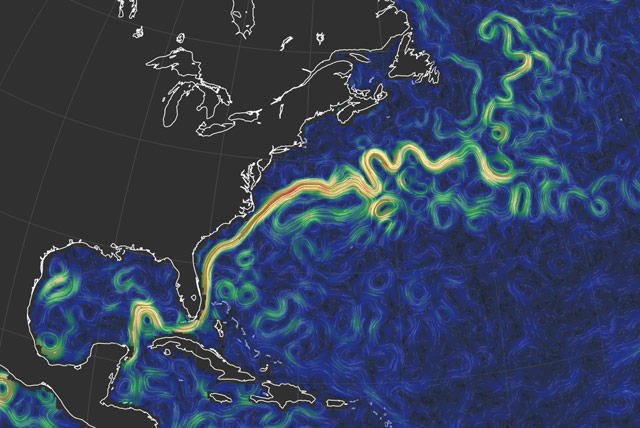
    Ocean currents map

    To go along with his wind map of the Earth, Cameron Beccario has made a world map of global ocean currents with data that updates every five days or so. Not quite realtime, but still, er, current enough.

  • Does Polar Vortex Mean ‘So Much for Global Warming?’ (Op-Ed)

    Michael Mann, Penn State University   |   January 31, 2014 06:16pm ET
    Expertvoices_02_ls_v2[2]
    Polar Vortex
    The Arctic polar vortex pushes into the Northeast in this NASA satellite image.
    Credit: NOAA/NASA GOES Project

    Michael Mann is Distinguished Professor of Meteorology at Penn State University and was recognized in 2007, with other IPCC authors, for contributing to the award of the 2007 Nobel Peace Prize for his work as a lead author on the Observed Climate Variability and Change” chapter of the Intergovernmental Panel on Climate Change (IPCC) Third Scientific Assessment Report. This article is adapted from one that appeared on Ecowatch.com. Mann contributed this article to LiveScience’s Expert Voices: Op-Ed & Insights.

    Over the past couple of months, the United States has seen the return of something many believed had been lost for good: cold weather.

    Although the current temperatures in the eastern United States may seem unusually cold, in the context of our history they really aren’t. In fact, most of the cold that has made the news lately hasn’t been all that chilly compared what was “normal” for the 20th century. The Associated Press explained the nation’s short-term memory loss in the article “Scientists: Americans are becoming weather wimps,” — the nerdy web comic XKCD captured the sentiment even more concisely.


    The bottom line? Because the last decade was the hottest on record (and just a year ago, the United States saw its warmest year ever) Americans have grown accustomed to warmer winters that make normal cold feel extreme.

    Some then wonder why this winter has been so (normally) cold and why temperatures in Peoria this winter have not been warmed by climate change to, say, a balmy 60 degrees Fahrenheit (16 degrees Celsius). The climate denial bubble claims that the cold winter weather means that surely CO2 cannot be warming the atmosphere. How can there be global warming if it’s snowing outside, after all?

    Well, the short answer is that cold winters still happen even in a warmed world, but that doesn’t mean it’s cold everywhere. In fact, you don’t even have to leave the United States to find a very striking image of warming. Just shift your attention from the East Coast to the West Coast. Alaska, usually snowy and frigid, has had two weeks of record high temperatures. Amazingly, the second half of January has averaged 40 F (4 C) above normal during some days in the central and western parts of the state.

    The persistently jagged jet stream we have witnessed in recent weeks has led most recently to what some have termed a “Drunken Arctic.” Stumbling south with polar winds and snow, this unexpected meteorological event seems to have caught our collective attention. And why shouldn’t it? It is an unusual enough, if not unprecedented, event. And it has rekindled curiosity over how human-caused climate change may be impacting the jet stream and the weather systems associated with it.

    expert voices, op-ed
    If you’re a topical expert — researcher, business leader, author or innovator — and would like to contribute an op-ed piece, email us here.

    So, is there a climate connection to this strange occurrence? While more study is certainly needed, I have been increasingly impressed by the growing body of evidence supporting the hypothesis that climate change may lead to more persistent meanders in the jet stream. In a world without global warming, the temperature difference between the freezing Arctic and warmer lower latitudes creates a pressure field that confines the jet stream to a relatively tight band around the Arctic, with wave-like meanders characterized by ephemeral “ridges” and “troughs.” As the Arctic melts and warms, however, that temperature difference is reduced, and the meanders of the jet stream potentially become more pronounced and more sluggish. The more sluggish and persistent those meanders, the more persistent the patterns of regional warmth where the jet stream pulls warm air northward, and the regional cold where it pulls arctic air south.

    Perfectly encapsulating the upside-down, hung-over Arctic is this remarkable observation, courtesy of Jeff Masters of the popular Weather Underground blog: At 10 p.m. on Jan. 26th, 2014, the temperature in Homer, Alaska of 54 F (12 C) was warmer than any other place in the contiguous United States except southern Florida and southern California.

    As we approach Groundhog Day, celebrated in the iconic town of Punxsutawney, the question we’re all asking here in central Pennsylvania of whether or not we’ll see an extended winter may in fact depend on what is happening instead thousands of miles to the north in the melting Arctic.

    And the very same jet stream configuration responsible for the southward plunging Arctic air mass chilling the eastern United States is associated further to the west with a “ridge” of high pressure that is pushing the warm, moist subtropical Pacific air masses that would normally deliver plentiful rainfall (and snowpack) to California well to the north.

    Climate scientists were beginning to suspect a decade ago that the dramatic loss of Arctic sea ice might alter the jet stream in precisely this way, favoring conditions eerily like what we are seeing right now in California: unprecedented and devastating drought.

    So to conclude, I propose a toast to the Arctic, whose instability should serve as a wake-up call to those steeped in denial. When it comes to kicking our “fossil fuel addiction” (as former president George W. Bush referred to it), let’s hope we’re not much further from hitting rock bottom. Because when a drunken Arctic leaves Alaska warmer than Georgia in mid-winter, and California as high and dry as it has ever been, we should know we may have a problem.

    This Op-Ed was adapted from “Does Polar Vortex Mean ‘So Much for Global Warming’?” on Ecowatch.com. Mann’s most recent Op-Ed was Something Is Rotten at the New York Times.Mann is author of two books, “The Hockey Stick and the Climate Wars: Dispatches from the Front Lines” (Columbia University Press, 2012), which will soon to be available inpaperback with an update and a new guest foreword by Bill Nye “The Science Guy”, and “Dire Predictions: Understanding Global Warming” (DK Publishing, 2008). You can follow him on Twitter: @MichaelEMann. The views expressed are those of the author and do not necessarily reflect the views of the publisher. This version of the article was originally published on LiveScience.

    Editor’s Recommendations

  • Help get our Medicare billboards on the road

    1 of 36
    Why this ad?
    TAFE Courses Onlinewww.opencolleges.edu.au – Study From Home At Your Own Pace Download A Course Guide Today.

    Help get our Medicare billboards on the road

    Inbox
    x
    Australian Unions Team info@actu.org.au
    2:05 PM (1 minute ago)

    to me
    Neville —

    This time next week voters in Griffith will be going to the polls for a federal by-election. Last year Tony Abbott was confident of winning the seat – that was until his chosen candidate came out in favour slugging people for doctors visits.

    Medicare has become the major issue of the campaign and we have an opportunity to send Tony Abbott a strong message: don’t mess with Medicare.

    We have mobile billboards ready to hit the road in Brisbane – we just need your help to get them on the road.

    Can you chip in $12 dollars to help get our message directly to voters in Griffith?

    This by-election will have a national impact. If Tony Abbott and the LNP lose this by-election on Saturday – a by-election fought largely on the Medicare issue – even the most extreme conservatives in the Liberal Party will have to think twice about attacking our world-class universal health system.

    We’ve already heard that some senior government figures who have backed the Medicare changes are now on the fence.

    With the election only a week away every vote matters. We’ve scouted the best spots to get maximum exposure with swinging voters. We know that our message works. All we need now is your help to get them on the road.

    Can we count on you to chip in to help get the billboards on the road?

    Australian Unions were pivotal in the creation of Medicare thirty years ago and there is no way that we will see it destroyed without a fight.

    Thanks for being a part of the Australian union movement and thanks for everything that you have done to stand up for the interests of working people. There are some tough attacks coming our way but if we stand together and fight for what matters we will win.

    Yours in union,

    Australian Unions Team
    http://www.australianunions.org.au/

    —–

  • REEF NEWS: Let’s take it to court GET-UP

    ick here to enable desktop notifications for Gmail.   Learn more  Hide

    1 of 39
    Why this ad?
    Need Legal Representationwww.hcdlaw.com.au – Ensure you are prepared for Court. Experienced lawyer for best outcome

    REEF NEWS: Let’s take it to court

    Inbox
    x
    GetUp!
    12:09 PM (1 hour ago)

    to me
    NEVILLE.

    It’s a terrible moment for the reef – but we have a plan.

    The Great Barrier Reef Marine Park Authority has caved to the pressure of the mining industry and the Federal Government. The agency charged with “the protection, wise use, understanding and enjoyment of the Great Barrier Reef in perpetuity” has allowed it to be sold out for short-term profits.

    Late yesterday, they granted a permit to dump five million tonnes of dredge spoil inside the Great Barrier Reef World Heritage Area.

    This destructive project is now allowed to go-ahead – unless we make a last ditch effort to challenge it in court. Click here to learn more, and help fund the legal challenge to save our Reef:

    http://www.getup.org.au/reef-fighting-fund

    We’re not lawyers, but we’ve taken on big legal fights before — and won. In 2010, GetUp members challenged Howard-era electoral laws in the High Court. Together, and with the help of some of the best legal brains in the country, we stopped hundreds of thousands of Australians from losing their right to vote. Now we can step up again, this time to protect our Reef.

    Our lawyers will be the Environmental Defenders Office (EDO) of Queensland, an independent community law centre dedicated to public interest advocacy in environmental matters. They’ll be representing North Queensland Conservation Council. Both groups have got what it takes to tackle the project, but need the backing of GetUp members from right across Australia.

    It’s as if the Federal Government saw this fight coming. Just before Christmas, and without warning, they inexplicably cancelled $10 million in federal funding to EDOs nation-wide. But they aren’t expecting people to fight back. Let’s unite, and gather the resources we need to use the full power of the law to protect our Reef. Click here to make it happen: http://www.getup.org.au/reef-fighting-fund

    The best legal analysis says this case is strong, and we won’t be alone. Other environmental groups are planning to chip in as well.

    We all know legal battles can be long and expensive. If we can raise $80k together as GetUp members – that’s about 16,000 of us chipping in $5 or more – the project will be confident of covering the considerable legal fees involved in a long fight. That money pays for court fees, printing and overhead costs, and allowing expert witnesses to provide evidence.

    If we raise more than $80k together, we will use the extra to build our Reef Fighting Fund to power further campaigning, or for further legal costs.

    Can you chip-in as little as $5 to kick off the all-in citizen-funded legal fight to protect our Great Barrier Reef?

    http://www.getup.org.au/reef-fighting-fund

    The mining industry, the Abbott Government, Campbell Newman and everyone else with vested interests expect this decision will be a kick in the guts for the environment movement – something that will deflate us, put us in our place and mark the end of this campaign.

    They obviously don’t know us well enough.

    For everything you’ve done so far — thank you. Now here’s to our Reef and the fight ahead,