Amazing Maps @Amazing_Maps 1h
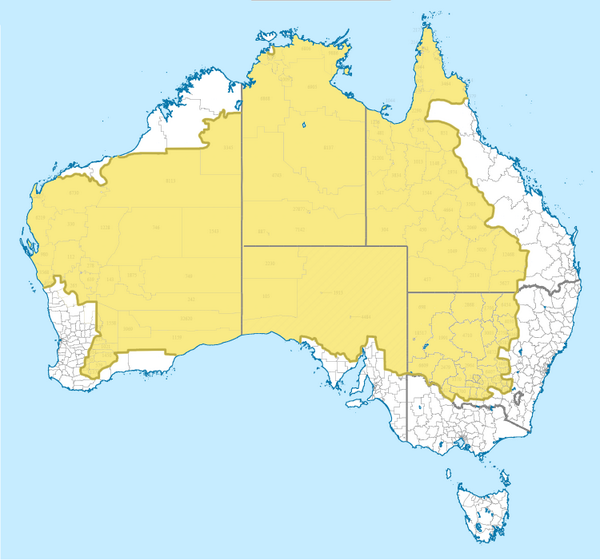
2% of Australia’s population lives in the yellow area pic.twitter.com/Aqn06oZxDz
Retweeted by chrispydog
Amazing Maps @Amazing_Maps 1h
2% of Australia’s population lives in the yellow area pic.twitter.com/Aqn06oZxDz
|
Why this ad?
 Need Legal Representation – www.hcdlaw.com.au – Ensure you are prepared for Court. Experienced lawyer for best outcome
|
|
Inbox
|
x |

|
9:32 AM (22 minutes ago)
|
|
||
|
||||
New post on The Tally Room |
 |
 |
Seat #6: Floreyby Ben Raue |
 Florey is a marginal Labor seat in northeastern Adelaide, covering Modbury and surrounding areas.
The ALP’s Frances Bedford has held the seat since 1997, but only holds the seat by a 3.6% margin. Florey has been held by the ALP at all but one election since its creation in 1970.
Baby boomers are fuelling a massive rise in death services.
 Acacia Remembrance Sanctuary, Australia’s first ‘natural’ burial park.
Want to go out with a bang? Why not have your ashes sent above in a dramatic fireworks display?
Or you could choose to spend eternity floating in a man-made reef purporting to be the ultimate in “green burials” – the Neptune Memorial Reef under the sea in Miami, Florida.
In the past few decades, the options for laying your loved ones to rest have increased dramatically, as many veer away from traditional religious services to select highly personalised farewells.
 LifeArt: creates personalised, eco-friendly coffins.
In Australia, many members of the ageing baby boomer generation are opting to prepay their funerals, and are often choosing more environmentally friendly options.
By 2018, according to IBISWorld figures, the post-World War II generation will make up more than 16 per cent of the population, leading to an inevitable rise in the average number of deaths in Australia each year.
Last year about 142,000 Australians left this earth, with the figure predicted to rise to more than 300,000 by 2050, providing a boom for the many small businesses that make up more than 60 per cent of the “death care” industry.
In Sydney, where burial plots are expected to reach capacity by 2035, small development company Zinnia Group has created plans for a natural burial site south-west of the city.
Acacia Remembrance Sanctuary, billed as Australia’s first natural burial park, would offer an alternative to “the old morbid, concrete-looking cemeteries” of old, says group financial controller Danny Masri.
He says a new cemetery hasn’t been built in Sydney since 1960, and Zinnia’s parkland site, which is up for sale, will include 7500 burial plots and potentially bring in revenue of $250 million over a 25-year period.
Plans for the sanctuary include online memorials, and a smartphone app that would use GPS technology to direct visitors to grave sites. Instead of tombstones, the spot might instead be marked by a rock with a small plaque.
“It’s all in keeping with the philosophy of having a very natural site. It’s more about the loved ones going and having an uplifting experience,” says Masri.
While many Australians are steering away from traditional ceremonies, they are also asking to be cremated in much larger numbers.
IBISWorld figures show that around 70 per cent of people are now cremated, as they choose a less expensive option or become more aware of a lack of cemetery space.
Ellese Templeton, who owns Templeton Family Funerals in Melbourne, says many people are also choosing a “no service cremation”, where family or friends hold the service down the track.
“It’s becoming more common to do a no service cremation rather than doing a $5500 to $6000 service,” she says.
“A lot more people are prepaying and pre-arranging their funerals. Because it’s for them they don’t want to spend the money.”
She says people who prepay their own funerals often say they’d prefer to spend the money on an after-party of sorts for their loved ones. For funerals likely to have fewer guests, many people opt instead for a celebration of the person’s life at a restaurant or other venue, says Templeton.
“The other thing that people are doing a lot more of is photography. They hire a professional photographer to come in and photograph the entire service.”
Skype is also becoming a fairly common feature at funerals, allowing people living interstate or overseas to see – and record – the service via the internet, says Templeton.
Funeral director Warwick Hansen has been in the game for more than four decades, and says funerals “have changed dramatically over the last 10 to 20 years”.
“Twenty years ago, probably 90 per cent of funerals would have been carried out by clergy, whereas now about 50 per cent are carried out by clergy,” he says.
Hansen is also now the New South Wales regional manager for LifeArt Australia, a business now owned by industry giant InvoCare. LifeArt creates personalised coffins created with a mix of environmentally friendly cardboard and sugarcane.
The company now sells about 2500 cardboard coffins each year, with many buyers selecting personalised prints reflecting the deceased’s interests and lifestyle.
“They might have been a very keen surfer or like to go walking through forests,” says Hansen.
Others opt for a plain white coffin where guests can write their own messages on the day.
The sturdy cardboard coffins, comparable to the price of a timber coffin, weigh about 12 kilograms compared to the usual 30 or 40, and are set to get cheaper as more people buy them, says Hansen.

For more than two centuries we’ve relied on engines to power our exploration, travel and trade on the seas.
With each new generation of engine technologies, we’ve travelled faster and safer with less impact on the environment.
It’s been a long, exciting journey since the early days when the wind carried the First Fleet’s eleven ships to Sydney Cove on January 26, 1788.
To recognise their voyage this Australia Day, and the spirit of adventure behind marine engine development, here is a look at the technologies that helped connect the world.

Marine steam engines emerged during the early 19th century and became a popular propulsion method for turning paddle wheels and propulsion screws, or what’s today called the propeller.
These external combustion engines used wood, coal or fuel oil to fire the burners that turned water into steam inside large boilers, or pressurised tanks. The steam was then used to drive pistons moving inside a cylinder, which then turned the drive mechanism.
Andy Munns, an engineer and teacher at Sydney Heritage Fleet, said the primary advantage of steam engines was releasing ships from the limitations of variable wind conditions.
As metallurgy improved, early copper and wrought iron engines were replaced with stronger steel engines. “Cheaper and higher quality steel led to higher quality pressures and more powerful engines,” he explained.
Three piston models known as triple-expansion engines let steam flow through successively smaller cylinders. The steam also cools through each stage before being recycled in the boiler.
The steam engine reached its zenith with triple-expansion engines featuring vertical pistons, an efficient design that’s echoed in the internal combustion engines of today.

As internal combustion engine technology developed through the 19th and 20th centuries, reciprocating diesel engines superseded steam turbines as more efficient and reliable power sources.
The diesel engine, or compression-ignition engine, followed the invention of the gasoline engine in the late 1800s. Both diesel and gasoline engines use a spark or small explosion to convert chemical energy from fuels into mechanical energy that push pistons inside cylinders. Like steam engines, the pistons drive a crankshaft and propeller.
However, unlike gasoline (or petrol) engines that use a spark to ignite the fuel, diesel engines use the heat generated by compressed air to ignite the fuel.
The main advantage of this approach, Mr Munns explained, is they’re about 30 percent energy efficient, compared to the 15 percent efficiency of a marine steam engine, or the 20 percent efficiency of a car engine.
“The energy doesn’t go into boiling steam and throwing it away,” he said. “With diesel, you transfer the energy directly to the piston.”
Diesel engines remain dominant in marine vessels today because of their simplicity, reliability and ability to generate significant amounts of power at slower engine speeds.

Gas turbine engines emerged towards the end of World War II in German aircraft, such as the Messerschmitt.
Early examples were not as efficient as diesel engines, however gas turbines produced significant amounts of power and were very light, making them ideal for aircraft.
In marine applications, the same advantages apply. Mr Munns said gas turbine technology still operates using the four stroke principle found in diesel and gasoline engines. Air is drawn into a cylinder, compressed, injected with fuel, and the resulting exhaust gases drive the propeller.
Today the advances in gas turbines are coupled with developments in the variety and costs of available fuels.
For example, GE’s LM gas turbine engines run on marine gas oil (MGO), bio diesel, bio-synthetic parraffinic kerosene bends and liquid natural gas (LNG). Cleaner fuels such as LNG are good for the environment and reduce maintenance costs. “The developments are all driven by fuel costs,” Mr Munns said.
In the future, technologies such as Dry Low Emissions (DLE) engines will improve emissions through near-optimum fuel-air distribution and reduced NOx and CO outputs.
The use of hybrid diesel, gas turbine and electric propulsion will also continue to shape engine technologies and new marine vessels.
For example, electric propulsion technology is being used to power ships like the world’s largest ocean liner RMS Queen Mary 2
Courtesy of David Spratt
Published 24 January 2014 11:05, Updated 24 January 2014 11:32
Penny van Oosterzee
 A young woman cooling off in the Nepean River, south-west of Sydney; heat waves are expected to become more common with climate change. Photo: Jonathan Ng
The Emissions Reduction Fund (ERF), the central pillar of Australia’s Direct Action climate policy, continues to attract a fair bit of derision with its credibility said to be “hanging by a thread”. Is it really that bad? Probably.
Now that environment minister Greg Hunt has released a Green Paper for the Emissions Reduction Fund, let’s look at just three aspects: comparable global action, the proposed baseline and credit system for business, and implications for the land sector.
In the Green Paper foreword the environment minister introduces the ERF as one of the two major global policies of emissions reductions. The main policy is a price on carbon, like ours to be removed in July this year.
But the minister dismisses this because of “considerable uncertainty and policy instability within many of these schemes”. Is this correct?
True, there have been problems with European Union’s falling carbon price due thanks to an oversupply of carbon permits, causing the price to drop to around €5. But the EU last week agreed to postpone sale of 900 million carbon permits to increase demand and price.
The OECD says that to be serious governments must price carbon, and their latest list shows the growing number of countries and regions where emissions trading is being implemented. Rest assured emissions trading is alive and well.
As for policy instability, look no further than home. Australia is the only country in the world dismantling a working carbon price: one that has, in its short life, already reduced emissions by nearly 40 megatonnes CO2 equivalent.
The other global approach is “purchasing abatement”. Instead of paying to emit, polluters are paid if they reduce emissions below a threshold.
This is the model the ERF nominally follows, founded on part of our current carbon policy known as the Carbon Farming Initiative. The initiative, designed to work with a carbon price, rewards landowners for reducing emissions with carbon credits that can be traded and bought by polluters.
The United Nations Clean Development Mechanism (CDM), cited in the ERF Green Paper, is the global example. The CDM allows developed nations to buy emissions reductions in developing nations to help meet their emissions reductions targets under the Kyoto Protocol.
The CDM is not a stand-alone scheme. It is voluntary program dependent on the Kyoto Protocol to function. Take away the compliance aspects of the Kyoto Protocol and you would be left with a voluntary scheme with nowhere to go.
It would be like, well, dismantling our carbon price and leaving only the Carbon Farming Initiative.
The ERF also cites the United Kingdom Non Fossil Fuel Obligation Scheme. Operating between 1990-98, the scheme encouraged private investors to invest in nuclear power, but also subsidised all forms of renewable energy.
The scheme was funded through a fossil fuel levy, not out of the public purse as with the ERF. Each year the scheme was allocated the equivalent of A$2.2 billion, more than the entire allocation of the ERF. The scheme is said to have incentivised the shift to renewable energy in the UK.
Competing bids for funding under the scheme were also price-banded so that different technologies could compete. The ERF makes it clear it is only interested in the lowest-cost abatement.
But let’s not quibble. Using an expanded, streamlined Carbon Farming Initiative to generate carbon credits might well work.
But for it to have any integrity it must be linked to a baseline and credit system that manages companies’ emissions. The ERF Green Paper calls this “safeguarding emissions reductions”. It would be self-defeating, for instance, if the government purchased emissions only to see business increase emissions.
The guts of any baseline and credit scheme is that there is a baseline for emitting activities. Credits are awarded for activities that emit below the baseline, and costs apportioned to activities that emit above the baseline.
The ERF, however, “is designed to allow businesses to continue ordinary operations without penalty.” “Ordinary” is not defined but clearly means as long as businesses contribute to economic growth. This is the real baseline of the ERF, underscored by the statement that entities that consistently exceed their baselines will be “rare cases”.
Actually businesses will have difficulty exceeding ERF baselines. They will be set “flexibly” that is to say they will reflect a “high point” in emissions using data from the current National Greenhouse Energy Reporting Scheme.
If a business did actually manage to exceed its generous baseline then flexible compliance arrangements would kick in including a transition period during which compliance would not apply. Consistently high polluters could actually be rewarded with investments in emissions reductions funded by the ERF.
Almost by definition this is not a baseline and credit scheme. It is simply a credit scheme.
Modelling from carbon consultancy Reputex shows that up to 75 per cent of credits could be of this kind, potentially leading to a windfall of A$2 billion over the first four years.
In any case, a recent survey shows that three quarters of Australian businesses have assumed they’ll be charged a carbon price to run their business.
Big global businesses have long priced carbon into their investment decisions with prices ranging from $8 to $60 per tonne CO2 equivalent. But instead the ERF could provide a windfall.
Paradoxically, the one thing a streamlined and expanded Carbon Farming Initiative under an ERF will not do is fund abatement across the land sector, as originally intended. Instead emissions reductions will be achieved at the lowest cost, and this will cut out the land.
Gone too is the focus on soil carbon “as the lowest cost of CO2 emissions reduction available in Australia on a large scale”. Given the methodological difficulties associated with measuring soil carbon that’s really no surprise. But that’s not the only flaw.
Players working across the landscape in the ecosystem sector are generally small. They will find it difficult to bid into the ERF. The Green Paper suggests a minimum bid size is likely to be adopted. The government does not, however propose a maximum bid size.
Purchasing emissions reductions at the lowest available cost also means that other objectives like biodiversity conservation, reducing salinity control and improving water quality won’t count. The Green Paper says in fact that these could raise costs, “as Australia would have to forgo lower-cost emissions reductions projects” to deliver them.
Alongside the ERF is the government’s 20 Million Trees plan, to aid carbon storage and reforestation. It sounds grand, but 20 million trees amounts to a area just 200 kilometres squared, and less than half that that if we’re talking about rainforest.
And even if we do meet our 5 per cent reduction goal through the ERF, government modelling shows emissions soaring after 2020 to 23 per cent above 2012 levels.
Reverting to fossil fuels, phasing out of renewable energy incentives and increasing deforestation levels to accommodate expanding agriculture explains most of this. Which begs the question of Australia’s government: are you serious?
Penny van Oosterzee is a senior research adjunct at James Cook University and a linkage partner in an ARC Research Project on cost-effective reforestation for biodiversity and carbon. She does not work for, consult to, own shares in or receive funding from any company or organisation that would benefit from this article. This article was originally published at The Conversation. Read the original article


Recruit self-disciplined people who don’t need to be managed so you can manage the business, not the people. It’s amazing how much more focus and time you have when you have the right people around you.

















 Home
Home