Author: Neville

  • Why Are Arctic Bird Populations Declining?

    Biodiversity, Climate Change

    Why Are Arctic Bird Populations Declining?

    Yale Environment 360 | January 24, 2014 12:23 pm | Comments

    By Ed Struzik

    On Coats Island, in northern Hudson Bay, thick-billed murres—members of the auk family—have been under assault on several fronts in recent years. Polar bears, faced with a sharp decline in the sea ice from which they hunt ringed seals, have retreated to the island and are eating the murres’ eggs. As the sea ice disappears, the murres now have to fly farther and work harder to get food that they normally find along the ice edges. And as temperatures around Hudson Bay rise, mosquitoes are hatching earlier in the season. So many mosquitoes have swarmed on Coats Island in recent years that some of the nesting murres have perished from blood loss, according to biologist Anthony Gaston of Environment Canada, who has been studying the murre colonies on the island since 1984.

    National Bird Biodiversity Indicators from Canada show a strongly declining trend since 1974 for all waders (shorebirds; red line) compared to other bird types (North American Bird Conservation Initiative Canada, 2012).

    National Bird Biodiversity Indicators from Canada show a strongly declining trend since 1974 for all waders (shorebirds; red line) compared to other bird types. Graphic credit: Arctic Report Card 2013

    Gaston believes that the toll these changes are taking on long-lived murres and their chicks will inevitably lead to a sharp decline and ultimate collapse of the island’s 30,000 breeding pairs. “Maybe not in my lifetime, but it will happen,” says Gaston, who will retire in March. “These and other seabirds are superbly adapted to the sea ice environment. Without that ice, and with polar bears and mosquitoes hitting them hard, the only future in the Arctic for them is to move north.”

    Across the Arctic, resident birds such as the murres are experiencing increasing stresses that affect their foraging patterns and reproductive success. Researchers say that the gyrfalcon, the peregrine falcon, the willow and rock ptarmigan, the long-tailed jaeger or skua, and Ross’s and ivory gulls are in decline, as are some other birds that fly north to nest in the Arctic. In many cases, the birds’ prey—from lemmings, to snowshoe hare, to cod in the southern reaches of the Arctic Ocean—are experiencing population declines and shifts in their reproductive cycles.

    “There’s no doubt that something is happening,” says Dave Mossop, a biologist at Yukon College who has been studying birds in the Yukon for more than 40 years. “Kestrels here are declining so fast, it’s scary. As many as 60 percent of the adult peregrines we have in the Yukon haven’t even bothered nesting in recent years. Our gyrfalcons are breeding much later, seem to be producing fewer young, and are declining in abundance.”

    Scientists are working hard to understand why these cycles are changing, but many suspect that climate change is at least partially responsible. With springtime in the Arctic advancing by two or three weeks, snowshoe hares may not be losing their white coats fast enough to make them less vulnerable to predation in spring. Higher temperatures may be having an impact on vegetation that is critical for some birds, and warmer and shorter winters are resulting in snowfall and icing events that may not be conducive to lemming, vole and other rodent reproduction.

    Predators such as the peregrine, the gyrfalcon, the snowy owl and the Greenland long-tailed skua depend on peaks in these prey species to reproduce in numbers that will sustain their populations. For these birds, collapsing prey cycles are bad news. A team of Danish scientists, for example, recently documented how a collapse in collared lemming cycles at two sites in Greenland between 1998 and 2010 resulted in a 98 percent decline in the snowy owl population. They also documented a similar, albeit less drastic, decline in the population of long-tailed jaegers, part of the skua family.

    snowowl

    Snowy owls are dependent on Arctic lemmings, whose populations are highly cyclical. Thousands of young snowy owls have headed south this winter in the biggest “irruption” of the species in southern Canada and the U.S. in decades. Photo credit: Bill Bouton

    Mossop and others are convinced that this rush of protein that periodically flushes through the system during predator peaks is what drives these resident populations in the Arctic. “All Arctic creatures have to have sophisticated strategies in order to survive in this part of the world.” he says. “Exploiting those peaks, I think, is part of the strategy.”

    According to Don Reid, a scientist for the Wildlife Conservation Society in the Yukon, early and deep snow provides the insulation that is necessary for lemmings to breed and produce enough young to account for the population peaks. Because snow conditions are declining or changing in some places in the Arctic, that insulation is being compromised, Reid says. Lemmings, as a result, cannot produce enough offspring to bounce back from the lows that follow heavy predation.

    University of Alberta biologist Alastair Franke has unequivocal evidence of peregrine falcon nestlings starving to death on the west coast of Hudson Bay. But lack of food, he says, is not the main thing killing these birds. According to a recent study led by graduate student Alexandre Anctil of the University of Quebec, some regions of the Arctic are now experiencing more periods of heavy rain each summer when compared to the early 1980s. With their downy white coats insulating them against the snow and the cold, these chicks do just fine. When it rains heavily, however—as it has increasingly been doing along the west coast of Hudson Bay since 1980—up to a third of the peregrine chicks in the study area die of hypothermia as their wet feathers rapidly draw heat from their bodies. Some even drowned in their nests.

    Anctil and Franke came to this conclusion by analyzing meteorological records dating back to 1980 and by placing nest boxes on cliffsides to provide shelter for some of the chicks. With the help of remote cameras, they discovered that sheltered chicks fared better than birds that were exposed to heavy rain events. All of this counters the good news for a species that has undergone a strong recovery after nearly being driven to extinction in the 1970s.

    Acadia University biologist Mark Mallory has been watching this and other similar events unfold with concern for the fulmars, murres, black guillemots, and other year-round Arctic residents that he studies in the High Arctic. This past summer was an especially bad one for the birds Mallory studies. As happened with some regularity in the past, snow, ice, and cold conditions lingered for so long that the terns, gulls and jaegers at Nasaruvaalik Island didn’t even lay eggs. Mallory says that while the birds are adapted to deal with these occasional seasonal extremes, the overall warming trend is a real cause for concern. “What worries me is what’s happening in the southern parts of the Arctic,” says Mallory. “If we see these ecosystem changes and rain events migrating north into the High Arctic, I don’t know how these birds are going to adapt.”

    bird

    Francis St. Pierre, examines a common eider off the northern coast of Ellesmere Island. Farther south, in western Hudson Bay, some common eider colonies have been hit hard by avian cholera in recent years. Found mainly in the south, avian cholera is beginning to spread into the Arctic as temperatures warm. Photo credit: Ed Struzik

    For researchers, the problem in almost all cases is that there is a dearth of information about how Arctic birds and their prey are faring throughout the circumpolar world. The impact of climate change is often an indirect one, creating subtle mismatches between predator and prey that may be caused by changes in snow and vegetation, icing events, the arrival of an invasive species or the early melting of sea ice.

    What’s more, climate change is not be the only reason some birds like the ivory gull are in trouble. For example, Mallory and colleague Grant Gilchrist of Environment Canada once thought that receding sea ice—which makes it increasingly difficult for these birds to forage for fish and marine invertebrates—was the main reason for the 80 percent decline that they documented in Canada’s ivory gull population since the 1980s. “Receding sea ice means that, just like bears having less time to hunt seals, there’s less time for the gulls to follow bears and scavenge kills,” says Mallory.

    But now he and other scientists have evidence to suggest that high levels of mercury, which the gulls may be ingesting from foraging on seal carcasses left behind by polar bears, may also be a factor. “Mercury is something we think is a smoking gun,” he says. “But because there are so few of the birds in Canada, it’s tough to justify sampling to run experiments.”

    To get a clearer picture of what is happening in the Arctic, Mossop, Mallory and other scientists are attempting to set up international networks that can better track changes. Even with that, says Mallory, figuring out what is going on is still daunting.

    “We have a very small population and few, widely distributed sampling sites (e.g. weather stations), so our baseline data is not too great,” says Mallory. “Add to that the complex suite of threats that some of these species are facing simultaneously—climate change, contamination of food webs, alteration to migratory stopover sites and wintering habitats, competition with human fisheries for prey, industrial development in the Arctic, invasion of the Arctic by new parasites, diseases — and you can appreciate that trying to nail down a cause-and-effect explanation for what we are seeing is very tough.”

    nest

    A falcon nest in Greenland, with eggs ringed by the carcasses of dozens of lemmings. In some parts of Arctic regions, snow cover—which provides insulation that enables lemmings to raise their young—is in decline, which scientists say may be reducing the peaks of lemming cycles. That, in turn, is reducing populations of birds of prey such as snowy owls, falcons and long-tailed jaegers. Photo credit: Christine Blais-Soucy

    Mallory says three things are needed to better understand these significant shifts in Arctic bird populations: interdisciplinary and international collaboration, a commitment to long-term studies, and the financial resources to do the work properly. “The commitment to long-term studies and the funding to do them properly is floundering,” he says.

    Laval University scientist Gilles Gauthier—who has spent the last quarter century leading a team of scientists studying the fauna and flora on Bylot Island in the eastern Arctic—cautions his colleagues not to read too much into short-term trends in animal cycles. But Gauthier says that when change happens in a simple food web such as the Arctic, it can occur abruptly, whether from declines in prey abundance, the appearance of new competitors or diseases, or changes in vegetation.

    “The eastern Arctic where I work is still relatively cold compared to what is happening in Fenno-Scandinavia and Alaska and the western Arctic of Canada,” says Gauthier. “That may account for the fact that on Bylot Island we are not seeing the big changes that are occurring elsewhere. What we do know, though, is that the warming that is coming will greatly exceed anything we have seen so far. In order to understand how plants and animals can adapt to constraints brought on by rapid change, we need to better understand these linkages between different species.”

    Visit EcoWatch’s BIODIVERSITY and CLIMATE CHANGE pages for more related news on this topic.

  • Tiny plankton – major threat to climate

    A news stream provided by the Ocean Acidification International Coordination Centre (OA-ICC)

    Tiny plankton – major threat to climate

    Published 24 January 2014 Media coverage Leave a Comment

    An unprecedented rise in tiny phytoplankton could threaten the spread of larger phytoplankton species, vital for curbing global warming.

    Shown to thrive as CO2 levels rise, pico- and nanoplankton — the sea’s smallest plankton — could upset the marine food web and affect key processes involved in counteracting global warming. This is the upshot of a recent publication1 based on research carried out in May 2010 in the Arctic as part of the European Project on Ocean Acidification (EPOCA, 2008–2012), which rallied more than 160 scientists from 32 European institutions.


    Since the start of the Industrial Revolution, around 1880, oceans have absorbed approximately one third of man-made CO2 emissions, resulting in a 26% rise in their acidity levels. As CO2 is more soluble at low temperatures, the Arctic Ocean is especially prone to this ongoing trend. To investigate how acidification affects marine ecosystems in situ, an EPOCA team travelled to Kings Bay (west of Norway), to set up nine mesocosms, or giant floating plastic bags holding a range of plankton species in seawater. In seven of the 50 m3 bags, CO2 concentration was increased to reach that expected 20, 40, 60, 80, and 100 years from now, while two controls were maintained in natural conditions.

    The five-week study notably showed that at high CO2 levels, pico- and nanoplankton at the base of the marine food chain grow faster and absorb nutrients usually left for larger phytoplankton. Yet, the latter are crucial to sustain two vital climate regulation processes. First, large phytoplankton carry carbon from surface waters to the depths for storage, so their decline would cut the ocean’s carbon uptake capacity. Second, they release dimethyl sulfide (DMS) gas, known to favor the formation of clouds that block out solar radiation and reduce the greenhouse effect.

    “Acidification is the root cause of the changes observed in the Arctic, and could hinder resistance to climate change,” explains EPOCA coordinator Jean-Pierre Gattuso of the LOV.2 “The best strategy is to limit CO2 emissions, but current trends are not promising.” In the meantime, the impact of acidification could be partially offset by “locally eliminating stress factors such as pollution to boost sea organisms’ resistance to higher acidity,” he concludes.

    01. U. Riebesell et al., “Arctic ocean acidification: pelagic ecosystem and biogeochemical responses during a mesocosm study,” Biogeosciences, 2013. 10: 5619-26.
    02. Laboratoire d’océanographie de Villefranche (CNRS/ UPMC).

    CONTACT INFORMATION:
    LOV, Villefranche-sur-Mer.
    Jean-Pierre Gattuso
    gattuso(at)obs-vlfr.fr

    Fui Lee Luk, CNRS international magazine No.32, January 2014, p. 14. Article.

    Rate this:

    1 Votes

    Share this post!

    0 Responses to “Tiny plankton – major threat to climate”

    1. Leave a Comment

    Leave a Reply

    Subscribe to the RSS feed

    Powered by FeedBurner

    Follow AnneMarin on Twitter

    Blog Stats

    • 698,010 hits

    OUP book

    Tags

    abundance adaptation algae annelids Antarctic Arctic Arctic Ocean bacteria Baltic Sea biodiversity biogeochemistry biological response BRcommunity bryozoa calcification chemistry Cnidaria community community composition corals crustaceans dissolution diversity

  • Interplanetary Dust Particles Could Deliver Water and Organics to Jump-Start Life On Earth

    Science News

    … from universities, journals, and other research organizations

    Interplanetary Dust Particles Could Deliver Water and Organics to Jump-Start Life On Earth

    Jan. 24, 2014 — Researchers from the University of Hawaii — Manoa (UHM) School of Ocean and Earth Science and Technology (SOEST), Lawrence Livermore National Laboratory, Lawrence Berkeley National Laboratory, and University of California — Berkeley discovered that interplanetary dust particles (IDPs) could deliver water and organics to Earth and other terrestrial planets.


    Share This:

    Interplanetary dust, dust that has come from comets, asteroids, and leftover debris from the birth of the solar system, continually rains down on Earth and other Solar System bodies. These particles are bombarded by solar wind, predominately hydrogen ions. This ion bombardment knocks the atoms out of order in the silicate mineral crystal and leaves behind oxygen that is more available to react with hydrogen, for example, to create water molecules.

    “It is a thrilling possibility that this influx of dust has acted as a continuous rainfall of little reaction vessels containing both the water and organics needed for the eventual origin of life on Earth and possibly Mars,” said Hope Ishii, new Associate Researcher in the Hawaii Institute of Geophysics and Planetology (HIGP) at UHM SOEST and co-author of the study. This mechanism of delivering both water and organics simultaneously would also work for exoplanets, worlds that orbit other stars. These raw ingredients of dust and hydrogen ions from their parent star would allow the process to happen in almost any planetary system.

    Implications of this work are potentially huge: Airless bodies in space such as asteroids and the Moon, with ubiquitous silicate minerals, are constantly being exposed to solar wind irradiation that can generate water. In fact, this mechanism of water formation would help explain remotely sensed data of the Moon, which discovered OH and preliminary water, and possibly explains the source of water ice in permanently shadowed regions of the Moon.

    “Perhaps more exciting,” said Ishii, “interplanetary dust, especially dust from primitive asteroids and comets, has long been known to carry organic carbon species that survive entering the Earth’s atmosphere, and we have now demonstrated that it also carries solar-wind-generated water. So we have shown for the first time that water and organics can be delivered together.”

    It has been known since the Apollo-era, when astronauts brought back rocks and soil from the Moon, that solar wind causes the chemical makeup of the dust’s surface layer to change. Hence, the idea that solar wind irradiation might produce water-species has been around since then, but whether it actually does produce water has been debated. The reasons for the uncertainty are that the amount of water produced is small and it is localized in very thin rims on the surfaces of silicate minerals so that older analytical techniques were unable to confirm the presence of water.

    Using a state-of-the-art transmission electron microscope, the scientists have now actually detected water produced by solar-wind irradiation in the space-weathered rims on silicate minerals in interplanetary dust particles. Futher, on the bases of laboratory-irradiated minerals that have similar amorphous rims, they were able to conclude that the water forms from the interaction of solar wind hydrogen ions (H+) with oxygen in the silicate mineral grains.

    This recent work does not suggest how much water may have been delivered to Earth in this manner from IDPs.

    “In no way do we suggest that it was sufficient to form oceans, for example,” said Ishii. “However, the relevance of our work is not the origin of the Earth’s oceans but that we have shown continuous, co-delivery of water and organics intimately intermixed.”

    In future work, the scientists will attempt to estimate water abundances delivered to Earth by IDPs. Further, they will explore in more detail what other organic (carbon-based) and inorganic species are present in the water in the vesicles in interplanetary dust rims.


  • Climate scientist to US Senate: ‘Climate change is a clear and present danger’

    Climate scientist to US Senate: ‘Climate change is a clear and present danger’

    In a Senate hearing on President Obama’s Climate Action Plan, Dessler summarised the science behind the climate threat
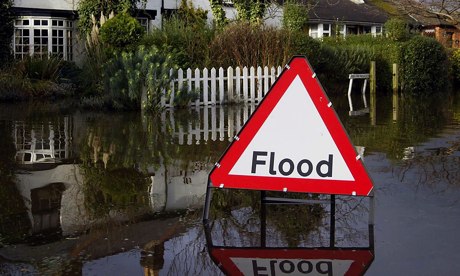
    A flood warning sign

    Andrew Dessler warned the US Senate about climate impacts like increased precipitation and floods. Photograph: Christopher Lee/Getty Images

    Last Thursday, the US Senate committee on environment & public works held a four-hour hearing to review President Obama’s Climate Action Plan. The hearing began with statements from the committee members, and then proceeded with two expert panels. The first was comprised of administrators of government agencies that are key to implementing President Obama’s Climate Action Plan, like EPA administrator Gina McCarthy. The second panel was comprised of climate science and policy experts.

    Andrew Dessler, a climate scientist from Texas A&M University, was one of the expert climate science witnesses invited to testify. In his testimony, Dessler simply and clearly articulated what we know about climate change, and why he personally views it as “a clear and present danger.” Dessler’s main points were:

    1. The climate is warming – not just the atmosphere, but also the oceans, which are rising as a result, and ice is melting.

    2. Most of the recent warming is extremely likely due to emissions of carbon dioxide and other greenhouse gases by human activities. This is supported by overwhelming evidence and hence was a conclusion of the 2014 IPCC report.

    3. Future warming could be large. Over the 21st century, if we continue with business-as-usual, the IPCC projects 2.6–4.8°C average global surface warming.

    4. The impacts of this are profound. The virtually certain impacts include increasing temperatures, more frequent extreme heat events, changes in
    the distribution of rainfall, rising seas, and the oceans becoming more acidic. There are numerous additional possible impacts as well.

    Strangely, in her testimony, Georgia Tech climate scientist Judith Curry directly contradicted Dessler’s second point, arguing that the 2014 IPCC report actually weakens scientists’ confidence in human-caused global warming. Curry’s evidence to support that assertion boiled down to arguing of a supposed ‘lack of warming since 1998’, discrepancies between models and observations during that time, a lower climate sensitivity range in the 2014 than the 2007 IPCC report, and the fact that Antarctic sea ice extent has increased.

    However, Dessler was correct that the IPCC increased its confidence in human-caused global warming between 2007 and 2014. It did so because the scientific evidence that humans are the dominant cause of global warming over the past century grew significantly stronger in recent years.

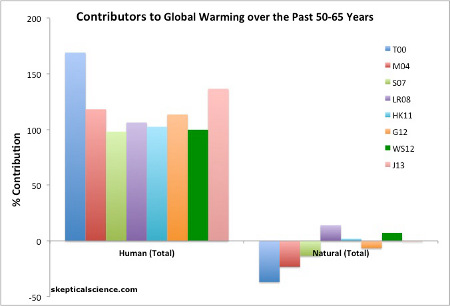
    Net human and natural percent contributions to the observed global surface warming over the past 50-65 years according to Tett et al. 2000 (T00, dark blue), Meehl et al. 2004 (M04, red), Stone et al. 2007 (S07, light green), Lean and Rind 2008 (LR08, purple), Huber and Knutti 2011 (HK11, light blue), Gillett et al. 2012 (G12, orange), Wigley and Santer 2012 (WS12, dark green), and Jones et al. 2013 (J12, pink). Net human and natural percent contributions to the observed global surface warming over the past 50-65 years according to Tett et al. 2000 (T00, dark blue), Meehl et al. 2004 (M04, red), Stone et al. 2007 (S07, light green), Lean and Rind 2008 (LR08, purple), Huber and Knutti 2011 (HK11, light blue), Gillett et al. 2012 (G12, orange), Wigley and Santer 2012 (WS12, dark green), and Jones et al. 2013 (J13, pink).

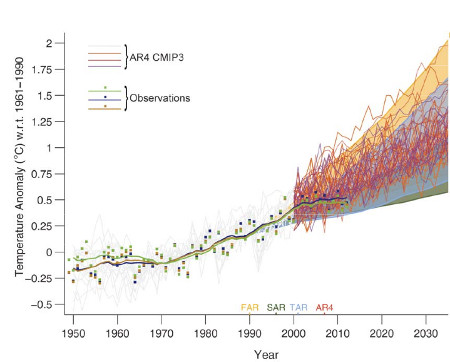
    This conclusion has also been supported by research published after the 2014 IPCC report, showing that the natural internal variability of the climate can’t account for recent global warming, and that the IPCC confidence in human-caused global warming is robust. And contrary to Curry’s second point, the observed global warming has been consistent with the projections of the range of models used in the IPCC report.

    IPCC AR5 Figure 1.4. Solid lines and squares represent measured average global surface temperature changes by NASA (blue), NOAA (yellow), and the UK Hadley Centre (green). The colored shading shows the projected range of surface warming in the IPCC First Assessment Report (FAR; yellow), Second (SAR; green), Third (TAR; blue), and Fourth (AR4; red). IPCC AR5 Figure 1.4. Solid lines and squares represent measured average global surface temperature changes by NASA (blue), NOAA (yellow), and the UK Hadley Centre (green). The colored shading shows the projected range of surface warming in the IPCC First Assessment Report (FAR; yellow), Second (SAR; green), Third (TAR; blue), and Fourth (AR4; red).

    In his testimony, Dessler also addressed the myth of the ‘lack of warming.’ In addition to being a result of cherry picking and largely an artifact of a lack of Arctic temperature station coverage, Dessler pointed to:

    “…the continued accumulation of heat in the bulk of the ocean, which is a clear marker of continued warming. And because heat can be stored in places other than at the surface, a lack of surface warming for a decade tells you almost nothing about the underlying long-term warming trends … I judge that there is virtually no merit to suggestions that the “hiatus” poses a serious challenge to the standard model [of human-caused global warming].”

    Regarding the sensitivity of the climate to the increased greenhouse effect, Dessler pointed out that the 2014 IPCC report matched the 2001, 1995, and 1990 reports, estimating an eventual global surface warming of 1.5–4.5°C in response to a doubling of atmospheric carbon dioxide. Only the 2007 IPCC report slightly changed the estimated range to 2–4.5°C. Additionally, recent research has suggested that the true climate sensitivity lies on the high end of that range.

    Regarding Antarctic sea ice, it’s a complex issue, influenced by factors like ozone depletion and recovery and associated changes in wind patterns. However, the rapid loss of Arctic sea ice has been much larger than the small increase in Antarctic sea ice. Moreover, the Southern Ocean around Antarctica has warmed. Thus changes in Antarctic sea ice tell us very little about global warming.

    Overall, Dessler was correct that the evidence for human-caused global warming is now stronger than ever. His testimony presented a compelling case for the threat of human-caused global warming, which he considers “a clear and present danger.” Dessler and Curry agreed on one key point: that our actions can’t alter the path of climate change over the next several decades (though Curry sounded like the Borg, calling emissions reductions efforts “futile”). It’s true that we’re locked in for significant additional global warming from the greenhouse gases we’ve already emitted.

    However, Dessler pointed out that our actions today will determine whether we proceed on a dangerous path of continued rapid climate change over the second half of the 21st century, or stabilise global temperatures and minimize the threat posed by climate change. Dessler concluded:

    “The scientific community has been working on understanding the climate system for nearly 200 years. In that time, a robust understanding of it has emerged. We know the climate is warming. We know that humans are now in the driver’s seat of the climate system. We know that, over the next century, if nothing is done to rein in emissions, temperatures will likely increase enough to profoundly change the planet. I wish this weren’t true, but it is what the science tells us.

  • I’ve never seen a turnaround like this

    Why this ad?
    Community Service Courseswww.seeklearning.com.au/Community – Get TAFE Qualified. Online Community Services Courses.

    I’ve never seen a turnaround like this

    Inbox
    x
    Sara Haghdoosti noreply@list.moveon.org
    4:26 AM (5 hours ago)

    to me
    Dear Neville,

    A few weeks ago we were looking at the prospect of Senator Menendez’s sanctions bill getting a veto-proof majority in the Senate and torpedoing the President’s negotiations with Iran.

    Then things changed—check out the headlines from the last two weeks:

    Previous Iran Sanctions Cosponsor won’t back new sanctions now
    National Journal, January 16

    Support for new Iran sanctions wanes
    —MSNBC. January 17Another blow to the Iran sanctions bill 
    –Washington Post, January 22

    How did this turnaround happen? One Senate staffer said: “more voters contacting the Hill with phone calls and emails, voicing opposition to the bill*.”

    In other words, we made this happen. Over the last few weeks since this legislation was announced, over 150,000 people have taken action, we’ve made over 10,000 phone calls and had petition deliveries all across the country.

    What we’re doing is working and that’s exactly why we can’t let up now. What we’ve achieved over the last few weeks is proof that not only can we fight back against war—we can help create the space for politicians to become champions for diplomacy.

    Now is the time for us to turn supporters into champions and the undecided into supporters. That’s why over the next few weeks I’ll be in touch over things you can do in your local area.

    Today—I just wanted to say congratulations, I’ve never seen a political turnaround like this. We may not have money or fancy lobbyists—but what we have is each other. The power we have when we stand alongside each other is truly inspiring.

    Yours, with hope.
    –Sara Haghdoosti, on behalf of Berim.org

    P.S. The interim deal with Iran went into effect last week. Click here to check out the full graphic and share it with your friends and family so we can get more people informed, excited and bring them into our movement.

  • Europe delivers “toothless” set of 2030 climate and green energy targets

    Europe delivers “toothless” set of 2030 climate and green energy targets

    Thursday 23 January 2014 12:05

    European decision-makers have been accused of weakness after delivering a watered-down set of targets on climate change and renewable energy.

    Today’s European Commission announcement revealed plans to reduce greenhouse gas (GHG) emissions by 40% below the 1990 level, an EU-wide binding target for renewable energy of at least 27% and renewed ambitions for energy efficiency policies.

    But the WWF said it was disappointed by the weak set of policies and claims the Commission appears to be putting the brakes on modernising Europe’s energy system by suggesting a greenhouse gas emissions target out of line with climate science, as well as a low renewable energy target which places no legal requirements on member states.

    Jason Anderson, Head of Climate and Energy, WWF European Policy Office, said: “After months of anticipation, the Commission has repackaged a slowdown in the current pace of emissions cuts and renewable energy deployment, and called it ambitious. It is putting Europe’s economic modernisation at risk.

    “The picture painted by the full set of policy proposals is dispiriting – an energy efficiency target has been deferred; cancelling the massive oversupply of carbon in the Emissions Trading Scheme is also deferred; closing the gaps in EU shale gas legislation is deferred. I’m sure the fossil fuel lobbyists will sleep well tonight.

    “It is now up to Member State governments to show the political leadership needed to inspire Europe towards an industrial and economic revolution that will provide for both people and the planet.”

    And Greenpeace UK Executive Director John Sauven shared the sense of disappointment, adding: “After months of bickering and in-fighting the European Commission has produced a set of proposals that will satisfy almost no-one.

    “They will do little to tackle climate change and in their current form give little certainty to Europe’s once thriving but now fragile clean tech sector. They would also leave European consumers hopelessly exposed to rising fossil fuel prices, which is what drove up energy bills in the first place.

    “The commission has set out its broken stall – it’s now up to Europe’s elected leaders to fix it. They must agree to cut greenhouse gases by at least 55% by 2030 if they wish to play a meaningful role in a new global climate deal and help reduce the devastating impacts of extreme weather.

    “They must also put in place a renewables policy that will give genuine confidence to those wishing to invest in Europe. Anything less will see Europe fall further and further behind the US and China in the global race for clean energy markets.

    “This toothless policy, which involves no legal obligation on member states, has the fingerprints of a UK government in hock to the Big Six energy giants written all over it. David Cameron now has a clear choice ahead of him.

    “He can go to Brussels and fight for British interests – which means supporting a genuinely binding renewables target that works for our world-class clean energy sector – or he can sacrifice the stability of the climate and the future of British industries in an attempt to buy off his party’s anti-green clique.

    “Building a UK’s clean energy system will also be cheaper for consumers if we do it with our European partners. Grid interconnections, expanded markets and economies of scale will all help drive down the costs of renewable energy – whilst isolating our energy system from that of our nearest neighbours will pile more costs on UK tax-payers and bill payers.”

    The European Commission claims today’s set of proposals for the 2030 framework will ensure regulatory certainty for investors and a coordinated approach among Member States, leading to the development of new technologies.

    The framework aims to drive continued progress towards a low-carbon economy and a competitive and secure energy system that ensures affordable energy for all consumers, increases the security of the EU’s energy supplies, reduces dependence on energy imports and creates new opportunities for growth and jobs.

    The Communication setting out the 2030 framework will be debated at the highest level, in particular in the European Council and European Parliament. It is accompanied by a legislative proposal for a market stability reserve for the EU emissions trading system (EU ETS) starting in 2021, to improve its robustness.

    A report on energy prices and costs in Europe, published alongside the Communication, suggests that the rising energy prices can be partly mitigated by ensuring cost effective energy and climate policies, competitive energy markets and improved energy efficiency.

    European Commission President José Manuel Barroso said: “Climate action is central for the future of our planet, while a truly European energy policy is key for our competitiveness. Today’s package proves that tackling the two issues simultaneously is not contradictory, but mutually reinforcing.

    “It is in the EU’s interest to build a job-rich economy that is less dependent on imported energy through increased efficiency and greater reliance on domestically produced clean energy. An ambitious 40% greenhouse reduction target for 2030 is the most cost-effective milestone in our path towards a low-carbon economy.

    “And the renewables target of at least 27% is an important signal: to give stability to investors, boost green jobs and support our security of supply.”

    Energy Commissioner Günther Oettinger added: “The 2030 framework is the EU’s drive for progress towards a competitive low-carbon economy, investment stability and security of energy supply. My aim is to make sure that energy remains affordable for households and companies.

    “The 2030 framework sets a high level of ambition for action against climate change, but it also recognises that this needs to be achieved at least cost. The internal energy market provides the basis to achieve this goal and I will continue to work on its completion in order to use its full potential. This includes the ‘Europeanisation’ of renewable energy policies”.

    Connie Hedegaard, Commissioner for Climate Action, commented: “In spite of all those arguing that nothing ambitious would come out of the Commission today, we did it. A 40% emissions reduction is the most cost-effective target for the EU and it takes account of our global responsibility. And of course Europe must continue its strong focus on renewables. That is why it matters that the Commission is proposing today a binding EU-level target.

    “The details of the framework will now have to be agreed, but the direction for Europe has been set. If all other regions were equally ambitious about tackling climate change, the world would be in significantly better shape.”

    The key elements of the 2030 policy framework set out by the Commission are as follows:

    * A binding greenhouse gas reduction target: A centre piece of the EU’s energy and climate policy for 2030, the target of a 40% emissions reduction below the 1990 level would be met through domestic measures alone. The annual reduction in the ‘cap’ on emissions from EU ETS sectors would be increased from 1.74% now to 2.2% after 2020. Emissions from sectors outside the EU ETS would need to be cut by 30% below the 2005 level, and this effort would be shared equitably between the Member States. The Commission invites the Council and the European Parliament to agree by the end of 2014 that the EU should pledge the 40% reduction in early 2015 as part of the international negotiations on a new global climate agreement due to be concluded in Paris at the end of 2015.

    * An EU-wide binding renewable energy target: Renewable energy will play a key role in the transition towards a competitive, secure and sustainable energy system. Driven by a more market-oriented approach with enabling conditions for emerging technologies, an EU-wide binding target for renewable energy of at least 27% in 2030 comes with significant benefits in terms of energy trade balances, reliance on indigenous energy sources, jobs and growth. An EU-level target for renewable energy is necessary to drive continued investment in the sector. However, it would not be translated into national targets through EU legislation, thus leaving flexibility for Member States to transform the energy system in a way that is adapted to national preferences and circumstances. Attainment of the EU renewables target would be ensured by the new governance system based on national energy plans.

    * Energy efficiency: Improved energy efficiency will contribute to all objectives of EU energy policy and no transition towards a competitive, secure and sustainable energy system is possible without it. The role of energy efficiency in the 2030 framework will be further considered in a review of the Energy Efficiency Directive due to be concluded later this year. The Commission will consider the potential need for amendments to the directive once the review has been completed. Member States’ national energy plans will also have to cover energy efficiency.

    * Reform of EU ETS: The Commission proposes to establish a market stability reserve at the beginning of the next ETS trading period in 2021. The reserve would both address the surplus of emission allowances that has built up in recent years and improve the system’s resilience to major shocks by automatically adjusting the supply of allowances to be auctioned. The creation of such a reserve – in addition to the recently agreed delay in the auctioning of 900 million allowances until 2019-2020 (‘back-loading’) – is supported by a broad spectrum of stakeholders. Under the legislation, proposed today, the reserve would operate entirely according to pre-defined rules which would leave no discretion to the Commission or Member States in its implementation.

    * Competitive, affordable and secure energy: The Commission proposes a set of key indicators to assess progress over time and to provide a factual base for potential policy response. These indicators relate to, for example, energy price differentials with major trading partners, supply diversification and reliance on indigenous energy sources, as well as the interconnection capacity between Member States. Through these indicators, policies will ensure a competitive and secure energy system in a 2030 perspective that will continue to build on market integration, supply diversification, enhanced competition, development of indigenous energy sources, as well as support to research, development and innovation.

    * New governance system: The 2030 framework proposes a new governance framework based on national plans for competitive, secure and sustainable energy. Based on upcoming guidance by the Commission, these plans will be prepared by the Member States under a common approach, which will ensure stronger investor certainty and greater transparency, and will enhance coherence, EU coordination and surveillance. An iterative process between the Commission and Member States will ensure the plans are sufficiently ambitious, as well as their consistency and compliance over time.

    The Communication setting out the 2030 framework is accompanied by a Report on energy prices and costs, which assesses the key drivers and compares EU prices with those of its main trading partners.

    Energy prices have risen in nearly every Member State since 2008 – mainly because of taxes and levies, but also due to higher network costs. The comparison with international partners highlights rising price differentials, notably with US gas prices – which could undermine Europe’s competitiveness, particularly for energy intensive industries.

    Nevertheless, rising energy prices can be partly offset by cost effective energy and climate policies, competitive energy markets and improved energy efficiency measures, such as using more energy-efficient products. European industry’s energy efficiency efforts may need to go even further, bearing in mind physical limits, as competitors do the same and European industry decides to invest abroad to be closer to expanding markets. These findings inform the 2030 framework.European decision-makers have been accused of weakness after delivering a watered-down set of targets on climate change and renewable energy.


    Today’s European Commission announcement revealed plans to reduce greenhouse gas (GHG) emissions by 40% below the 1990 level, an EU-wide binding target for renewable energy of at least 27% and renewed ambitions for energy efficiency policies.


    But the WWF said it was disappointed by the weak set of policies and claims the Commission appears to be putting the brakes on modernising Europe’s energy system by suggesting a greenhouse gas emissions target out of line with climate science, as well as a low renewable energy target which places no legal requirements on member states.


    Jason Anderson, Head of Climate and Energy, WWF European Policy Office, said: “After months of anticipation, the Commission has repackaged a slowdown in the current pace of emissions cuts and renewable energy deployment, and called it ambitious. It is putting Europe’s economic modernisation at risk.


    “The picture painted by the full set of policy proposals is dispiriting – an energy efficiency target has been deferred; cancelling the massive oversupply of carbon in the Emissions Trading Scheme is also deferred; closing the gaps in EU shale gas legislation is deferred. I’m sure the fossil fuel lobbyists will sleep well tonight.


    “It is now up to Member State governments to show the political leadership needed to inspire Europe towards an industrial and economic revolution that will provide for both people and the planet.”


    And Greenpeace UK Executive Director John Sauven shared the sense of disappointment, adding: “After months of bickering and in-fighting the European Commission has produced a set of proposals that will satisfy almost no-one.
    “They will do little to tackle climate change and in their current form give little certainty to Europe’s once thriving but now fragile clean tech sector. They would also leave European consumers hopelessly exposed to rising fossil fuel prices, which is what drove up energy bills in the first place.


    “The commission has set out its broken stall – it’s now up to Europe’s elected leaders to fix it. They must agree to cut greenhouse gases by at least 55% by 2030 if they wish to play a meaningful role in a new global climate deal and help reduce the devastating impacts of extreme weather.


    “They must also put in place a renewables policy that will give genuine confidence to those wishing to invest in Europe. Anything less will see Europe fall further and further behind the US and China in the global race for clean energy markets.


    “This toothless policy, which involves no legal obligation on member states, has the fingerprints of a UK government in hock to the Big Six energy giants written all over it. David Cameron now has a clear choice ahead of him.
    “He can go to Brussels and fight for British interests – which means supporting a genuinely binding renewables target that works for our world-class clean energy sector – or he can sacrifice the stability of the climate and the future of British industries in an attempt to buy off his party’s anti-green clique.


    “Building a UK’s clean energy system will also be cheaper for consumers if we do it with our European partners. Grid interconnections, expanded markets and economies of scale will all help drive down the costs of renewable energy – whilst isolating our energy system from that of our nearest neighbours will pile more costs on UK tax-payers and bill payers.”


    The European Commission claims today’s set of proposals for the 2030 framework will ensure regulatory certainty for investors and a coordinated approach among Member States, leading to the development of new technologies.


    The framework aims to drive continued progress towards a low-carbon economy and a competitive and secure energy system that ensures affordable energy for all consumers, increases the security of the EU’s energy supplies, reduces dependence on energy imports and creates new opportunities for growth and jobs.


    The Communication setting out the 2030 framework will be debated at the highest level, in particular in the European Council and European Parliament. It is accompanied by a legislative proposal for a market stability reserve for the EU emissions trading system (EU ETS) starting in 2021, to improve its robustness.


    A report on energy prices and costs in Europe, published alongside the Communication, suggests that the rising energy prices can be partly mitigated by ensuring cost effective energy and climate policies, competitive energy markets and improved energy efficiency.


    European Commission President José Manuel Barroso said: “Climate action is central for the future of our planet, while a truly European energy policy is key for our competitiveness. Today’s package proves that tackling the two issues simultaneously is not contradictory, but mutually reinforcing.


    “It is in the EU’s interest to build a job-rich economy that is less dependent on imported energy through increased efficiency and greater reliance on domestically produced clean energy. An ambitious 40% greenhouse reduction target for 2030 is the most cost-effective milestone in our path towards a low-carbon economy.


    “And the renewables target of at least 27% is an important signal: to give stability to investors, boost green jobs and support our security of supply.”


    Energy Commissioner Günther Oettinger added: “The 2030 framework is the EU’s drive for progress towards a competitive low-carbon economy, investment stability and security of energy supply. My aim is to make sure that energy remains affordable for households and companies.
    “The 2030 framework sets a high level of ambition for action against climate change, but it also recognises that this needs to be achieved at least cost. The internal energy market provides the basis to achieve this goal and I will continue to work on its completion in order to use its full potential. This includes the ‘Europeanisation’ of renewable energy policies”.


    Connie Hedegaard, Commissioner for Climate Action, commented: “In spite of all those arguing that nothing ambitious would come out of the Commission today, we did it. A 40% emissions reduction is the most cost-effective target for the EU and it takes account of our global responsibility. And of course Europe must continue its strong focus on renewables. That is why it matters that the Commission is proposing today a binding EU-level target.


    “The details of the framework will now have to be agreed, but the direction for Europe has been set. If all other regions were equally ambitious about tackling climate change, the world would be in significantly better shape.”


    The key elements of the 2030 policy framework set out by the Commission are as follows:


    * A binding greenhouse gas reduction target: A centre piece of the EU’s energy and climate policy for 2030, the target of a 40% emissions reduction below the 1990 level would be met through domestic measures alone. The annual reduction in the ‘cap’ on emissions from EU ETS sectors would be increased from 1.74% now to 2.2% after 2020. Emissions from sectors outside the EU ETS would need to be cut by 30% below the 2005 level, and this effort would be shared equitably between the Member States. The Commission invites the Council and the European Parliament to agree by the end of 2014 that the EU should pledge the 40% reduction in early 2015 as part of the international negotiations on a new global climate agreement due to be concluded in Paris at the end of 2015.


    * An EU-wide binding renewable energy target: Renewable energy will play a key role in the transition towards a competitive, secure and sustainable energy system. Driven by a more market-oriented approach with enabling conditions for emerging technologies, an EU-wide binding target for renewable energy of at least 27% in 2030 comes with significant benefits in terms of energy trade balances, reliance on indigenous energy sources, jobs and growth. An EU-level target for renewable energy is necessary to drive continued investment in the sector. However, it would not be translated into national targets through EU legislation, thus leaving flexibility for Member States to transform the energy system in a way that is adapted to national preferences and circumstances. Attainment of the EU renewables target would be ensured by the new governance system based on national energy plans.


    * Energy efficiency: Improved energy efficiency will contribute to all objectives of EU energy policy and no transition towards a competitive, secure and sustainable energy system is possible without it. The role of energy efficiency in the 2030 framework will be further considered in a review of the Energy Efficiency Directive due to be concluded later this year. The Commission will consider the potential need for amendments to the directive once the review has been completed. Member States’ national energy plans will also have to cover energy efficiency.


    * Reform of EU ETS: The Commission proposes to establish a market stability reserve at the beginning of the next ETS trading period in 2021. The reserve would both address the surplus of emission allowances that has built up in recent years and improve the system’s resilience to major shocks by automatically adjusting the supply of allowances to be auctioned. The creation of such a reserve – in addition to the recently agreed delay in the auctioning of 900 million allowances until 2019-2020 (‘back-loading’) – is supported by a broad spectrum of stakeholders. Under the legislation, proposed today, the reserve would operate entirely according to pre-defined rules which would leave no discretion to the Commission or Member States in its implementation.


    * Competitive, affordable and secure energy: The Commission proposes a set of key indicators to assess progress over time and to provide a factual base for potential policy response. These indicators relate to, for example, energy price differentials with major trading partners, supply diversification and reliance on indigenous energy sources, as well as the interconnection capacity between Member States. Through these indicators, policies will ensure a competitive and secure energy system in a 2030 perspective that will continue to build on market integration, supply diversification, enhanced competition, development of indigenous energy sources, as well as support to research, development and innovation.


    * New governance system: The 2030 framework proposes a new governance framework based on national plans for competitive, secure and sustainable energy. Based on upcoming guidance by the Commission, these plans will be prepared by the Member States under a common approach, which will ensure stronger investor certainty and greater transparency, and will enhance coherence, EU coordination and surveillance. An iterative process between the Commission and Member States will ensure the plans are sufficiently ambitious, as well as their consistency and compliance over time.


    The Communication setting out the 2030 framework is accompanied by a Report on energy prices and costs, which assesses the key drivers and compares EU prices with those of its main trading partners.


    Energy prices have risen in nearly every Member State since 2008 – mainly because of taxes and levies, but also due to higher network costs. The comparison with international partners highlights rising price differentials, notably with US gas prices – which could undermine Europe’s competitiveness, particularly for energy intensive industries.


    Nevertheless, rising energy prices can be partly offset by cost effective energy and climate policies, competitive energy markets and improved energy efficiency measures, such as using more energy-efficient products. European industry’s energy efficiency efforts may need to go even further, bearing in mind physical limits, as competitors do the same and European industry decides to invest abroad to be closer to expanding markets. These findings inform the 2030 framework.


    email
    Get involved and join the twitter conversation
    nextgen
    Ebec

    European decision-makers have been accused of weakness after delivering a watered-down set of targets on climate change and renewable energy.


    Today’s European Commission announcement revealed plans to reduce greenhouse gas (GHG) emissions by 40% below the 1990 level, an EU-wide binding target for renewable energy of at least 27% and renewed ambitions for energy efficiency policies.


    But the WWF said it was disappointed by the weak set of policies and claims the Commission appears to be putting the brakes on modernising Europe’s energy system by suggesting a greenhouse gas emissions target out of line with climate science, as well as a low renewable energy target which places no legal requirements on member states.


    Jason Anderson, Head of Climate and Energy, WWF European Policy Office, said: “After months of anticipation, the Commission has repackaged a slowdown in the current pace of emissions cuts and renewable energy deployment, and called it ambitious. It is putting Europe’s economic modernisation at risk.


    “The picture painted by the full set of policy proposals is dispiriting – an energy efficiency target has been deferred; cancelling the massive oversupply of carbon in the Emissions Trading Scheme is also deferred; closing the gaps in EU shale gas legislation is deferred. I’m sure the fossil fuel lobbyists will sleep well tonight.


    “It is now up to Member State governments to show the political leadership needed to inspire Europe towards an industrial and economic revolution that will provide for both people and the planet.”


    And Greenpeace UK Executive Director John Sauven shared the sense of disappointment, adding: “After months of bickering and in-fighting the European Commission has produced a set of proposals that will satisfy almost no-one.
    “They will do little to tackle climate change and in their current form give little certainty to Europe’s once thriving but now fragile clean tech sector. They would also leave European consumers hopelessly exposed to rising fossil fuel prices, which is what drove up energy bills in the first place.


    “The commission has set out its broken stall – it’s now up to Europe’s elected leaders to fix it. They must agree to cut greenhouse gases by at least 55% by 2030 if they wish to play a meaningful role in a new global climate deal and help reduce the devastating impacts of extreme weather.


    “They must also put in place a renewables policy that will give genuine confidence to those wishing to invest in Europe. Anything less will see Europe fall further and further behind the US and China in the global race for clean energy markets.


    “This toothless policy, which involves no legal obligation on member states, has the fingerprints of a UK government in hock to the Big Six energy giants written all over it. David Cameron now has a clear choice ahead of him.
    “He can go to Brussels and fight for British interests – which means supporting a genuinely binding renewables target that works for our world-class clean energy sector – or he can sacrifice the stability of the climate and the future of British industries in an attempt to buy off his party’s anti-green clique.


    “Building a UK’s clean energy system will also be cheaper for consumers if we do it with our European partners. Grid interconnections, expanded markets and economies of scale will all help drive down the costs of renewable energy – whilst isolating our energy system from that of our nearest neighbours will pile more costs on UK tax-payers and bill payers.”


    The European Commission claims today’s set of proposals for the 2030 framework will ensure regulatory certainty for investors and a coordinated approach among Member States, leading to the development of new technologies.


    The framework aims to drive continued progress towards a low-carbon economy and a competitive and secure energy system that ensures affordable energy for all consumers, increases the security of the EU’s energy supplies, reduces dependence on energy imports and creates new opportunities for growth and jobs.


    The Communication setting out the 2030 framework will be debated at the highest level, in particular in the European Council and European Parliament. It is accompanied by a legislative proposal for a market stability reserve for the EU emissions trading system (EU ETS) starting in 2021, to improve its robustness.


    A report on energy prices and costs in Europe, published alongside the Communication, suggests that the rising energy prices can be partly mitigated by ensuring cost effective energy and climate policies, competitive energy markets and improved energy efficiency.


    European Commission President José Manuel Barroso said: “Climate action is central for the future of our planet, while a truly European energy policy is key for our competitiveness. Today’s package proves that tackling the two issues simultaneously is not contradictory, but mutually reinforcing.


    “It is in the EU’s interest to build a job-rich economy that is less dependent on imported energy through increased efficiency and greater reliance on domestically produced clean energy. An ambitious 40% greenhouse reduction target for 2030 is the most cost-effective milestone in our path towards a low-carbon economy.


    “And the renewables target of at least 27% is an important signal: to give stability to investors, boost green jobs and support our security of supply.”


    Energy Commissioner Günther Oettinger added: “The 2030 framework is the EU’s drive for progress towards a competitive low-carbon economy, investment stability and security of energy supply. My aim is to make sure that energy remains affordable for households and companies.
    “The 2030 framework sets a high level of ambition for action against climate change, but it also recognises that this needs to be achieved at least cost. The internal energy market provides the basis to achieve this goal and I will continue to work on its completion in order to use its full potential. This includes the ‘Europeanisation’ of renewable energy policies”.


    Connie Hedegaard, Commissioner for Climate Action, commented: “In spite of all those arguing that nothing ambitious would come out of the Commission today, we did it. A 40% emissions reduction is the most cost-effective target for the EU and it takes account of our global responsibility. And of course Europe must continue its strong focus on renewables. That is why it matters that the Commission is proposing today a binding EU-level target.


    “The details of the framework will now have to be agreed, but the direction for Europe has been set. If all other regions were equally ambitious about tackling climate change, the world would be in significantly better shape.”


    The key elements of the 2030 policy framework set out by the Commission are as follows:


    * A binding greenhouse gas reduction target: A centre piece of the EU’s energy and climate policy for 2030, the target of a 40% emissions reduction below the 1990 level would be met through domestic measures alone. The annual reduction in the ‘cap’ on emissions from EU ETS sectors would be increased from 1.74% now to 2.2% after 2020. Emissions from sectors outside the EU ETS would need to be cut by 30% below the 2005 level, and this effort would be shared equitably between the Member States. The Commission invites the Council and the European Parliament to agree by the end of 2014 that the EU should pledge the 40% reduction in early 2015 as part of the international negotiations on a new global climate agreement due to be concluded in Paris at the end of 2015.


    * An EU-wide binding renewable energy target: Renewable energy will play a key role in the transition towards a competitive, secure and sustainable energy system. Driven by a more market-oriented approach with enabling conditions for emerging technologies, an EU-wide binding target for renewable energy of at least 27% in 2030 comes with significant benefits in terms of energy trade balances, reliance on indigenous energy sources, jobs and growth. An EU-level target for renewable energy is necessary to drive continued investment in the sector. However, it would not be translated into national targets through EU legislation, thus leaving flexibility for Member States to transform the energy system in a way that is adapted to national preferences and circumstances. Attainment of the EU renewables target would be ensured by the new governance system based on national energy plans.


    * Energy efficiency: Improved energy efficiency will contribute to all objectives of EU energy policy and no transition towards a competitive, secure and sustainable energy system is possible without it. The role of energy efficiency in the 2030 framework will be further considered in a review of the Energy Efficiency Directive due to be concluded later this year. The Commission will consider the potential need for amendments to the directive once the review has been completed. Member States’ national energy plans will also have to cover energy efficiency.


    * Reform of EU ETS: The Commission proposes to establish a market stability reserve at the beginning of the next ETS trading period in 2021. The reserve would both address the surplus of emission allowances that has built up in recent years and improve the system’s resilience to major shocks by automatically adjusting the supply of allowances to be auctioned. The creation of such a reserve – in addition to the recently agreed delay in the auctioning of 900 million allowances until 2019-2020 (‘back-loading’) – is supported by a broad spectrum of stakeholders. Under the legislation, proposed today, the reserve would operate entirely according to pre-defined rules which would leave no discretion to the Commission or Member States in its implementation.


    * Competitive, affordable and secure energy: The Commission proposes a set of key indicators to assess progress over time and to provide a factual base for potential policy response. These indicators relate to, for example, energy price differentials with major trading partners, supply diversification and reliance on indigenous energy sources, as well as the interconnection capacity between Member States. Through these indicators, policies will ensure a competitive and secure energy system in a 2030 perspective that will continue to build on market integration, supply diversification, enhanced competition, development of indigenous energy sources, as well as support to research, development and innovation.


    * New governance system: The 2030 framework proposes a new governance framework based on national plans for competitive, secure and sustainable energy. Based on upcoming guidance by the Commission, these plans will be prepared by the Member States under a common approach, which will ensure stronger investor certainty and greater transparency, and will enhance coherence, EU coordination and surveillance. An iterative process between the Commission and Member States will ensure the plans are sufficiently ambitious, as well as their consistency and compliance over time.


    The Communication setting out the 2030 framework is accompanied by a Report on energy prices and costs, which assesses the key drivers and compares EU prices with those of its main trading partners.


    Energy prices have risen in nearly every Member State since 2008 – mainly because of taxes and levies, but also due to higher network costs. The comparison with international partners highlights rising price differentials, notably with US gas prices – which could undermine Europe’s competitiveness, particularly for energy intensive industries.


    Nevertheless, rising energy prices can be partly offset by cost effective energy and climate policies, competitive energy markets and improved energy efficiency measures, such as using more energy-efficient products. European industry’s energy efficiency efforts may need to go even further, bearing in mind physical limits, as competitors do the same and European industry decides to invest abroad to be closer to expanding markets. These findings inform the 2030 framework.