Author: Neville

  • Rock’s power to mop up carbon revisited

    Rock’s power to mop up carbon revisited

    Experts push for more research into olivine weathering.

    21 January 2014

    Article tools

    Siim Sepp/Alamy

    Estimates suggest that olivine could be used to sequester a significant proportion of carbon emissions.

    Last week, a group of geoengineers met in Hamburg to discuss what on the face of it sounds like a very attractive idea: to soak up anthropogenic carbon emissions using only rocks and water. In particular, they want to help to mitigate climate change by crushing rocks and dropping them into the sea or spreading them on land. The meeting was hailed a success, but the idea is still far from fruition.

    The ‘weathering’, or breaking down, of rocks is a hugely important but very slow part of the carbon cycle. Natural weathering locks up atmospheric carbon dioxide by means of chemical reactions between common silicate minerals and air. For example, when magnesium-rich olivine, a rock of particular interest to geoengineers, is brought together with CO2 and water under natural conditions, the resulting reaction forms magnesium carbonate and silicic acid, thereby removing and storing carbon.

    But some scientists think that this natural process could be exploited to offset at least some of the carbon emitted by human activities. Rather than waiting for rocks to be slowly weathered away, olivine could be mined on an industrial scale, ground up, and spread over land or in the sea, speeding up these chemical reactions and sucking vast quantities of CO2 out of the atmosphere. But this presents practical problems: according to one estimate, you would need to spread 5 gigatonnes of olivine on beaches annually to offset 30% of global CO2 emissions (assuming 1990 levels of emissions; S. J. T. Hangx & C. J. Spiers Int. J. Greenhouse Gas Contr. 3, 757–767; 2009).

    At the informal meeting, about 20 enhanced-weathering experts discussed recent research in the area and tried to summarize and coordinate future work, for example by agreeing to standardize experiments. Until now, there has been no organized research agenda for the fledgling field, says meeting convener Jens Hartmann, who works on geological cycles and carbon sequestration at the University of Hamburg in Germany. “It was very positive; we know we are now a community,” he says.

    Hartmann points out that humans have been exploiting rock weathering for decades — for example, by spreading minerals such as olivine, pyroxenes and serpentines as fertilizers. “The question is, can we optimize it and can we do it in areas we are not doing it?” he says.

    As with its use as a fertilizer, olivine would have to be finely crushed to maximize its exposure to carbon. Olaf Schuiling, a geochemist at Utrecht University in the Netherlands and a passionate advocate of enhanced weathering, proposes spreading coarse olivine grains on beaches that experience heavy seas. “There the grains are tumbling around in the surf and the waves, they collide, they abrade each other, and produce very rapidly a lot of tiny olivine slivers that weather quickly,” he says.

    However, there is little evidence for the practical rates of weathering that could be expected if large amounts of olivine or other rocks were mined and spread on fields or dumped into the sea. This, in turn, means it is not clear how much would be needed to significantly mitigate carbon emissions, how long it would take to work or whether it would be cost and energy efficient.

    In theory, one kilogram of olivine sequesters about one kilogram of CO2, but the rate at which this happens can be slow. And the actual efficiency of sequestration will be much lower than 100%, because of the energy used — and emissions released — in grinding and transporting the rock. In some cases, this could emit more carbon than would be sequestered.

    “We have good and very promising results, but there are still a lot of unknowns.”

    Francesc Montserrat, a marine benthic ecologist at the Royal Netherlands Institute for Sea Research in Yerseke, is trying to pin down the figures. He is using small tanks to measure the weathering of olivine in various conditions — including the impact of worms that live in and eat the sandy sediment. Montserrat’s experiments will test the idea that when these worms eat tiny grains of olivine they also help to break down the crust that can form on olivine’s surface, which slows down the weathering effect.

    “You need to have some hard numbers to go to the authorities to say whether it will be safe enough to try it out,” he says. “We have good and very promising results, but there are still a lot of unknowns.”

    Even advocates of this method of geo­engineering admit that large-scale enhanced weathering is not without risk. Olivine can contain toxic heavy metals such as nickel that could accumulate in the environment. Grinding rocks would produce dust, which might harm human health. And putting olivine into the sea could change the pH of the water, helping to combat ocean acidification driven by climate change but also potentially harming marine organisms by altering their environment.

    Phil Renforth studies carbon sequestration and minerals at the University of Oxford, UK, and attended the Hamburg meeting. He says that there is a pressing need to conduct more work on enhanced weathering given that carbon emissions are likely to continue to rise, and because of the current focus on dealing with emissions by capturing them from power stations and storing them underground.

    “We’re putting all our eggs in one basket if we’re only looking at one method,” he says. There’s a real need to diversify the portfolio.”

    Nature
    505,
    464
    (23 January 2014)
    doi:10.1038/505464a
  • Polar drilling problems revealed

    Nature | News

    Sharing

    Polar drilling problems revealed

    Report into failings of expedition to explore Antarctic lake finds equipment to blame — but complications can be fixed.

    21 January 2014

    Article tools

    Pete Bucktrout/BAS

    A 2012 attempt to drill through a 3-kilometre-thick Antarctic ice sheet faced technical difficulties.

    Christmas Day 2012 was a very bad day for glaciologist Martin Siegert and his team of Antarctic researchers. After weeks of equipment failures, Siegert was forced to halt an ambitious attempt to drill into a lake deep beneath the West Antarctic Ice Sheet. “The decision was difficult to make but easy enough to call,” he noted in his field diary. Exhausted and disappointed, the team packed up.

    But it has not given up. Over the past year, researchers, engineers and officials involved in the US$12-million drilling project, funded by the UK Natural Environment Research Council, have carried out and responded to several internal reviews into the reasons for its failure. And now, in a paper under review by the Annals of Glaciology, Siegert, who is based at the University of Bristol, UK, and his colleagues have summarized the problems that they suffered at Lake Ellsworth and laid out options for putting them right. They think that several years of engineering work will be required to develop improved technology for a more reliable drill, but they say that success is achievable.

    “I am glad to see that they plan to publish their drilling efforts,” says John Priscu, a glaciologist at Montana State University in Bozeman who has worked on similar lake-drilling projects in western Antarctica. “It will quell rumours and provide a solid bit of groundwork on which they can move forward.”

    Lake Ellsworth is one of several hundred lakes beneath Antarctica’s ice sheets (see ‘Hidden lakes’). Scientists suspect that the extended basins, isolated for possibly millions of years, support specially adapted forms of life. Organisms that may thrive in the extreme environment could even bear clues as to the biology of extraterrestrial life, such as any that might exist in a suspected ocean beneath the icy surface of Europa, one of Jupiter’s moons.

    The Ellsworth project was in planning for more than ten years. The teardrop-shaped lake, about 15 kilometres long and up to 156 metres deep, and in a valley, was extensively charted with seismic methods and ice-penetrating radar by the team before the drilling attempt.

    After arriving at the lake in early December 2012, Siegert’s team had hoped to cut through the 3-kilometre-thick ice sheet in a single 72-hour effort. A specially developed hot-water drilling technique, devised by engineers at the British Antarctic Survey, was designed to minimize air and water pollution.

    According to the paper, problems started when the boiler that was intended to melt large quantities of snow to provide hot water for the drill failed to work properly because of short-circuiting in its control panel. More severe problems followed. The two parallel drills — one to drill the main borehole to reach the lake, and one to create a reservoir cavity to recirculate drilling water — ran too slowly. Other failures, including of components designed to ensure vertical drilling, exacerbated the problems.

    “The drilling was essentially undertaken blindly,” says Siegert. Probably because one or both holes were not drilled vertically, the cavity failed to link with the main borehole. Water also leaked into the cavity drill and froze the hose in the drill hole. Attempts to remove the hose failed, so it had to be cut. At that point, and with not enough fuel left to reach the lake, Siegert gave up.

    His report into the project suggests a number of steps to improve the drilling system: sensors need to be thoroughly tested for reliability under conditions comparable to Antarctica’s harsh environment, spare parts must be available on the site, and a field team must include electrical engineers to assist with on-site operations.

    The method is not fundamentally flawed, however. Last year, Priscu and his team successfully used a hot-water drill to explore Lake Whillans, a small body of water on the edge of the Ross Ice Shelf in western Antarctica. The lake, which is not as deep as Ellsworth, does seem to harbour microbial life (see Nature http://doi.org/q3m; 2013).

    There are other reasons for pursuing hot-water drill technology. In 2012, Russian scientists broke into Lake Vostok, by far the largest of Antarctica’s hidden lakes, using a kerosene-fuelled drill. But their samples are spoiled with drill fluid and the bacteria they contain are probably contaminant species.

    Consideration of what went wrong at Ellsworth should result in a revised plan for a return mission, says Mahlon Kennicutt, chair of the Lake Ellsworth advisory committee. The team hopes to formally propose a second attempt in five years.

    “Antarctic science is by its nature risky,” says Kennicutt. “However, the potential gains in knowledge outweigh the costs and the risks in most cases, and this is especially true for the exploration of subglacial aquatic environments.”

    Nature
    505,
    463
    (23 January 2014)
    doi:10.1038/505463a
  • Atlantic Ocean Currents Cause Climate Change in the Antarctic

    Atlantic Ocean Currents Cause Climate Change in the Antarctic

    First Posted: Jan 23, 2014 09:28 AM EST
    Antarctica Ice

    As our oceans heat up, warm currents travel across the globe. These currents, though, now seem to be contributing to climate change in icier regions. Scientists have discovered that the gradual warming of the North and Tropical Atlantic Ocean is contributing to ice melt in Antarctica. (Photo : Reuters)

    As our oceans heat up, warm currents travel across the globe. These currents, though, now seem to be contributing to climate change in icier regions. Scientists have discovered that the gradual warming of the North and Tropical Atlantic Ocean is contributing to ice melt in Antarctica.

    Like Us on Facebook

    Over the past few decades, Antarctica has experienced dramatic climate change. In fact, its peninsula has felt the strongest warming of any region on the planet. Summer months have resulted in greenhouse gas increase and stratospheric ozone loss. Yet scientists have wondered exactly what might be behind climate changes that occur during Antarctica’s winter.

    In order to find that out, the researchers decided to take a closer look at the Atlantic Ocean. More specifically, they examined the North and Tropical Atlantic’s Sea Surface Temperature (SST) variability. Before now, the Atlantic Ocean has largely been overlooked as a driver behind Antarctic climate change.

    The scientists used a time-series analysis to better study warming trends. They matched changes in the North and Tropical Atlantic’s SST with subsequent changes in Antarctic climate. In the end, they found strong correlations; warming Atlantic waters were followed by changes in sea-level pressure in the Antarctic’s Amundsen Sea. The scientists also found that these warming patterns preceded the redistribution of sea ice between the Antarctic’s Ross and Amundsen-Bellingshausen-Weddell Seas.

    While this correlation provided some evidence of warming trends, the researchers decided to investigate a bit further. They used a global atmospheric model which allowed them to create a simulated warming of the North Atlantic. This revealed that warming in this ocean did cause climate change in Antarctica.

    “From this study, we are learning just how Antarctic sea-ice redistributes itself, and also finding that the underlying mechanisms controlling Antarctic sea ice are completely distinct from those in the Arctic,” said David Holland, one of the researchers, in a news release.

    The findings reveal a bit more about how climate change in one area can impact even the far reaches of the globe. The study also raises a number of deeper questions, such as if the Antarctic sea ice change is fundamentally different from the well-reported changes in the Arctic. The research paves the way for future studies that will hopefully assess the impact and distribution of climate change.

    The findings are published in the journal Nature.

  • NEVILLE vs the vested interests GET-UP

    1 of 47
    Why this ad?
    Community Service Courseswww.seeklearning.com.au/Community – Get TAFE Qualified. Online Community Services Courses.

    NEVILLE vs the vested interests

    Inbox
    x
    GetUp!
    3:12 PM (32 minutes ago)

    to me
    NEVILLE –

    Your MP is counting on you not to ask.

    They’re busy. They’ve got lunches with the big end of town, and galas funded by the Minerals Council. The Hotels Association, the tobacco lobby and Business Council are on their case, too. Not to mention the powerbrokers and party elders to appease so as to make sure their next pre-selection is in the bag.

    That’s a lot of vested interests for your MP to fit in one day, NEVILLE. That’s why they’re counting on not having to hear from you too. People like us are supposed to remain the silent minority, and to leave lobbying to lobbyists, so that they can get on with business as usual.

    But in this still new Parliament, more than most that have come before it, we need to make sure that the voices of the 650,000 Australians behind the GetUp movement are heard loud and clear over the special interests of a select few. Because if we don’t, the agenda will be set without us.

    Together we can set out a progressive mandate on the issues we care about by sitting down to meetings with every MP in the country. For us to reach the 150 MPs in our Federal Parliament, GetUp members are banding together in every electorate, forming local teams and holding face-to-face meetings with their MPs. That’s how we can make sure our issues are on the minds of decision-makers in 2014.

    The good news is that a GetUp member in your electorate has already volunteered to be a team leader in your community. That means there’s someone taking care of contacting your MP, and booking in a meeting time for the whole team. All you need to do is volunteer some time and energy to meeting up with nearby GetUp members so together you can plan your sit-down with your MP.

    Can you join your electorate team, and help to organise a meeting with your MP? Click the link to find and join your local team:

    https://www.getup.org.au/meet-your-mp

    So far, Federal MPs from both sides of the aisle have been meeting with GetUp members, from Christopher Pyne to Andrew Fraser, Melissa Parke to Anthony Albanese. And each meeting has had its own impact. Here’s what Kate Ellis, the MP for Adelaide, tweeted after meeting GetUp members Deanna, Jeff and Abby:

    “Great to meet with some of the 8500 #Adelaide based @GetUp members and hear their views & concerns – passionate community members speaking up.”

    And GetUp members have been enjoying the meetings too. Local GetUp member Juanita in Wide Bay didn’t expect to see eye-to-eye with her Liberal MP, Deputy Prime Minister Warren Truss, but was surprised how well the meeting went:

    “Mr Truss gave our team a full half hour, listened politely and the meeting was really pleasant. Best of all, this whole experience brought me in contact with a whole bunch of vibrant people who it has been a pleasure to meet and swap ideas with!”

    Meeting your MP isn’t as scary as you might think. In fact, chances are your MP would love to hear from you over the lobbyists they’re usually stuck with. And you don’t need any experience to take this project on: just a little time, passion and energy to work with a local team of GetUp members to organise and carry out a 30 minute meeting with your MP.

    Sound like something you can do? Click the link to find and join your electorate team:

    https://www.getup.org.au/meet-your-mp

    Meeting with your MP is how we ensure our views on the issues that matter to the silent majority aren’t lost on the bottom of the pile. Issues like real action on climate change, a better approach for asylum seekers a more equitable taxation system, and an independent media we can all enjoy.

    But it’s also our best chance yet to build meaningful relationships with our politicians, relationships we can revisit well into the future. This is how we build community power from the ground up. Inch-by-inch, meeting-by-meeting. So NEVILLE, are you in?

    Thanks for all that you do,
    Jess, Carl, Emma and Sophie, for the GetUp team.


    GetUp is an independent, not-for-profit community campaigning group. We use new technology to empower Australians to have their say on important national issues. We receive no political party or government funding, and every campaign we run is entirely supported by voluntary donations. If you’d like to contribute to help fund GetUp’s work, please donate now! If you have trouble with any links in this email, please go directly to www.getup.org.au. GetUp has recently updated our Privacy Policy, to read the policy go to: www.getup.org.au/about/privacy-policy. To unsubscribe from GetUp, please click here. Authorised by Sam Mclean, Level 2, 104 Commonwealth Street, Surry Hills NSW

  • Stand in Santos’ way 350 org

    More

    1 of 46
    Why this ad?
    Community Service Courseswww.seeklearning.com.au/Community – Get TAFE Qualified. Online Community Services Courses.

    Stand in Santos’ way

    Inbox
    x
    Charlie Wood – 350.org Australia charlie@350.org
    2:32 PM (6 minutes ago)

    to me

    Dear friend,

    As the fossil fuel divestment movement grows, the fossil fuel industry digs itself deeper into the quagmire by focusing its attention on unconventional resources like coal seam gas, shale gas and deep-sea oil drilling.

    Each of these energy sources requires highly risky extraction methods such as hydraulic fracturing (fracking) which puts our climate, ecosystems, water, communities and land in danger.

    Santos, an Australian oil and gas company, is all aboard the unconventional oil and gas ship – with plans that will send the mercury rising and devastate some of Australia’s most precious ecosystems.

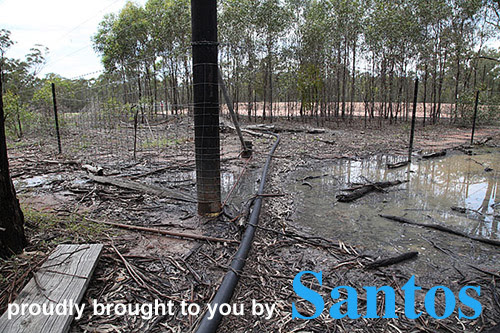
    As we speak, Santos is drilling exploration wells deep into NSW’s Pilliga Forest – one of the key recharge areas of the Great Artesian Basin and home to numerous threatened species, including our beloved koala. Despite longstanding community opposition, Santos plans to drill a whopping 850 of these wells throughout the forest and surrounding farmland.

    But it doesn’t end there. Santos also plans to frack shale gas wells in the Wild Rivers of Queensland’s Channel Country. And, they’re buddying up with BP and Chevron to explore for oil in the Great Australian Bight, placing our unique marine wildlife and the climate directly in the firing line.

    Unfortunately, we can’t rely on our government to stand up for our climate or environment. It’s going to come down to us to stand in Santos’ way.

    If you are a Santos shareholder, we need your help. Our friends at the Wilderness society are helping shareholders to move a resolution against drilling in the Pilliga at Santos’ 2014 AGM. But we need to act fast – the resolution deadline is mid February and it’s going to take 100 shareholders to get this over the line.

    If you’re a shareholder, please sign up today and share this email with others. If you’re not a shareholder, you can still sign up here for updates about other ways you can get involved. Click here to share the above picture on Facebook.

    Let’s show Santos that we are > than fossil fuels. 

    Yours for a safe climate,

    Charlie


    350.org is building a global movement to solve the climate crisis. Connect with us on

  • Seat #5: Newland by Ben Raue The Tally Room

    Seat #5: Newland

    by Ben Raue

    Newland1-2PPNewland is a marginal Labor seat in northeastern Adelaide, covering Banksia Park, Fairview Park, Redwood Park, Ridgehaven, St Agnes and Tea Tree Gully.

    The seat has been held by Tom Kenyon since 2006, and he will have a fierce fight to hold on to the seat.

    Read more