Author: Neville

  • Britain’s married minority

    Britain’s married minority

    Married couples have officially become a minority in the UK after the number of people choosing not to tie the knot surged by 3.6 million in just 10 years, final results from the census show.

    Married

    Statistics show that married couples are now in the minority in Britain Photo: ALAMY

    By , Social Affairs Editor

    8:00AM BST 12 Oct 2013

    Comments20 Comments

    New figures bringing together comprehensive 2011 census results from all four countries of the UK for the first time lay bare a decade of dramatic social change.

    Amid the fastest population growth for more than 200 years, fuelled by mass immigration and a baby boom, the proportion of people old enough to marry who have actually tied the knot slipped from 51 per cent to just under 47 per cent.

    In evidence of the impact of the so-called “Bridget Jones generation”, the number of single Britons has increased by a quarter while the number of divorcees is up by a fifth.

    There are also one million more pensioners than there were a decade ago and 600,000 more full time unpaid carers.

    One in six Britons are now over 65, a group growing more than twice the rate of the rest of the population.

    The figures also underline the scale of immigration during the decade which saw the enlargement of the EU, helping drive an unprecedented 4.1 million increase in the British population to 63.2 million.

    The number of foreign-born residents of the UK rose by almost two thirds between 2001 and 2011, from 4.9 million to 8 million – now accounting for 13 per cent of the population.

    The make-up of Britain’s minorities has also changed beyond recognition: with the number of Polish-born people living in the UK increasing tenfold in a decade.

    Yet the census exposes wide variations in the make-up of Britain. Four in 10 Londoners are from an ethnic minority while in Northern Ireland non-white people account for only two per cent.

    And it gives a glimpse of lifestyles have changed even more than the population. Despite the impact of environmentalism and a renaissance in cycling, the number of family cars on British roads are increasing twice as fast as the human population.

    Changing working patterns, attitudes to matters such as cohabiting and couples choosing to marry later in life marriage have driven a surge in the number of people classing themselves as single.

    They now account for 17.8 million people – more than a third of the population.

    At the same time the number of divorcees also jumped by a fifth to 4.5 million while the numbers of separated people who are not officially divorced also increased b a similar proportion. Same-sex civil partnerships, which did not even exist a decade earlier, accounted for around 113,000 people in 2011 census.

    Yet, in a vivid illustration of the impact of the impact of improvements in medical care, the number of widows in Britain fell by more than 300,000 – in evidence hat men are finally closing the gap on women in life expectancy.

    Harry Benson, of the Marriage Foundation think-tank said that the figures masked the enduring popularity of marriage as the basis for bringing up children.

    But he said it was undeniable that marriage is no longer as popular as it was.

    “The fact is that the trend away from marriage is so strongly associated with increased family breakdown,” he said.

    “It is a major concern that fewer people are getting married.

    “Being an unmarried parent puts you at much greater risk of then becoming a lone parent.

    “But the reality is that almost all couples who stay together while bringing up children get married at some stage.”

  • Bill Shorten elected Labor leader over Anthony Albanese after month-long campaign

    (Shorten will now form a new cabinet to face Abbott in the lower house. Some changes will no doubt be made.)


    Bill Shorten elected Labor leader over Anthony Albanese after month-long campaign

    Updated 17 minutes ago

    Bill Shorten has been elected leader of the ALP after a month-long battle for the top job with Anthony Albanese.

    Mr Shorten won with 52.02 per cent of the vote: 63.95 per cent from the Caucus and 40.08 per cent from the rank-and-file membership, who got a say in a leadership ballot for the first time.

    The result was announced to the Caucus at a special meeting in Parliament House this afternoon.

    Labor’s Parliamentary returning officer Chris Hayes confirmed that Mr Shorten had attracted the majority of the Caucus vote, gaining 55 votes to Mr Albanese’s 31.

    Chris Bowen, who held the interim Labor leadership, says the ALP has elected who he believes will be the next Labor prime minister.

    “The entire Labor Party has elected an alternative prime minister and I believe the next Labor prime minister of Australia,” he said.

    ALP vote breakdown

    Bill Shorten Anthony Albanese
    Caucus votes 63.95% (55 votes) 36.05% (31 votes)
    ALP membership
    (About 30k votes)
    40.08% 59.92%
    Overall vote 52.02% 47.98%


    “Bill Shorten is a man who has dedicated his working life to representing vulnerable people and to improving this nation.”

    ALP national president Jenny McAllister says Mr Shorten emerges from the “largest, most democratic process ever faced by any candidate for Labor’s leadership.”

    “We gave our members a say in the most important decision made by our political party and they’ve responded with vigour,” she said.

    “There has been more than 30,000 votes cast. That’s 74 per cent of eligible voters, and we received more than 4,000 expressions of interest from new members.”

    Mr Bowen says the Australian public had a unique opportunity to become familiar with both candidates via the election process.

    “A new leader of the opposition traditionally as a hard task to introduce themselves to the Australian people because a government inevitably has a honeymoon and it’s very hard for a leader of the opposition, newly minted, to get the attention of [the media] and the Australian people,” he said.

    “Bill comes to this now having been introduced to the Australian people through this process, and the Australian people have had the chance, whether they’re Labor members or not, to watch the debates and to see the new alternative PM in action.

    “So he starts with an advantage that some of his predecessors have not due to the process that the Labor.”

    Congratulations to Bill Shorten on becoming Labor leader. A great honour! I wish Bill all the best.JG

    — Julia Gillard (@JuliaGillard) October 13, 2013

    ALP still ‘split’ over leadership

    Coalition MP Jamie Briggs says that the Labor Party is still “split and divided” on who they want as their leader.

    “I think it says it is the same old Labor Party,” he said.

    “On one hand you had the party membership very clearly say – I think in a margin of 60 to 40 that they wanted Mr Albanese to be the leader, but yet the faceless men in the factions have decided that Mr Shorten will be the leader.”

    Attaining the Labor leadership fulfils a long-held ambition for Mr Shorten.

    Mr Shorten rose through the union ranks to become national secretary of the Australian Workers Union from 2001 to 2007.

    His public profile was boosted during the 2006 Beaconsfield mine disaster, when two miners were trapped a kilometre underground for two weeks.

    He entered Federal Parliament in 2007 and held a place in the outer ministry.

    In Labor’s years in government, he was elevated to Assistant Treasurer before entering Cabinet as Minister for Workplace Relations and then Education Minister.

    Mr Shorten will now lead the charge for Labor in opposition as it faces off against Prime Minister Tony Abbott.

    The Coalition won 90 seats in this year’s federal election, leaving Labor to rebuild with just 55 seats.

  • Side event on ocean acidification at COP 19

    Side event on ocean acidification at COP 19

    Published 11 October 2013 Meetings Leave a Comment

    Ocean acidification – the other CO2 problem

    Monday 18 November 2013, 13:15—14:45
    Venue: COP 19; The National Stadium, Warsaw; Room 4
    Organizers: IOC-UNESCO, IAEA, PML, WMO, IMO, SCOR, IGBP

    side event


    Ocean acidification is an emerging global concern and is a risk to marine biodiversity, ecosystems and human society. This event will highlight initiatives to address the challenges associated with ocean acidification, including the need for greater international observation and coordination.

    More information is available here.

    Rate this:

    Rate This

    Share this post!

    0 Responses to “Side event on ocean acidification at COP 19”

    1. Leave a Comment

    Leave a Reply

    Subscribe to the RSS feed

    Subscribe to Ocean acidification by

  • False equivalence: how ‘balance’ makes the media dangerously dumb

    False equivalence: how ‘balance’ makes the media dangerously dumb

    We’ve seen it in climate change reporting; we see it in shutdown coverage. Journalists should be unbiased, yes, but not brainless

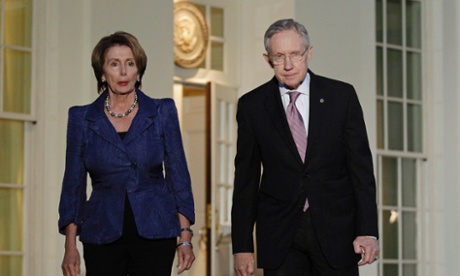
    Nancy Pelosi and Harry Reid leave the West Wing of the White House after congressional leaders met Barack Obama.

    Democratic congressional leaders Nancy Pelosi and Harry Reid at the White House: a Washington Post editorial implied they were equally to blame as House Republicans for the government shutdown. Photograph: Yuri Gripas/Reuters

    Let us state this unequivocally: false equivalency – the practice of giving equal media time and space to demonstrably invalid positions for the sake of supposed reportorial balance – is dishonest, pernicious and cowardly.

    On the other hand, according to the grassroots American Council of Liberty Loving Ordinary White People Propped Up by the Koch Brothers, the liberal media want to contaminate your precious bodily fluids and indoctrinate your children in homosocialism.

    Haha, kidding. Of course, there’s no such group. But false equivalency in the news has been very much, in fact, in the news lately – thanks to reporting on the US government shutdown that characterizes the impasse as the consequence of two stubborn political parties unwilling to compromise on healthcare. For instance, this was the final paragraph of a Washington Post editorial:

    Ultimately, the grown-ups in the room will have to do their jobs, which in a democracy with divided government means compromising for the common good. That means Mr Boehner, his counterpart in the Senate, Harry M Reid (D-Nev), minority leaders Sen Mitch McConnell (R-Ky) and Rep Nancy Pelosi (D-Calif) and the president. Both sides are inordinately concerned with making sure that, if catastrophe comes, the other side takes the political hit. In truth, none of their reputations stands to benefit.

    Mutually obdurate pols – it’s a fetching narrative, since Republicans and Democrats are undisputedly more polarized than they’ve been in a century, yielding endless posturing and partisan gridlock. Except, the narrative is wrong. The shutdown is not the result of the divide between Republicans and Democrats on Obamacare: that issue has been legislated, ratified by two presidential elections, affirmed by the US supreme court and more than 40 times unrepealed by Congress.

    No, the shutdown is the result of the divide between mainstream, center-right Republicans and Tea Party extremists. The latter are wrapped in suicide belts and perfectly willing to blow the GOP and the economy to kingdom come if they can: a) kill Obamacare (as if); or b) guarantee campaign windfalls from likeminded anti-government crackpots.

    This is not gridlock. It is a hostage situation.

    Others, however, see things differently. In a recent post calling for Obama’s impeachment, headlined “Barack Hussein Obama: The New Leader of al-Qaida”, the website Tea Party Nation accused the president of treason. As US Representative Virginia Foxx (Republican, North Carolina) warned the House upon passage of Obamacare in 2009:

    I believe we have more to fear from the potential of that bill than we do from any terrorist right now in any country.

    Haha, not kidding. Those quotations are real – and why not? There has never been a shortage of paranoia in politics. What has changed is the press’s willingness to give it oxygen.

    As an institution, the American media seem to have decided that no superstition, stupidity, error in fact or Big Lie is too superstitious, stupid, wrong or evil to be disqualified from “balancing” an opposing … wadddyacallit? … fact. Because, otherwise, the truth might be cited as evidence of liberal bias.

    Thus do the US media aid and abet Swiftboaters, 9/11 “Truthers”, creationists and “Birthers”, whose bizarre charge that the president was born overseas required us to believe a conspiracy involving hospital employees and Honolulu newspapers dating to infant Barack Hussein Obama’s first day on earth.

    Birthers are liars, morons, bigots or some combination of all three, yet, for four years, the press treated them as if they were worthy of consideration, dignifying their delusion by addressing it. Note the equivocating language from this Associated Press dispatch:

    So-called “birthers” – who claim Obama is ineligible to be president because, they argue, he was actually born outside the United States – have grown more vocal recently on blogs and television news shows.

    Yeah, blogs, TV news shows … and wire reports. Question: what is so difficult about calling bullshit on a lie?

    As recently as a week ago, upon the release of the United Nations’ latest report on climate change, CBS Evening News led with this:

    Another inconvenient truth has emerged on the way to the apocalypse. The new UN report on climate change is expected to blame man-made greenhouse gases more than ever for global warming. But there’s a problem. The global atmosphere hasn’t been warming lately.

    Wow. Juicy stuff – except that Mark Phillips goes on to explain that temperature increases have shifted for the moment to the oceans, and that the UN report was its most apocalyptic to date. Yet, immediately after debunking his own premise, he twice trots out a prominent climate-change skeptic (with no climate-science training) named Benny Peiser and identifies him only as director of a “thinktank”. Never mind that his Cambridge Conference Network thinks mainly that climate “debate” is bogus.

    Needless to say, the conservative media jumped all over this liberal media vindication of climate denialism. “CBS Stunned By Climate Change ‘Inconvenient Truth,” headlined CNSNews.com, propaganda organ of the Media Research Council, a founding member of the Vast Rightwing Conspiracy.

    On the other hand, denialism is a time-honored tactic to coalesce the haters. In spite of millions of eyewitnesses and archives full of documentation from the perpetrators – not to mention, film footage of the victims – there is no shortage of prominent personages, from David Irving to Mahmoud Ahmadinejad‎, who have earned global attention by questioning history. I am pleased to report that, in this rare instance, the press continues to treat them as dangerous wingnuts, and never invokes them for an opposing view on history.

    But why? Is it because 6 million murders are more real than legislative intransigence or fossil records or melting ice caps? Or just that some truths carry less political risks than others?

    Do the math. Just don’t worry too much about where you put the = sign.

    Daily Email

    close

    Sign up for the Guardian Today

    Our editors’ picks for the day’s top news and commentary delivered to your inbox each morning.

    Sign up for the daily email

  • Floods could have catastrophic impact on Australia’s east coast, study warns

    Floods could have catastrophic impact on Australia’s east coast, study warns

    Mega-storms exacerbated by climate change would spell disaster for populated coastal communities

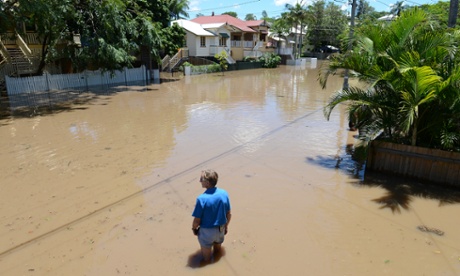
    Brisbane floods, 2013
    The eastern seaboard of Australia is particularly vulnerable to flooding and cyclones. Photograph: Dave Hunt/AAP

    A repeat of the worst floods charted over the past 150 years, potentially exacerbated by climate change, would have a “catastrophic impact” on coastal communities on the eastern seaboard of Australia, a new study has warned.

    Bureau of Meteorology research of a 1,500km stretch of Australia’s east coast, reaching from Brisbane south to Eden, found that more than 600 people died from floods between 1860 and 2012.

    In total, 253 major floods occurred in this time, caused by tropical cyclones and locally originating “east coast lows”.

    Many of these large floods occurred in the late 19th and early 20th centuries. The report warns that a repeat of these events, with the intensity possibly ramped up by climate change, would spell disaster for communities on the coast.

    Dr Scott Power, co-author of the report, told Guardian Australia: “If you look at the major cyclone of 1954, it caused deaths on the Gold Coast, but only 18,000 people lived there at the time. Now it’s more like 750,000.

    “Weather prediction is much better now than it was then, but there’s the potential for absolutely catastrophic impacts if that were to occur again today. It’s still very sobering to look at the data to see what has happened as far back as 1860.”

    Power said despite increased understanding of extreme weather impacts, the number of lives lost from major floods has remained consistent over the past 150 years, with an average of 2.5 deaths for each event.

    “We are still seeing significant death tolls from these disasters,” he said. “Population density is certainly a factor in that but it did make us wonder whether people are just not taking these risks seriously enough.”

    While several studies on the impact of climate change have indicated no tangible increase in cyclone frequency, scientists have pointed to a heightened chance of far more intense storms, escalating the risk of major damage and loss of life when a cyclone does occur.

    “If you look globally, as a rule of thumb tropical cyclones are expected to diminish, but the likelihood is that they will be more intense than they used to be,” Power said.

    “The models suggest that as more water is evaporated due to warming, there will be more rainfall, which means more rain and winds during cyclones. That is a robust prediction but we aren’t entirely confident over the exact magnitude.

    “There is often confusion with people thinking that every single extreme weather event will increase with climate change. It’s more complicated than that. We know for example that extremely cold mornings, which can cause a severe problem for people, will see a large decrease.”

    The findings were presented at the final day of the Greenhouse 2013 conference in Adelaide on Friday, which also saw research from the University of New South Wales that showed heatwaves have been “increasing over much of the Australian continent”.

    Daily email

    close

    Get the Guardian’s daily Australia email

    Our editors’ picks for the day’s top news and commentary delivered to your inbox every weekday.

    Sign up for the daily email

  • Up to five billion face ‘entirely new climate’ by 2050

    Up to five billion face ‘entirely new climate’ by 2050

    By on 11 October 2013
    Print Friendly

    Climate Central

    The mean annual climate of the average location on Earth will slip past the most extreme conditions experienced during the past 150 years and into new territory by between 2047 and 2069, depending on the amount of climate-warming greenhouse gases that are emitted during the next few decades, a new study found. The study, published Wednesday in the journal Nature, used a new index to show for the first time when the climate — which has been warming during the past century in response to manmade pollution and natural variability — will be radically different from average conditions during the 1860-2005 period.

    The study shows that tropical areas, which contain the richest diversity of species on the planet as well as some of the poorest countries, will be among the first to see the climate exceed historical limits — in as little as a decade from now — which spells trouble for rainforest ecosystems and nations that have a limited capacity to adapt to rapid climate change.

    Map of multi-model mean results for different greenhouse gas concentration scenarios of annual mean surface temperature change in 2081– 2100.
    Credit: IPCC Working Group


    According to the study, conducted by a team from the University of Hawaii, about 1 billion people currently live in areas where the climate will exceed historical bounds of variability by 2050. This number would rise to 5 billion people under a business-as-usual emissions scenario, which is the emissions path the world is currently on.

    Even more strikingly, the study found that the oceans, which have absorbed about half of the manmade carbon dioxide (CO2) emissions since the dawn of the industrial revolution 250 years ago, exceeded their historical bounds of pH measurements back in 2008.

    In other words, the oceans are now more acidic than they have been since at least 1860.

    The study “Provides a new metric of when climate change will lead to an environment that we’ve never seen before,” said author Camilo Mora, a professor at the University of Hawaii at Manoa, in an interview.

    “When you look at the information there is a lot of empirical evidence suggesting that indeed we already crossed the threshold of pH variability during the last decade”

    In the water, CO2 reacts to form carbonic acid, and over the years, the ocean’s acidity has increased by more than 30 percent because so much of the excess man-made CO2 is being drawn into the water.

    This increased acidity changes the balance of other carbon-species in the water, and may have far-reaching ramifications. Some marine species that use a form of carbonate to build their skeletons and shells, like corals and mollusks, may be harmed because the acid formed in the water consumes this carbonate and makes it less accessible to these organisms.

    Even with aggressive cuts in greenhouse gas emissions, the study found, the projected near-surface air temperature of the average location on Earth will move beyond historical variability in about 56 years from now. A business-as-usual scenario in which emissions continue on their current upward trajectory would see an unprecedented climate occurring 20 years sooner than that, in 2047.

    However, the extra 20 years that emissions cuts would buy time for making emissions cuts and could prove crucial for many species’ survival, Mora said.

    Imagine you are on a highway, and you spot an obstacle in the road up ahead, Mora said. “Should you step on the gas, or hit the brake?” Hitting an obstacle at a slower speed will minimize the damage to the car and its occupants, in much the same way as hitting a climate threshold at a slower speed would reduce the ramifications for biological systems, he said. “The speed at which you face that (obstacle) is going to make a huge difference.”

    The study questions the way climate change is typically framed, which is by looking at the absolute value of the temperature change that is expected to occur in the coming decades. This framing often identifies the Arctic as being ground zero for the most significant and rapid climate change, and overlooks the fact that, while the Arctic has a history of bigger temperature swings, that’s not the case in the tropics, where temperatures have historically remained within a narrower range. That makes it easier for a small amount of warming to make a big difference in tropical climate.

    For temperature-sensitive tropical species, such as coral reefs, the speed at which climate change occurs can be a more important factor in determining how disruptive climate change will be, even though the total amount of climate change expected in the tropics will be less than in the Far North.

    Chart showing the year by which the climate is projected to exceed the range of historical variability, depending on the emissions scenario. “Stabilized emissions” corresponds to a low emissions scenario.
    Credit: Alyson Kenward, Climate Central. Data from Mora et al.