Author: Neville

  • Scientists have warned that climate change has sent the health of oceans “spiralling downward” faster than previously thought

    Ads by Google

    Scientists have warned that climate change has sent the health of oceans “spiralling downward” faster than previously thought.

    A key international assessment of climate change last week revealed the oceans are absorbing much of the warming and unprecedented levels of carbon dioxide caused by human activity such as burning fossil fuels.

    Now experts are warning the impact of rising greenhouse gases combined with a range of other problems is far graver than previously thought.

    Oceans are being hit by decreasing oxygen levels caused by climate change and increased nutrient run-off from agriculture and sewage, and are becoming more acidic as more carbon dioxide dissolves into the sea, both of which harm wildlife.

    Warming, as the oceans absorb much of the extra energy being trapped by greenhouse gases, is set reduce seasonal sea ice and lead to changes to sea layers, which will also cause lowering of oxygen levels.

    Warming will also lead to increased venting of methane, a potent greenhouse gas, from the Arctic seabed, experts from the International Programme on the State of the Ocean (IPSO) and the International Union for Conservation of Nature (IUCN) said.

    The “deadly trio” of warming, de-oxygenation and acidification is seriously affecting how productive and efficient the ocean is, with impacts throughout the chain of marine life, the scientists said.

    In addition, continued overfishing is damaging the resilience of the oceans, and despite improvements in some areas, fisheries management is failing to halt the decline in key species and prevent harm to important marine ecosystems.

    Last year the UN’s Food and Agriculture Organisation (FAO) found that 70% of world fish populations were unsustainably exploited, and almost a third of those (30%) had collapsed to less than 10% of unfished levels.

    The scientists called for urgent action to limit temperature rises to less than 2C above pre-industrial levels.

    They warned that current targets for carbon emission reductions are not enough to ensure coral reefs on which humans and wildlife depend survive increasingly acidic oceans.

    Potential knock-on effects of climate change in the oceans such as methane releases from the melting permafrost and coral dieback could lead to worse consequences for humans and nature than presently expected.

    The scientists also called for effective management of fishing, which favoured small-scale fisheries, taking steps such as eliminating subsidies that back more fishing vessels than fisheries can support, and banning the most destructive gear.

    And there needs to be “fit for purpose” global systems for governing the high seas, the experts said.

    Oxford University professor Alex Rogers, scientific director of IPSO, said: “The health of the ocean is spiralling downwards far more rapidly than we had thought.

    “We are seeing greater change, happening faster, and the effects are more imminent than previously anticipated.

    “The situation should be of the gravest concern to everyone, since everyone will be affected by changes in the ability of the ocean to support life on Earth.”

    The IUCN’s professor Dan Laffoley said: “What these latest reports make absolutely clear is that deferring action will increase costs in the future and lead to even greater, perhaps irreversible, losses.

    “The UN climate report confirmed that the ocean is bearing a brunt of human-induced changes to our planet. These findings give us more cause for alarm – but also a road map for action. We must use it.”

    Additional reporting PA

    You Might Also Like

    The Economics Of Solar Power in Australia [infographic]
    The Economics Of Solar Power in Australia [infographic]
    (SolarQuotes.com.au)
    Palmer possess the power

    Play Video
    Palmer possess the power
    Play Video
    What Australians are Buying on Impulse (Infographic)
    Ads by Google

    News in pictures

    World news in pictures

    From the blogs

    Children’s Book Blog: Recommended read – The Weasel, Puffin, Unicorn, Pig, Lobster Race by James Thorp and Angus Mackinnon

    Every month or so I recommend a children’s book that either hasn’t or isn’t likely to get the media …

    Dish of the Day: Interview with Ellie Grace

    Ellie Grace, co-author of Kitchen & Co: Colourful Home Cooking Through The Seasons talks with J…

    From Christopher Isherwood to Charles Dickens: Tales from the Soho Literary Festival

    At a buzzing Soho Literary Festival, Christopher Isherwood’s lifelong partner recalls his time with …

    A few thoughts on Louis Vuitton, as Paris closes.

    I love a train-spotting fashion collection. The Louis Vuitton show contained echoes from Marc Jacobs…

    Video from around the web

    Population pains for Western Australia

    Play Video
    Population pains for Western Australia
    (Yahoo!7 News Video)
    Killer wasps leave dozens dead

    Play Video
    Killer wasps leave dozens dead
  • IPCC report makes US meteorologist cry – and give up flying

    IPCC report makes US meteorologist cry – and give up flying

    Man who broke down in tears and shared his pain on Twitter is liked and loathed for his pledge to do his bit for climate

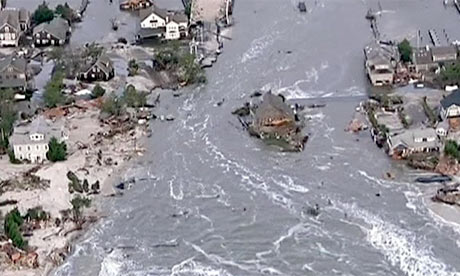
    An ariel view of flooding caused by hurricane Sandy in New Jersey 2012

    An ariel view of flooding caused by hurricane Sandy in New Jersey. Meteorologist Eric Holthaus has been flooded with email about how individuals should respond to climate change. Photograph: guardian.co.uk

    A meteorologist who broke down in tears, mused about a vasectomy, and vowed to give up air travel in the wake of the blockbuster report from the UN’s Intergovernmental Panel on Climate Change (IPCC) has found himself at the centre of a storm about personal responses to climate change.

    Since his emotional musings on Twitter, meteorologist Eric Holthaus has been flooded with email about how individuals should respond to climate change.

    Some were openly hostile. “I’ve had a couple hundred people send emails or tweets that said: ‘if you really want to reduce your carbon footprints why not commit suicide’?” Holthaus told the Guardian. But others were supportive of the no-fly pledge, saying they were inspired to give up meat, or take other carbon-cutting actions.

    Holthaus, who gained a large following during hurricane Sandy, estimates he flew 75,000 miles last year, much of that to Ethiopia where he is involved in a climate project.

    He has followed climate change for years, as a blogger for the Wall Street Journal and now at Quartz.

    But he said he was overwhelmed by the IPCC pronouncing for the first time that humans were now only decades away from being locked into a course of dangerous climate change. He also despaired at the inertia in UN climate talks, which are unlikely to produce global action before 2020.

    On his way home from San Francisco, Holthaus tweeted: “I just broke down in tears in boarding area at SFO [San Francisco airport] while on phone with my wife. I’ve never cried because of a science report before.”

    Two minutes later, Holthaus tweeted again: “I realised, just now: this has to be the last flight I ever take. I’m committing right now to stop flying. It’s not worth the climate.”

    He said: “It felt like a hopeless moment to me to be completely honest. At that moment it hit me, as a citizen of the planet and as a human, not as a scientist.

    “In the absence of a global coordinated carbon policy, I think it is going to be up to individuals, cities, and corporations to take action.”

    In his case, Holthaus said flying was by far the largest source of carbon emissions. Much of it was for work, but he also flew from his home in Wisconsin to holidays in Tanzania and California. He realised his carbon footprint from flying far outweighed his savings from sharing a car, recycling, or giving up meat.

    “I was thinking the flying was all for a good cause. It is not going to matter but I think that kind of thinking is dangerous when we are at the global tipping point,” he said. “When I saw I could reduce my carbon footprint with one action, for me it was a step I was willing to take.”

    Did Holthaus go too far? Fox News, predictably, in a segment this week labelled him a “kook” and said the “meteorologist’s meltdown” discredited climate science.

    Andrew Freedman, who writes at Climate Central, said on his Twitter feed that while he respected Holthaus’s work: “I wonder if his overall reaction to the #IPCC report hurts his ability to credibly report on #climate.”

    But Holthaus said he could live with the criticism.

    “Is my credibility increased or reduced? I don’t know but I would argue that I am talking from a stronger standpoint now that I am practicing what I preach a little more,” he said.

    And he does not entirely rule out getting on a plane again one day. “Let’s say, heaven forbid, my mother was in a car accident and I needed to be in hospital today. Of course I would fly,” he said. “I don’t have any plans to ever fly again but if there was an emergency like that than I would. My point is that there is a lot of discretionary travel by airplanes that produces a lot of emissions, whether people are taking vacations or business travel.”

    Green light

    close

    Sign up for the Green light email

    The most important environment stories each week including data, opinion pieces and guides.

    Sign up for the Green light email

  • “20 facts about ocean acidification” – a fact sheet to help scientists communicate ocean acidification to media and the public

    “20 facts about ocean acidification” – a fact sheet to help scientists communicate ocean acidification to media and the public

    Published 2 October 2013 Science Leave a Comment

    This document presents the highlights of the Frequently Asked Questions about Ocean Acidification (2010, 2012; www.whoi.edu/OCB-OA/FAQs), a detailed summary of the state of ocean acidification research and understanding. The FAQs and this fact sheet are intended to aid scientists, science communicators, and science policy advisors asked to comment on details about ocean acidification. In all, 63 scientists from 47 institutions and 12 countries participated in writing the FAQ, which was produced by the Ocean Carbon and Biogeochemistry Project (www.us-ocb.org), the United Kingdom Ocean Acidification Programme (www.oceanacidification.org.uk), and the European Project on Ocean Acidification (EPOCA). More information and contacts can be found at any of these websites or at the Ocean Acidification International Coordination Centre’s website (www.iaea.org/ocean-acidification). The Intergovernmental Panel on Climate Change (IPCC) Fifth Assessment Report findings on ocean acidification can be viewed at www.ipcc.ch.


    The fact sheet is supported by the Ocean Carbon & Biogeochemistry Project (OCB), the Ocean Acidification International Coordination Centre (OA-ICC), the UK Ocean Acidification Research Programme (UKOA), the NOAA Ocean Acidification Program and Washington Sea Grant.

    Ocean Carbon & Biogeochemistry Project, 2 October 2013. Fact sheet.

    Rate this:

    Rate This

    Share this post!

    0 Responses to ““20 facts about ocean acidification” – a fact sheet to help scientists communicate ocean acidification to media and the public”

  • What Price for Extra Oil?

    Peter Neill

    Director, World Ocean Observatory

    GET UPDATES FROM Peter Neill

    4

    What Price for Extra Oil?

    Posted: 10/02/2013 6:17 pm


    0
    5
    0
    1
    Get Green Newsletters:

    It has been very interesting to watch over the past few years the shift in public understanding of international oil and gas supply for the future. Not too long ago, the rush to renewable and alternative energy sources was strong, with public subsidies and private funds in full support of solar, wind, bio-fuels, and other new technologies and approaches. There was much talk of “peak oil,” the tipping point when future supply cannot meet future demand. There was talk of carbon taxes, offsets, and trading as viable means to nurture what would be a painful but necessary shift in consumption and response.

    But suddenly all that went away. Climate, as a reflection of the emission consequence of fossil fuels dependence, was aggressively denied by companies, lobbyists, politicians, and investors. New oil deposits, from the tar-sands in Canada for example, were suddenly available, extending the perceived viability of established supply and existing corporate agendas. In addition, natural gas became the new source, a revision that changed the United States from a natural gas importer to an exporter, the result of new and dramatic supplies accumulated through a rapid expansion of fracking technology, the infusion of a water and chemical mix under pressure that enabled wells previously thought exhausted to renew yields and new leases to be purchased, particularly in what were historically agricultural areas. Farmers sold their mineral rights for high prices, abandoning their farms to energy exploitation, many leaving their traditional homeland. The result of this fracking technology is much debated: on one side the energy companies and their supporters, on the other environmentalists and community activists radicalized by the obvious degradation to their towns and surrounding environment. While the estimates of resultant future supply are seductive and diverting, they mask the serious questions about the true nature of this technology and its impact on land and sea.

    One major question is the chemical composition of the water used in the process. The companies refuse to reveal the actual recipe; the water left behind however shows serious toxic effect, so much so that it must be stored, isolated, and restricted from entering the healthy water cycle around it. The usual cautions and disclaimers are given the public, but the devastation to the landscape, the ever-increasing reports of toxic water and waste from the process, and the ever-expanding health impacts on the people nearby are truly disturbing counters to corporate blandishments and apologists. Why can’t we know the chemical mix used? Is proprietary exclusivity so important that it can excuse such physical and financial destruction? Do we have to poison our already limited water supply, and our neighbors, and do it in secret?

    A recent article in Reuters points to another, depressingly familiar, equally dangerous situation — an off-shore well in the North Sea, one of many operated by Total, the French energy company, that had to be shut down due to the corrosive effect of a chemically-enhanced drilling fluid that under pressure, and heated to over 280 degrees Fahrenheit, had weakened and cracked the piping and leaked for more than a month and a half a cloud of flammable gas that caused the platform to be evacuated from the area lest a spark ignite a devastating explosion and fire. The corrosive chemical is reported to be calcium bromide, one of a number of halide fluids, known as “brines,” that, as discovered after the fact, are corrosive to steel! After an internal investigation, still not officially concluded, Total closed “a minimum” of 10 wells and felt compelled to notify Shell with its neighboring field off the Scotland coast, operating similarly as a method to extend the productivity of wells thought exhausted. According to the news report, similar technology is being used extensively in wells off the coast of Brazil and the Gulf of Mexico.

    What are we doing here? What are we doing to ourselves? To the ocean and earth? Why are we standing by and letting this travesty continue? When even the beneficiary company admits the problem and warns its competitor of the danger, why can not the regulators and authorities put an end to the foolishness once and for all? According to the Reuters article, the process of abandonment will take three years and cost Total more than $200 million, as if this loss matters at all when compared to the already inflicted loss to the environment, not to mention the future loss implicit in any failure to restrict this dangerous technology, not to mention the loss of time and investment in the alternatives. There is nothing, absolutely nothing, to be gained from this short-term avoidance and denial of the terminal reality of reliance on fossil fuels. There is nothing, absolutely nothing, to be gained, so why do we continue to pay this price?


    Follow Peter Neill on Twitter: www.twitter.com/the_w2o

    FOLLOW GREEN
    152k
  • Ocean acidification due to carbon emissions is at highest for 300m years

    Ocean acidification due to carbon emissions is at highest for 300m years

    Overfishing and pollution are part of the problem, scientists say, warning that mass extinction of species may be inevitable

    marine life

    Coral is particularly at risk from acidification and rising sea temperatures. Photograph: Paul Jarrett/PA

    The oceans are more acidic now than they have been for at least 300m years, due to carbon dioxide emissions from burning fossil fuels, and a mass extinction of key species may already be almost inevitable as a result, leading marine scientists warned on Thursday.

    An international audit of the health of the oceans has found that overfishing and pollution are also contributing to the crisis, in a deadly combination of destructive forces that are imperilling marine life, on which billions of people depend for their nutrition and livelihood.

    In the starkest warning yet of the threat to ocean health, the International Programme on the State of the Ocean (IPSO) said: “This [acidification] is unprecedented in the Earth’s known history. We are entering an unknown territory of marine ecosystem change, and exposing organisms to intolerable evolutionary pressure. The next mass extinction may have already begun.” It published its findings in the State of the Oceans report, collated every two years from global monitoring and other research studies.

    Alex Rogers, professor of biology at Oxford University, said: “The health of the ocean is spiralling downwards far more rapidly than we had thought. We are seeing greater change, happening faster, and the effects are more imminent than previously anticipated. The situation should be of the gravest concern to everyone since everyone will be affected by changes in the ability of the ocean to support life on Earth.”

    Coral is particularly at risk. Increased acidity dissolves the calcium carbonate skeletons that form the structure of reefs, and increasing temperatures lead to bleaching where the corals lose symbiotic algae they rely on. The report says that world governments’ current pledges to curb carbon emissions would not go far enough or fast enough to save many of the world’s reefs. There is a time lag of several decades between the carbon being emitted and the effects on seas, meaning that further acidification and further warming of the oceans are inevitable, even if we drastically reduce emissions very quickly. There is as yet little sign of that, with global greenhouse gas output still rising.

    Corals are vital to the health of fisheries, because they act as nurseries to young fish and smaller species that provide food for bigger ones.

    Carbon dioxide in the atmosphere is absorbed by the seas – at least a third of the carbon that humans have released has been dissolved in this way, according to the Intergovernmental Panel on Climate Change – and makes them more acidic. But IPSO found the situation was even more dire than that laid out by the world’s top climate scientists in their landmark report last week.

    In absorbing carbon and heat from the atmosphere, the world’s oceans have shielded humans from the worst effects of global warming, the marine scientists said. This has slowed the rate of climate change on land, but its profound effects on marine life are only now being understood.

    Acidification harms marine creatures that rely on calcium carbonate to build coral reefs and shells, as well as plankton, and the fish that rely on them. Jane Lubchenco, former director of the US National Oceanic and Atmospheric Administration and a marine biologist, said the effects were already being felt in some oyster fisheries, where young larvae were failing to develop properly in areas where the acid rates are higher, such as on the west coast of the US. “You can actually see this happening,” she said. “It’s not something a long way into the future. It is a very big problem.”

    But the chemical changes in the ocean go further, said Rogers. Marine animals use chemical signals to perceive their environment and locate prey and predators, and there is evidence that their ability to do so is being impaired in some species.

    Trevor Manuel, a South African government minister and co-chair of the Global Ocean Commission, called the report “a deafening alarm bell on humanity’s wider impacts on the global oceans”.

    “Unless we restore the ocean’s health, we will experience the consequences on prosperity, wellbeing and development. Governments must respond as urgently as they do to national security threats – in the long run, the impacts are just as important,” he said.

    Current rates of carbon release into the oceans are 10 times faster than those before the last major species extinction, which was the Paleocene-Eocene Thermal Maximum extinction, about 55m years ago. The IPSO scientists can tell that the current ocean acidification is the highest for 300m years from geological records.

    They called for strong action by governments to limit carbon concentrations in the atmosphere to no more than 450 parts per million of carbon dioxide equivalent. That would require urgent and deep reductions in fossil fuel use.

    No country in the world is properly tackling overfishing, the report found, and almost two thirds are failing badly. At least 70 per cent of the world’s fish populations are over-exploited. Giving local communities more control over their fisheries, and favouring small-scale operators over large commercial vessels would help this, the report found. Subsidies that drive overcapacity in fishing fleets should also be eliminated, marine conservation zones set up and destructive fishing equipment should be banned. There should also be better governance of the areas of ocean beyond countries’ national limits.

    The IPSO report also found the oceans were being “deoxygenated” – their average oxygen content is likely to fall by as much as 7 per cent by 2100, partly because of the run-off of fertilisers and sewage into the seas, and also as a side-effect of global warming. The reduction of oxygen is a concern as areas of severe depletion become effectively dead.

    Rogers said: “People are just not aware of the massive roles that the oceans play in the Earth’s systems. Phytoplankton produce 40 per cent of the oxygen in the atmosphere, for example, and 90 per cent of all life is in the oceans. Because the oceans are so vast, there are still areas we have never really seen. We have a very poor grasp of some of the biochemical processes in the world’s biggest ecosystem.”

    The five chapters of which the State of the Oceans report is a summary have been published in the Marine Pollution Bulletin, a peer-reviewed journal.

    Green light

    close

    Sign up for the Green light email

    The most important environment stories each week including data, opinion pieces and guides.

    Sign up for the Green light email

  • TRANSCRIPT OF THE HON MALCOLM TURNBULL DOORSTOP INTERVIEW CANBERRA

    3 October 2013

    TRANSCRIPT OF THE HON MALCOLM TURNBULL
    DOORSTOP INTERVIEW
    CANBERRA

    Topics: NBN Board Changes, commencement of strategic review
    ………………………………………………………………………………………..

    MALCOLM TURNBULL:

    I’m announcing that the Finance Minister and I have, with the approval of cabinet, appointed Dr Ziggy Switkowski to the board of the NBN Co as Chariman and I can also announce he has been appointed Executive Chairman of the NBN Co pending the appointment of a Chief Executive Officer to replace Mr Michael Quigley. As you may know already, we’ve received offers of resignation from five of the seven NBN Co. directors, I think I announced that a little while ago, and we’ve received one resignation. We have accepted four of those offered resignations, but have asked Dr Kerry Schott and Miss Alison Lansley to continue serving on the board.

    So the board at present is a board of three. Dr Switkowski, Dr Schott and Miss Lansley. The Government intends to nominate additional non-executive directors to the board shortly.

    I want to thank, on behalf of the Government, all of the outgoing directors. And in particular Mr Quigley, the retiring chief executive, and Miss Siobhan McKenna, the retiring chairman, for their leadership and service to the company, often in very difficult circumstances. And for the professionalism and courtesy with which they have helped manage this transition.

    Now, in addition to this, we have announced today the commencement of the strategic review of the company. This, as you know, is part of our policy. This – the terms of reference are set out here. In a nutshell, however, the terms of reference will tell all of the Australian people and the Government – the shareholder of the company – what the status of the project is at the moment – how much it is going to cost, and how long it will take to complete it on the current plan, or the Labor Government’s plan at the 93 per cent fibre to the premises model.

    What savings, both in cost and time, can be made to the project if variations are made to the current plan, such as an increased use of fibre to the node, as we’d set out in our policy. And this will then give us the information, the context in which to make decisions about this project. The Government is very committed to the National Broadband Network. We are determined to see a National Broadband Network completed sooner, cheaper and more affordably for consumers.

    In appointing Dr Switkowski to the board as chairman, we have appointed one of the most experienced telecom executives in Australia. Someone who has been the chief executive, not just of Telstra, but of Optus as well. A very distinguished company director and chairman since he left Telstra.

    So Dr Switkowski is an outstanding Australian business leader, and we have every confidence that as chair – initially as executive chair, and then, after the appointment of a fulltime CEO as non-executive chair, he will be part of the new leadership team – the chair of the new leadership team, that will ensure the NBN Co. project is restored to health, and progresses in a cost-effective manner that, as I’ve said before, will ensure the National Broadband Network completed sooner, cheaper – in terms of cost to the Government – and more affordably for consumers.

    REPORTER:

    So how – tell me Mr Turnbull, how are you going to – can you just outline the process for finding the replacement to Mr Quigley? Is that a matter for the NBN, or will the Government be involved in – you know, is it an international head-hunting firm, you know, how does that work?

    MALCOLM TURNBULL:

    There has been a head-hunting firm engaged already by the company. And the appointment of the chief executive is one made by the company in consultation with the Government.

    REPORTER:

    Minister, today’s revelations about Leighton Holdings. They have about $1.5b of contracts relating to the NBN. What impact will they have on Leighton’s involvement in the project?

    And secondly, did today’s revelations have any impact on Wal King’s involvement, or non-involvement, or future involvement, on the board?

    MALCOLM TURNBULL:

    Well look, I don’t want to – the allegations that have been published today are going to be the subject of police attention. I don’t want to comment on them, they don’t have any connection with the NBN project.

    As far as Mr King is concerned, I’ve been very rigorous in not making any comments or responses to the orgy of speculation about who may or may not be appointed to the board of NBN Co. Most of which, I have to say, has been wrong.

    But the problem is that if I make a comment on one individual, then I’ll have to make a comment on others. So the – I’ve got nothing to say about potential new directors, additional directors of NBN Co. other than that it is the Government’s intention to appoint them shortly – additional directors shortly. And, as you can imagine, we’re going through a very careful and methodical process of looking at various candidates for these important roles.

    REPORTER:

    Minister, his name, Mr King’s name is out in the public domain, can you –

    MALCOLM TURNBULL:

    So are many other people’s names. [laughs]

    REPORTER:

    Can you say that he’s categorically not going to be appointed?

    MALCOLM TURNBULL:

    I’m not going to make any comment on any individual. There are so many – because if I comment on Mr King, then you’ll ask me to comment on any of the other half a dozen or more people that have been filling up the Financial Review most days.

    REPORTER:

    Minister, you praised the professionalism of the outgoing board members, what was it that saw them have their offer of resignation accepted, when you didn’t accept it from Schott and Lansley?

    MALCOLM TURNBULL:

    Well, you’ve got to – in any process of corporate renewal, you’ve got to have an element of continuity. And so a judgement had to be made. I don’t want to reflect, and we don’t reflect, adversely on any of the directors, continuing or departing.

    But the project clearly does need new leadership. Both Miss Lansley and Dr Schott have relevant skills – Dr Schott of course a very distinguished economist, public sector economist, former chief executive of Sydney Water, familiar with linear infrastructure projects, familiar with government/business enterprises. Miss Lansley, of course, is a experienced corporate lawyer, and with a lot of experience in the telecom sector.

    Now, this is not to say the other directors were not well qualified people as well, but we have to make a judgement. The two that are continuing provide that element of continuity, and they also have very specific skills and experience.

    REPORTER:

    Dr Switkowski left Telstra, personally, a much wealthier man, Telstra shareholders were much poorer for his reign. He made a disastrous investment in Asia, one of his things that he was criticised in the press was…

    MALCOLM TURNBULL:

    What was the share price of Telstra when Switkowski left, compared to when Trujillo left?

    REPORTER:

    Well, why are we comparing him to Trujillo?

    MALCOLM TURNBULL:

    Well I don’t know. You’re drawing judgement about Ziggy’s reign, you might think about that.

    REPORTER:

    The company itself was on a decline, and it didn’t have anything to do with…

    MALCOLM TURNBULL:

    Well look, I really don’t want to get into a debate about the share price of Telstra.

    REPORTER:

    Why the confidence in Dr Switkowski? There was a lot of controversy about the way he ran Telstra.

    MALCOLM TURNBULL:

    Dr Switkowski has had a lot of experience in the telecom sector, and elsewhere in the business world, and we have every confidence in him. And I might say the reception to his mooted appointment, and has been – that’s one of the few areas of speculation about this company’s board that has been accurate, and has been out there for a long time. The reception has been very positive.

    REPORTER:

    Mr Turnbull, could I just clarify, when do you expect Mr Quigley to finish up at NBN Co.? And what input would you have, seeing you’ve engaged an [indistinct] firm, into a long-term replacement, or a permanent replacement for him?

    MALCOLM TURNBULL:

    Well, as I understand it – Mr Quigley resigned some time ago, as you know, back in July. And he, by arrangement with the company, with the then board, his tenure as chief executive would come to an end when a replacement was found. So, Dr Switkowski is a replacement, or be it a temporary one. So there is a new chief executive of NBN Co. That’s Ziggy Switkowski, pending the appointment of a permanent CEO.

    So – but Mr Quigley has, I know, been meeting with Switkowski today and effecting a good handover and so forth. As far as the appointment of a new CEO is concerned, as I’ve said, that will be made… that decision is made by the Government and the company. The company – the board of the company formally makes the appointment in consultation with the Government. So it’s a… you know, it is a collaborative decision.

    REPORTER:

    Have you still got a timeframe for that appointment?

    MALCOLM TURNBULL:

    As soon as possible is the answer, but obviously the – there is a search – a search is been underway, but once you identify somebody then it may take them some time to extract themselves from whatever position they have. So it’s – as soon as possible is the best answer I can give you.

    REPORTER:

    Dr Switkowski, has he ever rolled out a telecoms network?

    MALCOLM TURNBULL:

    Dr Switkowski ran a very large telecom company called Telstra, as you know, which throughout its whole life has been constantly rolling out networks. He also was involved in Optus at the time of the HFC rollout. But Dr Switkowski has not been hired or been appointed here as somebody to be the head of construction, right? He is the chairman of the company. He is the executive chairman, acting CEO, if you like, pending the appointment of a fulltime CEO.

    REPORTER:

    Will you be looking for someone with construction experience for that CEO role?

    MALCOLM TURNBULL:

    Jonathan, that is a very relevant criterion. Linear infrastructure is what this is all about and that is a specialised area. And while all infrastructure experience is valuable, linear infrastructure of this type is different to say building a dam or an office building.

    Just have one more, if that’s okay.

    REPORTER:

    In terms of the strategic review, why have the NBN Co priced the cost of Labor’s former plan, which you put it to around $94 billion, Labor, I think, estimated it as low as $37 billion. Why have the company look at that plan given that your policy’s very clear about fibre to the node. Is there some chance that you could review some elements…

    MALCOLM TURNBULL:

    No. Well, it’s very important to know… to have a very clear-eyed accurate, objective assessment of where the company is at the moment and where it would go on the previous plan to actually – because that is effectively your benchmark. Where are we today? I mean, we don’t have blank sheet of paper. You know, we’d love to. We’d all love to have a blank sheet of paper on this.

    Labor’s made shocking mistakes. There are billions of dollars that Labor has wasted that we will never be able to recover. This has been a shockingly miss-conceived exercise… wasteful exercise in public policy. We are endeavouring to recover value for it and get the job completed as quickly and cost-effectively as we can. So we need to know, what is the state of the project right now, accurately.

    We then need to know what the real trajectory of it would be, were the previous policy settings to be kept in place. And then, we need to know what are our options for making it more cost-effective, finishing it sooner, making it more affordable for consumers, making it less expensive for taxpayers.

    So that is the first thing that we’ve got to do. That is the most urgent priority, and the reason that we’ve asked the board to do it, or the company to do it, and of course it will be substantially a new board, and there will be a lot of new management there as well no doubt, is that we want the company to own it. You see, in the past, this project has been riddled with politics, and the company has been under pressure to deliver numbers and answers and documents that met the political priority of the previous government.

    What I have said to the company is I just want the plain unvarnished facts. We do not want spin. We do not want the company to tell us what they think we might want to hear. We want to know what the real facts are. And then armed with those facts, then we can make decisions about the future of the project and Australians will see the actual factual context in which we’re making them. That is terrifically important.

    And the reason the company should undertake this is because we want them to own it. See, you can – there’s any number of consulting firms you can hire, and the NBN Co’s hired most of them over the last four years, but you can hire a consulting firm, they’ll come in and write a report. But the directors, the executives may have no sense of ownership of it. They may – it’s just something that descended from outside.

    It’s really important that the directors and the management own this. They should get advice from experts, you know, inside the company, outside the company – sure. But they have got to, at the end of the day, be able to say to the Government, as shareholder, this is where we honestly, genuinely, objectively, soberly believe this project is right now. This is where it was going to go, under the previous policy, and here are some options to have a more cost-effective outcome.

    REPORTER:

    I understand all that, Mr Turnbull, but what I’m trying to nail down is, you’re saying – it sounds like your saying there’s room for a change in the parameters of the fibre to the node network pending the review by the company of the current…

    MALCOLM TURNBULL:

    Sorry, you’re saying that we’re open-mined about – you’re asking me whether I’m open-minded about technology. Look, I am not Stephen Conroy, okay? I view this technology issue objectively. The previous communications minister, but one Mr Stephen Conroy, regarded technology as an ideological political issue, and that’s why billions of dollars have been wasted.

    The bottom line is this; we want all Australians to have very fast broadband soon, cheaply, as cheaply as possible and as affordably as possible. So, the bottom line is, you use whatever technologies will deliver that outcome most effectively. And so we gave an example, a very thoroughly worked-out example in our policy based on international experience and so forth, but if there are other variants of that that will get the job done even better, then we are very open to it.

    I can not emphasis to you too much that we are absolutely committed to taking an open-minded rational and objective approach to this project. This should be a business issue, not an issue of ideology and politics as it was under the previous government. That’s how they dug that big multi-billion dollar black hole.
    REPORTER:
    It sounds like if they come back and say there’s $8 billion variance, Labor’s $37 billion figure is accurate. There’s an $8 billion variance in the two plans. It doesn’t make sense to do fibre to the node in dense urban areas, for example, you should…

    MALCOLM TURNBULL:

    Well, look…

    REPORTER:

    Is that something that Government [indistinct] consider then?

    MALCOLM TURNBULL:

    We will consider, obviously very carefully, and pay attention to the strategic review, but don’t – let’s not get into a hypothetical about what it might find out. Let’s wait until we get the facts. We won’t have to wait too long, I trust. But the critical thing is there is a total change of management culture, both from a government point-of-view and from the company point-of-view. We have now – we have stepped out of the world of spin and politics and ideology, and into the world of business and objective facts and making decisions in a rational way.

    So on that note, I will say farewell to you. Thanks a lot.