Letters: Blind workers in too hard basket Saturday, August 24, 2013 60% of legally blind people were unemployed and looking for work. I disagree with a few points in the article “Blind workers fight for jobs at Vision Australia”. There are lots of parts of welfare to work which are not great but there is a particular part which helps people with disabilities be able to compete on the labour market or become self employed more easily. This is the Job Access Fund [JAF], which is a grant system that gives funding to people with disability to buy infrastructure they need, i.e assistive technology such as talking technology on computers, magnification for the vision impaired or altered desks for a person in a wheelchair. Stating welfare to work should be scrapped is simplistic since the JAF is part of this. In regards to unemployment, there was a Vision Australia survey that found 60% of legally blind people were unemployed and looking for work. But when it comes to disability, merely ordering that a company or government department has to employ someone with a disability is not enough, there needs to be a degree of a mindshift. There is legislation in India, for example, which makes it compulsory for the government to employ a certain percentage of people with disabilities (PWD) in the government workforce. A number of PWD do not feel empowered or engaged as a result of this legislation because they are sometimes told to stay at home yet still get paid. Having legislation making it compulsory to employ a percentage of PWD’s is not enough. A mind shift needs to take place as well. This needs to start with the government taking the lead. Why are the workers who have been sacked by Vision Australia unlikely to find more employment? It’s because they are in the too hard basket like many of the blind. Duncan Meerding Hobart, Tas SUSTAINABLE AUSTRALIA RESPONDS In the article “Rise of the populationists greenwashes racism”, Malcolm King claims that: “Talking about population control serves to shift blame from the rich in the West onto those who are least to blame”. First, Sustainable Population Australia does not advocate “control” as it implies coercion. Voluntary measures should be sufficient to stabilise and then reduce population numbers and thereby help bring the world back within its biological carrying capacity. Of course the West and highly polluting life-styles are to blame for much of the world’s environmental woes, especially in terms of greenhouse gases. Yet people need to be fed and it is agriculture that not only destroys other species’ habitats through land-clearing, but is a significant source of greenhouse gas emissions. SPA does not advocate contraception as the only means of reducing fertility. You can’t “blame” women who have too many children if they do not have the means to control their fertility or the education to pursue a different life-style than merely raising children. Women need empowerment, education and access to a full range of reproductive services. Those who deny women these things and condone the status quo are the ones practising coercion. For King to go on at length about forced sterilisations in the 1970s that no-one supported, certainly not us, is anachronistic at best. Post-1994 and the International Conference on Population and Development, the focus has rightly been on women’s reproductive rights and health. SPA does, in fact, have environmental credentials. We are recognised as an environmental organisation by the Department of Environment and by the Tax Office. We were set up 25 years ago by people concerned about overpopulation’s effect on the environment. Social and economic factors were secondary. Many of us have a background in science so any claims we make are based on science and not ideology. SPA does not blame immigrants for our environmental problems. If blame is to be sheeted anywhere, it is successive federal governments who have encouraged population growth through incentives for bigger families such as the baby bonus and exceptionally high immigration levels. The latest State of the Environment: Australia report recognises population growth as one of the major drivers of environmental change. One would hope that a publication that has “Green” in its title would accept this. Jenny Goldie President Sustainable Population Australia Michelago, NSW – See more at: http://www.greenleft.org.au/node/54832#sthash.d6YmkGyb.dpuf
Author: Neville
-
New global population trends are worrisome
New global population trends are worrisome
What are we to do? By Tan Sri Lin See-Yan
Demography matters. But it’s not destiny as the French philosopher, Auguste Comte, would have us believe. Other things also matter. Certainly its impact endures far longer and has far wide-ranging effects. Nevertheless, even demographic trends do change. What’s happening right now is extraordinary. The UN’s “State of World Population 2011” points to ominous trends. The world’s population reached 7 billion on October 31, 2011, of which only 1.2 billion (17%) live in the rich world; 5.8 billion (83%) are found in developing economies including 851 million in the least developed.
More than 4 billion (57% of the world) reside in Asia and the Pacific. What’s remarkable today is that about 900 million people are over the age of 60 worldwide; by 2050, they will rise to 2.4 billion as population ages and live longer, and birth-rates slide further. The 20th century was marked by the greatest fall in death rates. Low birth rates look likely to be the defining demographic event of the 21st century. Total fertility rate (TFR) now averages below 2.1 in more than 70 nations (representing 50% of world population). This level of TFR measures number of births the average woman would need to bear over her life time to prevent population from falling in the long run. All European nations have low TFRs today and so do many Asian economies, including Japan, China, South Korea and Taiwan. Russia, Japan and Italy now have the lowest TFRs – typically not more than one child during her life time. Without strong immigration, their populations will fall. The US, by contrast, still has a growing population because its TFR is at about the 2.1 replacement level and continues to attract significant immigration.
Not long ago, many were concerned, and some still do, about the rapid rise in population. This poses an ominous policy dilemma – while the falling population brings with it the benefits of inverse correlation between fertility and income per capita which should please neo-Malthusians (those who still believe population will rise faster than the means of sustenance, bringing with it war, famine & epidemic), the current trend of low TFR and rising life expectancy will result in eventually, falling economic growth and rising costs, including health and related spending on social safety nets, as the workers pool supporting retirees fall. Today 4 workers support one retiree in the European Union; by 2060, the number of such workers will drop to just 2.
Dispelling the myths
—Overpopulation: Is 7 billion too many? No one knows for sure; not economists, not demographers. UN forecasts world population will reach 9.3 billion in 2050 and more than 10 billion by the end of this century. So? Population density can’t be used as the yardstick: Monaco has more than 16,000 persons per square kilometre, whereas Bangladesh has only 1,000. So? Some scholars even tried to determine the “optimum population.” Part of the problem lies in uncertainties forecasting the impact of future technologies on food production. Using resource scarcity isn’t helpful either. Real prices of corn, rice and wheat fell during the 20th century when world population exploded from 1.6 billion to more than 6 billion. Since prices are supposed to reflect scarcity, the world should be less “overpopulated” today than 100 years ago? Don’t match common sense, does it?
—High population growth keeps poor nations poor: Experience of Asian tigers South Korea and Taiwan don’t bear this out. In 1960, they were poor with fast growing populations. Over the next 2 decades, South Korea’s population rose 50%, and Taiwan’s, 65%. Between 1960 and 1980, these nations boomed; income per capita rose an average 6.2% a year in South Korea, and 7% in Taiwan. That’s not unique. Between 1900 and 2000, world population exploded but per capital income grew faster by fivefold.
—As population declines, so does growth: Again, empirical evidence showed otherwise. Between 1940s and 1960s, Ireland’s population collapsed, falling from 8.3 million to less than 3 million. Yet Ireland’s per capita income tripled. More recently, most of the former Soviet-bloc nations experienced depopulation since the end of the cold war. Yet, today, economic growth has been rather robust in this region; e.g. Bulgaria and Estonia suffered sharp population contractions of close to 20% – but their income per capita rose 50% and 60% respectively.
—Small is beautiful: A contrarian view that Japan should accept a smaller population and hence, less competition for space and resources. “Support a smaller Japan with a higher quality of life” (Prof. A. Matsutani). This challenge to the orthodoxy urging Japan to re-examine its social and political priorities could yet gain ground. The call to “populate or perish” remains compelling for most developed nations, including Japan.
—China’s one-child policy boost growth: This restrictive policy and China’s adoption of Deng’s pro-market reforms began in the late 1970s. Since then, China’s per capital income rose more than 8-fold. Both outcomes are not necessarily linked. Before the one-child policy, China’s TFR was 2.7; today, it’s 1.6, or 40% lower. Between 1960s and 1970s, Chinese TFR fell from 5.9 to 2.9, a sharper 50% drop. Yet, China’s per capita income only rose modestly. Its falling trend in fertility reflected also the experience of many East and South-east Asian societies. Myanmar also experienced very low fertility, but without state intervention. Nevertheless, reform is on the cards even though many exceptions are already being granted to minority groups; rural families whose first child is female; and couples who are both from one-child families.
Tale of two “bellies”
The demographic divide between nations (“bellies”) with high and low population growth has enormous economic and political significance. Today, Europe is following the traditional normal demographic path: as it became richer after the ‘50s, its TFR fell sharply to 1.4 now, below the replacement 2.1 rate. US followed a similar pattern until ‘80s. Then the TFR reversed its fall and even rose to about the replacement rate. With immigration, US population actually rose. UN expects US population to rise from 315 million today to 350 million to 400 million over the next 25 years, and to 400 million to 550 million by 2050. Europe’s population will likely peak at 740 million in 2025 and fall thereafter. So what? With a fertility rate 50% higher than Germany, Russia or Japan, and well above China, South Korea and Italy, and virtually higher than all of Eastern Europe, the US is the outlier among its traditional competitors, all of whose populations are destined to eventually fall after 2035.
Today, Russia’s low TFR (1.3) suggests its population will drop 30% by 2050 to less than one-third of US’s population. Equally serious is the emerging gap between US and East Asia. By 2050, a third or more of East Asia’s population will be more than 65 years old (30% in China). A slowdown in population growth can offer short-term economic and environmental benefits, but will soon cut deep into the nation’s savings and income.
Between 2000-2050, US workforce will grow 42%, while the same will decline 10% in China and 25% in Europe, and 44% in Japan. Unlike Europe and East Asia, US’s imperative is not in meeting the needs of the aging but in promoting jobs and opportunities for its expanding workforce. What the US does with this “demographic dividend” derived from its new “sweet-spot” of a robust young workforce, will depend on the entrepreneurial spirit of and innovative initiatives taken by the private sector – an issue that’s worrisome even now as more than 15 million are already unemployed. But the eventual loss of human capital as generation–Y ages means that this dividend has to be repaid.
Similarly, Europe and East Asia’s aging demography also needs to set their agenda – to find ways to ease pension and health burdens and grow productivity at the same time. Both regions need to bring new sparkiness into their midst through entrepreneurial vigour. They have to become more open to immigration.
The billionaires
Asia is home to more than four billion people. Its population will peak at 5.2 billion in 2052 and then start a slow decline. It claims the world’s two billionaires: China with 1.35 billion (and TFR of 1.6) in 2011; and India, 1.24 billion (and TFR, 2.5). China’s population will stabilise in 2025 (its workforce had started to shrink for the first time in 2012) and India, in 2060. In 2028, India will overtake China (with 1.39 billion) as the world’s most populous nation with 1.46 billion.
China’s population will stop growing by 2032 and then decline to 1.3 billion by 2050, while India will continue to grow to 1.7 billion by 2060 before it begins to fall. Global population shrinkage is real: Russia’s population will fall by 22% in first half of 21st century; Ukraine by a staggering 43%.
This is creeping all over the rich world: Japan has started to shrink (from 127 million to 100 million by 2050); Germany and Italy will follow soon. By 2050, populations will be lower than today in 50 nations.
Demographic decline is worrisome because it is perceived to be accompanied by economic decline. When population contracts, growth will slacken. Companies worry because domestic markets shrink. People worry about their economic welfare. Yet all these need not happen. Productivity growth will keep per capita growth up through the smart use of technology and the free spirit of entrepreneurship. With political will, the new demographics can herald a golden age.
Aging time bomb
The world is greying and Japan is greying at an unprecedented rate. Fifty years ago, only 5% of its population was over 65, well below US, UK, France or Germany. Today, it’s risen to 20%, the highest in the world and is forecast to reach 30% by 2025. After WWII, it had a more defined population pyramid than US. Now, its demographic profile looks more like a Japanese lantern.
Soon, it will turn into a narrow based urn, with serious consequences. Soon enough, there will be fewer productive workers, and more and more dependent elders. Also, the demographic shape of the workforce will eventually assume an inverted pyramid, with fewer young workers at the base where once there were many. The old consume more resources than the young, mostly in health related resources.
The baby-boomers have now started to retire and become custodians of years of accumulated technical and managerial skills. Their absence will be sorely missed by Mama-san at Ginza bars. Japan at least had a chance to grow rich before it grew old. Most developing economies, including China, are growing old before they even get rich. Bear in mind China’s per capita income is only US$6,000 in 2012, against US$50,000 in US, US$36,800 in Hong Kong and US$22,600 in South Korea. China’s low TFR means that by 2020, 20% of its population will more than 65 years old (14% in 2012); on current trends, it will reach 30% by mid-century.
It is estimated that by 2038, there will be as many people more than 65 as they are below age 20. Post 2038, older consumers will outnumber younger ones. Today, 1.4% of Chinese is more than 80 years old; by 2050, 7.2% will be. The implications on state finances are stark. The nation’s social security system, which covers only a fraction of the population, already has debts far exceeding its ability to repay. It also needs reform to put social spending, especially on healthcare, on a more sustainable footing.
What then, are we to do?
Yes, demography does matter. The new demographic trends are worrisome. Birth rates are low for good reasons, particularly the high time cost involved in raising children (especially for career women) and the desire to invest more in each child than in another. Birth rates can be raised by incentives and generous subsidies, but they are found in cross-country studies to have only modest impact. I am of the view that once nations (like Japan and Russia) have TFRs far below the replacement level of 2.1, even the most generous financial support will not significantly raise TFR in the next few decades. The viable solution to an ageing and falling population is to open the immigration gates. US studies have shown that significant inflows of immigrants: (i) have proven to be active venture capitalists; (ii) their ventures do create jobs and investment; (iii) they often act as critical catalysts in high-tech manufacturing and in information technology; and (iv) they can also make-up a large portion of new graduates in engineering and computer science, who are crucial in supporting growth of the finance and IT sectors. They help expand the pool of intellectual capital. Sure, immigration can create political, economic and social problems. That’s why Japan & Russia face a worrisome demographic and economic future. It’s not surprising people ignore the Greek philosopher Plato’s keen insight: “We easily forgive a child who is afraid of the dark; the real tragedy of life is when men are afraid of the light.”
- Former banker, Dr Lin is a Harvard educated economist and a British Chartered Scientist who speaks, writes and consults on economic & financial issues. Feedback is most welcome; email:starbizweek@thestar.com.my
-
Future climate change moving “from manageable to catastrophic”
Future climate change moving “from manageable to catastrophic”
Friday, August 23, 2013
The average American has probably never heard of the Intergovernmental Panel on Climate Change (IPCC), even though it has existed since Ronald Reagan was president and is considered by most climate scientists as providing a kind of gold standard for current climate science knowledge every few years. Its drawback is how extremely conservative it is. Since it operates on a consensus model, all statements require unanimous or near unanimous agreement. Pick any profession. Lawyers, truck drivers, brain surgeons, insurance salesmen, nurses, journalists or anything else you want to name. Then imagine gathering 2,000 of the most highly respected members of…
Is climate change denial blissful?
Thursday, August 22, 2013

David Horsey, who drew the above cartoon recently wrote an editorial for the L.A. Times in which he wrote, “Ah, to be a conservative climate change denier. While real scientists must do all the research and engage in heated debates about just how bad things are going to be, the deniers can rest easy in the bliss of willful ignorance.” Horsey, who has won a Pulitzer Prize for his editorial cartoons, focused on the fact that the Intergovernmental Panel on Climate Change has reviewed all the science on climate change and concluded that the world’s oceans could rise three…
Methane emergency in the Arctic?
Tuesday, August 20, 2013
Thanks to Bob Baker for this. It really isn’t that hard to know what is true and what isn’t. From kindergarten to junior high to high school to college to graduate school, I cannot recall a lot of confusion or controversy. Within the education departments across the planet a fact is a fact. Two plus two is four. E=Mc2. Redding is really hot in the summer. It is only when politicians and media companies and Anthony Watts get involved that the science becomes distorted and confused. When money and power need the truth to be something it isn’t. And people…
-
Christine Milne launches Greens campaign with focus on environment, refugee policy
Christine Milne launches Greens campaign with focus on environment, refugee policy
Rosanna Ryan, ABCUpdated August 24, 2013, 3:24 pm ABC © Enlarge photo
The Greens have used their official campaign launch to appeal to voters for their support, warning of the risk of the Coalition taking control of both houses of parliament.
Christine Milne, who is in the middle of her first federal campaign as party leader, was given a standing ovation after her speech outlining why voters should vote for the Greens.
Senator Milne says if Opposition Leader Tony Abbott wins on September 7, he would only need another three seats in the Senate to gain control of both houses.
“The future demands we keep and amplify a strong Greens voice in the Federal Parliament to ensure the old parties don’t have absolute power,” she said.
“The Greens stand between Tony Abbott and the kind of future that we envisage, caring for people and the environment.Â
“Voting Green is double-value voting: not only does it return the Greens but it stops Tony Abbott getting absolute power in the Federal Parliament.”
The party is under pressure to maintain its influence in Parliament after striking a deal with Labor in 2010 to help it form minority government.
Opinion polls out today show and is on track to win the poll in two weeks’ time.
Milne says refugee policy ‘defining issue of campaign’
Senator Milne sharply criticised Labor for its approach to refugees, telling the crowd that former prime minister Paul Keating’s description of the Opposition as “mean and small” applied equally to the Government.
“The cruelty to refugees by the old parties is the defining issue of this election campaign,” she said.
“That Labor can give up on such basic human principles and human rights in the rush to an election is the clearest evidence yet that they can no longer be trusted to stand up for what matters but will do whatever it takes to claim power.
“Paul Keating yesterday spoke of mean and small. I say his words apply to both the Coalition and Labor on refugee policy.”
Senator Milne cited this week’s damning finding from the United Nations’ humans rights watchdog that Australia inflicted “cruel, inhuman and degrading” treatment on refugees held in detention.
She says the Greens want a full inquiry into Australia’s asylum seeker policies.
“With Australia on the UN Security Council and set to host the G20, this is not just an embarrassment and a horror for the people involved, but it is an international body blow to our global standing,” she said.
“As Australians, we are better than that.
“In the new parliament, the Greens will subject the policies of whoever is elected to the most rigorous and wide ranging Senate inquiry from the legal and constitutional affairs committee, calling on experts from around the world to comment on the legal, moral and global implications of the cruelty inflicted on refugees in the name of Australia.”
New policies on air pollution, rental affordability
Senator Milne used the campaign launch to announce plans for a clean air act to lower pollution and improve public health.
“The Greens are already standing with communities all over Australia to say no to coal seam gas, no to expanded coal seam gas, no to expanded coal mining and yes to the health of our farmlands and our ground water systems,” she said.
“[The act will require] the development of national standards and regulations for air quality, starting with better regulation of air quality from coal mines and coal fired power stations, requiring coal trains that pass through population centres to be covered and driving the installation of an air quality monitoring network capable of providing real-time data on pollution sources.”
She also announced a proposal to extend the Government’s national rental housing affordability scheme.
“We also have the only plan in this election to address housing affordability. When do we hear anything about housing?” she asked.
“The Greens will extend the national rental housing affordability scheme to ensure a further 70,000 dwellings in the next 10 years, 20,000 reserved for students.
“With courage and conviction, we can solve Australia’s housing affordability crisis. We can ensure the basic right to a roof over our heads and make sure that that basic right is extended to everyone.”
Party ‘confident’ of Adam Bandt’s chances in Melbourne
Speaking to media after the launch, Senator Milne said the party was confident Adam Bandt would retain his seat in the House of Representatives.
Mr Bandt says the support he has received in has been good, but he knows it will be a tough fight.
“The feedback I am getting from people is that they are preparing to change their votes,” he said.
“Many of them have in fact already gone out to early voting and voted to change their votes.
“Someone rang me up during the week and said: ‘Thanks for the information that you have sent me about how you will turn Australia into a more caring society and a cleaner economy. You treat voters like adults and you actually put out in front of us a clear plan to set Australia up for the 21st century. And that is not the kind of debate we have been hearing from the old parties’.”
Mr Bandt holds Melbourne on a margin of 6 per cent, but faces a challenge from his Labor opponent in 2010, Cath Bowtell, who is contesting the seat again in this campaign.
-
What’s the difference between natural gas, liquid natural gas, shale gas, shale oil and methane? An oil and gas glossary
What’s the difference between natural gas, liquid natural gas, shale gas, shale oil and methane? An oil and gas glossary
- 23 Aug 2013, 00:00
- Robin Webster

Over the last few weeks, shale gas has shot into the national consciousness – resulting in more discussion on the airwaves about what, exactly, the UK’s energy future is going to look like. But it’s easy to get lost in all the technical terms. Here’s our quick oil and gas glossary to help you sort your coal bed methane from your LNG.
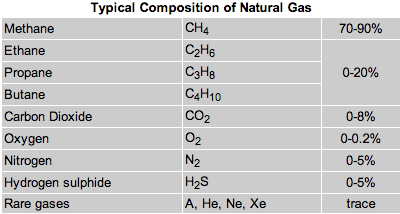
Natural gas: Natural gas is a major energy source around the world, accounting for 21 per cent of the world’s energy supply in 2010. Natural gas is an odourless, colourless gas, largely formed over millions of years underground. It’s made of a variety of compounds (see below), but methane is by far the most significant.
Natural gas is a fossil fuel, releasing greenhouse gases when burnt – but is less climate-polluting than coal, releasing about half of its carbon emissions.
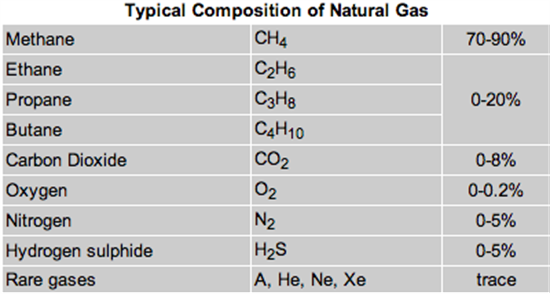
Typical makeup of natural gas. Source: Naturalgas.org
Unconventional gas: Unconventional natural gas is trapped in deep underground rocks that are hard to reach, such as shale rock or coal beds. Recent technological advances have made it possible to get these new sources of energy out of the ground.
Shale gas: Shale gas is extracted from shale rock using fracking, or hydraulic fracturing, of the rock. Shale rock is very common; the BGS estimates it makes up 35 per cent of the world’s surface rocks. It also suggests there are 1,300 trillion cubic feet of shale gas in the north of England.
The application of the fracking process – which has been used in the oil industry since the mid nineteenth century – to shale gas extraction has the potential to bring about a “a sweeping transformation” of the energy system around the world, according to the International Energy Agency, as different countries develop the resource.
Methane: In the shale gas debate, commentators sometimes make a distinction between natural gas and methane. In fact, as the chart above demonstrates, natural gas mostly is methane.
When it’s released directly in the atmosphere – rather than being burnt – methane is a powerful greenhouse gas. It is approximately 25 times more climate-polluting than carbon dioxide over a 100-year timescale. Some academics are worried that methane leaks during the fracking process – so called fugitive emissions – will significantly increase the impact of fracking on the climate.
Liquified Natural gas (LNG): In order to feed the world’s demand for natural gas, the gas needs to be transported from where it’s produced to where it’s going to be consumed. But transporting gas is not that easy. LNG is created by cooling natural gas to -160ºC, creating a clear, colourless and non-toxic liquid, 600 times smaller than natural gas. The biggest exporter of LNG around the world is Qatar, which sends it around the world in enormous tankers.
Shale oil: Fracking can be used to get not just gas out of the rock, but oil. The US-based Energy Information Administration estimates that shale oil represents 10 per cent of the world’s crude oil resources. It’s not clear how much the UK has got. The British Geological Survey is working on a survey of the shale oil resource in the south of the country. But a spokesperson tells Carbon Brief it will be “several if not many months” before the report is produced.
Coal bed methane (CBM): Methane occurs naturally underground within coal reserves. It can be extracted using a variety of techniques. In comparison to shale gas, the amount of gas we might get from CBM seems to be fairly small – maybe around three years of UK natural gas supply, according to the British Geological Survey.
Underground coal gasification (UCG): UCG is an industrial process where coal is converted into gas while it’s still underground. It involves drilling boreholes into the coal seam, injecting water and oxygen, and partially burning the coal underground. UCG has not been carried out in the UK since trials in Derbyshire in the 1950s, but recently there’s been an increased interest in the technology. UCG has the potential to open up large new areas of coal to exploitation – a prospect that has alarmed environmental campaigners.
Tags |
-
How to write about climate: Pull up a barstool

David Roberts
Energy, politics, and more
How to write about climate: Pull up a barstool

Shutterstock Climate change is an awkward fit for the conventions and institutions that make up today’s media.
There are a bunch of reasons for this, but the main one is that not much happens. Ecosystems change slowly and incrementally, on time scales much longer than those we’re biologically designed to heed. Climate processes unfold over centuries, millennia, whereas we’re primed to pay attention to what’s happening in front of our noses, or at best within our lifetimes. “The seas rose another .001 feet today” is not a story any editor wants to publish or anyone wants to read.
Climate politics is its own story, of course, and offers some day-to-day developments … but not many. U.S. politics addresses climate rarely, if at all, and when it does the results are, ahem, unenlightening.
All this means that it’s difficult to report on climate change. News editors want to know what’s new, what’s changed, and on climate, not much has. There are no crime scenes, no explosive revelations, no sudden shifts, just … PDFs. Lots and lots of PDFs. Climate change is just puttering along, moving at a pace that won’t mean much over an editor’s career but will profoundly reshape human habitats over centuries.
So it’s not much fun being a climate change reporter. Yet the public badly needs to hear about, and understand, climate change. So if not reporting, then what?
It seems to me what’s needed is more discussion of the meaning of what’s happening, the context, the forces at play, the narratives unfolding. The public — or more importantly, the subset of the public that is engaged, or potentially engaged, with these subjects — needs to learn about concepts, technologies, ways of doing things, ways of thinking about things, that are not familiar.
“Not familiar” is key here. The mainstream media, for all its talk of “objectivity,” is in fact incredibly biased in favor of the status quo, not just status quo powers but status quo narratives and frames. So anyone who’s going to try to help the public understand climate change is inevitably going to be in the position of an outsider. That adds a whole other layer of complications and tactical considerations.
What’s the best way to go about this? What’s the best way to write about climate and related issues?
From the time I first entered this field, I noticed a huge gap between wonks/academics, who release jargon- and chart-filled PDFs, and advocates/polemicists, who release propaganda. (I don’t mean that pejoratively; I just mean it’s explicitly designed to produce political outcomes.) Between those poles there is a large space for analysis, explanation, and argument, delivered by voices who (like wonks) are not forced by institutional commitments to “stay on message,” but who (like advocates) want to reach ordinary people. Independent thinkers and communicators — or, as they were once called, public intellectuals.
That space is well-occupied when it comes to, say, healthcare. Think of Ezra Klein. He’s not a reporter; he’s not writing in the voice from nowhere. He doesn’t pretend not to have values, preferences, and opinions. But his main focus is explanation. He elucidates complicated matters of healthcare policy and politics in ways that average, non-wonk readers can understand. He writes clearly, and fairly. His goal is to grow the pool of healthcare-literate citizens.
That space is much less occupied when it comes to climate. There are lots of wonks and academics, lots of advocates, but very few people who are (successfully) translating the issues so they are digestible by ordinary folk.
Why is that? My lay diagnosis is that most climate communicators originally approached the subject through science, or have scientific or academic backgrounds, or an interest in science writing. Much writing about climate is thus technical and dry; relatedly, most writers and advocates have been (and are) disproportionately obsessed with the “scientific consensus” and arguing with climate deniers. All of this is boring and off-putting to people who don’t approach it with similar scientific training or strong prior opinions about climate (which is most people).
I have tried, with varying success, to occupy that space. I have generally stayed away from science and instead focused on the social, political, and economic aspects of the problem. So, e.g., I try to explain discount rates, CBO scoring, the filibuster, risk-based decisionmaking, baseload power plants, and electric utilities. The stuff engaged citizens need to know.
Insofar as I’ve been successful at this — and jebus, you all have said so many nice things in the last few days! — it’s because of my secret formula. Since I’m leaving for a year, I’m going to share it with you. That way you can replicate me while I’m gone.
As I mentioned the other day, my entry into this field was rather idiosyncratic. I wasn’t trained in journalism or science or advocacy. Obviously that left me without the skills imparted by those disciplines (as many people have reminded me over the years), but it also left me without their preconceptions and dysfunctions. Instead, I was trained in academic philosophy, which is all about achieving conceptual clarity and constructing arguments. So when I approached these issues, it was all about breaking them down into their conceptual components, clarifying what the real disputes are, and making the case for my perspective. (Because I have argued in favor of some policies and positions, I often get accused of being an “advocate” or being part of a “team,” but unless you want to spend your life writing dreary, braindead “both sides are wrong, the truth is in the middle” pieces, you just have to live with that.)
Which brings me to my secret formula, which I call the Friend In a Bar principle.
When I write, I imagine that I am with a good friend in a bar. This is an intelligent friend, a generally knowledgeable and well-read friend, but a friend who doesn’t know much about the thing I’m talking about. I am trying to explain to my friend why she should care about this thing (say, discount rates). We’ve had a few drinks, so I’m feeling chatty.
If I were talking to a friend, would I adopt an “objective” tone, listing facts and citing sources in an inverted pyramid? No, that would be boring as hell. My friend doesn’t have to listen to me; it’s up to me to keep her from tuning out. Then again, would I just rant and rave about how long-term discount rates ought to be lower? No, that would be tiresome. There’s nothing worse than listening to someone get all red in the face about something you don’t particularly understand or care about. Would I speak as though I were some kind of Official Expert, standing at a podium and dispensing wisdom? No. My friend wouldn’t put up with that. She knows me too well.
So yeah, instead, I’d just talk to her. Not at her. To her. What I want, really, is to make discount rates interesting to my friend, to explain the context and considerations involved, so that she understands why the argument exists at all, the animating principles behind each side. I want her to see that it matters, that it’s lurking behind a lot of other stuff she already cares about.
I wouldn’t pretend I don’t have an opinion on discount rates, but I’m not looking for disciples, for soldiers in some discount rate army. Mainly what I want is to create someone else who cares about discount rates, so I have someone to talk to!
That’s the secret formula. I recommend it. And I mean really: When you write something, read it aloud and literally imagine yourself saying it to a good friend in a bar. When you speak to someone you know, someone you respect and who knows you, your voice has a kind of natural rhythm and variety. You instinctively know when you’re getting boring, or when you’ve droned on too much about technical stuff, or when you’re getting too pedantic or strident. You will know because, when you read it aloud, you will imagine your friend rolling her eyes.
And yeah, when you’re talking to a friend, you drop the occasional joke or curseword. Because that’s how people talk in real life. Not all Official. Just real.
Is this “journalism”? Hell, I don’t know. It’s not reporting. It’s not quite op-ed writing. It’s more … conversing. That’s what I’ve tried to do: draw people into conversations, enlarge the group of people aware of and engaged in this stuff.
I’m not arrogant enough to think my being gone will have any big impact on the world, but I do know that we need more people in that middle space, not wonking, not polemicizing, just musing and explaining and arguing and conversing. It’s what a healthy democracy looks like. I hope more people come in and occupy that space, and even more, I hope media editors and publishers see the worth in it.