Author: Neville

  • More Coal-Fired Plants Closing

    More Coal-Fired Plants Closing

    AEP and FirstEnergy eliminating facilities in Ohio, Pa.

    July 12, 2013
    By CASEY JUNKINS Staff Writer , The Intelligencer / Wheeling News-Register
    Save | Post a comment |            

    WHEELING – To comply with President Obama’s plan to reduce carbon and mercury emissions, American Electric Power and FirstEnergy Corp. are eliminating 2,665 megawatts of coal-fired generating capacity.

    Even though some believe burning methane natural gas for electricity – a process planned for the 700-megawatt generating station set for construction near Carrollton, Ohio – is better for the environment than burning coal, Wheeling Jesuit University biology professor Ben Stout is not so sure.

    “Methane is 20 times as powerful of a greenhouse gas than CO2,” he said, a statement supported by information from the U.S. Environmental Protection Agency. “Eventually, we are going to run out of fossil fuels, whether its coal, gas or oil. We need to be working to find a more sustainable strategy.”

    Article Photos

    Photo by Sarah Harmon
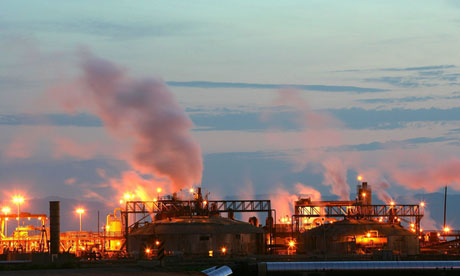
    FirstEnergy’s R.E. Burger Plant south of Shadyside was closed a few years ago. Now, FirstEnergy is closing additional coal-fired power plants.

    Nevertheless, residents of eastern Ohio and northern West Virginia who have long relied on relatively cheap electricity from coal soon may see their market squeezed. Obama recently directed the EPA to crack down on carbon emissions, specifically those coming from coal-fired power plants, to “prepare our nation for the unavoidable impact of climate change.”

    FirstEnergy sells electricity to customers in Hancock, Brooke, Wetzel and Tyler counties through its Mon Power subsidiary.

    The company still operates the W.H. Sammis Plant in Jefferson County, which actually stretches over the lanes of Ohio 7, as its largest generation facility in Ohio. FirstEnergy closed its R.E. Burger Plant south of Shadyside in 2010.

    This week, FirstEnergy officials announced they will deactivate two coal-fired power plants in Masontown, Pa., and Courtney, Pa., by Oct. 9. This will remove 2,080 megawatts from the company’s generating capacity. FirstEnergy estimates it will cost the company $925 million to comply with the EPA’s Mercury and Air Toxics Standards.

    After investing hundreds of millions of dollars to upgrade its facilities, FirstEnergy expects to reduce emissions of nitrogen oxides by 84 percent, sulfur dioxide by 95 percent, mercury by 91 percent and carbon dioxide by 20-30 percent. However, the two Pennsylvania plant closures will affect about 380 FirstEnergy workers.

    AEP provides coal-fired electricity to residents in Ohio, Marshall, Belmont, Jefferson, Harrison and Monroe counties, with much of this power generated at the Kammer and Mitchell plants in Marshall County and the Cardinal Plant in Jefferson County.

    AEP officials said Thursday they will close a 585-megawatt coal-fired power plant in Beverly, Ohio – northwest of Marietta – by 2015 because of “the cost of compliance with environmental regulations.” The company had explored the option of reconfiguring this plant to run on natural gas, but determined this would probably not be cost-effective.

    AEP already is scheduled to close its Kammer plant by the end of 2014, affecting the 55 workers now employed there.

  • Geothermal plants trigger small quakes near San Andreas fault

    Click here to find out more!

    Geothermal plants trigger small quakes near San Andreas fault

    Geothermal plants on the Salton Sea cause tremors, study finds, but it isn’t clear if they could touch off a major quake on the San Andreas fault.

    • Email
      Share
      7
    By Bettina BoxallJuly 11, 2013, 9:03 p.m.

    The geothermal power plants at Southern California’s Salton Sea don’t just produce electricity, they also trigger thousands of temblors not far from one of the West Coast’s most dangerous earthquake faults, a new study says.

    Research published online Thursday in the journal Science found that as production rose at the Imperial County geothermal field, so did the number of earthquakes. From 1981 through 2012, more than 10,000 earthquakes above magnitude 1.75 were recorded in the area.

    “That group of earthquakes …. is connected to the production,” said Emily Brodsky, a UC Santa Cruz geophysicist and the paper’s lead author.

    The largest quake during the three-decade study period was magnitude 5.1. The vast majority of quakes were small. But they are occurring about 12 miles from the southern end of the San Andreas fault, which seismologists predict will eventually rock the Southland with a devastating temblor.

    Researchers wonder if the many small quakes could trigger larger ones on the nearby fault.

    “The big question at this point is what is the probability of jumping that gap and actually starting to interact with the San Andreas,” Brodsky said. “We don’t know the answer to that question.”

    “It is plausible,” she said. “Is it a certainty? No.”

    Geothermal power production began in the Salton Sea field, on the sea’s southeastern edge, in 1982 and includes one of the largest and hottest geothermal wells in the world. Plants extract superheated water from thousands of feet beneath the Earth’s surface and use it to produce steam that drives turbines to generate electricity. The remaining brine is then injected back into the ground.

    It has been known for decades that injecting fluids into the Earth can lead to seismic activity. Previous studies have also linked earthquakes to geothermal production.

    What Brodsky and co-author Lia Lajoie — who worked on the project as a UC Santa Cruz graduate student — did was to quantify the relationship.

    By examining field production data and earthquake records, they found that the earthquake rate mirrored the net extraction rate — the volume of water withdrawn minus the amount injected back into the ground.

    “The net extraction … at the Salton Sea is about half a billion gallons per month,” Brodsky said. “That results in roughly one detectable earthquake per 11 days. If you increase it, that increases the number of earthquakes. And the more earthquakes you have, the more likely you are to have a big one.”

    The Salton Sea field is one of a number of geothermal operations in California, which leads the nation in geothermal power production. Work at the much larger Geysers field in Northern California has also triggered a multitude of small quakes, according to William Ellsworth, a geophysicist with the U.S. Geological Survey office in Menlo Park.

    Though not intentional, the seismic activity helps stimulate the flow of hot water by fracturing bedrock and creating pathways to the surface.

    “These very tiny earthquakes that are occurring are really important for the continued operation of the geothermal field,” Ellsworth said. “If we didn’t have the little earthquakes occurring, the field would probably close up.”

    Ellsworth, who was not involved in the Salton Sea study, called the results “very interesting” and said they raised questions of exactly how net extraction influenced the earthquake rate.

    But he said he doesn’t think the geothermal operations pose a serious risk of triggering earthquakes on the San Andreas fault.

    “There are larger, natural earthquakes that occur much closer to the San Andreas and so the chances that something in the geothermal reservoir would unleash a much larger earthquake are pretty small compared to the hazard from the natural events,” Ellsworth said. “I don’t think any of my colleagues who have looked at this think that this is a major contributor to the seismic hazard.”

    Geothermal production in California is regulated by the California Department of Conservation, which a spokesman said does not specifically look at seismic activity. But geothermal producers must submit annual seismic surveys to authorities.

    In an email, State Geologist John Parrish said the small Salton Sea quakes “are far enough away from the San Andreas fault, and at such shallow depths, that we do not believe the earth stresses in the area are being realigned so as to affect the San Andreas fault, or any other major fault within the region.”

    Regardless, scientists say that the southern San Andreas fault could one day unleash a magnitude 7.8 quake.

    “It is certainly a place where we expect a large earthquake, triggered or not,” Brodsky said. “People should be prepared for that.”

    bettina.boxall@latimes.com

    Copyright © 2013, Los Angeles Times

    • Email
      Share
      7

    MORE FROM THE TIMES
    • Wal-Mart, AT&T, Best Buy slashing iPhone 5 price
    • Canada: It’s a train trip through the Rockies, sure, but it’s also a visual buffet
    • Who are the winners and losers in the NBA free agency shuffle?
    • Saudi princess may have kept four other women as slaves, police say
    • Teacher who had teen’s baby charged with 41 sex crimes, 3 victims
    Comments are filtered for language and registration is required. The Times makes no guarantee of comments’ factual accuracy. Readers may report inappropriate comments by clicking the Report Abuse link next to a comment. Here are the full legal terms you agree to by using this comment form.

    Advertisement
    Click here to find out more!
    <SCRIPT language=’JavaScript1.1′ SRC=”http://ad.doubleclick.net/adj/N8558.279382.BIDMANAGER_DFASITE_/B7751758.43;abr=!ie;sz=160×600;click=;u=xbAAXbk6q719fud3fEY7yAVcUaEVCuSwJLF0wuYT2d4qX5E_aerpHECKYbxrTR5Xn1t-N00SCdatZijMDe0n_n0_oqBF_vad8Tmw;ord=1373610199?”> </SCRIPT> <NOSCRIPT> <A HREF=”http://ad.doubleclick.net/jump/N8558.279382.BIDMANAGER_DFASITE_/B7751758.43;abr=!ie4;abr=!ie5;sz=160×600;u=xbAAXbk6q719fud3fEY7yAVcUaEVCuSwJLF0wuYT2d4qX5E_aerpHECKYbxrTR5Xn1t-N00SCdatZijMDe0n_n0_oqBF_vad8Tmw;ord=1373610199?”> <IMG SRC=”http://ad.doubleclick.net/ad/N8558.279382.BIDMANAGER_DFASITE_/B7751758.43;abr=!ie4;abr=!ie5;sz=160×600;u=xbAAXbk6q719fud3fEY7yAVcUaEVCuSwJLF0wuYT2d4qX5E_aerpHECKYbxrTR5Xn1t-N00SCdatZijMDe0n_n0_oqBF_vad8Tmw;ord=1373610199?” BORDER=0 WIDTH=160 HEIGHT=600 ALT=”Advertisement”></A> </NOSCRIPT>
  • ‘The heart of Sydney’: plan to redevelop three-kilometre rail corridor

    ( There has been talk of building over Sydney Terminal station for many years.
       A Hotel complex and even at one stage a football field/ I will believe this if or when I see it happen.
       It really is wasted space.)

    ‘The heart of Sydney’: plan to redevelop three-kilometre rail corridor

    Date
    July 12, 2013 – 1:35PM
    CentralPlanning Minister Brad Hazzard said the government would call for expressions of interest from around the world for the project.

    The rail corridor between Central and Eveleigh will be built into high rises and the space over rail lines will be developed as the state government calls for global investment to create a “new heart” for Sydney.

    Planning Minister Brad Hazzard said the government would call for expressions of interest from around the world for the project that would develop up to one million square metres of space and create thousands of new jobs and homes.

    Central StationA rail corridor between Central and Eveleigh will be built into high rises and the space over rail lines will be developed.

    “We believe there is an opportunity for a world class redevelopment of the corridor on a scale that reflects Sydney’s global status,” he said, adding similar projects had been undertaken in New York, Paris and London.

    Advertisement

    “We want the world knocking on the door, to come and show us their best for rejuvenating the heart of Sydney.”

    The renewal corridor, comprising apartments, offices and public space, would stretch for three kilometres from the Goulburn Street car park in central Sydney to Macdonaldtown train station.

    Mr Hazzard said the project would allow more crossings to unite Ultimo and Redfern, where the rail lines presently act as a “Berlin Wall” dividing the two suburbs.

    The new links would help connect educational institutions such as the University of Sydney and the University of Technology, Sydney.

    Significant heritage buildings along the corridor could be subject to “adaptive re-use”.

    To date, development has taken place above and around a small number of stations in Sydney such as Chatswood, Kogarah and Edgecliff.

    Mr Hazzard said the 15- to 20-year project would help achieve targets set out in the draft metropolitan strategy, which calls for 114,000 new central Sydney jobs and tens of thousands of new homes by 2031.

    “The supply of new housing would also be a key component, not only for the broad community but also for students,” he said.

    It coincides with a flurry of infrastructure activity in central Sydney, including Barangaroo and the Darling Harbour redevelopment.

    Read more: http://www.smh.com.au/nsw/the-heart-of-sydney-plan-to-redevelop-threekilometre-rail-corridor-20130712-2pudd.html#ixzz2Ynd9o5tn

  • Fracking water injection could trigger major earthquake,

    Fracking water injection could trigger major earthquake, say scientists

    New studies suggest injecting water for geothermal power or fracking can lead to larger earthquakes than previously thought

    Geothermal plant near Calipatria, California

    A geothermal plant in California. Water injection may prime cracks, making them vulnerable to triggering by tremors from distant earthquakes. Photograph: Getty

    Pumping water underground at geothermal power plants can lead to dangerous earthquakes even in regions not prone to tremors, according to scientists. They say that quake risk should be factored into decisions about where to site geothermal plants and other drilling rigs where water is pumped underground – for example in shale gas fracking.

    Prof Emily Brodsky, who led a study of earthquakes at a geothermal power plant in California, said: “For scientists to make themselves useful in this field we need to be able to tell operators how many gallons of water they can pump into the ground in a particular location and how many earthquakes that will produce.”

    It is already known that pumping large quantities of water underground can induce minor earthquakes near to geothermal power generation and fracking sites. However, the new evidence reveals the potential for much larger earthquakes, of magnitude 4 or 5, related to the weakening of pre-existing undergrounds faults through increased fluid pressure.

    The water injection appears to prime cracks in the rock, making them vulnerable to triggering by tremors from earthquakes thousands of miles away. Nicholas van der Elst, the lead author on one of three studies published on Thursday in the journal Science, said: “These fluids are driving faults to their tipping point.”

    Prof Brodsky said they found a clear correlation between the amount of water extracted and injected into the ground, and the number of earthquakes.

    The analysis of the Californian site showed that for a net injection of 500m gallons of water into the ground per month, there is an earthquake on average every 11 days.

    “The problem is we can only predict how many earthquakes will occur but not their size and so with this knowledge then it has to be decided what is an acceptable size and frequency of earthquakes for a particular area,” said Brodsky.

    Because of the increase in the exploitation of geothermal power for renewable energy, and hydraulic fracturing or “fracking” to release natural gas, it is important to understand the chances of a large earthquake occurring at these sites, particularly if they are in densely populated regions.

    Another key feature of the research shows that sites experiencing sustained pumping of water into the ground for a period of decades or more are more susceptible to large tremors triggered by earthquakes occurring in other parts of the world.

    Large earthquakes in Chile in 2010, Japan in 2011 and Sumatra in 2012 all set off mid-size tremors in the central United States near to sites of water injection, with the largest induced earthquake of magnitude 5.7 destroying 14 homes and injuring two people. Van der Elst said: “The remote triggering by big earthquakes is an indication the area is critically stressed.”

    Heather Savage, a co-author on the same study said: “It is already accepted that when we have very large earthquakes seismic waves travel all over the globe, but even though the waves are small when they reach the other side of the world, they still shake faults. This can trigger seismicity in seismically active areas such as volcanoes where there is already a high fluid pressure. But this is the first time the same has been recognised for areas with anthropogenically induced high fluid pressure.”

    Scientists map the exact location of faults that occur naturally over most of the Earth’s crust. However, there are many underground faults that do not intersect the Earth’s surface, some of which could be very large. The fear is that one of these previously inactive faults could be triggered. Van der Elst added: “It is an important subject for the future that we understand about the disposal of fluids as they arise from many processes.”

    Rather than completely stopping the pumping of wastewater into the ground at geothermal plants, Prof Brodsky suggests that careful observation and analysis at each pumping site may help predict the chances of an earthquake.

  • More Signs of ‘Peak Us’ in New Study of ‘Peak Oil Demand’

    Sustainability July 10, 2013, 3:12 pm 54 Comments

    More Signs of ‘Peak Us’ in New Study of ‘Peak Oil Demand’

    By ANDREW C. REVKIN
    A new analysis of trends in fuel use projects declining demand for crude oil by 2035 both due to efficiency gains and a shift to other liquid fuels (NGL is natural gas liquids). Environmental Science & TechnologyA new analysis of trends in fuel use projects declining demand for crude oil by 2035 both due to efficiency gains and a shift to other liquid fuels (NGL is natural gas liquids).

    Back in 2010, I asked this question: “Which Comes First – Peak Everything or Peak Us?” My focus was whether humans could use the gift of foresight to curb resource appetites in ways that would avoid having the peak imposed on us by shortages or human-induced environmental shifts like climate disruption.

    There are growing signs the answer is yes. First came work pointing to “peak travel.” Then I wrote about a study foreseeing “peak farmland” — an end to the need to keep pressing into untrammeled ecosystems to expand agriculture.

    Now comes this fascinating paper in Environmental Science & Technology: “Peak Oil Demand: The Role of Fuel Efficiency and Alternative Fuels in a Global Oil Production Decline.” I asked the lead author, Adam R. Brandt of Stanford University, to write an “abstract for the common man” and he kindly complied. Here it is, with a followup question and answer:

    Oil depletion studies commonly focus on the supply of conventional petroleum without as much attention to the other side of the equation, which is petroleum demand. In this study, we examine the trends affecting demand for conventional oil in the future to see under what conditions “peak demand” for oil might arise. We find that historical trends in oil use lead to a peak in demand for oil by well before mid-century. If concerted effort is made to shift to oil alternatives and promote efficiency, a demand decline may arise even sooner.

    This may seem counter-intuitive, due to seemingly ever-growing demand for oil in Asia and other developing regions. However, a number of trends are underway that will mitigate this demand increase. First, demand for land transport does not grow consistently with wealth. Consumers in developed regions such as the US, Europe and Japan have reached “saturation” for land travel demand, even if we grow wealthier. That is, other factors (time, traffic congestion) limit our demand for land travel, even if we are wealthy enough to travel more. While demand in Asia is currently growing rapidly, that is because they are on the steep part of a “s-shaped” demand growth curve. Current trends should not be extrapolated. At the same time, global fuel economy standards are finally picking up again after some decades of stagnation. Fuel economy regulations across the globe mean that in 10-15 years, the average new consumer vehicle will get milage similar to today’s hybrids. Lastly, alternatives to conventional oil in the transport sector are growing rapidly, including oil sands, biofuels, electric vehicles, and natural gas vehicles. Obviously, not all of these ways to mitigate peak oil have the same climate consequences (more on this below).

    Despite this general optimism about shifting away from conventional oil, some sources of demand remain robust. For example, there is no evidence in historical data for saturation of demand for air travel. As people get wealthier, they fly more. No exceptions were found to this trend. Also, oil use in freight and shipping (both domestic and international) does not show saturation effects in our datasets. Thus, these needs grow in importance over time.

    We also find that the particular path taken away from conventional oil will strongly affect the climate consequences of our future energy system. A shift to wind and solar powered EVs will obviously have climate benefits. A shift to coal-based synthetic fuels may mitigate the need for conventional oil but will exacerbate climate change. The complex social and ecological challenges of biofuels are well known. For this reason, we argue that focus on oil futures should shift away from attention on oil as purely a scarcity problem toward a focus on managing the impacts (both social and environmental) of oil substitution.

    Readers are welcome to download the model used in our study and to explore the issues using an easy-to-use interface.

    I sent this followup question:

    In considering climate change implications, it would seem that this work identifies priority areas for developing carbon-neutral or lower-carbon fuels — i.e., biofuels for aviation or, say, Qatar’s process for turning natural gas into a jet fuel. Is that fair to say?

    Here’s Brandt’s reply:

    Yes, definitely. Historical data show robust demand for air and freight energy use as a function of wealth. That is, we like to keep flying and buying things even if we are not wanting to spend more time in traffic. Therefore, substitutes with climate benefits in these sectors would be strategically very important. Air is a well-known challenge due to the required energy densities of fuels. Freight seems to have more options in the near-term (e.g., electrification of rail or LNG for long-haul trucking).

    In considering this work, of course, it’s important to keep in mind the track record of energy forecasts, more generally. But there’s an interesting theme here to watch.

  • Russia and Ukraine likely to block huge Antarctic marine reserve

    Russia and Ukraine likely to block huge Antarctic marine reserve

    Conservation body meets to discuss protection of area 13 times the size of the UK, which would require unanimous agreement

    Penguins in the Ross Sea, off Antarctica

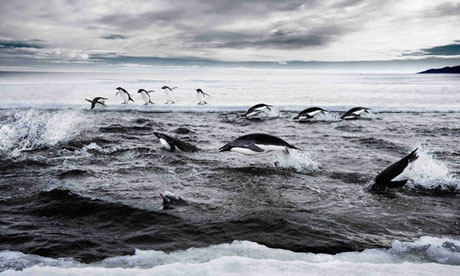
    Adélie penguins in the Ross Sea, off Antarctica. Photograph: John Weller/AFP/Getty

    Russia and Ukraine look likely to block a plan to create two huge marine reserves off the coast of Antarctica that combined would be bigger than the area of all the world’s protected oceans put together.

    The 25-member Commission for the Conservation of Antarctic Marine Living Resources (CCAMLR) meets in Bremerhaven, Germany, on Thursday to discuss the proposal to create the Marine Protected Areas (MPAs) in the Ross Sea, off the east coast of Antarctica. A decision, expected on Tuesday, would require unanimous agreement.

    The proposal, backed by the US, New Zealand, Australia, France and the EU, would designate an area 13 times the size of the UK as one in which natural resource exploitation, including fishing, would be illegal. Advocates say the MPAs would provide environmental security to a region that remains relatively pristine.

    Publicly, delegates and environmental NGOs have expressed optimism that the meeting will be a success. But a senior source at the meeting said the attitudes of Russia and Ukraine as they entered were looking negative.

    The debate highlighted a rift between “pro-[fish]harvesting countries” and those who style themselves proponents of conservation, such as the US, Australia, New Zealand and the EU, according to Alan Hemmings, a specialist in Antarctic governance at the University of Canterbury, New Zealand.He said: “You would put Russia and the Ukraine near the top of the states that are likely to be concerned about marine protected areas in the Antarctic on a large scale, along with China, Japan and, on and off, South Korea.”

    “There’s a tug of war between those who want to establish conservation management and those who want to keep working with smaller-scale fisheries management,” said Steve Campbell, campaign director at the Antarctic Ocean Alliance. But he expressed “quiet optimism” that the proposals would be passed, if not at the meeting in Germany, then at the next annual meeting in Hobart, Australia later in the year.

    The US and NGOs have been lobbying countries who expressed reservations at the last CCAMLR meeting. NGOs and delegates reported that China, South Korea and Japan looked likely to support the proposals.

    Many countries have valuable fisheries in the region, particularly for patagonian toothfish and krill. Andrea Kavanagh, director of the Pew Charitable Trusts Southern Ocean sanctuaries, said defining the boundaries of the reserves to balance ecology and economic interests would represent a challenge to negotiations.

    Additionally, a sunset clause for the reserves, proposed by Norway and supported by Russia and Japan, would mean the protected status of East Antarctic and Ross Sea reserves would have to be renewed in 2064 and 2043 respectively. Campbell said reserves with time limits were highly unusual.

    “Precedent tells you that if you set up a protected area, you set it up for an indefinite period of time. If you set up a national park in a country, you designate it in perpetuity.” He said the potential for fishing and other resources in the future was driving the push.

    “It’s not just about what’s there now, it’s also about what could be a future economic interest or a future interest in the region,” said Campbell.

    The extraordinary session in Bremerhaven was arranged after the last annual meeting of CCAMLR in November, 2011 failed to reach a consensus on the MPAs. At the time Russia, China and Ukraine expressed concerns at a lack of available science in favour of the reserves. The decision was taken to reconvene this summer with the agenda solely focused on the proposals.

    Green groups expressed dismay at last year’s inaction. They were joined by delegates from the USA, UK, EU and Australia who feared that CCAMLR had lost its proactive attitude to conservation.

    At the end of the 2011 meeting, the Ukraine delegation said well-grounded scientific arguments were lacking. They said MPAs were only one approach to managing an ecosystem and that “only fishing, at least at some level, can guarantee that research is conducted” to monitor fish stocks.

    “Russia was of the view that previous scientific committee advice was related to only some aspects of MPAs and that all available information needed to be considered,” said the Russian delegation.

    Russian and Ukraine declined to comment further on this week’s meeting.