Author: Neville

  • Alber and Hopkinson: Getting a rise out of sea level

    Alber and Hopkinson: Getting a rise out of sea level

    updated Wednesday, July 10, 2013 – 7:57pm

    Sea-level column was misleading

    In a recent commentary, Harold Brown, a senior fellow at the Georgia Public Policy Foundation, discussed the myriad factors that affect sea level around the globe, but neglected to mention that the sea is currently rising at an unprecedented rate (Column, “‘Sea-level rise’ is complex phenomenon,” Saturday).

    Moreover, scientists agree that the increase in sea level is due to a combination of warming temperatures (which causes water to expand), melting glaciers and loss of ice sheets on Greenland and Antarctica, all of which are linked to human activities.

    Providing accurate information about sea-level rise will not prevent it, but it is a good place to start conversations with coastal communities about the risks of rising seas. Although it is true, as Brown points out, that local rates of rise can and do vary, these variations in relative sea-level rise are taken into account when overall trends are evaluated.

    As reported in 2007 in the journal Science, the rate of sea-level rise over the past 20 years was 25 percent faster than in any other 20-year period over the past 115 years, and projections of the Intergovernmental Panel on Climate Change suggest that sea level will rise by between 11 inches and 17 inches by 2100. This means that the more than eight million people living in coastal flood zones in the United States are at increased risk to flooding, as are many of our assets related to energy, commerce and the military that are co-located on the coast.

    In Georgia, sea level has been recorded at Fort Pulaski since 1935, and in that time it has increased by more than 10 inches. Residents of Tybee Island already have cause for concern because Highway 80 currently floods and is shut down several times a year, preventing access to emergency care in Savannah and halting economic activity. Coastal communities need a chance to assess their risks and their vulnerabilities so that they can plan adaptation strategies. Obscuring these facts, as Brown seems intent on doing, is counterproductive.

    In his column, Brown asserts that “‘experts’ and activists try to simplify the process to float their own agendas.” If we do not make a commitment to understanding the causes and consequences of sea-level rise, agendas aren’t the only things that will be floating.

    Merryl Alber

    Charles S. Hopkinson

    • Merryl Alber and Charles S. Hopkinson are professors in the department of marine sciences at the University of Georgia.

  • Severe floods and deadly landslides hit Sichuan province, China (video)

    Severe floods and deadly landslides hit Sichuan province, China (video)

    Desert Gypsy's picture
    Submitted by Desert Gypsy on Wed, 07/10/2013 – 07:23

    The Watchers, 7/10/13, Adonai


    After days of torrential rain and heavy flooding across parts of southwest China, a deadly landslide occurred in Zhongxing town, Sichuan province, on July 10, 2013. More than 100 rescuers are on the scene at this time.

    State media said landslide has buried between 30 and 40 people.Since Monday evening strong rain has affected more than 508,000 people in Sichuan and Yunnan provinces. About 300 homes were destroyed by heavy rain and three bridges have collapsed in the cities of Jiangyou and Deyang.

    Read more

    Tags:

    Category:

  • Arctic Atmospheric Methane Trends 2013

    Arctic Atmospheric Methane Trends 2013

    It’s been a while since we’ve looked at methane trends in the Arctic atmosphere (just a little under a year in fact).  This important greenhouse gas has been on the rise over the past several decades, though that rise has not been nearly as steady as CO2. What’s worrisome to those who follow methane is the return to higher growth rates of the gas over the past few years.  This chart shows the atmospheric measurement of methane at Point Barrow cover the last 2.5 years:

    Arctic Methane Trends 2013

    What I’ve highlighted here in red are a few interesting features of the methane levels that are worth mentioning.

    First, the horizontal red bar shows the lowest boundary of the yearly methane measured a few weeks ago. Methane always hits a low annual concentration at Point Barrow around the middle of the year, usually in June as part the natural fluctuations.  This year we saw the highest low point ever recorded.  This is significant because it shows the underlying long-term growth rate.  If you compare this year’s low point to last year’s, you get a sense of the upward turn in the atmospheric methane concentrations.

    At the top of this graphic in the large red circle are several “anomalous” readings that were recorded over Barrow last year just about the time that GAC-2012 was hitting.  These are huge outliers, but because there were several of them occurring all about the same time, we can also assume they were valid data in the sense that it was really being recorded properly.  In direct email discussions with staff at Barrow station at the time, they characterized these as “likely” local anthropogenic sources, i.e. outgassing from drilling rigs, etc.  Note the word “likely”.  These samples are sent back to a lab for analysis that can better describe the sources.  My hunch, and again, this is only a hunch, is that GAC-2012 or simply the very low ice levels of last summer or some combination, may have brought up more methane and caused these very high anomalous readings. It is also important to note that all the data points in the graph that are orange have yet to be fully validated– though they are in the vast majority of cases.

    Finally, in the small red circle is one the latest readings from Barrow.  It continues to show the higher long-term upward trend is accelerating and also shows the remainder of 2013 should be interesting to watch, as it will likely show the strong growth rate of methane in the Arctic atmosphere. Though the level will oscillate up and down a bit between now and its annual peak in early 2014, we should monitor the rest of the summer Arctic melt season for the kinds of “anomalies” that we saw last year. I will especially look for a period of anomalously high levels should another large cyclone hit in August or even September when sea ice is at its lowest.

    The bottom line of all this is that methane levels remain an important metric to gauge both current and potential future changes in the Arctic climate, and the trends should be of great concern.

    Addendum by Neven:

    Thanks go out to R. Gates for his update on methane. I’m taking the opportunity to draw attention to this effort to get methane levels back to 1250 ppb, much like the 350 movement is doing for CO2: 1250now.org

    There is also a very cool interactive website that allows one to track methane in the atmosphere everywhere on the planet: Methane Tracker. The site is still in the pre-alpha phase, but when it’s finished, it’ll be announced here in a separate blog post.

    Posted by on July 10, 2013 at 22:49 in Methane | Permalink

    Reblog (0) | | Digg This | Save to del.icio.us | |

  • Arctic melt hits food security in bitter taste of life on a hotter planet

    11 July 2013

    Arctic melt hits food security in bitter taste of life on a hotter planet

    by David Spratt, first published in RenewEconomy
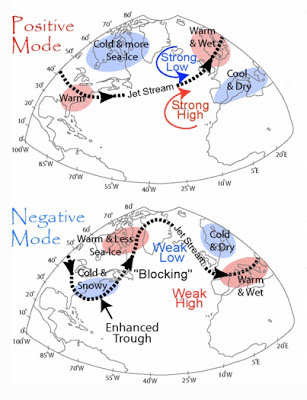
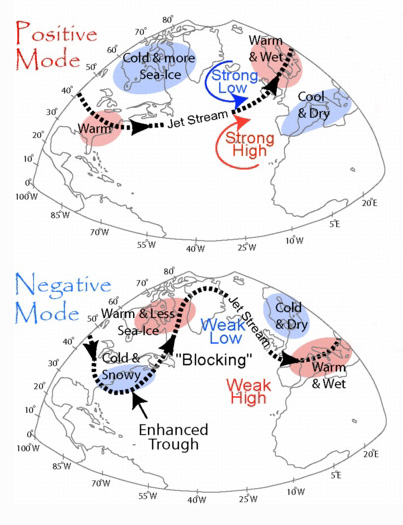
    Arctic melt has pushing the Jet Stream into
    a more meandering, S-shape pattern, dragging
    down and stalling cold and wet conditions
    over Europe

    A wet summer and autumn, followed by a cold winter and spring, in the UK and Ireland have hit wheat and potato production and cattle feed, a foretaste of how climate change can affect food security, even in the developed economies.

    And the culprit in this drama is rapid Arctic melting, which has destabilised the Jet Steam and brought extreme weather – unusual cold, heavy snowfall, record rain and hot spells — to much of northern Europe and North America, and record heat to the Arctic. Following Superstorm Sandy’s battering of the US north-east coast in 2012, flooding in June across central Europe was the worst in 400 years.

    Rapid Arctic melting – sea-ice volume in September 2012 was down by four-fifths compared to the summer average 30 years ago – has help change the Jet Stream, the river of high altitude air that works to separates Arctic weather from that of northern Europe, Russia and Canada, and which governs much northern hemisphere weather.

    The ice loss has added to ocean and atmospheric heat, pushing the Jet Stream into a more meandering, S-shape pattern, dragging down and stalling cold and wet conditions over Europe, and bringing record heat to the Arctic, as was dramatically experienced in Alaska last month.

    Professor Jennifer Francis, of Rutgers Institute of Coastal and Marine Science, says the Arctic-driven changes to the Jet Stream allows “the cold air from the Arctic to plunge much further south. The pattern can be slow to change because the [southern] wave of the jet stream is getting bigger…  so whatever weather you have now is going to stick around”.

    In March, new research found that “the severe loss of summertime Arctic sea ice — attributed to greenhouse warming — appears to enhance Northern Hemisphere jet stream meandering, intensify Arctic air mass invasions toward middle latitudes, and increase the frequency of atmospheric blocking events like the one that steered Hurricane Sandy west into the densely populated New York City area”.

    And a recent study be Liu et al found that “the recent decline of Arctic sea ice has played a critical role in the recent cold and snowy winters” across the northern hemisphere.

    Last September, Francis warned that 2012′s record sea ice melt could lead to a cold winter in the UK and northern Europe. And so it turned out, with farmers copping the consequences:

    WET SUMMER AND AUTUMN: Six out of the last seven summers in the UK (since the record-smashing Arctic melt of 2007) have seen below-average temperatures and sunshine, and above-average rainfall. 2012 was the UK’s second wettest year on record, with autumn rain almost 50% higher than long-term average. In Ireland, twice the average amount of rainfall was recorded in many parts of the country during the three summer months of 2012.  People across the UK and Ireland will readily tell you that “We haven’t had a summer in four or five years”, and unusually, for them, complain of “bitter” and “terrible” winters, with temperatures dropping as low as –18C in Northern Ireland.

    COLD WINTER AND SPRING: “It’s been the longest winter on record in this country. Not since the records began 70 years ago has there been a March as cold as this year’s. It’s been followed by the coldest April in 25 years in some areas of the country,” reported the Irish Examiner on 9 May 2013.  The Irish spring in 2103 was coldest in 62 years across most of country, and dull and windy. Spring in the UK this year was the coldest in 50 years.

    BAD COMBINATION: This combination of events has wrecked farmer’s schedules. Less growth in a dull 2012 summer – combined with water-logged crops and pastures in autumn – reduced yields, and some crops had to be left in the ground.  The spring 2013 growing season, including for apples and pears as well as pasture, started up to six weeks late due to the cold, dull conditions. And waterlogged fields meant that across Ireland cattle were still being kept in their winter sheds in the first week of June, ostensibly a summer month.  The consequences – whilst mild compared to climate-change impacts on vulnerable communities in the developing world from the African Sahel to Asia’s changing monsoons – show how easily the security of food production can be disrupted:

    WHEAT:  In the UK, a wet autumn, hard winter and cold spring has resulted in one of the smallest wheat harvests in a generation, 30% below normal. Britain, generality the third biggest wheat grower in the EU, will be a net importer for the first time in 11 years. Charlotte Garbutt, a senior analyst at the industry-financed Agriculture and Horticulture Development Board says: “Normally we export around 2.5m tonnes of wheat but this year we expect to have to import 2.5m tonnes.”   The latest analysis from the UK  Department for the Environment, Food and Rural Affairs says total farming income decreased by £737million in 2012 to £4.7bn, as farmers faced both crop losses and higher feed costs.

    STOCK LOSSES: Late snowstorms across England, Sotland, Wales and Ireland March 2013, with drifts of up to 5 metres, killed an estimated 40,000 newborn lambs. In ireland’s west, one-quarter more animals died in the first three months of 2013 compared to 2012, with some vets trained to look for suicidal behaviour in farmers.

    POTATO SHORTAGE: A wet autumn and poor season in 2012 prevented many crops being harvested in Ireland. Supermarket price-squeezing has also driven some farmers out of the industry, together resulting in reduced yields of at least 30 per cent in 2012. By spring 2013, potato prices had almost tripled in many parts of Ireland, with supplies exhausted and a reliance on imports from central Europe.

    Limavady farmer, James Wray, told UTV News that said the changing weather in recent weeks had forced the price up: “This year has been a terrible growing season with loads of crops lost and loads of crops not harvested and any crops that have been harvested have produced low yields. There just isn’t any potatoes left in the country, there are no farmers with potatoes left, so whatever potatoes are about, are very, very expensive. If you go to any of the major supermarkets most of their potatoes are coming in from Europe just to bridge the gap.”

    Potato shortages have a particular cultural resonance in Ireland as a consequence of the Irish potato famine of the mid-nineteenth century, which killed a million people and forced another million to emigrate.

    FEED SHORTAGE: In the last week of May (the final week of spring), farmers in Ireland’s west were queuing for hay and silage imports from England, France and Netherland as their winter feed became exhausted and a lack of pasture growth in spring due to cold and overcast conditions, and wet fields, prevented cattle from being moved from their winter sheds.  More than 13000 tonnes of feed was imported, but even so farmer Enda Stenson said local farmers “have neither money nor fodder”. Many had sold down their herds to be able to buy feed for the remainder.

    BEES IN TROUBLE: Bad weather and disease is also threatening honey production, with some beekeepers expecting to produce no honey as bees have been unable to mate and hives are decimated. And bees play a crucial role in pollinating many crops. Jim Donohoe, of the Federation of Irish Beekeepers’ Associations, told the Irish Independent that the problem was weather related: “We’ve had bad summers before, but because of the wind, rain and lack of sunshine, we’ve had serious problems with colonies wanting to swarm, but the queens being unable to mate with drones which refused to fly because there wasn’t calm conditions. This year, we had a delayed winter where bees couldn’t fly. The flowers were delayed coming out, and that crucial period meant bees died from old age. All of this combines to about 50pc of colonies being lost. If we don’t get milder weather, the losses will be closer to 75pc.

    These stories may seem trivial compared to the devastating impact of climate change on global food security and prices, and their political consequences. Writing on Egypt’s new political turmoil, Nafeez Ahmed notes that:

    “Food price hikes have coincided with devastating climate change impacts in the form of extreme weather in key food-basket regions. Since 2010, we have seen droughts and heat-waves in the US, Russia, and China, leading to a dramatic fall in wheat yields, on which Egypt is heavily dependent. The subsequent doubling of global wheat prices – from $157/metric tonne in June 2010 to $326/metric tonne in February 2011 – directly affected millions of Egyptians, who already spend about 40% of their income on food. That helped trigger the events that led to the fall of Hosni Mubarak in 2011, but the same configuration of factors is worsening.”

    And Lester Brown, head of the Earth Policy Institute in Washington, has warned that grain harvests are already shrinking as US, India and China come close to ‘peak water’. He says that 18 countries, together containing half the world’s people, are now over-pumping their underground water tables to the point – known as “peak water” – where they are not replenishing and where harvests are getting smaller each year.

    Together these stories paint a compelling picture of the threat to food security from climate change, not just in the Middle East, Asia and Africa, but in the heart of the

  • Update on coastal erosion ( Rob Oakeshott )

    Update on coastal erosion

    Inbox
    x
    Norris, Garth (R. Oakeshott, MP) <Garth.Norris@aph.gov.au>
    2:17 PM (36 minutes ago)

    to Garth

    Good afternoon,


    Thank you for your continuing interest and advocacy regarding the need for a comprehensive government response to the worsening problem of coastal erosion.


    As part of this continuing campaign, Rob has written to the newly sworn-in Minister for Climate Change, the Hon. Mark Butler MP, alerting him to the work already done by our community and calling on the  government to act on the many reports published over the past four years in relation to this issue. Rob’s letter, attached for your interest, was sent along with an email from Old Bar Beach Sand Replenishment Group President Elaine Pearce asking what had happened to the recommendations that were officially adopted by the government in 2010 from its own report on the Impact of Climate Change on Coastal Communities.


    I will forward a copy of the Minister’s response on Rob’s behalf as soon as it is received.


    Kind regards,

    Garth


    Garth Norris

    Adviser

    Robert Oakeshott – MP for Lyne

    Ph. 6584-2911

    Fax. 6584-2922

    E: garth.norris@aph.gov.au

    W. www.roboakeshott.com


    Coastal_erosion.pdf
    79K   View   Download
  • Green news roundup: Droughts, elephant poachers and tidal power

    Green news roundup: Droughts, elephant poachers and tidal power

    The week’s top environment news stories and green events

    If you’re not already receiving this roundup, sign up here to get the briefing delivered to your inbox

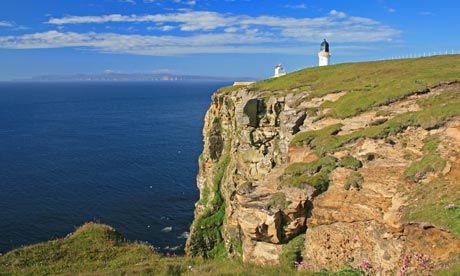
    Pentland firth

    Pentland firth. Photograph: Albaimages / Alamy/Alamy

    Environment news

    Droughts could hit food production in England in 2020s, report warns
    Tidal power from Pentland firth ‘could provide half of Scotland’s electricity’
    Great Barrier Reef’s condition declined from moderate to poor in 2011
    China’s reliance on coal reduces life expectancy by 5.5 years, says study
    Future of UK offshore wind power in ‘serious doubt’
    Biofuels plant opens to become UK’s biggest buyer of wheat

    On the blogs

    African elephants in AustraliaGuns will not win the war against elephant poachers
    George Monbiot: The National Farmers’ Union secures so much public cash yet gives nothing back
    Antarctic krill face unhappy Hollywood ending if fossil fuel emissions keep rising
    Charles Krauthammer’s flat-earther global warming folly
    ‘Wild’ animals in travelling circuses benefit no one
    Tony Abbott’s climate policy is just a figleaf developed by deniers

    Multimedia

    A boy plays on an algae-covered seaside in Qingdao, Shandong provinceThe week in wildlife – in pictures
    How to set up your bicycle like a pro – video
    Hebrides: Islands On The Edge – in pictures
    Chinese beaches overwhelmed by algae – in pictures

    Best of the web

    Australian heatwaves ‘five times more likely due to global warming’
    US has failed to protect marine life, say conservationists
    Stephen Emmott’s population book is unscientific and misanthropic
    Why Obama ditched green jobs from his climate change rhetoric
    2C climate target is half of what is needed, say scientists

    …And finally

    Google hosts fundraiser for climate change denying US senator
    Proceeds of the lunch, priced at $250 to $2,500, will benefit the Republican Jim Inhofe, who calls climate change a ‘hoax’

    • SKY_Guardian_Charity_Awards_190713
    • Button_Public_Services_Awards_Deadline_120713
    • Button_International_Development_Achievement_Award_050813

    You are receiving this email because you are a Green Light subscriber.

    Guardian News & Media Limited – a member of Guardian Media Group PLC. Registered Office: Kings Place, 90 York Way, London, N1 9GU. Registered in England No. 908396