Last Updated: July 8, 2013 (Notes)
full report
Overview
Kuwait is one of the world’s top producers and net exporters of oil.
As a member of the Organization of the Petroleum Exporting Countries (OPEC), Kuwait was the world’s 10th largest oil producer in 2012. Despite having the second smallest land area among the OPEC member countries, Kuwait exports the third largest volume of oil. Kuwait’s economy is heavily dependent on petroleum export revenues, accounting for nearly half of its gross domestic product and nearly 70 percent of export revenues. EIA estimates these revenues were 75 billion dollars in 2012. Kuwait should remain one of the world’s top oil producers as the country pushes towards a target of 4 million barrels per day (bbl/d) of production capacity by 2020.
In an effort to diversify its oil-heavy economy, Kuwait has expanded efforts to develop its non-associated natural gas fields, which remain a small portion of its natural gas production. Greater production of gas can provide fuel for electricity generation which frequently falls short during periods of peak electricity demand.
Energy policy is set by the Supreme Petroleum Council, overseen by the Ministry of Petroleum, and executed by The Kuwait Petroleum Corporation and its various subsidiaries. In addition, Kuwait has an active sovereign-wealth fund, the Kuwait Investment Authority, which oversees all state expenditures and international investments. Despite, Kuwait’s constitutional ban on foreign ownership of its resources, the government has taken measures to increase foreign participation in the oil and gas sectors. Kuwait is a constitutional emirate led by the Emir of Kuwait, a hereditary seat led by the Al-Sabah family. The Prime Minister and his deputy and council of ministers are approved by the Emir.
Oil
Kuwait holds the world’s sixth largest oil reserves and is one of the top ten global producers and exporters of total petroleum liquids.
According to Oil & Gas Journal, as of January 2013, Kuwait’s territorial boundaries contained an estimated 102 billion barrels of proven oil reserves, roughly 6 percent of the world total. Kuwait ranked sixth in terms of oil reserves among all countries in 2012. Additional reserves are held in the Partitioned Neutral Zone (PNZ), which Kuwait shares on a 50-50 basis with Saudi Arabia. The Neutral Zone holds an additional 5 billion barrels of proven reserves, bringing Kuwait’s total oil reserves to 104 billion barrels.
Sector organization
Kuwait Petroleum Corporation, Kuwait’s national oil company, and its subsidiaries controls the entire oil sector from upstream to downstream and exports.
The government of Kuwait owns and controls all development of the oil sector. The Supreme Petroleum Council (SPC) oversees Kuwait’s oil sector and sets oil policy. The SPC is headed by the Prime Minister. The rest of the council is made up of six ministers and six representatives from the private sector, all of whom serve three-year terms, and are selected by the Emir. The Ministry of Petroleum supervises all aspects of policy implementation in the upstream and downstream portions of both the oil and natural gas sectors.
The Kuwait Petroleum Corporation (KPC) manages domestic and foreign oil investments. Kuwait Oil Company (KOC), the upstream subsidiary of KPC, was taken over by the Kuwaiti government in 1975 and manages all upstream development in the oil and gas sectors. The Kuwait National Petroleum Company (KNPC) controls the downstream sector, while the Petrochemical Industries Company (PIC) is in charge of the petrochemical sector. Export operations are overseen by both KNPC and the Kuwait Oil Tanker Company (KOTC). Foreign interests of KPC are handled by the Kuwait Foreign Petroleum Exploration Company (Kufpec), and international upstream development and downstream operations are controlled by Kuwait Petroleum International (KPI). Finally, Kuwait Energy Company (KEC) is a privately-held company that has developed a number of foreign interests over the past decade, including interests in Yemen, Egypt, Russia, Pakistan, and Oman.
The Partitioned Neutral Zone (PNZ) has its own managing companies, separated by onshore and offshore activities. The onshore sector was developed by American Independent Oil Company (Aminoil), which was nationalized in 1977. Getty Oil, which would eventually be subsumed by Chevron, was brought in to develop onshore PNZ fields Wafra, South Umm Gudair, and Humma. Chevron remains a participant along with KPC, although management of all KPC PNZ interests has been transferred to the Kuwait Gulf Oil Company (KGOC). Offshore, a Japanese company, the Arabian Oil Company (AOC) discovered Khafji, Hout, Lulu, and Dorra oil fields in the 1960s. The concessions with Saudi Arabia and Kuwait expired in 2000 and 2002, respectively. KGOC was established in 2002 to oversee the offshore operations for KPC. Subsequently, KGOC, along with Aramco Gulf Operations Company (AOGC), set up a joint operating company, Al-Khafji Joint Operations Company (KJO), which manages offshore PNZ production.

Source: Kuwait Oil Company (KOC)
Exploration and production
Kuwait has implemented enhanced oil recovery measures to boost stagnant production rates. New discoveries have been made, but Kuwait’s regulated oil sector hinders further exploration and production.
In 2012, Kuwait’s total oil production was approximately 2.8 million barrels per day (bbl/d), including its share of approximately 250,000 bbl/d of oil production from the PNZ. Of the country’s 2012 production, approximately 2.6 million bbl/d was crude oil and 200,000 bbl/d was non-crude liquids. Slightly over half of Kuwaiti crude production in 2011 came from the southeast of the country, largely from the Burgan field. Production from the north has increased to approximately 650,000 bbl/d according to KOC. In early 2011, as one of the few OPEC members with spare capacity, Kuwait increased oil production to compensate for the loss of Libyan supplies.
Because of a greatly debated constitutional ban on foreign ownership of Kuwait’s natural resources, domestic production of Kuwait’s fields have stalled. Discoveries of lighter crudes in the center of the country have been successful, but progress has not moved beyond the planning stages. In 1984, a discovery was made in South Maqwa, revealing light crude of API 35° to 40° grade, and after drilling began at Kra’a al-Mara in 1990, significant volumes of 49° API crude were found. Negotiations began with ExxonMobil, but the conditions to move this project to full development have not been reached. Another successful discovery was made in 2006 in the Sabriya and Umm Niqa areas, in the north of the country, which added an estimated 20 to 25 billion barrels of reserves, although mostly of a heavier, sour quality.
In a plan to circumvent the constitutional ban, international oil companies (IOCs) were allowed involvement through Enhanced Technical Service Agreements (ETSA). Royal Dutch Shell, in February 2010, signed an ETSA to exploit these new discoveries; however, progress has been slow in boosting production. KOC is also having trouble developing the Lower Fars reservoir of al-Ratqa field. KOC initially negotiated with ExxonMobil, Shell, and Total to develop this field, but KOC subsequently abandoned plans for a joint project development. KPC also signed a memorandum of understanding (MOU) in July 2010 with Japan Oil, Gas, and Metals National Corporation (JOGMEC) to assess the feasibility of injection of carbon dioxide as a potential enhanced oil recovery (EOR) technique.
KPC announced a $100-billion capital spending plan over five years encompassing both the upstream and the downstream sectors. Included are plans to upgrade Kuwait’s production and export infrastructure and its tanker fleet, expand exploration, and build downstream facilities, both domestically and abroad. This effort is expected to boost total oil production capacity to 4 million bbl/d by 2020, and it is projected that the production capacity would be maintained through 2030. In order to achieve its 2020 target, IOC investment and participation will be necessary.
Much of Kuwait’s reserves and production are concentrated in a few mature oil fields discovered in the 1930s and 1950s. The Greater Burgan oil field, which comprises the Burgan, Magwa, and Ahmadi reservoirs, makes up the dominant portion of both reserves and production. Burgan is widely considered the world’s second largest oil field, surpassed only by Saudi Arabia’s Ghawar field. Greater Burgan was discovered in 1938, but it did not become fully developed until after World War II. Burgan has been producing consistently since production first began. Generally, production from Burgan is medium to light crudes, with API gravities in the 28° to 36° range. Although Burgan’s recent production of between 1.1 and 1.3 million bbl/d accounted for about half of Kuwait’s total production, Burgan could be further developed to produce as much as 1.7 million bbl/d. KOC is seeking to boost Burgan’s capacity largely from the Wara reservoir through water injection recovery methods.
Other production centers in the south of the country include Umm Gudair, Minagish, and Abduliyah. Umm Gudair and Minagish produce a variety of crude oil grades, which largely fall in the medium range, with gravities of 22° to 34° API.
In January 2003, water injection began at Minagish to enhance oil recovery and offset natural production declines. In 2009, an exploration well drilled discovered light crude and associated natural gas at the Mutriba oil field to the west of Rudhatain. As much as 80,000 bbl/d are expected from this field, with plans for production coming on-stream by 2014.
Northern Kuwait holds the majority of Kuwait’s larger fields other than Greater Burgan. Kuwait’s second largest source of crude production is from the northern Raudhatain field, with a capacity of 350,000 to 400,000 bbl/d. Sabriya field is adjacent to Raudhatain and adds another 100,000 bbl/d. The frontier fields of al-Ratqa, the southern extension of Iraq’s Rumaila structure, and the smaller Abdali field were both obtained after the new border was established in 1993 following the end of the Persian Gulf War. They add another 75,000 bbl/d of production capacity. In August 2010, British Petrofac signed a deal with KOC to boost production capacity at Raudhatain and neighboring Sabriyah fields. In the same month, Kuwaiti and Iraqi officials agreed in principle to jointly develop shared oil fields, as well as to allow IOCs to aid in such projects.
Project Kuwait
In an otherwise nationalized oil sector, Project Kuwait attempts to incentivize foreign investment to bring production capacity to 4 million bbl/d by 2020.
A focal point of Kuwait’s aspirations to attain a production capacity of 4 million bbl/d is Project Kuwait. Proposed in 1998, Project Kuwait was a concerted effort to create proper incentives to attract foreign participation. The contract structure that resulted was challenged as unconstitutional and the National Assembly has impeded progress of Project Kuwait for a number of years. Kuwait’s constitution bars foreign ownership of the country’s natural resources, which precludes the product-sharing agreements (PSAs) that provide the desired incentive for IOC investment. In order to allow IOC involvement, an “incentivized buy-back contract” (IBBC) arrangement was created, which neither involves production sharing nor concessions.
The structure of the IBBC agreements allows the Kuwaiti government to retain full ownership of oil reserves, control over oil production levels, and strategic management of the ventures. Foreign firms are to be paid a “per barrel” fee, along with allowances for capital recovery and incentive fees for increasing reserves. In May 2007, the Kuwaiti ruling family conceded the responsibility to approve each related IBBC for Project Kuwait to the National Assembly, which has caused further delays. Additionally, more performance-based incentives have been introduced in an ETSA structure, although only one has been awarded so far.
Project Kuwait aims to increase the country’s oil production capacity from four northern oil fields (Raudhatain, Sabriya, al-Ratqa, and Abdali) and targets 1 million bbl/d of output from the fields by 2015. This serves as a pivotal component to increase overall oil production capacity to 3.5 million bbl/d by 2015, and 4 million bbl/d by 2020, which KOC admits will require the help of IOCs. Some agreements, such as the ETSA with Royal Dutch Shell forged in February 2010 and continued negotiations with other IOCs over EOR developments have enhanced prospects for foreign participation, yet no other final agreements have been made. Production from the northern fields is expected to rise with the installation of a 165,000 bbl/d early production center at the Sabriya field.
Heavy oil is also a major long-term component of Project Kuwait, providing a projected 60,000 bbl/d by 2016 and 270,000 bbl/d by 2020, although this is much lower than the original forecast production of 750,000 bbl/d. Estimated heavy oil reserves of approximately 13 billion barrels are located primarily in the north of Kuwait, with other reserves concentrated in the PNZ.
An unconventional source of potential production will come from the clean-up of the large pools of crude that have remained since the withdrawal of the Iraqi army after the Persian Gulf War. The KOC has awarded tenders to HERA Company of Spain, GS Engineering and Construction Corporation of South Korea, and TERI Company of India in February 2012 to aid in soil remediation, which could result in significant crude volumes. The entire operation will take a number of years and cost roughly $3.5 billion, paid for by the UN reparations fund; however, the first phase involves only three sites. During the Persian Gulf War, the Iraqi army set more than 800 wells ablaze and estimates indicate that as much as 5 million bbl/d were lost over the nine months it took to extinguish the fires, which resulted in the creation of thousands of crude oil lakes. Additionally, the crude lakes restrict access to producing areas and known reserves, which further restricts exploration and production.
Partitioned Neutral Zone
Territorial dispute between Kuwait and Saudi Arabia led to the creation of the Partitioned Neutral Zone. Both countries divide equally the production of oil and gas in the zone.
The Partitioned Neutral Zone (PNZ) was established in 1922 to settle a territorial dispute between Kuwait and Saudi Arabia. The PNZ encompasses a 6,200 square-mile area and contains an estimated 5 billion barrels of oil and 1 trillion cubic feet (Tcf) of natural gas. Oil production capacity in the PNZ is currently about 600,000 bbl/d, all of which is divided equally between Saudi Arabia and Kuwait.
Onshore production in the PNZ centers on the Wafra oil field, which began producing oil in 1954. Wafra is the largest of the PNZ’s onshore fields with approximately 3.4 billion in proven and probable reserves. Wafra has related production facilities and gathering centers with South Umm Gudair and South Fuwaris. Onshore production in the PNZ has a capacity of 240,000 bbl/d, but it is in decline. A full-field steam injection project led by Chevron is under development to offset field declines and boost production by over 80,000 bbl/d. The anticipated project is set to start in 2017.
The production capacity of offshore fields in the PNZ is 350,000 bbl/d, with plans to double production to 700,000 bbl/d by 2019. Nearly 90 percent of current offshore production comes from Khafji. Offshore production is about four times as expensive in the PNZ as in the rest of Kuwait. Production offshore originates from Khafji, an extension of Saudi Arabia’s Safaniyah (the world’s largest offshore field); Hout, which is also an extension of Safaniyah; and Dorra, an extension of Iran’s Arash and shared with Saudi Arabia. Dorra is not currently under production, pending resolution of boundary demarcation negotiations and plans for joint development between Kuwait and Iran.
Exports and consumption
Kuwait’s domestic consumption has been increasing, but a majority of its production heads to Asia.
In 2012, Kuwaiti net exports of total liquids were estimated at 2.4 million bbl/d, making Kuwait the third largest exporter of total liquids among OPEC producers behind Saudi Arabia and Iran. Most Kuwaiti crude oil is sold on term contracts. Kuwait’s crude exports are a single blend of all its crude types. The largest proportion is the medium Burgan crude, which is blended with heavier, sour crude from northern fields, as well as marginal amounts from Minagish and Umm Gudair. Kuwait’s single export blend (“Kuwait Export”) has a specific gravity of 31.4°API (a typical medium Mideast crude), and is generally considered sour, with 2.52 percent sulfur content. In 2011, the Asia-Pacific region received approximately 1.5 million bbl/d of crude oil, while exports to the United States totaled 191,000 bbl/d, and Europe received around 80,000 bbl/d.
With the majority of its export volumes headed to Asian markets, the most significant price benchmark for Kuwaiti exports is Dubai or Oman or a combination of both, to which oil exports are priced at a slight discount. As of the beginning of 2010, the price of Kuwaiti crude oil for U.S. customers was tied to the Argus Sour Crude Index (ASCI), a weighted average of various North American medium, sour crudes. European buyers purchase from a benchmark linked between a Brent weighted-average and Saudi Arab Medium.
Mina al-Ahmadi is the country’s main port for the export of crude oil. Kuwait also has operational oil export terminals at Mina Abdullah, Shuaiba, and at Mina Saud, otherwise known as Mina al-Zour. Increased production generated by Iraq and the northern fields has necessitated the construction of a new terminal on Bubiyan Island. This terminal is still in the planning stages.
Kuwait consumes only a small portion of its total petroleum production. The country consumed a total of 406,000 bbl/d in 2012, leaving the vast majority of its production available for exports. However, domestic consumption has been steadily increasing, partially as a result of increased petroleum-fired electricity generation.
Refining
Kuwait maintains refining and marketing interests in Europe and looks to expand into Asia, particularly China, Vietnam, and Indonesia.
Oil & Gas Journal reports nameplate refining capacity in Kuwait at 936,000 bbl/d, the third-largest capacity in the Middle East. This production capacity is derived from three refinery complexes: al-Ahmadi, Abdullah, and al-Shuaiba. All of the refineries are located near the coastline, about 30 miles south of Kuwait City and are owned and operated by Kuwait National Petroleum Company (KNPC). The largest refinery, Mina al-Ahmadi, was built in 1949 and has a capacity of 466,000 bbl/d. Mina Abdullah and al-Shuaiba have nameplate capacities of 270,000 bbl/d and 200,000 bbl/d, respectively.
Kuwait Petroleum International (KPI), also known as Q8, manages KPC’s refining and marketing operations internationally. Its operations include approximately 4,000 retail stations across Belgium, Spain, Sweden, Luxembourg, and Italy. KPI has interests in two refineries, owning an 80,000 bbl/d refinery in Rotterdam, Netherlands and a 50-50 joint venture with Italian major ENI in the 240,000 bbl/d capacity refinery in Milazzo, Italy.
Kuwait is seeking to cultivate downstream interests in markets with high potential demand growth, the Asian market in particular, specifically China, Vietnam, and Indonesia. In China’s Guangdong Province, KPC is negotiating a refinery and petrochemical joint venture with China’s Sinopec, with a remaining stake allocated to Total. The plant will feature a 300,000 bbl/d capacity refinery, which will also have an ethylene steam cracker with the capacity to produce 1 million tons per year (mtpa) of ethylene and its derivatives. In March 2011, China’s National Development and Reform Commission (NDRC) gave final approval to the project, making Kuwait the second Arab oil producer behind Saudi Arabia to have a major downstream facility in China. Sinopec has announced a planned commission date of 2014; however, analysts predict a much longer timeframe, with a likely start-up in 2018-2019. Kuwait aims to increase its exports from 200,000 bbl/d to 500,000 bbl/d with the completion of the refinery.
Kuwait Petroleum International (KPI) joined with PetroVietnam and Japanese Idemitsu in April 2008 to construct a 200,000 bbl/d refinery in Nhi Son, Vietnam. In November 2010, the Vietnamese government approved the project, with an expected completion date of 2014. KPI currently holds a 35-percent stake, which will be reduced for PetroVietnam to take a majority stake once the refinery comes online. Indonesian officials have also announced a possible $8-9 billion, 300,000 bbl/d refinery with KPC on the island of Java.
Clean Fuels Project and Al-Zour
In June 2011, Kuwait’s Supreme Petroleum Council approved two long-delayed projects: the Clean Fuels Project and the al-Zour refining facility. These two ambitious projects have an estimated combined cost of over $31 billion and come at a time of increasing domestic demand, especially in the petrochemical sector, and for higher quality products in Kuwait’s traditional export markets.
The Clean Fuels Project (CFP) will upgrade Kuwait’s existing refineries. The planned overhaul of Kuwait’s refining sector includes building a new al-Zour refinery, shutting down the al-Shuaiba refinery, and retiring old units and installing new components at the remaining refineries. A crude distillation unit will be taken out of commission at the Mina al-Ahmadi, while Mina Abdullah will lose a number of components, but its overall capacity will increase by 184,000 bbl/d.
The al-Zour refinery was originally put out for bids in 2008, but political opposition led to the cancellation of the bid round. This opposition forced KPC to compensate those companies who had spent resources preparing their bids, placing the entire project on hold. KNPC received the final approvals necessary to develop the Al-Zour project in 2012 and plans to re-tender contracts. The new refinery is expected to add another 615,000 bbl/d of capacity by 2018.
Kuwaiti refineries and expansion plans
| Facility |
Current capacity
(bbl/d) |
Planned capacity
(bbl/d) |
| Mina al-Ahmadi |
466,000 |
346,000 |
| Mina Abdullah |
270,000 |
454,000 |
| Al-Shuaiba |
200,000 |
N/A |
| Al-Zour |
N/A |
615,000 |
| Total Capacity |
936,000 |
1,415,000 |
| Source: Middle East Economic Survey, Middle East Economic Digest |
Natural gas
Kuwait has recently become a net importer of natural gas, leading the country to focus more on natural gas exploration and development for domestic consumption.
According to Oil & Gas Journal, as of January 2013, Kuwait had an estimated 63 Tcf of proven natural gas reserves. Natural gas reserves have remained at the same level since 2006. Kuwait’s intent to diversify its economy has spurred an extensive drive in natural gas exploration. Vast discoveries of non-associated gas in the north of the country attracted interest from IOCs; however, contract structures and political uncertainty remain principal impediments to any rapid expansion of both reserves and production. Additionally, new discoveries are geologically more complex, mainly tight and sour gas deposits that require more sophisticated and costly development.
Sector organization
Kuwait’s gas sector is also managed by the Kuwait Petroleum Corporation.
As in the oil sector, all of the natural gas resources are owned by the Kuwait Petroleum Corporation (KPC). The Kuwaiti constitution prohibits any use of production-sharing agreements (PSAs) that allow for an equity stake by an IOC in development projects. Therefore, Kuwait is using technical service agreements (TSAs) in order to bring in IOCs to develop more difficult projects. In February 2010, Royal Dutch Shell signed an ETSA for the 2006 natural gas discoveries in the north, known as the Jurassic fields, which contains 35 Tcf of reserves in place, the nature of which are too sour for local firms to develop.
Exploration and production
Kuwait plans to increase gas production to 4 billion cubic feet per day by 2030 in efforts to satisfy domestic consumption and decrease imports of LNG.
In 2011, Kuwait produced 1.3 billion cubic feet per day (Bcf/d) of natural gas. This volume was an increase of around 15 percent compared with 2010. Given the predominance of associated natural gas in Kuwaiti production, domestic natural gas supplies increased at a small rate as a result of lower OPEC crude production quotas. Kuwait requires increasing supplies of natural gas for the generation of electricity, water desalination, and petrochemicals, as well as increased use for enhanced oil recovery (EOR) techniques to boost oil production. Kuwait is shifting its exploration drive to focus on natural gas discoveries to mitigate imports of liquefied natural gas (LNG) and decrease the proportion of oil used domestically, particularly for electricity and desalination plants. KOC has announced a production target of 4 Bcf/d by 2030, about four times the current production level.
Associated natural gas production makes up the vast majority of Kuwait’s overall production. In 2010, approximately 1 billion cubic feet per day (Bcf/d) was produced from associated gas, while non-associated gas production amounted to only 150-200 million cubic feet per day (MMcf/d). Production of non-associated natural gas from the north is seen as the most promising future source of natural gas production growth. Given Kuwait’s fiscal and political climate, not much progress has been made in exploring the mainly offshore prospects, leaving Kuwait to focus on its natural gas discoveries in the north. KPC intends to produce about 400 MMcf/d of non-associated gas by 2020.
The Jurassic non-associated gas field was discovered in 2006, with an estimated 35 Tcf of reserves. This project has been described as the most difficult in the world, based on the geologic composition and the technical complexities it presents. A first phase envisioned 175 MMcf/d of natural gas and 50,000 bbl/d of condensate production by 2008; however, it seems to have reached a production plateau at 140 MMcf/d. The second phase is being constructed by Kharufi National and Saipem, with a projected capacity of 500 MMcf/d due to come online by 2013. Original development plans of Jurassic forecast production of 600 MMcf/d by 2012 and 1 Bcf/d and 350,000 bbl/d of light crude or condensate, by 2015, although industry experts see the 2015 target date as unlikely. Royal Dutch Shell has been developing the Jurassic project through its 2010 ETSA.
The other prospect for non-associated natural gas production is the Dorra gas field offshore PNZ. This field is shared by Kuwait, Saudi Arabia, and Iran, which calls the field Arash. Kuwait and Saudi Arabia have already announced plans to begin production at Dorra by 2017, providing an additional 500-800 MMcf/d. Iran, in response, has indicated that it will develop its own side of the field in the near future. Political tensions between the Gulf States and Iran are likely to preclude any near-term settlement of mutual development.
Kuwait is also expanding its gas processing infrastructure to meet rising domestic demand. Daelim of South Korea is currently constructing Kuwait’s fourth and largest gas processing plant with 800 MMcf/d of capacity. This unit will be on the site of the Ahmadi refinery and give Kuwait a gas processing capacity of 2.3 Bcf/d by 2013. A fifth train of an additional 800 MMcf/d is also in the planning stages, taking potential capacity over 3 Bcf/d. However, neither the current production plans nor the expansion of processing facilities is expected to meet the growing levels of domestic demand.
Consumption and imports
In 2011, Kuwait consumed approximately 502 Bcf of natural gas, which is equal to 1.4 Bcf/d. Since 2009, Kuwait has consumed more natural gas than it has produced, compounding the problem of electricity outages by making the availability of feedstock uncertain. In 2011, Kuwait imported about 245 MMcf/d of LNG, largely from Qatar and Nigeria. Kuwait’s electricity demand, fueled increasingly by natural gas, has outpaced natural gas production during the summer months, resulting in the shutdown of refinery and petrochemical operations to meet the increased demand of electricity. As such, Kuwait has resorted to importing LNG to make up for this supply gap.
In June 2009, Kuwait signed a deal with Royal Dutch Shell to import LNG, receiving the first cargo in August 2009. KPC made another deal with the international energy trading firm, Vitol, in April 2010, which will supply Kuwait with LNG cargoes through 2013. Kuwait takes delivery of the LNG at the Persian Gulf’s first regasification terminal, Mina al-Ahmadi GasPort, a floating facility that has the flexibility to supply LNG to Kuwait during its periods of high seasonal demand. The regasification capacity of al-Ahmadi is approximately 500 MMcf/d of LNG.
Kuwait has also recently exhibited interest in supplies from the impending natural gas project in Southern Iraq. Royal Dutch Shell, Mitsubishi, and Iraqi state-owned Southern Oil Company (SOC) are developing infrastructure to gather associated natural gas from Iraq’s southern oil fields. A potential pipeline from Iran’s South Pars gas field has been placed on hold, as political considerations make the project less likely. These prospective pipeline imports would still not mitigate the need for continued LNG imports.
Electricity
Kuwait’s electric sector capacity has been extremely slow to expand despite rapidly rising consumption rates over the past decade and persistent power shortages during peak demand periods.
Kuwait relies on fossil fuels, oil and natural gas, to supply its electricity generation needs. The country struggles to produce and import sufficient natural gas to meet peak demand, and as a result, depends on more expensive fuel oil. In 2011, Kuwait had an installed electric generation capacity of 13.5 gigawatts (GW) and generated electricity at a 46-percent capacity factor, resulting in an average output of 6.3 GW. According to IHS, peak demand for 2010 was 10.5 GW and has increased every year since 2008. The rate of growth of generation is not keeping up with the rate of growth of demand, which means electricity is not flowing to the consumers as fast as the capability is built.
Kuwait has come to embody the difficulties facing the region’s electricity networks, with rapid demand growth causing rolling blackouts at times of peak energy demand. Slow implementation of development plans rooted in the political infighting between the Emir and the National Assembly, as well as a lack of natural gas feedstock, has created chronic shortages in electricity supply during the hot summer months. Formerly having one of the largest reserve margins in the region, Kuwait is perpetually in a state of electricity supply shortage and experiences frequent blackouts and brownouts each summer. In the past decade, the development of Kuwait’s electricity sector has stalled because of political factors and lack of investment, despite average annual demand growth of 6 percent. Only one power plant was commissioned during that time, bringing a comfortable reserve margin to a shortage beginning in 2006. According to the World Bank, Kuwait was the world’s third largest electricity consumer on a per capita basis in 2010.
Given the rapidly increasing demand over the past decade, the Kuwaiti government has unveiled an extensive development plan for the electric grid. Kuwait is in the planning stages to bring on an additional power plant, Al-Zour North, with a generating capacity of 1.5 GW by 2015 and plans to nearly double its generation capacity by 2017 in an effort to meet an anticipated peak demand of 25 GW by 2025. Most of this planned capacity will come from natural gas or oil, although Kuwait aims to generate 10 percent of its electricity from renewable sources by 2020 through capitalizing on its potential wind and solar potential.
In order to achieve this, Kuwait intends to employ more private capital through public-private projects (PPP), as well as independent water and power projects (IWPP). Kuwait is the last Gulf country to incorporate the private sector into the development of its electric sector. The first evidence of private sector participation is the expansion project of the al-Subiya power plant built by General Electric (GE) and Hyundai Heavy Industries of South Korea. In July 2012, GE and Hyundai completed the 700 MW expansion of the power plant to its nameplate capacity of 2,000 MW. The power plant is a combined-cycle facility, using natural gas primarily, with fuel oil as a back-up. It is the first new power plant to become operational in over 20 years and expected to add needed generation capability to the electric system. Five other power plants, including al-Zour North, are in various stages of development to achieve the forecast capacity and bring an adequate buffer between peak demand and generation capacity.
Kuwaiti planned power plants
| Project |
Generation
capacity |
Plant type |
| Al-Zour North |
4,800 MW
(4 Phases) |
Gas Turbine |
| Al-Julaia |
1,000 MW |
Gas Turbine |
| Shuwakh |
2,000 MW |
Gas Turbine |
| Shuaiba South |
1,400 MW |
Steam Turbine |
| Doha East |
2,300 MW |
Steam Turbine |
| Total Capacity |
11,500 MW |
|
| Source: Ministry of Electricity and Water, Middle East Economic Survey, Middle East Economic Digest |
Nuclear power
Kuwait began planning to use nuclear energy in 2009 and announced its intention to establish a nuclear commission. Subsequently, in January 2010, the head of the National Nuclear Energy Committee announced a 20-year cooperative deal with the French Atomic Energy Commission to develop nuclear power in Kuwait. Kuwait was considering four nuclear power plants, set to become operational by 2022 and agreed to allow International Atomic Energy Agency (IAEA) inspectors into any future nuclear sites. However, following Japan‘s Fukushima nuclear disaster in 2011, Kuwait dissolved its National Nuclear Energy Committee and decided to abandon its plans to produce nuclear power.
Gulf Cooperation Council (GCC) grid
Facing rising electricity demand, the Gulf Cooperation Council, comprised of six Gulf countries, is developing an interconnected power grid.
The Gulf Cooperation Council (GCC), of which Kuwait is a member, faces rapidly increasing demand growth in electricity. As a result, the six Gulf countries of the United Arab Emirates (UAE), Kuwait, Qatar, Bahrain, Saudi Arabia, and Oman began a region-wide power grid. This three-phase project, completed in late 2012, connected the Northern System—Kuwait, Bahrain, Saudi Arabia, Qatar-to the Southern System— UAE, and Oman. Some analysts believe the GCC Grid has the potential to expand into North Africa and eventually link with Europe’s power grids. Kuwait has already had to import electricity from the Northern System, as it has been plagued by electricity supply shortfalls. In addition to meeting the growing electricity demands and sharing electricity reserve requirements in the Gulf States, the integrated power grids will reduce power outages in the short term and increase power exchange across seasons and time zones.
Notes
- Data presented in the text are the most recent available as of July 8, 2013.
- Data are EIA estimates unless otherwise noted.
Sources
Agence France Presse
APS Gas Market Trends
APS Oil Market Trends
APS Review Downstream Trends
Arab Times
Associated Press
Business Monitor International
Cambridge Energy Research Associates
CIA World Factbook
Dow Jones News Wire service
Economist Intelligence Unit
Energy Intelligence
FACTS, Inc
Financial Times
Global Insight
International Energy Agency
Kuwait Petroleum International
Kuwait Times
Kuwaiti Foreign Petroleum Exploration Company
Kuwaiti News Agency
Middle East and Africa Oil and Gas Insights
Middle East Economic Digest
Middle East Economic Survey
Oil and Gas Journal
OPEC
Petroleum Economist
Petroleum Intelligence Weekly
Saudi Gazette
Stratfor.com
Upstream Online
U.S. Energy Information Administration
Wall Street Journal
World Bank
World Gas Intelligence
World Markets Online
World Oil
 Email
Email
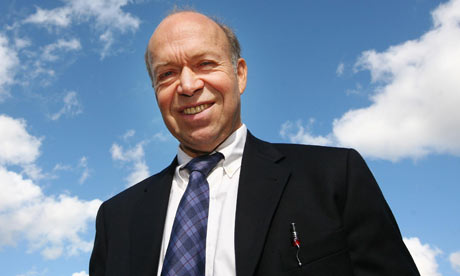 ‘We don’t have a leader who is able to grasp [the issue] and say what is really needed. Instead we are trying to continue business as usual,’ said James Hansen in 2009. Photograph: Gareth Fuller/PA”Governments are allowing and encouraging fossil fuel companies to go after every conceivable fuel”, said Hansen, “which is an obtuse policy that ignores the implications for young people, future generations and nature. We could make substantial parts of the Earth uninhabitable.”


 2
2


