Author: Neville

  • Deep soils store up to five times more carbon than first thought: study

    Deep soils store up to five times more carbon than first thought: study

    Deep soils store up to five times more carbon than is commonly reported, a new study by Murdoch University and Cranfield University in the UK has found. Soil locks in greenhouse gases by storing carbon, making it a crucial player in the fight against global warming. Greenhouse gases are released when…

    Ztsfpwjf-1372424359
    Soil represents one of the world’s largest carbon stocks. J.Kelley/http://SoilScience.info

    Deep soils store up to five times more carbon than is commonly reported, a new study by Murdoch University and Cranfield University in the UK has found.

    Soil locks in greenhouse gases by storing carbon, making it a crucial player in the fight against global warming. Greenhouse gases are released when soils are exposed to air by farming, peat drainage and deforestation.

    Current estimates of soil organic carbon are based largely on measurements to depths of 30 cm. This approach has evolved in North America and Europe, where soil is generally more shallow.

    However, many plant species have roots extending many metres deep, suggesting there is also carbon stored at such depth and inspiring researchers to explore the storage potential of deeper soils in older landscapes such as the Amazon or Australia. Researchers in the Amazon had previously sampled soils to 8 m.

    The researchers took soil measurements from samples taken to almost 40 metres deep at a range of sites in south-western Australia.

    They found that small amounts of carbon were present throughout the soils all the way to the bedrock, and that deep soils store up to five times more carbon than is normally reported.

    “This finding may have major implications for estimates of global carbon storage and modelling of the potential global impacts of climate change and land-use change on carbon cycles,” the researchers said in their paper, which was published in the journal Plant and Soil.

    Lead researcher Professor Richard Harper, an expert in water management and sustainability at Murdoch University said the findings extend our concept of the amounts and potential of carbon stored in soils.

    “This carbon has been previously overlooked, and this opens up several lines of inquiry – for example, what happens to this carbon with land use change such as deforestation and reforestation?” Professor Harper said.

    “There is likely more carbon stored in the world’s soils than previously considered. What will happen to this carbon – that is, will it be released as a result of either land-use change or climate change – is unknown. This is what we are working on now,” he said.

    Landmark study

    Professor of Horticulture and Viticulture at the University of Melbourne, Snow Barlow, said the study highlights the significant impact of land use change on global carbon cycles.

    “This paper is a timely reminder of the impacts of land use change, as this carbon has clearly originated in the earlier forested era of these landscapes,” said Professor Barlow, adding that Australia’s position on the UN Kyoto Protocol climate change agreement was strongly based on the significance of land use change through decreasing land clearing.

    “It is also a strong reminder of how much carbon is actually stored in soils, particularly deep soils, and that even Australia has deep soils that contain significant carbon at moderate rainfalls.”

    Dr Robert Edis, a soil scientist from the University of Melbourne said the study was “robustly and rigorously executed and then elegantly interpreted”, but added that the importance of deep soil carbon for climate change, “hinges on how stable the carbon is, and will determine if the study is just interesting or pivotal.”

    Dr Edis said the study was a “landmark quantification of a pool of carbon only qualitatively suspected.”

    Andrea Koch, project manager of the Soil Carbon Initiative at the University of Sydney said the study highlights how much we have underestimated the potential for soils to act as a critical sink for carbon.

    “As a society, we are pretty focused on what we can get from the top 30cm of the soil profile, and the mineral and energy resources that are deep below the surface, but the soil in between the deeper soil is a frontier that is yet to be understood. Managing and maintaining soil carbon is fundamental to food and water security, biodiversity and energy security, as well as climate regulation, so if we can work out ways to manage soil carbon at depth that can only be a good thing,” Ms Koch said.

    “Finding ways to manage and account for soil carbon at depth will not only require new soil management practices and technologies, it will also need to be met with public policies that support and encourage these efforts,” she said.

  • Dealing with uncertainty: the insurance industry and climate change

    Dealing with uncertainty: the insurance industry and climate change

    Insurers are paying out heavily for extreme weather events – but the industry could be doing more to engage with climate change

    UK floods

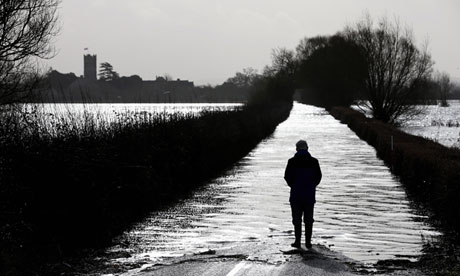
    Extreme weather events are pounding the insurance industry: last year’s floods cost more than £400m. Photograph: Matt Cardy/Getty Images

    Bad weather does a lot more than spoil barbecues. Last year’s floods in the UK caused £400m-worth of damage, while this summer’s floods in central Europe could lead to insurance claims for as much as €6bn (£5.1bn); at the other extreme, last year’s droughts in the US Midwest’s corn belt caused around $20bn (£13bn) of damage to agricultural crops.

    There is still not 100% agreement in the industry as to whether or not man-made climate change exists but arguing the point rather misses the bigger issue, said Laurence Baxter, the head of policy and research at the Chartered Insurance Institute, the professional body.

    “I have seen the debate waged over the last few years – individuals in and out of the industry – and in that they miss the whole point, which is that extreme weather events are on the rise and a number of weather-related records have been broken in the last few years. The climate is changing and as the sector responsible for managing risk and how it is mitigated… the insurance industry does play a big part.”

    The industry is starting to recognise this. The CII incorporates the issue into its qualifications and continuing professional development resources for its members, while a number of insurers got together six years ago to set up the ClimateWise leadership group to work together investigating the issue.

    The group’s members have recognised that the number of extreme weather events and other climate-linked changes have significant implications for their businesses, said Katharine Thoday, head of the ClimateWise secretariat at the University of Cambridge Programme for Sustainability Leadership. The group has set up six principles, including informing public policy, incorporating climate change into members’ investment strategies and reducing the environmental impacts of their business.

    One of the underlying challenges is that climate change is still far from fully understood, meaning that companies are always dealing with uncertainty, said Dr Stefan Straub, Munich Re’s spokesman on climate change and renewable energy. “No one can say ‘that’s the last piece of the puzzle’. The research is still going on. We still don’t know enough, which makes it difficult to assess the risks in the right way.” It funds or is otherwise involved in a large number of research initiatives to help improve understanding of the issues involved, as well as supporting the development of renewable energy technology.

    Knowledge may not yet be complete but it is improving, said Jon Williams, a partner at PricewaterhouseCoopers, which reviews insurers’ performance against the ClimateWise principles. The industry is making the most progress in research and development and risk modelling, engagement with policymakers, and product innovation, he said. “For example, in the UK 10 years ago flood-risk modelling was a high-level crude postcode lottery,” he said. “Now it’s sub-postcode mapping of how water will flow across terrain.”

    Companies are also starting to create products that try to change consumer behaviour, said Williams. Aviva’s “pay as you drive” policy, which means heavy car users pay higher premiums than those who drive for short distances, is one example; another is the way in which insurers make assets more resilient to risk after they have had to pay out. “So in a flood-risk area, expect to have your power points reinstalled 24 inches up so that if it floods again it won’t take out all your electrics.”

    But the picture is not all positive. For a start, there is still much more that could be done to develop new products that help mitigate risk, said Williams. “And another area where relatively little has been done is understanding the risks of climate change to those more exposed to them, especially in developing countries.” This is becoming increasingly important as insurers look to these markets for new opportunities for growth now that the UK market is saturated – Williams’ pun.

    “What that does is take them into markets where governments are typically less able to adapt to climate change so risks are higher, and much higher for insurers,” he said.

    Even insurers with no direct involvement in developing markets need to understand the issues there, he said. “About a third of premiums insured in this market come from overseas so they are already exposed to overseas. Secondly, the world is pretty connected and the biggest threat to the UK from climate change is through the supply chain, particularly through food security.” A British insurer that offers business continuity insurance to a company based in the UK could easily be exposed to climate change risks down the line, for example if a drought in Kenya wiped out a major supplier’s crop.

    He also believes that insurers need to think harder about what they can do with their asset portfolios. This is a tricky area, said Thoday. “The outside perception is that, because insurers from the underwriting side have been thinking about these issues… there’s a strong sense that they should be applying it to their investments,” she said. “In reality as a business those two things are very separate. For all kinds of regulatory reasons you don’t share your risk analysis from the underwriting side with the investment decision side.” That said, this is a question that’s starting to get on the agenda of the investment side, she added.

    This content is brought to you by Guardian Professional. Become GSB member to get more stories like this direct to your inbox

    • Sustainable business courses

      Practical half-day courses from the Guardian on sustainability communications, brand, collaboration and leadership. Book now.

    About Guardian Professional

    • Guardian Professional Networks

      Guardian Professional Networks are community-focused sites, where we bring together advice, best practice and insight from a wide range of professional communities.

      Some of our specialist hubs within these sites are supported by funding from external companies and organisations. All editorial content is independent of any sponsorship, unless otherwise clearly stated. We make Partner Zones available for sponsors’ own content. Guardian Professional is a division of Guardian News & Media

  • Carbon pricing, one year on: independent expertise is crucial

    Carbon pricing, one year on: independent expertise is crucial

    Climate change is too important a topic to leave to politicians. Canberra should listen to the real experts – the Climate Change Authority

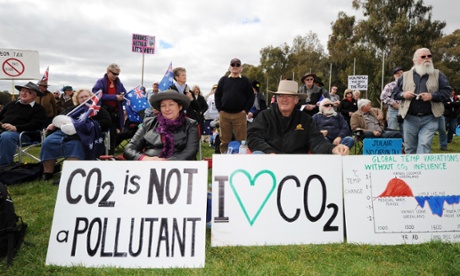
    Anti-carbon tax protesters in Canberra.
    Anti-carbon tax protesters in Canberra. Photograph: Torsten Blackwood/AFP/Getty

    When it comes to dealing with matters of profound complexity and gravity, matters that will have a fundamental impact on our lives, we expect decisions to be based on the best expert advice available. Yet, disturbingly, when it comes to working how Australia should tackle climate change – the “great moral challenge of our generation”–politicians are sidelining independent science and policy advisory bodies for the sake of political expediency.

    Within hours of Kevin Rudd’s return to the helm – just shy of the first anniversary of the carbon pricing mechanism on 1 July – reports emerged of a potential election promise to bring forward the trading phase of the scheme, in line with business demands. Moving to an emissions trading scheme will make it cheaper for business and industry to comply with the scheme because they’ll have access to the dirt-cheap European Union permits (currently trading at approximately $4.65 in Australian currency, compared to the scheme’s 2013-2014 fixed price of $24.15) and distance the Rudd government from Gillard’s much maligned “carbon tax”.

    Following the trend in recent years, climate change policy is once again in the national spotlight around a federal election and leadership spill. But there are some things that are too important to leave to politics, subject as it is to lobbying and opinion polls. This is one of the reasons why the minority government established the expert Climate Change Authority – to get the issue out of politics and publicly provide government decision-makers with impartial advice on how to best cut fossil fuel emissions. And they should be commended for that.

    The Climate Change Authority reviews and advises the government about Australia’s climate change policies, including the operation and effectiveness of the carbon price and renewable energy target. Some of Australia’s leading experts from business, science and ethics sit on its board. It’s in charge of recommending yearly carbon pollution limits (“caps”) and tracking our progress on cutting emissions. By law, its reviews and advice must be guided by principles of fairness, the public interest and environmental effectiveness. It has a legislative duty to engage in public consultation and make its review and recommendations publicly available. The development of climate policy in nations like the UK has been dependent on the fierce independence and expertise of similar bodies.

    This week, prime minister Rudd meets with his newly assembled team of ministers (including a replacement for outgoing climate change minister, Greg Combet). Will Rudd seek and heed the advice of this body as he takes the reins of Australia’s climate policy once again? Or will he sideline climate expertise to do what is politically convenient and advantageous?

    On the other side of the political spectrum, things look even grimmer. If elected, the Abbott-led Coalition intends to abolish the Climate Change Authority entirely (along with the carbon pricing mechanism, a range of other clean energy measures and the Climate Commission – the body established to provide all Australians with an independent and reliable source of information about climate change science).

    Australians respect the role and advice of independent expertise in other priority areas, like Australia’s monetary policy (Reserve Bank), economic policy (Productivity Commission), health (National Health and Medical Research Council) and national water reform (National Water Commission). Are we really prepared to accept our leaders marginalising, or indeed abolishing, climate expertise?

    Bodies known for their conservatism – the World Bank, the International Energy Agency and companies like PricewaterhouseCoopers – have reviewed the best available science and are united: we’re on a collision course with climate catastrophe. We are playing a giant experiment with an extraordinarily complex system. We are changing the chemical composition of the earth’s atmosphere and oceans at unprecedented rates. And we’re entering a climate never before experienced by human civilisation. We’re the guinea pigs in this experiment, which we desperately need to bring under control.

    Policy-makers and theorists have a word for these kinds of issues. They call them “wicked problems“. And climate change is the wickedest problem we face today. The wickedest problems call for the wisest counsel. That’s unlikely to be found on the floor of parliament. What we need are impartial experts. But we also need leaders who are willing to listen.

  • It’s time Australia moved to full-blown emissions trading scheme

    It’s time Australia moved to full-blown emissions trading scheme

    Ending the carbon tax and moving to emissions trading – as Kevin Rudd is reportedly considering – is the right thing to do

    An excavator works at a Rio Tinto coal mine in the Hunter valley north of Sydney

    An excavator works at a Rio Tinto coal mine in the Hunter valley north of Sydney. Photograph: HO/REUTERS

    Over the weekend, there has been widespread reporting that returned prime minister Kevin Rudd is contemplating moving the carbon price from a fixed price to floating price for emissions permits.

    The Age reported that it was expected that the carbon price would be a priority item for discussion at the next cabinet meeting:

    Speculation is growing the newly reinstalled Prime Minister will dump the fixed carbon price in favour of an earlier transition to an emissions trading scheme, with two ministers indicating on Friday that carbon pricing will be a priority at the first meeting of a new Rudd cabinet.

    The effect of moving from a fixed price to a genuine emissions trading scheme would be for the price of carbon emission permits to fall, and fall significantly.

    Currently, emissions permits are fixed just above $23. This price is fixed until 1 July 2015, when it would become a floating price — that is, a price determined by supply and demand.

    Complicating matters is the fact that Australia‘s carbon price from 2015 will be linked to the emissions trading scheme in the European Union. This is just one reason why it would be difficult for Tony Abbott, were he to become prime minister, to abolish the Australian emissions trading system.

    The current cost per tonne in Europe for carbon emissions permits is around 3 euroes (approximately $4 in Australia). The price fell sharply in recent years due to the effects of the global financial crisis, and because big polluters received substantial numbers of free permits. This oversupply, followed by a decline in economic activity accounts for the majority of the price decline, according to University of Melbourne research associate Katherine Lake.

    Australia followed the path of Europe by giving away significant numbers of free permits. Furthermore, the impact on future budgets was locked in through the decision to front-load compensation to taxpayers and businesses. That is, people got carbon price compensation before the income came in from the scheme.

    The added complication was our fixed price. In the middle price-range, it has succeeded in seeing around a 30% increase in renewable energy production and significant reduction in carbon emissions. Longer term, the risk was that it would lock in investment in gas projects.

    Australia should dump the fixed price and move to a full trading scheme. To avoid the mistakes of the European scheme, rather than using fixed prices, we should rely on scarcity to drive up the price and encourage the big polluters to innovate and reduce emissions. The number of permits should be progressively reduced.

    Kevin Rudd can also underscore his commitment to taking action on climate change by ramping up investment in clean, renewable energy projects, and expand the existing programmes that are in the system that assist households increase energy efficiency.

    More broadly, Rudd could halt some controversial coal and unconventional fossil fuel projects that are being planned, which would also assist Australia’s action on keeping temperature rise to below 2 degrees Celsius. Tied to this, Rudd could reduce fossil fuel subsidies, which amounts to tax-payer subsidised funding of carbon pollution. This could help Australia avoid the coal bubble that would lock in catastrophic global warming. A report by Centre for Naval Analysis states (with respect to fossil fuel investment in the USA):

    Using more natural gas and oil, even if domestically produced, neither frees our economies from global oil prices nor checks the greenhouse gas emissions that threaten future generations. The only sustainable solution to this dual challenge is to improve our energy efficiency and diversify our energy sources to include cleaner and renewable power.

    The carbon price is an important tool, but it is by no means the only one that the government has. The renewable energy target is by far the most effective way Australia to reduce its emissions in the short term.

    Moving sooner rather than later to full emissions trading is a good thing.

    Monday 1 July marks the first full year of the carbon price being in place in Australia. If you’re so inclined, you can sign a card to Greg Combet the former climate change minister, who announced he is resigning from parliament.

  • Mega-quakes ’caused volcanoes to sink’

    Mega-quakes ’caused volcanoes to sink’

    Updated: 10:40, Monday July 1, 2013

    Mega-quakes 'caused volcanoes to sink'

    Massive earthquakes can cause distant volcanoes to sink, according to research in Japan and Chile.

    The magnitude 9.0 tsunami-generating quake that occurred off northeastern Japan in 2011 caused subsidence of up to 15 centimetres in a string of volcanoes on the island of Honshu as much as 200 kilometres from the epicentre, a Japanese study published on Sunday said.

    And the 8.8-magnitude Maule quake in Chile in 2010 caused a similar degree of sinking in five volcanic regions located up to 220km away, according to a US-led paper.

    It was not clear whether the phenomenon boosted eruption risk, the authors wrote.

    Both the Japan and Chile quakes were of the subduction type, caused when one part of Earth’s crust slides beneath another.

    If the movement is not smooth, tension can build up over decades or centuries before it is suddenly released, sometimes with catastrophic effect.

    In both cases, the sinking occurred in mountain ranges running horizontally to the quake.

    The 2011 quake “caused east-west tension in eastern Japan,” Youichiro Takada of the Disaster Prevention Research Institute at Kyoto University told AFP in an email.

    “Hot and soft rocks beneath the volcanoes, with magma at the centre, were horizontally stretched and vertically flattened. This deformation caused the volcanoes to subside.”

    The researchers for the Chilean volcanoes said subsidence occurred along a stretch spanning 400km.

    As in Japan, the ground deformation in Chile occurred in huge ellipse-shaped divots up to 15km by 30km in size, although the cause appears to be different.

    Pockets of hot hydrothermal fluids that underpinned the volcanic areas may have escaped through rock that had been stretched and made permeable by the quake.

    Two earthquakes in the Chilean subduction zone in 1906 and 1960 were followed by eruptions in the Andean southern volcanic zone within a year of their occurrence.

    However, no big eruptions in this volcanic hotspot can be associated with the 2010 temblor, says the study led by Matthew Pritchard of Cornell University in New York.

    Takada said the impact of the 2011 quake on volcano risk on Honshu was unclear.

    The studies, published in the journal Nature Geoscience, used data from satellite radar which mapped terrain before and after the quakes.

    SHARE THIS ARTICLE:

  • El Nino Unusually Active in the Late 20th Century: Is It Because of Global Warming?

    El Nino Unusually Active in the Late 20th Century: Is It Because of Global Warming?

    June 30, 2013 — Spawning droughts, floods, and other weather disturbances world-wide, the El Niño — Southern Oscillation (ENSO) impacts the daily life of millions of people. During El Niño, Atlantic hurricane activity wanes and rainfall in Hawaii decreases while Pacific winter storms shift southward, elevating the risk of floods in California.


    Share This:

    The ability to forecast how ENSO will respond to global warming thus matters greatly to society. Providing accurate predictions, though, is challenging because ENSO varies naturally over decades and centuries. Instrumental records are too short to determine whether any changes seen recently are simply natural or attributable to human-made greenhouse gases. Reconstructions of ENSO behavior are usually missing adequate records for the tropics where ENSO develops.

    Help is now underway in the form of a tree-ring record reflecting ENSO activity over the past seven centuries. Tree-rings have been shown to be very good proxies for temperature and rainfall measurements. An international team of scientists spearheaded by Jinbao Li and Shang-Ping Xie, while working at the International Pacific Research Center, University of Hawaii at Manoa, has compiled 2,222 tree-ring chronologies of the past seven centuries from both the tropics and mid-latitudes in both hemispheres. Their work is published in the June 30, 2013 online issue of Nature Climate Change.

    The inclusion of tropical tree-ring records enabled the team to generate an archive of ENSO activity of unprecedented accuracy, as attested by the close correspondence with records from equatorial Pacific corals and with an independent Northern Hemisphere temperature reconstruction that captures well-known teleconnection climate patterns.

    These proxy records all indicate that ENSO was unusually active in the late 20th century compared to the past seven centuries, implying that this climate phenomenon is responding to ongoing global warming.

    “In the year after a large tropical volcanic eruption, our record shows that the east-central tropical Pacific is unusually cool, followed by unusual warming one year later. Like greenhouse gases, volcanic aerosols perturb the Earth’s radiation balance. This supports the idea that the unusually high ENSO activity in the late 20th century is a footprint of global warming,” explains lead author Jinbao Li.

    “Many climate models do not reflect the strong ENSO response to global warming that we found,” says co-author Shang-Ping Xie, meteorology professor at the International Pacific Research Center, University of Hawaii at Manoa and Roger Revelle Professor at Scripps Institution of Oceanography, University of California at San Diego. “This suggests that many models underestimate the sensitivity to radiative perturbations in greenhouse gases. Our results now provide a guide to improve the accuracy of climate models and their projections of future ENSO activity. If this trend of increasing ENSO activity continues, we expect to see more weather extremes such as floods and droughts.”

    Share this story on Facebook, Twitter, and Google: