Author: Neville

  • See who’s supporting your call for the big banks to divest

    See who’s supporting your call for the big banks to divest

    Inbox
    x
    Charlie Wood – 350.org Australia <charlie@350.org>
    12:01 PM (35 minutes ago)

    to me
    Images are not displayed. Display images below – Always display images from charlie@350.org

    Dear Friend,

    Whilst our politicians play musical chairs, we’re stepping up the divestment push with our campaign to stop the big banks investing in climate destruction.

    Together with our friends at Market Forces, we’ve supported and signed on to an open letter in major Fairfax and News Limited outlets to ANZ, Commonwealth, NAB and Westpac, urging them to stop investing in the fossil fuel industry.

    Sixty respected individuals have signed the letter including 350.org’s own Bill McKibben, authors Peter Carey and John Cotzee, former politician Carmen Lawrence, musicians Felix Riebl and Claire Bowditch, Professor Peter Singer, climate change scientist Lesley Hughes and former Coal Association Chair Ian Dunlop.

    Will you join our call for the big four to divest and invite your friends to do the same? Click here to join: openletter.marketforces.org.au/

    In only a few months, you’ve already committed to move almost $30 million of your savings if the ‘big four’ don’t stop funding fossil fuels. This open letter adds the voices of 60 prominent Australians to your call.

    Sign and share this letter and tell the banks to start moving money out of fossil fuels in a big way.

    Yours in hope,

    Charlie Wood,

    350.org Australia

    PS – Our letter to PM Rudd telling him to keep his climate promises has gotten great pickup. If you haven’t had a chance to sign, add your name now, and make sure he gets the message: act.350.org/sign/rudd-climate-promises/


    350.org is building a global movement to solve the climate crisis. Connect with us on Facebook and Twitter, and sign up for email alerts. You can help power our work by getting involved locally, sharing your story, and donating here.To stop receiving emails from 350.org, click here.

  • Angela Merkel ‘blocks’ EU plan on limiting emissions from new cars

    Angela Merkel ‘blocks’ EU plan on limiting emissions from new cars

    EC abandons vote on making cars more fuel efficient after intervention of German chancellor, supported by David Cameron

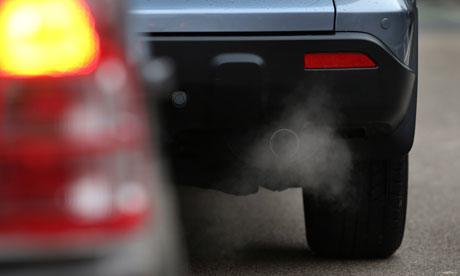
    Car pollution

    Policy to make car manufacturers adhere to stricter standards on levels of carbon emissions was agreed by 27 EU member states. Photograph: Peter Macdiarmid/Getty Images

    German chancellor Angela Merkel personally thwarted plans this week to improve the fuel efficiency of European cars, in order to protect luxury marques including BMW, Audi and Daimler. Supporters of the policy, which had been agreed by officials from the 27 EU nations, say it would save motorists in the UK £400 a year in fuel costs.

    David Cameron helped Merkel block the plan to limit emissions from new cars sold in 2020, despite his own department of transport being in favour. The plan had been expected to be rubber stamped by national leaders at the quarterly European council meeting on Thursday, but was dropped from the agenda after Merkel telephoned other leaders to lobby them.

    The policy would see new European cars required to emit no more on average than 95grammes of carbon dioxide per kilometre by 2020. The current target of 120gCO2/km by 2015 will be easily met as manufacturers meet increasing consumer demand for fuel efficient vehicles.

    “Merkel’s unilateral attempt to try and stop the car CO2 deal is undemocratic and unwelcome,” said Matthias Groote, German MEP from the opposition SPD party and chair of the European parliament environment committee. He said Merkel’s personal interventions, including a call to the Enda Kenny taiseoch of Ireland which currently holds the EU presidency, had caused “chaos” and added he had not seen such “brazen behaviour” in seven years in the European parliament.

    Merkel faces national elections in Germany in September and some observers said her block was aimed at shifting a policy unpopular with Germany’s powerful car makers until after the vote while others suggested Germany would use the postponement to recruit enough member states to water down the efficiency plans. No new date has been set for the policy to be approved.

    The European Automobile Manufacturers’ Association, which represents the biggest car companies, opposes the plan as expensive. Ivan Hodac, ACEA secretary general, said some of the proposals “will clearly put us at a strong disadvantage on the global market”.

    But not all manufacturers welcomed the abandoned vote. “As a company committed to meaningful CO2 emission reductions through advanced technology, Ford is disappointed,” said a company spokesman. “We will now have to regroup within the industry to determine the next steps.”

    Monique Goyens, director-general of BEUC – the European Consumer Organisation, said: “It’s consumers who will pay the price for this last-minute scuppering of the deal on car CO2 emissions. This last-minute intervention at the highest political level is a clear case of the concerns of a handful of companies taking precedence over consumers’ interests.”

    Environmental campaigners also criticised Merkel’s actions. “This new delay means Merkel can mount another assault on the draft CO2 standards we’ve fought for – and keep polluting cars on the roads for longer,” said a Greenpeace spokeswoman. “And yet we all know carmakers are capable of innovating to meet these targets – VW has shown that.”

    Greg Archer of Transport and Environment said: “It’s unprecedented in EU environmental policymaking that the pressure of one country delays a vote in an attempt to overturn a fairly-negotiated agreement between the European parliament, the commission and the council itself. It is ludicrous for Germany to claim it needs more time, as the 95g target was agreed five years ago and Germany has already put forward five different proposals that have been rejected by the vast majority of EU countries.”

    German car makers produce a fleet with emissions 15gCO2/km above the current 132gCO2/km European average, according to the International Council on Clean Transportation, while France’s Peugot and Italy’s Fiat sell smaller cars with lower emissions.

  • Rudd poll bounce boosts Labor

    Rudd poll bounce boosts Labor

    Date
    June 28, 2013 – 11:39PM
    • 477 reading now
    • (476)

    Mark Kenny and Heath Aston

    Exclusive

    Bill Shorten.Bill Shorten.

    Kevin Rudd’s return to the Labor leadership has dramatically reversed a poll slide in the party’s heartland seats, suggesting the severe election losses feared under Julia Gillard’s leadership can be avoided.

    A new poll reviving Labor hopes came as Mr Rudd stepped up his attack on Opposition Leader Tony Abbott’s “stop the boats” policy, warning it risked sparking conflict with Indonesia.

    Mr Rudd also warned that a Coalition government could plunge Australia into recession if it adopted the harsh spending cuts he believes the opposition is planning.

    Chilout everyone: Prime Minister Kevin Rudd.‘Just chill’: Prime Minister Kevin Rudd addresses the media. Photo: Alex Ellinghausen

    He also signalled significant policy changes, including the possible dumping of the carbon tax in favour of a lower floating carbon price and a two-week extension of the negotiation period of the education funding package, and softened his language on a big Australia in favour of a sustainable Australia.

    Advertisement

    A Fairfax ReachTEL poll conducted on Thursday found a turnaround of about 10 per cent for Labor in four key seats – Melbourne’s Maribyrnong and Chisholm and Sydney’s McMahon and Blaxland – since Mr Rudd regained the top job.

    The poll showed that Workplace Relations Minister Bill Shorten had climbed back to an 8.6per cent two-party preferred lead in his electorate of Maribyrnong in Melbourne’s west. Mr Shorten controversially shifted his support from Ms Gillard to Mr Rudd at the last minute in the leadership showdown.

    In Chisholm, Speaker Anna Burke was ahead 55.2 to 44.8.

    The poll suggested the leadership change has impressed enough Labor heartland voters in western Sydney to save key Rudd backer and new Treasurer Chris Bowen and rising star Jason Clare, the Home Affairs Minister who holds Paul Keating’s old seat of Blaxland.

    The poll of the four seats contains some wider warning signals for Tony Abbott. In each case he trailed Mr Rudd on the question of who would make the better prime minister.

    In an interview later with Fairfax Media, Mr Rudd outlined his thinking on the election timing, saying he wanted time to make changes to several key policy areas, including the education package previously known as Gonski, as well as possible changes to the carbon fixed price, the mining tax, and others.

    The comments indicated he may be prepared to wait longer than Ms Gillard’s poll date of September 14 before going to voters.

    Issuing a clear signal that he has learnt from previous errors when he was criticised as a “control freak”, Mr Rudd stressed that decisions would be made through an orderly and consultative process.

    “I want to the see some new policy settings in a number of areas before we face the people and that it’s got to be thoroughly developed, thoroughly costed so that it’s real and notjust a press release,” he said.

    On border protection, he accused Mr Abbott of “choosing to be ignorant of the facts, choosing to be ignorant of what the intelligence services are telling us … and instead, simply trying to slide through on the basis of slogans and fear-mongering and a headline”.

    But he did acknowledge that the rate of irregular maritime arrivals was straining public patience and hurting the Labor Party.

    “Our challenge has been always to keep this at manageable levels,” he said.

    “I’m worried that there is more disquiet in the community because of this challenge. It’s important, but I’ll be fighting this election first and foremost on the economy, jobs, standard of living and of course national security is another priority.”

    In other comments, Mr Rudd:

    •Said he would fight the election on the economy, and job security, and working conditions, challenging Mr Abbott to a National Press Club debate on debt and deficit in the next fortnight.

    •Defended his role as “Kevin 747” during his first stint as prime minister but flagged doing less international travel in favour of “video-conferencing” in some instances.

    •Softened his previous language on a goal of a “big Australia” in favour of “a sustainable Australia”.

    “I believe in a sustainable Australia,” Mr Rudd  said. “If you’ve got the sustainability settings right, on land use, on water useand on infrastructure provision, then of course the country can grow, so I believe in a sustainable Australia.”

    Read more: http://www.smh.com.au/national/rudd-poll-bounce-boosts-labor-20130628-2p366.html#ixzz2XYZBWA54

  • John Topping’s June 13 lecture now on Youtube

    John Topping’s June 13 lecture now on Youtube

    Inbox
    x
    Climate Institute <info@climate.org>
    5:46 AM (3 hours ago)

    to lessa, kb9ivb, Carolina, climatechangep., D, hiattjm, ewieben, moraabarca, Allan_kulumba, Andreas, Deborah, ramusubr, nuelma710, Sean, bhishmakadariya, robmusa, nazdrybriones, crmehta65, afellow, wunainoca, naturalist, aahadpstu, Yasobant, friends_azeem, Juliana.roth
    Dear friends of the Climate Institute:

    Our president, John Topping, gave a lecture earlier this month at Columbia University on climate change mitigation strategies for the Arctic, one of the most vulnerable regions on the planet.  You can now watch the video online at http://www.youtube.com/watch?v=P93kYL-W4Zo&noredirect=1.  Also, we have posted the PowerPoint one our website at www.climate.org.
    Thank you for your interest!
    The Climate Institute


    Climate Institute
    900 17th St NW, Suite 700
    Washington DC 20006
    (202) 552-4723

    YouTube – Videos from this email
  • Ocean acidification is chemistry, not conjecture

    Ocean acidification is chemistry, not conjecture

    Posted: 27 Jun 2013 06:06 AM PDT

    By Sam Dupont, Researcher, Ocean Acidification Infrastructure Facility co-ordinator at University of Gothenburg, SwedenAs a scientist working on the impact of climate change on marine ecosystems, one of my duties is to communicate my work. My main goal is to convince students, citizens, economists and politicians that we need to take urgent action to reduce our carbon dioxide emissions. This is not an easy task and I often face very difficult questions. Are we really warming the planet? Is there really a link to our carbon dioxide emissions?

    I am not a climate scientist and I do not have the expertise to judge the quality of the science behind global warming. But while I’m not a chemist either, I can understand that if carbon dioxide (CO2) is dissolved in water (H2O), it turns into carbonic acid (H2CO3). This is such a simple relationship that there is no place for controversy.


    The amount of carbon dioxide released into the atmosphere by human activities is so large that it is changing the whole ocean. Every year, humans are releasing nine petagrams (1015) of carbon in the atmosphere and a quarter of these nine billion tons are absorbed by the ocean. This carbon dioxide turns into carbonic acid which makes the ocean more acidic, a phenomenon known as ocean acidification.

    Since the beginning of the industrial revolution, the average surface ocean acidity has increased by 30% and it is predicted that acidity may double again by the end of this century.

    This is not without consequences for marine species and ecosystems. Many laboratories around the world have demonstrated that if we do not drastically cut carbon dioxide emissions, many species and ecosystems potentially face extinction within decades. For example, the brittlestar Ophiothrix fragilis – a close relative to starfish – is a key species on the west coast of Europe. It is not unusual to find hundreds of individuals per square metre and these beds of brittlestars constitute a habitat for dozens of other species. When we raised Ophiothrix larvae in ocean conditions that could be expected within a few decades, we found they were unable to develop normally and all died within a few days. Perhaps you may not care if this brittlestar goes extinct – but if it does it will have a huge impact on the many species associated with it, including fish.

    Ocean acidification is not something that will happen in a distant future. We can monitor chemical changes and the first biological signs are already visible today – some massive oyster declines on the west coast of the USA have been attributed to ocean acidification, as has large-scale bleaching of coral.

    Of course many uncertainties remain. More information is needed if we want to fully understand the impact of ocean acidification on the oceans, as advocated in a piece that we published in the scientific journal Nature today. Today, we know that to capture the potential impacts of ocean acidification on marine ecosystems, we need to perform longer term experiments, and expand from studying single species to whole ecosystems to capture the environment’s complexity. Ocean acidification is happening together with other global changes such as warming, deoxygenation and freshning (de-salination from mixing with fresh glacial meltwater). On top of this, you have local pressures on ecosystems, such as pollution or over-fishing.

    However, uncertainty is not an excuse for inaction. We do know enough to claim that ocean acidification may lead to major changes in marine ecosystems, including reduction in biodiversity and impacts on seafood and other ecosystem services.

    So what can we do? The obvious answer is that we need to reduce our carbon dioxide emissions. There is no other serious alternative at the moment. We know that this may be a long and difficult process, so we need to buy some time.

    This can be achieved in various ways. We can reduce other pressures such as pollution or over-fishing on a marine ecosystem suffering acidification so as to improve its ability to help itself, increasing its resilience to other factors. We can also make use of the oceans’ diversity to select some strains of important species, for example those important to food fisheries, that are more tolerant of environmental changes. Some species of oysters, for example, have been shown to be less sensitive to ocean acidification than others .

    Ocean acidification is chemistry, not conjecture – it is as real as water making you wet. It is one of the major threats on the marine realm, and it is essential to act now and reduce carbon dioxide emissions if we are to keep a diverse and productive ocean.

    Disclosure StatementSam Dupont receives funding from Swedish Research Councils.

    The Conversation is funded by the following universities: Aberdeen, Birmingham, Bristol, Cardiff, City, Glasgow Caledonian, Liverpool, Open, Salford, Sheffield, Surrey, UCL and Warwick.It also receives funding from: Hefce, Hefcw, SFC, RCUK, The Nuffield Foundation and The Wellcome TrustSam Dupont, The Conversation, 26 June 2013. Article.

  • Kevin Rudd’s return could herald a second Australian climate election

    Lest we forget what happened last time”

    Kevin Rudd’s return could herald a second Australian climate election

    The Labor leader’s return to the Australian prime ministership could see a repeat of 2007’s ‘climate change election’

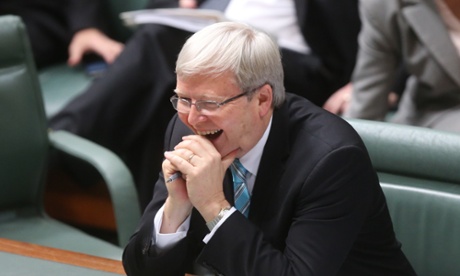
    Prime Minister Kevin Rudd reacts to a valedictory speech by Defence Minister Stephen Smith where he described Stephen Conroy as

    Prime Minister Kevin Rudd reacts to a valedictory speech by the defence minister, Stephen Smith, where he described Stephen Conroy as ‘misunderstood.’ Photograph: Mike Bowers/the Global Mail

    Rudd was elected in 2007 saying that climate change was the “the greatest moral, economic and environmental challenge of our generation”. In many ways, 2007 was the climate change election.

    The first act Rudd took as prime minister was to ratify Kyoto, a symbolic break from the lead-footed conservative government under John Howard. A price on carbon was the major policy that the new Labor government saw to reduce carbon emissions, called the carbon pollution reduction scheme.

    The scheme was defeated in the Senate in 2009 after the Greens party refused to support it, and voted with the Liberal and National parties to oppose it. Then the dismal efforts of Copenhagen further dampened efforts for climate action. Rudd’s final climate act as prime minister in 2010 was to announce that the carbon pollution reduction scheme would be shelved.

    Australia got its price on carbon under the prime ministership of Julia Gillard. Gillard, whatever you think of her, was remarkable in her ability to forge consensus in a hung parliament. The Greens party and independent MPs supported the Clean Energy Future Act, which in most ways was similar to Rudd’s carbon reduction scheme, albeit with more investment in renewable energy.

    During this time, as I’ve written about earlier, the conservative opposition leader, Tony Abbott, ran an unrelenting fear campaign against the carbon price. Support for the carbon price from 2010 to 2012 fell sharply, until July last year when it came into effect. Since then, public support in Australia has increased for the carbon price.

    The minister who had carriage of the Clean Energy Future Act was Greg Combet. Widely respected as a man of great integrity and enormous capabilities, Combet became responsible for a super ministry, covering industry, innovation and energy efficiency, as well as climate change. His negotiating skills, honed as secretary of the Australian Council of Trade Unions, saw the carbon price become law.

    On Wednesday night, Rudd was returned as leader of the Labor Party.

    What could this mean for climate policy in Australia? Is climate change still the greatest moral challenge of our generation?

    At the press conference where he announced his intention to challenge Julia Gillard, Rudd said:

    Australians want a real policy debate on our vision for the country’s future and Mr Abbott’s vision for the future of our economy and jobs, on national security, on education, on health, on climate change and how we would make these competing visions work.

    As in 2007, Rudd has laid out the pillars of this election campaign around a set of key policies. One of those is climate change.

    In many regards, Labor’s policy on climate change has been to focus on the carbon price and developing renewable energy. It is doubtful that Rudd would be proposing significant changes to Labor’s climate or energy policies.

    With the resignation of Greg Combet, a supporter of Julia Gillard, it is unclear who will take over as minister for climate change. But, with both Labor and Liberal promising just 5% reductions in carbon emissions, part of Rudd’s pitch to the electorate on Wednesday was to highlight Tony Abbott’s scepticism about whether climate change exists at all.

    For supporters of strong action on climate change, the main solace from the return of Rudd is that if he wins, he will defend carbon pricing and renewable energy targets. This also comes on the back of Barack Obama’s enormous announcement that the USA now has a climate strategy focused on cutting carbon emissions by 17%.

    In the meantime, from his performance on Wednesday, we may be able to expect more debate on climate change, and more scrutiny of Tony Abbott’s non-policy of “direct action”. Abbott has repeatedly said: “the next election will be – if nothing else – a referendum on the carbon tax”.

    This year’s Australian election could see a repeat of 2007 election and be another climate change election.