Author: Neville

  • Gladstone Harbour review delayed

    Gladstone Harbour review delayed

    AAPJune 30, 2013, 2:48 pm

    An independent review panel has been granted more time to assess the health of Gladstone Harbour and the impact of port developments on the Great Barrier Reef.

    The United Nation’s environment arm was highly critical of Australia’s management of the reef in a report last year and requested a review of the harbour.

    Federal Environment Minister Tony Burke commissioned an independent review in February and a report was due to be handed down on Sunday.

    However, a spokeswoman for Mr Burke says the panel asked for, and has been granted, more time to complete the report.

    She says there’s no new deadline but the report is expected to be handed down soon.

    The review will look at current and future port developments, including large liquified natural gas plants on Curtis Island, and the impact it’s having on the local environment and the reef’s health.

    Concerns have also been raised by commercial fishers about the health of fish within the port and the loss of seagrass.

  • This Is What Climate Change Looks Like: Top 10 Most Expensive U.S. Climate Disasters of 2012

    Daniel Kessler

    350.org and 350 Action Fund

    GET UPDATES FROM Daniel Kessler

    8

    This Is What Climate Change Looks Like: Top 10 Most Expensive U.S. Climate Disasters of 2012

    Posted: 06/27/2013 4:29 pm
    16
    24
    2
    7
    Get Green Newsletters:

    On Tuesday President Obama released his climate action plan — and not a moment too soon. Extreme weather has been pounding the U.S., and while pundits and the fossil fuel industry will claim action is too expensive, the cost of inaction is far too much to bear.

    In 2012 there were 11 climate disasters that cost more than $1 billion each, according to NOAA. Below are the 10 most expensive.

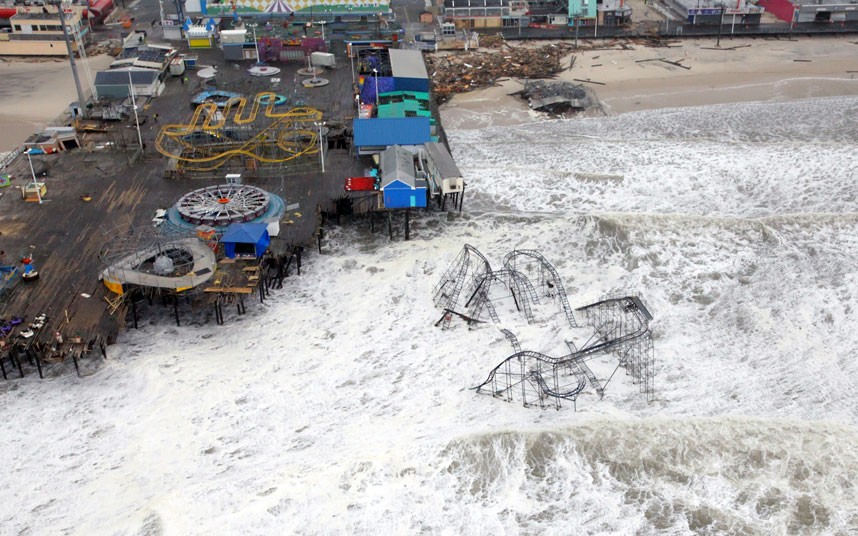
    1. Hurricane Sandy – cost $65.7 billion and caused 159 deaths
    Hurricane Sandy touched down on U.S. soil on October 29 after leaving a path of destruction through Jamaica, Haiti, the Dominican Republic, Cuba, the Bahamas, and Bermuda. Sandy was the second-costliest and deadliest hurricane ever to hit the U.S. after Hurricane Katrina in 2005. A total of 24 states were affected, with thousands of homes destroyed and millions of people left without electricity. Of the direct deaths, the storm caused 48 direct deaths and 87 additional indirect deaths. Of those Sandy killed directly, 48 people died in New York, 12 in New Jersey, 5 in Connecticut, 2 each in Pennsylvania and Virginia, and 1 each in New Hampshire, West Virginia, and Maryland.
    2013-06-24-1a.jpg
    EPA/MASTER SGT. MARK OLSEN / US AIR FORCE

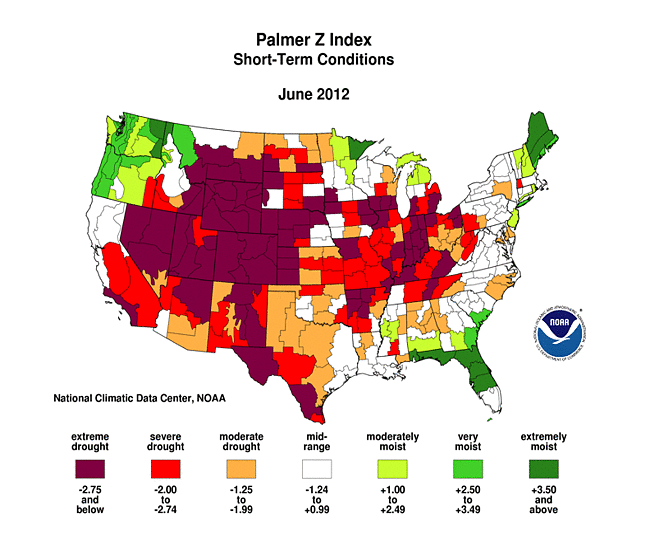
    2. Nationwide Drought and Heat Wave – cost $30.3 billion and caused 123 deaths
    The 2012 drought and heat wave was the most extreme to hit the United States since the 1930s. Most than half of the country experienced the drought, with 81 percent experiencing abnormally dry conditions at its peak on July 17th. Record high temperatures and low rainfall caused extensive agricultural damage, particularly affecting corn and soybean crops. This in turn has created an increase in the price of food, as well as the lowest number of cattle in the U.S. in the last 60 years. The summer heat wave caused 123 direct deaths.
    2013-06-24-2a.jpeg
    NOAA

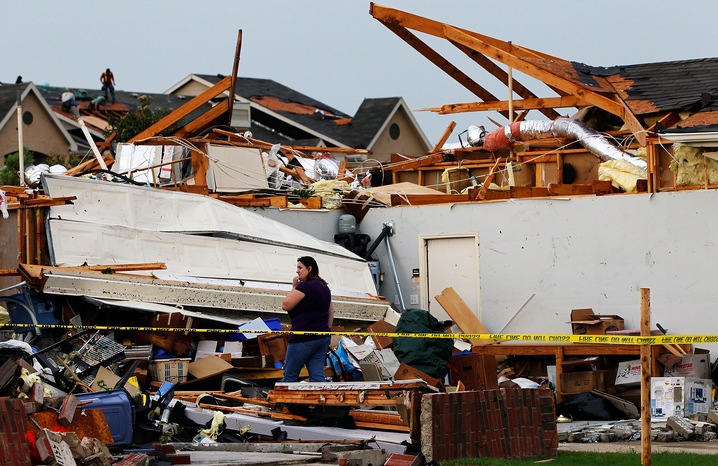
    3. Ohio Valley Extreme Weather and Tornadoes – cost $6.4 billion and caused 43 deaths
    Extreme weather throughout March and April devastated the Midwest, Southeast, and Ohio Valley areas. In early March, 75 tornadoes left 42 people dead in Kentucky, Indiana, Ohio, Alabama, and Georgia. Hundreds of homes, businesses, and cars were destroyed. Between April 28th and May 1st, 38 confirmed tornadoes and hailstorms swept through the Midwest and Ohio Valley, killing one person.
    2013-06-24-3a.jpg
    Tom Pennington/Getty Images

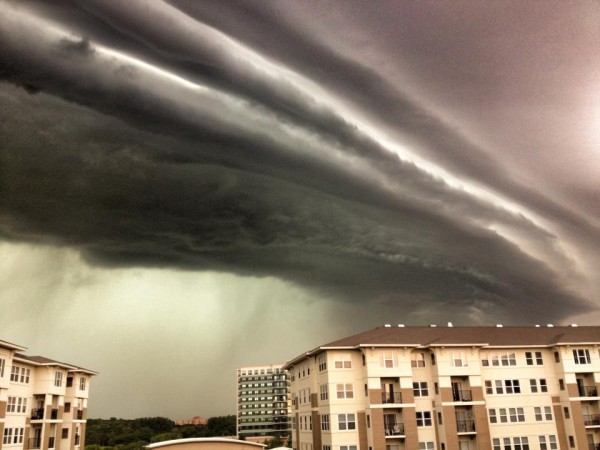
    4. Derecho Storm – cost $2.9 billion and caused 28 deaths
    A “derecho,” or rapidly-moving line of long-lived thunderstorms, moved across the Midwest and mid-Atlantic on June 29th and 30th, leaving a more than 700-mile trail of destruction in its wake. About three million homes and businesses lost power, and damages to water filtration facilities in Maryland caused water shortages. One of the most destructive and deadly thunderstorms in North American history, the derecho resulted in 28 deaths.
    2013-06-24-4a.jpg
    NWS Meteorologist Samuel Shea

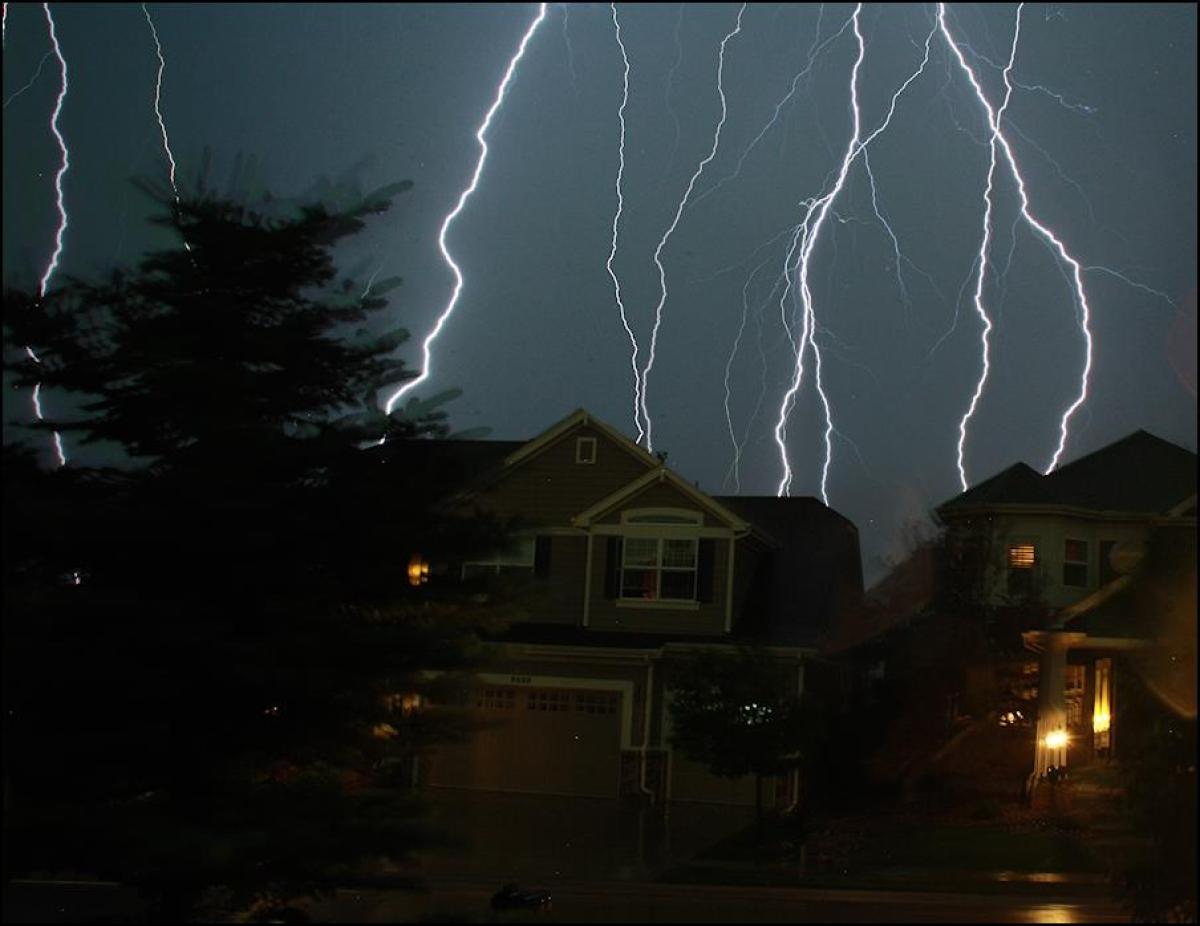
    5. Tornadoes in Colorado – cost $2.6 billion and caused 0 deaths
    Extreme storms with high-speed winds and hail, including 25 confirmed tornadoes, moved through Colorado, New Mexico, and Texas in early June. Forty people were rescued, many from within or on top of vehicles. Over six hundred 9-1-1 calls were made within a two-hour period, and flooding damaged many areas in Colorado. A severe hailstorm also caused extensive damage, with Colorado alone experiencing over $1 billion in damages. The storms also produced tornadoes and lightning strikes in the area.
    2013-06-24-5a.jpg
    Flickr: Brokentaco

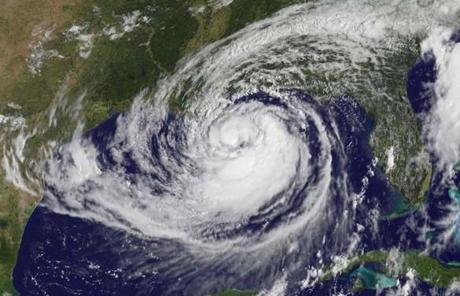
    6. Hurricane Isaac – cost $2.3 billion and caused 9 deaths
    Hurricane Isaac made landfall in Southeastern Louisiana on August 29th as a category 1 hurricane. More than 900,000 people were without power in Louisiana, Mississippi, Alabama, Florida, Texas, and Arkansas. 34 tornadoes also touched down across the southeast region during this time period. The large storm surge and flooding rains created extensive destruction and caused 9 deaths in the United States. Thirty-two people also died in Haiti, the Dominican Republic, Venezuela, and Puerto Rico.
    2013-06-24-6b.jpg
    AP

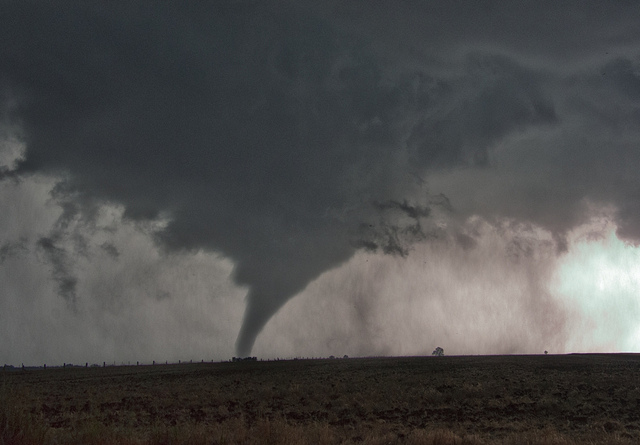
    7. Southern Plains and Midwest Storms – cost $2.3 billion and caused 1 death
    Severe thunderstorms over the Southern Plains, Midwest, and Northeast blew across Texas, Oklahoma, Kansas, Minnesota, Pennsylvania, and New York between May 25th and May 30th. At least 27 tornadoes, extreme hailstorms with golf-ball sized pieces of ice, and straight-line winds damaged homes and businesses in the area. There was one direct death from the storms.
    2013-06-25-7b.jpg
    Niccolò Ubalducci Photographer

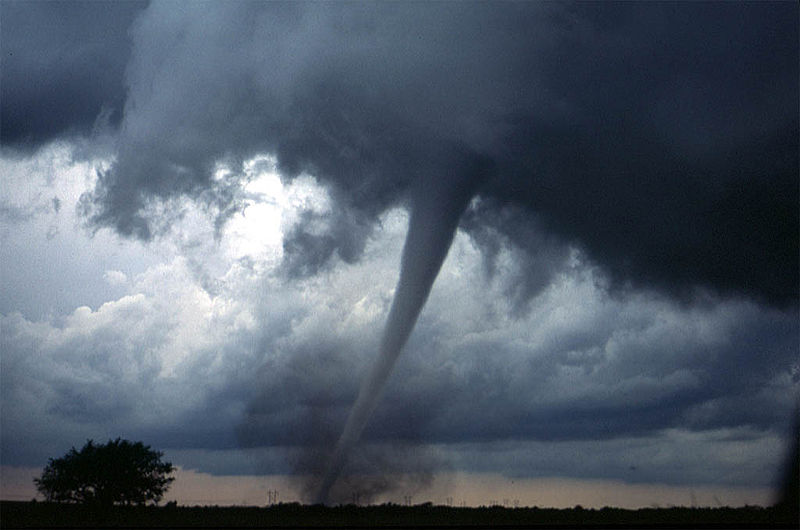
    8. Midwest Tornadoes – cost $1.1 billion and caused 6 deaths
    98 confirmed tornadoes and extreme weather developed over Oklahoma, Kansas, Nebraska, and Iowa on April 13th and 14th. The tornadoes remained on the ground for long periods of time, some traveling tens of miles. With forecasters warning of life-threatening storms, central Oklahoma and northeast Nebraska saw baseball-sized hail and winds of more than 70 mph, sending a few dozen people to the hospital. There were 6 deaths as a result of the tornadoes in Woodward, Oklahoma.
    2013-06-25-8a.jpg
    Wikipedia Commons

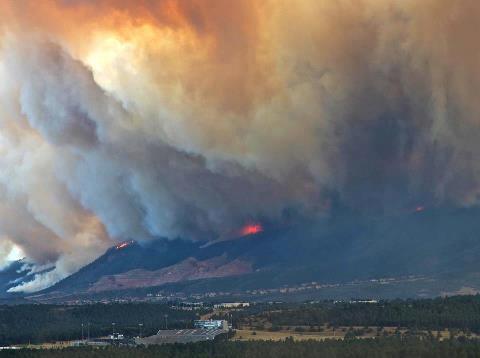
    9. Western Wildfires – cost $1 billion and caused 8 deaths
    The Western Wildfires were a series of blazes that spread throughout Colorado and other western states, including Idaho, Wyoming, Montana, California, Nevada, Oregon, and Washington. During the summer and fall these fires burned over 9.2 million acres, the highest annual total in over a decade. Colorado suffered the worst and most costly wildfires, losing more than 200,000 acres and hundreds of homes and businesses. In Colorado at least 34,500 residents were evacuated in the month of June alone. There were 8 direct deaths from the wildfires throughout the western states.
    2013-06-25-9b.jpg
    Keystoneridin

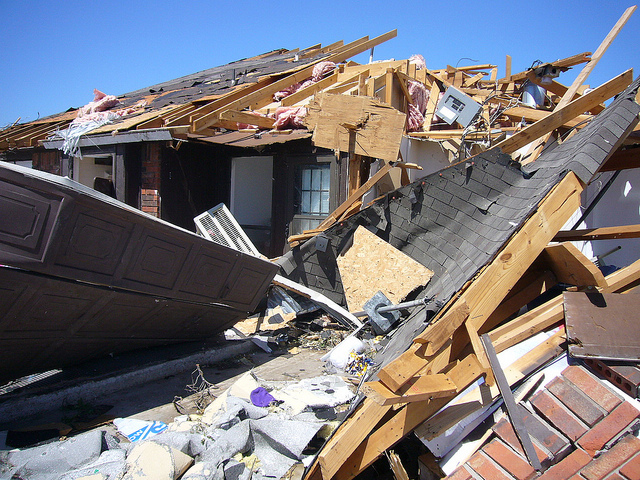
    10. Texas Tornadoes – cost $1 billion and caused 0 deaths
    On April 3rd an outbreak of tornadoes near the greater Dallas-Fort Worth area developed from individual supercells. There were 22 confirmed tornadoes; one of the strongest was an EF3 tornado that hit Forney, Texas. Strong winds and hailstorms struck the area, damaging numerous homes and businesses and injuring 29 people.
    2013-06-25-10b.jpg

    Follow Daniel Kessler on Twitter: www.twitter.com/danieljkessler

    FOLLOW GREEN
    136k

    • Comments
    • 7
    • Pending Comments
    • 0
    • View FAQ

    Post Comment Preview Comment

    To reply to a Comment: Click “Reply” at the bottom of the comment; after being approved your comment will appear directly underneath the comment you replied to.

    Share your Comment:

    Post to Facebook.
    Post to Blogger.
    Post to Twitter.
    Post to WordPress.
    Post to TypePad.
    Post to Tumblr.
    View All
    Favorites
    Recency  |
    Popularity
    HUFFPOST SUPER USER

    bthompson18

    41 seconds ago ( 2:58 PM)

    According to the climate scientists they are just natural weather events.

    12 hours ago ( 2:44 AM)

    climate disasters – hahahahaha

    He meant storm damage.

    16 hours ago (10:30 PM)

    Symptoms Of Climate Change
    — stevengoddard
    Be on the lookout for these :

    Warm temperatures
    Cold temperatures
    Mild temperatures
    Snow
    Lack of snow
    Rain
    Lack of rain
    Tornadoes
    Lack of tornadoes
    Hurricanes
    Lack of Hurricanes
    Hail
    Lack of hail
    Storms
    Lack of storms
    Floods
    Lack of floods

    All of these symptoms are sure fire signs of missing heat, and should be reported to authorities immediately.

    photo

    HUFFPOST SUPER USER

    SeriouslySushi

    God sure baked a lot of fruit cake, baby.
    7 hours ago ( 8:24 AM)

    Actually, if one believes that we are now in the midst of climate change- which is to say it’s not a future event, but a current and ongoing one- then all the weather everywhere everyday, from the mild to catastrophic, is occurring within the context of a changing climate and all that entails.

    And as I’m sure you know, the impacts of climate change are not expected to be uniform across the globe. Some areas will be wetter. Some will get less rain. If Antarctica gets more snow, that would actually signify warming there, since it’s often too cold for significant snowfalls.

    People like to say that statements like the one you quoted create a situation where AGW cannot be disproved, since just about any weather can be attributed to it. But all one has to do to disprove AGW theory is show that CO2 does not have infrared energy absorption properties and that our atmospheric makeup and function is much different than we believe after centuries of study and observation. Easy Peasy Lemon Squeezy.

    4 hours ago (10:39 AM)

    1. Climate is always changing, and there is nothing unusual at all about its present characteristics, including the magnitude or rate of change in global temps. That this is true is easily seen in the historic and geologic record.

    http://climate.geologist-1011.net/HoloceneTemperatures.png

  • Visionary spruiks floating bridge plan Date

    “DISMANTLE OUR COATHANGER!!!! Built in the 1930’s along with the Bunnerong Power House by depression labour. This must take the role of idiotic idea of the year. Chinese Labour?? A new harbour crossing is vitally needed, but this idea takes the cake”


    Visionary spruiks floating bridge plan

    Return to video

    Video settings

    Please Log in to update your video settings

    Return to video

    Video settings

    Please Log in to update your video settings

    Moving the bridge

    A proposal by Aspire Sydney to replace the Harbour Bridge to increase the traffic and rail capacity.

    Video will begin in 1 seconds.

    Dismantling the Sydney Harbour Bridge and floating in a new double-deck version built overseas sounds like a plan hatched over beers at the pub. But one man says it should be reality.

    Former federal Liberal MP Ross Cameron approached the state government with the radical proposal, which he says would solve Sydney’s worst transit ”choke point”.

    Even better, it could be built using Chinese labour, at a fraction of the cost of the proposed $10 billion second harbour rail crossing, Mr Cameron says.

    “If you left [the bridge] it would get increasingly dangerous and more bits of it will start falling off,” he said, referring to an incident in March when loose metal plates caused commuter chaos.

    Advertisement

    The bridge “needs three times as much rail capability and twice as much road capability”.

    He would seek to form a public-private partnership.

    It forms part of a grander plan, rejected by the state government last November, to build the M4 East motorway in exchange for the rights to develop the rail corridor between Central and Strathfield. Thousands of international workers would rebuild kilometres of rail lines underground and assemble at least 150 skyscrapers, prefabricated in China. Materials would be moved to the construction site on overhead conveyor belts from a new port near Glebe.

    Mr Cameron would also turn historic Fort Denison into a cruise passenger terminal, connected to the mainland via a tunnel.

    The former Macquarie banker wants the government to fully evaluate the proposal.

    He says he met NSW’s top transport bureaucrat Les Wielinga, who asked him to “please include the bridge” when he submitted the plans. A consortium known as Aspire Sydney would procure a new two-deck bridge from an overseas manufacturer before floating it “whole or in pieces to Sydney Harbour”.

    A spokesman for Mr Wielinga said he advised Mr Cameron to lodge the plan as an unsolicited proposal “if he felt it had promise”. The Premier’s Department rejected the Aspire Sydney proposal, saying it “did not present a commercial or financial proposition for [the] government to consider.

    <img width="0px" height=

    Read more: http://www.smh.com.au/nsw/visionary-spruiks-floating-bridge-plan-20130629-2p3vc.html#ixzz2XeqZY9nm

  • How crowdsourcing and open innovation could change the world

    How crowdsourcing and open innovation could change the world

    Tapping into the ideas offered by large numbers of people seems a smart way to solve some of our most pressing problems

    Dictionary

    The Oxford English Dictionary started out as an open appeal to collate idioms and phrases from thousands of volunteers around English-speaking world. Photograph: Ian Nicholson/PA

    Historically, technological breakthroughs have been led by the innovations of the few with access to the resources and platform to influence, but something exciting is happening on the worldwide web that is turning this precedent on its head.

    Crowdsourcing, as defined by Wired Magazine, represents “the act of a company or institution taking a function once performed by employees and outsourcing it to an undefined (and generally large) network of people in the form of an open call.”

    Although it may seem like it is a new phenomenon, the basic practices of crowdsourcing and open-innovation have been around for centuries. In fact, the Oxford English Dictionary started out in the late 18th century as an open appeal by Professor James Murray to collate idioms and phrases from thousands of volunteers around the English-speaking world.

    As time has moved on, the internet has facilitated, expanded and accelerated the interactions behind crowdsourcing. Crowdsourcing and open innovation websites allow people from all cultural, economic and educational backgrounds to collaborate on ground-breaking technology.

    Kickstarter is probably the most famous example of an online crowdsourcing platform. Since its launch in 2009, it has grown to become the largest funding platform for creative projects, with over 4.2 million people pledging in excess of $652m to fund over 43,000 projects.

    Outside the domain of raising cash for iPod docks and Bluetooth-enabled watches, a number of other online crowdsourcing platforms have sprung up in recent years to solve any number of different societal and technological problems. OpenIDEO hosts a small number of philanthropic competitions and asks their online community to come up with new design solutions to societal problems. Kaggle offers monetary rewards, jobs or consulting opportunities to data scientists that can make sense of problems with large data sets. One of the grandfathers in this arena is Innocentive which has been crowdsourcing solutions to problems since 2001. Innocentive’s community of “solvers” tackle problems spanning engineering to life sciences, and business to IT, with sponsored prizes in the past from the likes of Merck, Nasa and The Economist.

    Why are businesses getting involved?

    Until recently, “traditional” corporates have watched open innovation and crowdsourcing initiatives from the sidelines with very few getting directly involved. There are signs that this is changing; with the economic downturn in recent years, more and more businesses have been turning to outsourcing as a cost-saving measure.

    Outsourcing to a cheaper labour force has its advantages (and disadvantages), and crowdsourcing can often also save businesses money. However, where crowdsourcing excels is in opening up a large workforce with a diverse set of skills and experiences, as within the crowd you’ll find domain experts that are notoriously difficult to tap into by “conventional” means. Having access to that kind of diversity and micro expertise at scale can only be a good thing for business.

    Starbucks has “My Starbucks Idea” which invites its customers to suggest improvements for anything from new flavours for drinks to the music it plays in its stores. There is no monetary reward or financial compensation, yet Starbucks has over 100,000 ideas on the site.

    One area in which open innovation and crowdsourcing is emerging as a crucial tool is in the development of sustainable technology. In May, for the first time in human history, the concentration of CO2 in the atmosphere hit 400ppm (parts per million). By 2050, there will be 9 billion people sharing our planet and in the next 20 years, the world’s middle class will grow from less than 2 billion to more than 4 billion. This growth will be coupled with enormous demand for resources.

    Crowdsourcing a clean tech revolution?

    The time has come for a clean revolution: a swift, massive scale-up of clean energy and infrastructure, and of smart technologies and design. There are rich rewards for those that pioneer the revolution; research by Google in 2011 found that breakthroughs in clean-tech innovation could generate an extra $155-244bn (£102-160bn) of GDP per year in the US from 2030 if the right investments are made now.

    There are global businesses that have recognised the potential of the low carbon economy and are utilising crowdsourcing and open innovation websites to realise the technologies these online communities create through collaboration. The message that sustainability and profitability are not mutually exclusive is beginning to resonate.

    We truly believe that crowdsourcing and open innovation have the potential to solve the biggest issues facing society. Some of the biggest leaps in technologies and innovation in science have come from approaching old problems with fresh perspectives not constrained by old dogmas. It took a chemist to overthrow the old tenet in biology that genetic information only flows in one direction (DNA > RNA > Protein), and it revolutionised our understanding of how viruses like HIV work and resulted in the awarding of not one, but two Nobel Prizes.

    We look to science more and more to solve these big problems and co-ordinating the efforts of large crowds made up of individuals that each have something different to offer and can build on each other’s ideas seems a smart way to solve them.

    Ben Ferrari is director of corporate relations at The Climate Group and Mehmet Fidanboylu is director of product and co-founder of Marblar.com, which crowdsources market applications for emerging and dormant technology.

    The Climate Group and Marblar have launched EarthHack – [sustainable homes].

    This content is brought to you by Guardian Professional. Become GSB member to get more stories like this direct to your inbox

  • So shale gas could meet demand for 40 years. What then?

    So shale gas could meet demand for 40 years. What then?

    Britain’s new gas capacity is much hyped, but the fracking path will most likely lead to the lights going out regardless

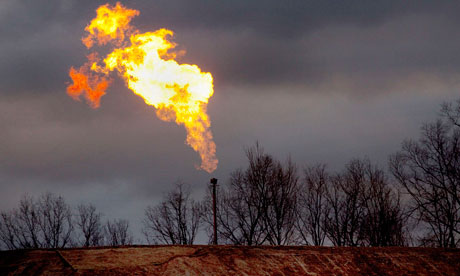
    A gas flare burns at a fracking site in rural Bradford County Pennsylvania

    A gas flare burns at a fracking site in rural Bradford County, Pennsylvania. Photograph: Les Stone/Reuters

    For a moment, let’s take the shale gas evangelists at their word. Britain has stumbled on a pile of carbon cash in its cellar, the energy equivalent of finding a stack of ugly but valuable china in the attic. With North Sea oil and gas in decline and global markets volatile and pricey, suddenly there seems a sure way to deliver the government’s promise of building 40 new gas power stations. By odd coincidence, newly estimated gas resources in the Bowland shale could meet our demand for gas for 40 years.

    Wonderful for some, but then what? Fast forward to July 2053 and where will we be? We will have a household and national energy infrastructure hopelessly dependent on an exhausted fuel source, and a climate pushed past the point of no return, warming catastrophically due to the burning of fossil fuels. The government’s own committee on climate change has pointed out that this would likely put the UK the wrong side of legally binding commitments to reduce emissions.

    Communities that took the £100,000 bribe to accept a gas-fracking well and the parsimonious 1% of revenue will end up feeling like every other community around the world touched by the resource curse: wondering what happened to them. They will be left with the environmental legacy of extraction, locked in to ever costlier fossil fuels, precious little in pocket and with children growing up in a world marked by climatic upheaval.

    Worse still, if we believe the Ofgem warning about an energy supply crunch due in 18 months, none of this much-hyped new gas capacity will be ready in time to help regardless.

    And there are many other reasons for caution. Policymakers have been hypnotised by the impact on gas prices of shale developments in the US, but this stands to be a misleading and short-lived result of an immature market. There, a gas dash has flooded the market with new supply, pushing prices down. But unlike conventional gas, shale gas fields decline more rapidly, and there’s evidence that in the US companies have concentrated on “sweet spots”, whereas the broader fields used to justify upbeat estimates are much less productive.

    When this was realised, one of the largest American fields, the Marcellus shale in the eastern US, saw an 80% downward revision of its undiscovered, technically recoverable reserves. Similar bad news comes from other hyped new sources such as those in Poland. Industry analysts Bernstein Research concluded that “data from Poland’s shale gas wells validate our concerns about European shale gas: poor flow rates in over-pressured, hard-to-develop shales”.

    If climate change and the economic vulnerability of fossil fuel dependence are insufficient reasons to think twice about deepening our fossil fuel addiction, perhaps we should also remember that, wherever the oil industry treads, conflict and corruption tend to follow. From the Middle East to Africa a story of red blood, black carbon and cold money repeats itself.

    But it doesn’t stop there. Louisiana, dubbed America’s “petro-state”, hasn’t escaped the resource curse of oil and gas. The Washington Post pointed out not long ago that, instead of prosperity, the industry had brought “dependency, corruption and an indifference to environmental damage”. And, far from improving the lives of its people, that state has some of the worst health and social indicators, such as violent crime, in the country. For all the counties sitting on top of shale beds, this may be further cause to pause before taking the shale pound.

    The alternative for Britain has been clear, yet ignored, since the need to stimulate the economy after the financial crash of 2007-2008. It involves: large-scale investment in a green new deal; a carbon army of green-collar workers to make the nation’s draft buildings energy efficient; the building and maintenance of an efficient, more decentralised and renewably powered energy system; the remaking of our transport system – and more.

    Obvious efficiency measures such as overnight electric light curfews in city office blocks might help, sending an important signal, and the government could impose a demand reduction obligation on the utilities too. This is not the embarrassing failure of the current small insulation programme dubbed a green deal, but a bold plan for necessary and rapid transition to a modern, more secure and convivial economy. It stands a far better chance of keeping the lights on too.

  • California set to swelter in heatwave temperature of 53C

    California set to swelter in heatwave temperature of 53C

    Updated 37 minutes ago

    A potentially deadly heatwave is expected to bear down on the United States’ south-west, with temperatures in California’s Death Valley forecast to hit 53 degrees Celsius.

    The severe heat will be only slightly lower than the hottest temperature ever recorded on earth – 57 degrees in the same location 100 years ago.

    Similar temperatures are predicted in the states of Arizona and Nevada.

    Weather forecasters say the mercury could reach 40 to 50 degrees Celsius in the deserts in southern Arizona.

    Cities in the region are opening cooling centres and officials fear the heat could delay air travel.

    The National Weather Service has issued an excessive heat warning that is current for the entire weekend.

    “Exceedingly high temperatures can cause heat-related illness, including death,” it said.

    The agency added that residents without air-conditioning are most vulnerable.

    It said the city of Phoenix is expected to reach 48 degrees Celsius, further increasing the risk of heat stroke and exhaustion.

    ‘Too hot to touch’

    Arizona resident Michael Fedo says the heat feels like an invisible wall that has forced his family to install black-out shades on every window in their house.

    “It’s almost the same thing which you get when you have your oven pre-heated and you open the oven door and you get that wash of heat over you – times 100,” he said.

    “As soon as that door opens it’s there, it’s always there, it’s just permeating to the core of your being.”

    Another Arizona resident, Ray Huffer, says the heat is making some things too hot to touch.

    “The metal that you touch on the door to get in your house, you need to have a cloth on it, you have to have a towel with you to touch the steering wheel,” he said.

    “An extended heatwave like this, five, six, seven days, the workers can’t go roofing, asphalt doesn’t harden, all kinds of economic things have to literally stop.”

    ABC/Reuters