The 2013 Gulf of Mexico dead zone may very likely be the largest one ever, according to new predictions based on several different NOAA-supported forecast models. The hypoxic dead zone is forecast to cover somewhere between 7,286 and 8,561 square miles of the Gulf of Mexico. The largest dead zone on record was the 2002 one, which covered 8,481 square miles.
“Less oxygen dissolved in the water is often referred to as a ‘dead zone’ (in red above) because most marine life either dies, or, if they are mobile such as fish, leave the area. Habitats that would normally be teeming with life become, essentially, biological deserts.”
Image Credit: NOAA
Dead zones — whether hypoxic (very low oxygen) or anoxic (no oxygen) — are caused primarily by high-levels of nutrient pollution. This nutrient pollution — mostly the fertilizers used in industrial agriculture — causes large algal blooms which use up all of the oxygen in a given environment. As a result, the environment becomes devoid of life — a “dead zone”. These deadzones have been increasing in frequency and scale since at least the 1970s. More than 1.7 million tons of potassium and nitrogen make their way into the Gulf of Mexico every year as a result of agricultural runoff — via the Mississippi river.
If the 2013 Gulf of Mexico dead zone becomes as large as is being predicted it will cover an area the size of New Jersey. The 2013 predictions were made by modelers at the University of Michigan, Louisiana State University, and the Louisiana Universities Marine Consortium.
The Great Barrier Reef may have been spared the indignity of being listed as a World Heritage Area “in danger” this week, but the Reef’s woes are just beginning. There are 962 properties on the world heritage list. Most of these are protected for their cultural values, while many, like the Great Barrier…
World Heritage won’t mean anything if nothing’s done about climate change. Flickr/350.org
The Great Barrier Reef may have been spared the indignity of being listed as a World Heritage Area “in danger” this week, but the Reef’s woes are just beginning.
The World Heritage Committee agreed to postpone their review of the Great Barrier Reef to 2014, as the Queensland and Federal governments prepare reports into coastal development. But it isn’t just coal and ports that are the problem.
It is only a matter of time before the Australian government and the international community will have to face up to reality. Climate change is fundamentally challenging the way we go about protecting the environment.
To protect the reef, look beyond the coast
Managing the Reef now can buy time while a global response is hammered out to deal with climate change and ocean acidification. But the Federal and Queensland governments don’t seem to recognise time is running out.
In fact, neither does the World Heritage regime itself. It remains based on a somewhat dated view about how natural environmental assets should be protected.
The 1972 World Heritage Convention, which defined how and what can be listed as World Heritage, is built on the premise that sites are best protected by conservation at the site. Historically this made sense. The Convention is one of the earliest environmental treaties, and concluded at a time when the main threats to world heritage were highly localised. It is a bit like a museum, seeking to preserve certain outstanding illustrations of cultural and natural property for future generations.
What it doesn’t do is account for natural change, or the much more serious threat of human-induced change. World heritage properties cannot be frozen in time. In the current geological epoch, which we can think of as the Anthropocene, the greatest single threat to many world heritage properties is climate change.
Back in 2004 a report from University of Sydney found the Howard government’s failure to ratify the Kyoto Protocol and to support international initiatives to curb greenhouse gas emissions was one reason among several why the Great Barrier Reef might be included on the “in danger” list. We mustn’t let the current debate about development hide the reality of climate change.
World Heritage can’t address this. That is for other regimes, chiefly the UN Framework Convention on Climate Change, to resolve. What World Heritage can do is draw attention to global threats that major environmental assets face. Its “in danger” listing process is a key mechanism to achieve this.
For well over a decade there has been discussion over whether the Great Barrier Reef should be placed on the “in danger” list. The main reason for this is the dawning realisation the Reef will be severely damaged by rising sea temperatures from climate change.
2012: development the new threat
The recent discussions about the reef have focused on the range of developments proposed for the Queensland coast, such as new or expanded ports to facilitate coal exports.
This is based on a 2012 report from UNESCO and the IUCN. It warned Australia the reef would be placed on the “in danger” list unless this development was curtailed or properly assessed.
The report set out 14 detailed recommendations for getting the protection and management back on track. These included:
no new port development outside existing port areas
an independent review of developments at Gladstone and Curtis
an independent review by internationally recognised and widely respected scientific experts of the overall planning, protection and management of the Reef
With official endorsement by the World Heritage Committee in 2012, it was clear the committee was keeping watch on the Reef, and that a brake had to be placed on coast developments.
On a positive note, the report observed that the actual management of the Reef was world-class, and considered the “gold standard” for conserving large marine areas.
2013: still on the brink
In February 2013 the Great Barrier Reef Marine Park Authority responded to the 2012 report and its recommendations. Several aspects of the Government’s response have been subject to significant criticism, particularly in respect to Gladstone Harbour.
Media reports earlier this week indicated that discussions at the 37th Session of the World Heritage Committee turned on whether Australia was satisfying a host of “priority issues” for protecting the reef. These have been identified by the UNESCO World Heritage Centre and the IUCN, but not yet made public.
At the 2013 World Heritage session officials were satisfied that Australia was meeting some but not all of their recommendations. They gave Australia further opportunity before 2014 to show that it is meeting the Convention obligations. There’s an ultimatum of sorts on development – any new coastal development with an impact on the Reef’s heritage values will be considered a violation.
The June 2013 decision of the World Heritage Committee has, like the 2012 decision, again preserved the status quo for the Reef. While recognising the threats to the Reef, those have not yet risen to a level that would allow the Committee to list the property on the “in danger” list.
Without a move on climate change the reef will remain “in danger”, and not just on the World Heritage list.
Publicly endorse the views and findings of the Roundtable.
White Paper
The Australian Business Roundtable for Disaster Resilience and Safer Communities commissioned a fact-based, comprehensive White Paper, Building our Nation’s Resilience to Natural Disasters, through Deloitte Access Economics. The White Paper aims to considerably assist decision making about the allocation of scarce resources and support the development of policy around natural disaster mitigation.
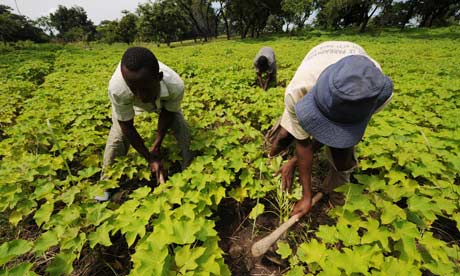
Employees work in a Jatropha nursery field in Dimbokro, Ivory Coast. Jatropha produces an oil that can be used as diesel substitute for power plants or engines. Photograph: Kambou Sia/AFP/Getty Images
Votes taken by European parliamentary committees this week could determine the future of EU biofuels policy, which has been strongly criticised for its negative impact on developing countries.
The commission said the move would stimulate the development of alternative, “second generation” biofuels from non-food crops, such as waste or straw, which emit substantially fewer greenhouse gases than fossil fuels and do not directly interfere with food production.
It also proposed for the first time to take into account the impact of deforestation, peatland drainage or other land clearance caused by biofuels in their carbon footprint. Environment and development campaigners argue this factor – indirect land-use change (ILUC) – has been missing from calculations of the green credentials of biofuels.
But campaigners fear that MEPs, under fierce lobbying by the biofuels industry and farmers’ unions, will weaken the commission’s proposals before a full parliamentary vote in September.
In votes on Tuesday, the transport and international trade committees voted to raise the biofuels limit to 6.5%, rather than the 5% proposed by the commission.
Negotiations are under way before Thursday’s vote on the industry, research and energy committee, but the committee’s draft does not bode well either. The committee is seeking to remove the 5% limit and replace reporting on the impact of converting to biofuels – the ILUC element – with voluntary mitigation measures. The environment committee will vote next month, reflecting the widespread nature of the biofuels debate in the EU.
Ahead of this week’s votes, Olivier De Schutter, the UN special rapporteur on the right to food, wrote a letter (pdf) to the commission, member states and MEPs that was highly critical of EU biofuels policy. He is concerned that EU policy creates incentives for land leases or acquisitions, particularly in sub-Saharan Africa, in which the rights of current land users are inadequately protected.
Figures vary on the amount of land that is used to grow biofuels. The commission estimates that between 2003 and 2008 6.6m hectares (16.5 million acres) of additional arable land globally was cultivated for biofuels.
“The land and water resources of the countries concerned should serve, in the first instance, the realisation of the right to food of the local populations; these populations should not be forced to compete against EU consumers, whose purchasing power is vastly higher,” said De Schutter.
De Schutter said biofuels had pushed up food prices, with estimates that, by 2020, EU biofuel targets could ramp up the agricultural price of vegetable oils by 36%, maize by 22%, wheat by 13% and oilseeds by 20%. Another concern is that biofuels favour large-scale industrial models of agriculture that appear to offer limited benefits to local populations, particularly smallholder farmers.
De Schutter argues that EU policy on biofuels contradicts its development objectives, as well as possibly contravening its legal obligations.
“The EU member states are all state parties to the international covenant on economic, social and cultural rights, which impose a duty to abstain from measures that could threaten the realisation of economic and social rights in other countries,” said De Schutter.
Research for the Chatham House thinktank says reaching the 5% level means UK motorists will have to pay an extra £460m a year because of the higher cost of fuel and from filling up more often as biofuels have a lower energy content. The report (pdf) says that if the UK is to meet its obligations to EU energy targets, the cost to motorists is likely to rise to £1.3bn per annum by 2020.
The European Biodiesel Board, an industry body, said the changes proposed by the commission could lead to the “catastrophic” end of an industry worth €10bn (£8.5bn) a year.
Why would the ALP vote against stronger environmental protection?
This week Greens Senator Larissa Waters proposed significant amendments to the Environmental Protection and Biodiversity Conservation Act. Some sought to better protect farmers and water resources from gas extraction. Others were aimed at protecting national parks and strengthening the Federal Government…
Moves to increase protection of national parks have been voted down. Flickr/Marc Dalmulder
This week Greens Senator Larissa Waters proposed significant amendments to the Environmental Protection and Biodiversity Conservation Act. Some sought to better protect farmers and water resources from gas extraction. Others were aimed at protecting national parks and strengthening the Federal Government’s power to protect the environment. All were voted down in the Senate by the combined forces of the ALP and the Coalition. Their failure has profound significance for the protection of our critical environmental assets.
The Environmental Protection and Biodiversity Conservation Act was passed by the Howard government. It was certainly not a radical move. The environmental NGOs and leading environmental scientists were divided at the time about whether the legislation was even worth supporting. Many argued that the new law was so weak it would achieve very little.
The main criticisms were that the Act provided limited conditions which would allow a Commonwealth Minister to intervene and overrule state approval for a development, and that even if those strict criteria were met it would still be optional for the minister to intervene. While a responsible Minister could act if the science showed clearly that a proposed development would damage the habitat of an endangered species or do serious damage to a threatened ecosystem, the law does not require that intervention.
One of the few instances of the Act being used by a Commonwealth Minister was Peter Garrett’s action to stop the proposed Traveston Crossing Dam on the Mary River. That dam had been proposed by Peter Beattie at the height of the drought-induced water shortages. With the change in the leadership of the Queensland government to Anna Bligh and the breaking of the drought by flooding rains, there was almost a sense of relief at the state level when Garrett canned the project. The cash-strapped Bligh government was reduced to selling public assets to fund the infrastructure demands of rapid population growth. It could not afford to pour money into a dam that wasn’t really needed. The project had also become a political embarrassment because of the evidence it would have been environmentally damaging.
The site of the proposed Traveston Crossing Dam Flickr/Patrick McCully
A review of the Act by experienced departmental head Alan Hawke identified several major shortcomings and recommended significant amendments. But neither the Rudd nor the Gillard government acted to strengthen the law along the lines Hawke recommended.
There was recently a serious move to weaken still further the capacity of the Australian government to intervene to protect the environment. The calls for “cutting green tape” constituted an explicit campaign to push the Commonwealth to abdicate its responsibility and cave in to the notoriously short-sighted pro-development agenda of state administrations. The Newman government in Queensland and the Barnett government in Western Australia have demonstrated clearly why we need a Commonwealth capacity to overrule irresponsible state approvals. The possibility of an Abbott-led Coalition government has led to increasing concern that the limited Commonwealth powers will not be used.
So the moves to tighten the EPBC Act were very important. The changes introduced by the government allow Commonwealth assessment of coal seam gas operations and large coal mines, but do not extend to shale gas and so-called “tight gas”. (While natural gas is normally extracted from relatively porous strata, “tight gas” is trapped in rocks that require extensive fracturing to release the gas.)
The further amendments proposed by Senator Waters, who was a lawyer working for the Environmental Defenders Office before being elected as Queensland’s first Green senator, would have given landholders the right to block proposed coal seam gas developments and would have given the Commonwealth explicit power to assess the impact of shale gas mining on water systems.
But the most fundamental change was the proposal to add national parks to the “matters of environmental significance”, which justify Commonwealth intervention.
The move was provoked by the recent actions of state governments to allow cattle grazing, mining, logging and shooting in national parks. Senator Waters argued that most people assume that the small fraction of our land set aside as national parks – about 4% – is protected from harmful development. But the attempt by the Victorian government to allow cattle to graze in the high Alps has been followed by the Queensland government allowing grazing of cattle and proposing to go back to logging national parks, the Tasmanian government supporting mines in the Tarkine and the continuation of some logging activities, and the NSW government allowing shooting.
The existing legislation does not give the Commonwealth power to intervene to protect a national park unless the proposed activity can be demonstrated to directly harm biodiversity. The proposed amendment would have greatly strengthened the hand of current and future Commonwealth Ministers to protect national parks from the sorts of proposals now being rolled out by state governments.
It is hard to understand why the government would not accept the amendments, unless it is trying to distance itself from the Greens in the lead-up to the September election.
The Senate has agreed to give the Commonwealth Environment Minister broader approval powers over coal seam gas projects and large coal mines.
The ‘Water Trigger’ amendment to the Environment Protection and Biodiversity Conservation Act allows the Federal Environment Minister to consider the impact of CSG projects and large coal mines on water resources, in deciding whether or not to they should be approved.
It passed the Senate with the support of all parties, despite unsuccessful Opposition and Greens attempts to further amend the legislation.
The bill, championed by independent NSW MP Tony Windsor, passed the House of Representatives in March.
Mr Windsor says he’s delighted that the water trigger has become law, meaning the Commonwealth Environment Minister can now act on advice provided to him by the Independent Expert Scientific Committee, in deciding whether a project should go ahead.
Previously, the Minister could only consider the impact of CSG extraction and coal mining on water resources where a threatened species or Ramsar wetland was involved.
“CSG and coal mining projects can no longer be given the green light unless independent scientific advice concludes they won’t damage our precious water resources,” Mr Windsor said.
“Federal oversight based on independent science will help protect Australia’s most productive farmland from potential damage and encourage mining companies to pursue projects with lower risk profiles.”




 Email
Email