Category: Energy Matters

  • New ETU report shows gross energy feed-in tariffs would create 22.500 jobs.

    New ETU report shows gross energy feed-in tariff would create 22,500
    jobs
    Greens call on government to act now

    Launching a report commissioned by the Electrical Trades Union of
    Victoria in Melbourne, the Australian Greens today called on the Rudd
    government to introduce a gross national feed-in tariff for renewable
    energy as community support for this measure grows.

    Australian Greens Leader Senator Bob Brown said that the report shows
    that over 22,500 jobs would be created by introducing a national gross
    feed-in tariff for solar energy.

    “The report shows thousands of new jobs would be created by the
    introduction of this scheme – jobs for installers and electricians, and
    jobs in retail and in marketing. The employment benefits would be spread
    around the country,” Senator Brown said.

    “And a gross national feed-in tariff has the support of the Electrical
    Trades Union because they recognise it is a sensible, jobs-rich approach
    to the essential transformation to a zero-emissions economy in
    Australia. And this report confirms that.”

    Greens Senator Christine Milne introduced her Renewable Energy Amendment
    (Feed-In Tariff for Electricity) Bill in November last year. Despite
    both the Government and the Coalition speaking in favour of Senator
    Milne’s bill, the Government has not taken any action to bring a
    national focus in this important area.

    “Prime Minister Rudd will have a chance to support the Greens’ bill in
    the House of Representatives where it has been introduced by Independent
    MP Rob Oakeshott.”

    “A gross national feed-in tariff gives certainty to investors in all
    sources and scales of renewable energy generation. It would quickly
    bring renewables, including solar energy, to the point where they can
    challenge the dominance of the coal industry,” Senator Brown said.

    More information:  Russell Kelly 0438 376 082


    Another message from the Greens Media mailing list.

    Too many messages? Don’t unsubscribe – try switching to a daily digest.
    You can unsubscribe or change your subscription settings here:
    <http://lists.greens.org.au/cgi-bin/mailman/options/media>
    Or send an email to <media-unsubscribe@lists.greens.org.au>

  • Feed-in Tariffs Have Earned a Role in US Energy Policy


    The feed-in tariff, or FIT, has proven to be a powerful tool to create managed economic incentives that yield meaningful results in system deployments, job creation, cost reduction and market development — yet many policy makers, especially in the U.S., continue to rely upon renewable portfolio standards, investment tax credits, low interest loan guarantees and other mechanisms to reduce fossil fuel dependency. The solar industry in the U.S. should take pride in achieving recent legislative and funding victories, but also must recognize the powerful role that FITs can bring to rational and responsible energy policy.

    Simply speaking, a capless FIT offers any producer of solar power a pre-determined rate for any kWh of electricity produced, regardless of the own consumption. If this rate is guaranteed for e.g. 20 years, and set in order to allow a decent return on investment for the owner of the system, it mobilizes powerful market forces towards rapid implementation of growing amounts of solar energy.

    The German Solar Miracle

    FITs are the highly-effective policy engine behind the German solar miracle. Recognizing that return-on-investment is the principle barrier to wider market penetration for renewable energy alternatives (not lowering up-front costs), German policy makers required utilities to pay a rate of between €0.32/kWh and €0.43/kWh for solar electricity from newly installed PV systems. The German FIT program authorizes the utilities to pass on this extra cost, spread equally, to all electricity consumers through their electricity bill. In this way, the feed-in program works through market incentives independent of government budgets and subsidies.

    In Germany, the share of renewable energy on the electricity supply grew from 5% in 1998 to 15% in 2008. The monthly extra cost per household due to the feed-in rates for solar electricity is in the average only €3 in 2008. The result is that every electricity consumer contributes to the restructuring of the national electricity supply network. Equally important, by assuring a rate of return over a sufficient period, the German FIT has proven to be an excellent accelerator for private financing. To encourage cost reduction and the eventual elimination of tariffs, the feed-in rate in Germany is reduced each year by 5% (increased to 8 -10 % starting 2009), but only for newly-installed PV systems. Once a PV system is connected to the grid, the guaranteed feed-in rate remains constant over a 20-year period. This approach allows solar customers to easily calculate the return on investment in their PV system, while exerting price pressure on the industry to continuously reduce costs to remain in the market.

    A remarkable feature of a FIT is the built-in sunset clause: With the annual degression of the feed-in rate offered to new customers this rate will in only a few years dip below the rate of household electricity, and later compete with conventional power. Thus, the financial burden on today’s rate payers remains limited, and it provides the basis for more stable energy prices in the future, based on a larger fraction of secure, domestically produced electricity.

    Spain’s FIT

    FITs have been implemented throughout the world with enormously successful results. In Spain’s widely reported experience, nearly 3 GW in 2008 of solar power projects were deployed last year after generous tariffs were adopted. The result was that Spain briefly became the largest solar power market on the world, adding more than 45% of the world’s new installations and three times more than analysts expected. Today, in response to the impact on utility rate payers, Spain has capped its FIT at 500 MW, an amount still larger than all newly installed systems the in the U.S. last year. While Spain’s FIT is often cited as what not to do in solar policy, and this is partly true, the case clearly demonstrates the effectiveness of FITs to quickly establish a viable solar market.

    Part of the confusion and controversy surrounding feed-in tariff is the wide variety of incentive schemes proposed and implemented across the world. In addition to the German example, classic tariffs or premium pricing schemes can be used; FITs can be technology targeted or neutral; capped or uncapped; generation cost based or value based.

    FITs Enacted in ROW

    FITs have been enacted with varying degrees of success in Australia, Brazil, Greece, Portugal, Korea, Singapore, and in some states in the U.S. South Korea adopted feed-in tariffs for solar PV in 2006 that distinguishes between systems >30kWp and systems <30kWp. Feed-in rates are quite generous, but necessary when considering the countries’ low solar irradiance profile. The result has been that South Korea’s solar demand now rivals Japan’s as Asia’s largest market (the country has set a goal of installing 1,300MWp by 2012).

    By using relatively simple market incentives implemented through regulated utility monopolies, feed-in tariffs have proven effective at overcoming thorny downstream barriers such as financing, market education, distribution and sales, installation support, permitting and zoning fears and environmental regulations. Energy investors with resources, experience and entrepreneurial zeal can quickly make markets when they understand the risk and have confidence in reasonable rates of return.

    Policy makers can target residential, commercial and power generation solar markets for development and choose tariff rates or caps to achieve the level of solar penetration desired. Successful fossil fuel reduction — with ancillary beneFITs of job creation, peak management, stable fuel supplies, and more — can be achieved more efficiently, more accurately and more cost effectively than any other policy instrument. In addition, the considerable cost of red tape that is necessary to administrate complicated support schemes like the ones we got used to in the U.S. to prevent fraud can almost be completely eliminated, as the PV system operator will take care to have the system run in the optimum way in order to ensure its profitability.

    Reliance on Subsidies

    So, why the reliance on tax credits, loans, subsidies and solar energy standards in the U.S. and China, to name two countries, to achieve desired policy outcomes? For one, tax credits have been the traditional incentive instruments in the United States for a variety of worthy goals such as home ownership, R&D, education and more. It is an instrument that is familiar and politically expedient.

    Confusion over the term “feed-in tariff” has also been cited as a barrier. In fact, a FIT scheme is not a tax; it just offers a certain rate to be paid for the production of power. Therefore, some advocates prefer the term “feed-in rates,” “performance-based incentives,” “advanced renewable incentives” or “clean energy buy back” mechanisms.

    Most solar policies today rely upon hard or soft mandates on utilities and electrical power providers to establish renewable energy production targets. The American Clean Energy and Security Act of 2009, as passed by the U.S. House of Representatives in June, relies upon the Renewable Portfolio Standards (RPS) to place an obligation on electricity supply companies to produce a specified fraction of their electricity from renewable energy sources. A majority of U.S. states also use RPS policies to achieve favorable renewable energy outcomes. Advocates of RPS mechanisms claim they will result in competition, efficiency and innovation that will deliver renewable energy at the lowest possible cost.

    Barriers to FITs

    The barriers to FITs in the United States are also related to the state and local control over electric utilities and the widely decentralized structure of the electrical generation and distribution system. The U.S. is a labyrinth of 3,100 public utilities, 2,100 non-utility power producers and a not-so-smart transmission system. Despite the complexity, movement is underway to use FITs as an instrument of state, local and national energy policy. In May, Vermont joined California as the only states to pass feed-in tariffs for renewable energy. Several other states, including Michigan, Minnesota, New York, Indiana, and Wisconsin are considering FITs.

    “The feed-in tariff has proven to be the best way to get quick movement in renewable energy development and create a lot of jobs,” said state Rep. Matt Pierce (D), who has introduced a feed-in tariff proposal in Indiana. (New York Times)

    In Florida, the Gainesville Regional Utilities adopted a feed-in tariff with a rate of $0.32 per kilowatt-hour guaranteed for the next 20 years. The program is modeled closely after European systems and reached its self-imposed cap of 4 MW in minutes after accepting applications. In comparison, the U.S. Department of Energy took over three years to award the first loan guarantee for solar after the Energy Policy Act passage in 2005.

    Perhaps similar to the problems in using European benchmarks in the current U.S. healthcare debate, FITs are still seen by some as some strange, exotic policy not applicable to the U.S. market. Some observers have even claimed that that the type of incentives does not matter, just the amount. One solar lobbyist even said about Germany, “They’ve been handing out bags of money and calling it a feed-in tariff. People think that they want a feed-in tariff, but what they really want is those bags of money.”

    “A lot of the charm of the feed-in tariff is solid, take-it-to-the-bank security and confidence for the investing community,” said U.S. Representative Jay Inslee (D-Wash), a sponsor of legislation that would establish a nationwide FIT. His bill was introduced in Congress last year and would use FITs to incent small projects up to 20 MW and help streamline grid interconnections.

    An analysis by the National Renewable Energy Laboratory (NREL) also confirmed that countries with feed-in tariffs have cheaper renewable electricity than those with renewable energy credits, the mechanism behind RPS. The tariff system is less risky, and investors are willing to accept lower profits for long-term stability, according to the report.

    “We deal with data and the evidence is very clear,” said Toby Couture, a researcher with the NREL in a report by the Sarasota Herald-Tribune (March 22, 2009). “Feed-in tariffs have consistently proven to be cheaper for consumers. That’s the bottom line.”

    Increasingly, FITs are seen as complimentary to well-crafted RPS policies. One report concluded, “RPS policies appear to be converging with some of the design characteristics typically associated with feed-in tariffs. As a result, it could become increasingly possible to incorporate elements of feed-in tariffs into RPS policy making,” (Feed-in Tariffs and Renewable Energy in the USA – a Policy Update, May 2008). A similar conclusion was made in a March 2009 report by the NREL that concluded: “FIT policies…can be used in parallel and wholly separate from RPS policies, they can replace a part of the current mechanism (perhaps to support a solar carve-out, or distributed generation), or they can be used to entirely replace RPS mechanisms. Of course, they can also be used by states with voluntary renewable energy goals to advance renewable energy development (Technical Report, NREL/TP-6A2 45549 March 2009).

    Despite their proven effectiveness and ability to work in conjunction with RPS policies, national, state and regional FIT legislation has been a grass roots affair, not supported by national environmental or renewable energy associations. Rhone Resch of the Solar Energy Industries Association said in January, “What you are also going to see is a focus by industry to create feed-in tariffs at the state level. Creating these programs at the state level will provide a laboratory that shows the federal government how this kind of incentive program stimulates the market. So we are probably a couple years away from a major push on feed-in tariffs at the federal level.”

    Call them what you will, but feed-in tariffs or performance-based incentives need to be seriously considered by every country and every policy maker in the world looking to expand the contribution of solar energy. They will be required to reach meaningful national climate goals and achieve significant job creation and economic stimulus. Elimination or marginalization of FITs by many policy makers in the U.S. cannot be a healthy sign for optimal legislation in the future. While near-term legislative action needs to focus on winnable, achievable victories, long-term success will require effective instruments grounded in solid economics.

  • Biomass: Another Renewable Energy Source

    Posted on August 26, 2009


    Biomass: Another Renewable Energy Source


    Today’s posting comes from AltaTerra Research’s principal analyst in “green data centers.” Data centers are responsible not only for giving you your email, web browsing, credit card transactions and views of your friends’ photos, but also a growing amount of energy use–on a par with the airline industry. In today’s post, Dr. Zen Kishimoto ponders the possibility of biomass powered data centers.


    I have covered renewable energy sources, namely wind, solar, and geothermal, in previous blogs.


    The Energy Information Administration (EIA) has reported the power generation breakdown among renewable energies and their distribution, as shown in the figure below.


    The EIA report separates wood and wood type from other biomass. Other analyses, such as Wikipedia’s, combine this type with the rest of biomass.


    Biomass, a renewable energy source, is biological material derived from living, or recently living organisms,[1] such as wood, waste, and alcohol fuels. Biomass is commonly plant matter grown to generate electricity or produce heat. For example, forest residues (such as dead trees, branches, and tree stumps), yard clippings and wood chips may be used as biomass. However, biomass also includes plant or animal matter used for production of fibers or chemicals. Biomass may also include biodegradable wastes that can be burnt as fuel. It excludes organic material such as fossil fuel which has been transformed by geological processes into substances such as coal or petroleum.


    Renewable Energy Power Generation Breakdown


    Power generated by each renewable energy source in 2008 (thousands of MWh)


    In my previous blog, I noted that there are more solar-powered data centers than wind-powered ones. But in reality, wind generates more power than solar and appears to be suitable for powering data centers. This observation is reinforced by the EIA breakdown, which shows that there is more than 30 times as much wind power as solar. Biomass generates about half the power that wind does. And if the wood and wood-type category is combined with the rest of biomass, then the power generated will be more than that by wind (52% vs. 33%).


    What about using biomass power for data centers? I searched for some examples of biomass-generated power for data centers, but I could not find many. Rich Miller of Data Center Knowledge reports in his blog that Emerson has installed a 100 kW solar panel array on its data center. In the comment section, someone mentioned the availability of power generated by biomass, as 20 tons of biowaste produces 3 MWh a day. In another of Miller’s blogs, I found another example of the power generated by biomass for Internet Villages International (IVI) in Scotland. Plans call for the IVI data centers to use electricity from a nearby biomass plant at Steven’s Croft operated by E-On UK (Powergen) and local wind farms. Local weather makes the area a prospect for using outside air to cool the servers (air-side economization). Waste heat from the data center buildings may be used to heat a nearby residential development.


    Meanwhile, my wife and I are producing three piles of biomass, a.k.a. compost, in our backyard. By recycling our waste, we cut down substantially on the amount of garbage we produce. However, we have found that doing this requires a lot of water. Although we are not generating power from this, I wonder how much water the generation of biomass consumes. I wrote on the shortage of water before.


    Compost piles


    My three biomass piles—compost—in the backyard


  • 1.300 Chinese children near smelter suffer lead poisoning

    1,300 Chinese children near smelter suffer lead poisoning


    • Officials close ‘unapproved’ manganese plant in Hunan
    • Second case in a month involving mass poisoning of pupils
    阅读中文 | Read this in Chinese


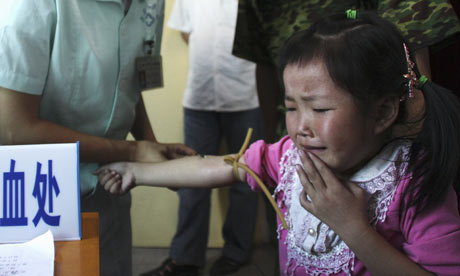
    Child has blood sample taken for examination of lead levels in blood at hospital in Wugang

    A child who lives near Wugang manganese smelting plant has her blood sample taken to examine the lead levels. Photograph: China Daily/Reuters


    More than 1,300 children have been poisoned by a manganese factory in central China, the state media reported today, amid growing fears about the prevalence of heavy metal pollution nationwide.


    The exposure of mass lead contamination in Wenping township, Hunan province, is the second case in as many weeks, prompting accusations that the authorities have failed to adequately regulate toxins that build up over time.


    A local government official told the Xinhua news agency that tests of children living near the smelter showed that 60-70% had unhealthy levels of lead in their blood. With tests continuing, more positive cases are expected.


    The authorities closed the factory last week and detained two executives on suspicion of “causing severe environment pollution”.


    The plant reportedly opened in May 2008 without the approval of the local environmental protection bureau within 500m of a primary school, a middle school and a kindergarten.


    Although the factory had only been operating for a year, the blood of 1,354 local children was found to have more than 100mg of lead per litre, the limit considered safe.


    A gradual build up of lead in the bloodstream can lead to anaemia, muscle weakness and brain damage.


    The plant is unlikely to have gone ahead without support from the local government. Many poor districts ignore environmental regulations to attract investment, and Hunan is notorious for its heavy metal industry. The Wugang city government said it had demanded an overhaul of more than 100 plants, including seven other smelters.


    But the problem is likely to be nationwide because authorities are not obliged to conduct expensive tests for heavy metals, which tend to accumulate over time rather than be emitted in noticeable bursts.


    In a separate case in Shaanxi, northern China, last week, 615 children tested positive for lead poisoning attributed to a nearby smelter, which is now due to cease operating this Saturday

  • Wind farms and polluted skies: the great paradox of China

    Wind farms and polluted skies: the great paradox of China


    China is on its way to becoming the world’s largest producer of renewable energy, yet it remains one of the most polluted countries on earth. From Yale Environment 360, part of the Guardian Environment Network


    Pollution in Beijing

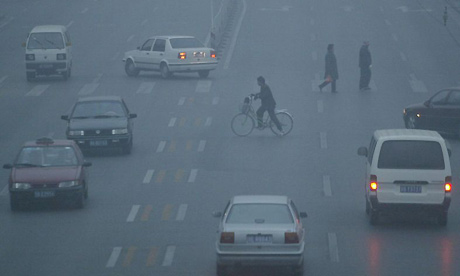
    Pedestrians, cars and a bicycle make their way through thick pollution in Beijing. Photograph: Peter Parks/AFP/Getty Images


    This month, on the first anniversary of the opening of the 2008 Summer Olympic Games, Beijing’s skies were a hazy gray. Walking down the street, one was left with a tickle in the throat and burning eyes. A recent study published in the Journal of Environmental Science and Technology, conducted jointly by Peking University and Oregon State University, found that Beijing’s $20 million investment to scrub the skies for the Olympics in fact had little impact on air quality. The U.S. embassy in Beijing now maintains a Twitter feed posting data from an air-quality monitoring station on the embassy compound; readings of large particulates in the air in recent weeks have ranged from “unhealthy” to “very unhealthy” to “hazardous.”


    The experience of daily life in Beijing hardly gives the impression that the last year has been a watershed for the environment in China. Being in the capital, one can’t help but feel a little quizzical glancing at recent headlines from newspapers in Washington, New York, and London announcing China’s green-tech revolution. (This is what an eco-friendly revolution feels like?) It’s tempting to shrug and wonder whether the legacy of new green initiatives will be as lackluster as the “green Olympics” – or to feel blue at the lack of promised “blue skies.”


    Yet for an entirely different perspective on China’s recent environmental progress, take the ultra-modern bullet train a half-hour southwest of Beijing to the port city of Tianjin. In just a little over four years, a mix of government and foreign investment has transformed this mid-sized Chinese city into the global manufacturing hub of the world’s wind power industry. China’s installed wind capacity has doubled in each of the past four years. Many experts seem reasonably optimistic that China could meet its ambitious renewable energy plans to derive at least 15 percent of all energy from renewable sources by 2020. The country also is striving to reduce energy intensity per unit of GDP by 20 percent over a five-year period.


    These two targets represent some of the most ambitious green goals in the world, and are expected to make China — in just over a decade — the world’s largest producer and consumer of alternative energy.


    China watchers worldwide have taken note. Earlier this month, a prominent American venture capitalist and the CEO of General Electric published a joint op-ed in The Washington Post, enthusing, “China’s commitment to developing clean energy technologies and markets is breathtaking” — even outpacing the U.S. and putting Beijing “in the lead today.”


    • This article was shared by our content partner Yale Environment 360, part of the Guardian Environment Network
    From the outside, China is seen as passing spectacular new renewable energy goals, building massive wind farms and hydropower stations overnight and perhaps one day even giving American and European companies a run for their money in the global green-tech market. But from the inside, what emerges is a more muddled picture. The daily experience is that the air and water quality is bad, in some places getting marginally better or staying the same, in some cases getting worse.


    “How do you reconcile these different pictures of China?” asks Barbara Finamore, founder and director of the Natural Resources Defense Council’s China Program. “Both are true at once. It’s something we struggle with all the time.”


    Indeed, China may soon be simultaneously the greenest and the blackest place on earth. The country is poised to be at once the world’s leader in alternative energy — and its leading emitter of C02. Alternative energy as a percentage of the total energy mix is increasing, but it will complement — not replace — growth in coal power. In fact, in a decade coal is expected to supply about 70 percent of China’s energy. Because of the sheer scale, diversity, and complexity of China, it is possible for the country to take some great green leaps forward, in particular progress toward its alternative energy and energy efficiency targets, while at the same time having its rivers remain black and its air quality a health hazard.


    To some extent this varied picture is to be expected. As Deborah Seligsohn, a senior fellow at the World Resources Institute’s China Program, explains: “I think the government is trying very hard, and they’re a developing country with huge challenges — different things will move forward at different speeds.”


    But there may also be another pattern at work. As Beijing-based political commentator Zhao Jing — who writes in the English-language press under the name of Michael Anti — puts it: “There are really two sets of ‘green’ issues in China, the global and the domestic — those where economic interests align with green targets, and those where they don’t.” In his estimation, China has made striking progress on the former set of issues, and rather less on the second.


    For example, China has made impressive gains in quickly developing its alternative energy industry, in part because large new investments benefit everyone — from wind turbine manufacturers to local governments (which gain tax revenue from new industry) to future consumers. Yet, on domestic air and water pollution — where what is needed is stricter regulatory enforcement, potentially limiting industry — Chinese environmental groups believe the picture may be getting worse. And the environmental lawyers and advocates who would bring these issues to the attention of authorities are facing tougher crackdowns than ever.


    At the same time, China is pouring billions of dollars into alternative energy — a commitment that, when taken as a percentage of GDP, is 10 times that of the United States. “China’s biggest green achievement has been to develop alternative energy,” says Jin Jiamin, founder and executive director of Global Environmental Institute, a Chinese NGO based in Beijing. “In the U.S., it takes time for ideas to become reality. But in China, it’s different. It’s easy for any new policies to be implemented quickly.”


    Julian L. Wong, founder of the Beijing Energy Network and now a Senior Policy Analyst at the Center for American Progress, says that the outlook and reported figures so far look good. He points to government statistics indicating that energy consumption per unit of GDP dropped by 10 percent between 2006 and 2008. One reason for rapid progress, he explains, is that these key energy initiatives are backed by China’s powerful National Development and Reform Commission, the ministry responsible for economic development.


    “Using energy more efficiently makes good economic sense,” he says. And diversifying China’s energy portfolio also appeals to Beijing, which has been concerned with energy security since the 1980s.


    Of course, there are some important caveats. In China, “alternative energy” includes both hydro and nuclear power, which are often not classified as such elsewhere. “Please remember, there are negative environmental consequences for dams and nuclear,” says Hu Kanping, editor of the Beijing-based Environmental Protection Journal. “I do not think those are really ‘clean’ energy sources.” This month China announced plans to increase nuclear energy capacity tenfold over the next decade.


    While the installation of wind turbines has proceeded at a furious pace in China, not all of the newly installed capacity is actually available to consumers through the grid. “Renewable energy providers often can’t always get access to the market,” says Ray Cheung, a senior associate at the World Resources Institute. “If you’re a solar or wind energy company in China and you can’t gain access to the grid, nobody’s going to buy your power.”


    Forbes recently reported that as many as 30 percent of “wind power assets” are not adequately connected to the grid. The obstacles are in part technical (the existing grid has not been designed for the fluctuating energy production from wind power), and in part political (the powerful companies that control access to the grid often have cozy relationships with coal energy suppliers and can block green newcomers).


    Finally, while progress is almost certainly being made on both alternative energy and energy efficiency in China, it’s worth noting that most data for quantifying that progress has been supplied by the government itself. For instance, the state-owned People’s Daily publishes the quarterly figures on energy efficiency that are in turn cited by both domestic and international press. “There’s still the question of how can we verify figures,” says Wong.


    Overall, however, on these emerging fronts the trends seem positive. But on domestic environmental issues — those that impact the daily lives of the Chinese people — the picture is less rosy.


    “Water quality is probably deteriorating,” says Jin Jiamin, of the Global Environmental Institute. “The reason is industrial pollution.” Indeed, the Ministry of Environmental Protection’s most recent annual report on the state of the environment acknowledges that cleanup efforts failed to make improvements in the water quality of China’s seven major rivers. Mortality from cancers linked with pollution — including stomach cancer and liver cancer — continues to rise, according to Ministry of Health statistics. Smog blankets large Chinese cities. The toxic industry of importing dangerous “e-waste” (used electronics and computer parts containing hazardous chemicals) continues to flourish in Guizhou, as documentary photographer Alex Hofford has demonstrated, despite laws in place to shut down the profitable trade.


    The reality is that, even as investment to stimulate new green industries is thriving in China, enforcement of green regulations that may limit industrial and economic activity is not. As Charles McElwee, a Shanghai-based environmental lawyer, explains: “Most actions aimed at energy will have some impact on local environment, but China has not shown willingness to commit the same level of resources to enforce existing environmental laws, which would have the most immediate impact on citizens.”


    And as The Washington Post has reported, tough economic times have brought even laxer environmental enforcement for factories in southern China. Peng Peng, research director of the Guangzhou Academy of Social Sciences, a government-affiliated think tank, told the Post: “With the poor economic situation, officials are thinking twice about whether to close polluting factories, whether the benefits to the environment really outweigh the dangers to social stability.”


    While China’s national priorities have shifted, its politics haven’t. When economic and environmental priorities align, astoundingly rapid transformation is possible. But when interests compete, the economy still trumps the environment.

  • Blocked rivers threaten livelihood of Brazilian tribes

    Blocked rivers threaten livelihood of Brazilian tribes


    Plans to build more than 200 hydroelectric dams bring prospect of cheap electricity but destruction of Amazon habitats


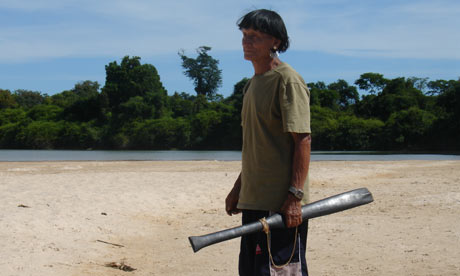
    Melobo, shaman, standing on Xingu river

    Activists say government plans for up to 16 new hydroelectric plants pose an unprecedented threat to the 14 tribes that live in the park. Photograph: Tom Phillips


    Once they were threatened by wildcat gold-miners and a measles epidemic that slashed their population to just 56. But now the Ikpeng, a proud tribe of Amazon warriors, say a new catastrophe looms over their future: the damming of the rivers they depend upon for food.


    Across Brazil alarm bells are ringing over plans to build at least 229 small hydroelectric dams, known as PCHs, which the government hopes will generate electricity and drive economic development.


    Opponents say they will damage the environment and destroy the livelihoods of thousands of Brazilian tribespeople.


    There are 346 PCHs in Brazil, with another 70 under construction and 159 awaiting licences. If the construction of dams continues, “the fish will run out and the waters will start to go down,” warned Komuru Txicao, a local tribesman. “Here in the forest we don’t need electricity. We need fish, water and land.”


    Other hydroelectric projects planned by the government are huge — the $4bn Belo Monte dam further north along the Xingu river from Pavuru would be the third biggest plant of its kind on earth, producing over 11,000 megawatts of electricity. While Belo Monte has been described by the government as a “gift from God”, critics say it will destroy lives, homes and traditions.For Komuru and his neighbours, the immediate concern is the construction of a network of PCHs around the Xingu national park in Mato Grosso state. Komuru fears the dams will block the tributaries of the Xingu, itself the largest tributary of the Amazon.


    According to the National Electric Energy Agency (Aneel), four PCHs – the Paranatinga II, Culuene, ARS and Ronuru – operate near the reserve; another, Paranatinga I, is waiting for its licence. Aneel says 13 PCHs are being built in Mato Grosso state, while another 19 projects are awaiting licences. The government says such dams will help power the agricultural revolution that is sweeping Brazil’s mid-west and bring electricity to small towns.


    Recent years have seen the Ikpeng, a proud tribe of Amazon warriors, embrace many of the comforts and distractions of the outside world.


    Three months ago wireless internet was installed here in Pavuru, one of over 30 villages located in the Park — a vast, 2.8 million hectare indigenous reserve home to some 5,000 Indians from 14 different ethnic groups. Today Ikpeng teenagers spend their afternoons downloading tracks by artists such as Enrique Iglesias and the US rapper 50 Cents while many of the tribe’s hunters use shot-guns rather than the traditional bow and arrow to hunt spider monkeys and wild-boar in the surrounding forests.


    “Things are changing,” admitted Karane Txicao, 28, sat behind an HP laptop in the village’s concrete internet cafe. “Now people never leave the front of the computer screen.”


    Several of the traditional huts – or owros – also shelter large television sets, powered by a diesel generation which is switched on at 9am each day and turned off at 9pm.


    But unlike the telenovelas and MP3s, government plans for PCHs around the Xingu Park have met with a furious reception.


    “It is very worrying,” said Kumare, a resident who is the local head of Funai, Brazil’s indigenous agency. “This will directly affect us. They are damming all of the rivers.” Kumare said the dams would make it impossible for the fish to migrate upstream thus decimating the main source of food for the reserve’s Indians.


    Last March the conflict escalated when eight staff from the electricity company responsible for one PCH spent five days held “hostage” near Pavuru. They were released only after the president of Brazil’s indigenous agency, Funai, personally intervened. “We didn’t kill them, we ‘arrested’ them,” recalled Komuru.


    Similar battles are raging across the Amazon region, where plans to build roads, hydroelectric dams and other major infrastructure projects have triggered a conflict between those who want to protect the world’s largest tropical rainforest and its indigenous tribes and those wishing to drive development and relieve poverty. A dispute over the Belo Monte dam turned violent in May when an engineer from the Brazilian power company Eletrobras was attacked during a presentation about the plant. President Luiz Inácio Lula da Silva has sought to allay fears over the dam, vowing that it “would not be shoved down anyone’s throat”.


    But concerns grew in July when a federal court lifted an embargo on the Belo Monte licensing process, clearing the way for a bidding round later this year.


    Having witnessed the Ikpeng’s plight in the 1960s, Melobo, an Ikpeng shaman, who says he is around 60 years old and wears 15 shell ear-rings in each ear, fears history may be repeating itself. “The farmers ruin the Indian’s things,” Melobo said, in heavily accented Portuguese, standing on the banks of the Xingu river. “They ruin the Indian’s water. They ruin the Indian’s land.””We don’t want to negotiate,” added Komuru. “We don’t want money. We don’t want things that are worth nothing. We want our land.”