
Category: A sustainable economy

  • Energy sector scoffs at clean coal as renewable prices crash

    Energy sector scoffs at clean coal as renewable prices crash

    Bloomberg Energy reported last week that the renewable energy sector in the US now employs more people than coal and is firmly entrenched in rural America where renewable energy income is keeping farmers on the land. Wind and Solar Energy are now cheaper than new coal, costing less than 100 US dollars to produce one megawatt of electricity. The Australian government’s plans to invest hundreds of millions of dollars more in clean coal has met with widespread derision from the energy sector as well as climate advocates. The US energy sector warned President Trump last week that removing environmental regulations on coal and government funding of renewables, will not keep coal competitive with wind and solar.

    https://industry.gov.au/resource/LowEmissionsFossilFuelTech/Pages/National-Low-Emission-Coal-Initiative.aspx

    https://about.bnef.com/blog/nrg-jx-nippon-open-1-billion-clean-coal-power-project-in-texas/

    http://www.smh.com.au/federal-politics/political-news/clean-coal-would-push-up-power-bills-more-than-wind-solar-or-gas-analysts-20170203-gu4ow5.html

  • LA shift to 100% renewables sparks community generation

    LA shift to 100% renewables sparks community generation

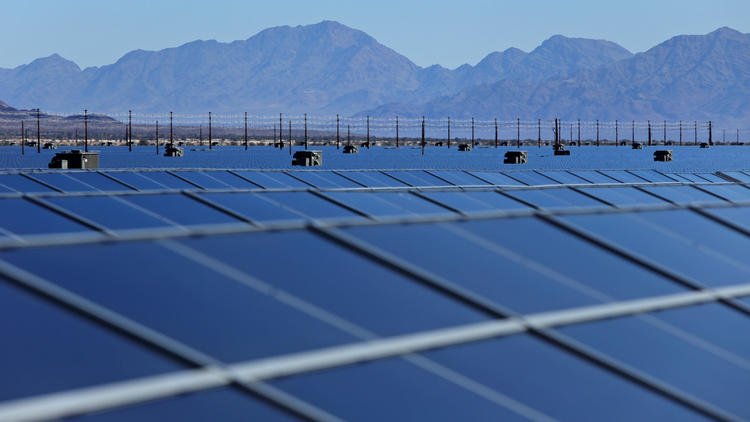
    The Desert Sunshine Solar Farm produces 550MW of power from 900 hectares of solar panels
    The Desert Sunshine Solar Farm produces 550MW of power from 900 hectares of solar panels

    News that the City government of LA is totally powered by renewables follows rapidly declining costs of solar electricity and advances in community owned generation models. A conference held earlier this month identified major opportunities for community based power generators using renewable energy. Reporting on the conference in South Wind, energy writer Peter Boyer wrote that hybrid energy systems at community level will resolve the disparity between antiquated centralized systems and distributed systems based on rooftop solar and local wind. The conference was held on Flinders Island in Bass Strait near Tasmania and focused on the systems that Boyer points to as a model for the future.

    https://independentaustralia.net/environment/environment-display/while-turnbull-spins-his-wheels-industry-gets-on-deploying-renewables,9842

    http://www.utas.edu.au/engineering/isolated-power-system-connect-2016

    http://www.huffingtonpost.com.au/entry/the-city-of-las-vegas-is-now-powered-entirely-by-renewable-energy_us_58594291e4b0b3ddfd8ea4e8

  • India backs Adani despite slowdown in demand for coal

    India backs Adani despite slowdown in demand for coal

    cage_adaniRecent ABC reports that India is stepping away from coal fail to understand the nuanced report by the Central Electricity Agency (CEA) that predicts falling demand for new coal power. Their report indicates that the government has overestimated general economic growth and individual demand for electricity. Despite this, the government intends to proceed with its Ultra Mega Power Plants projects to rapidly expand India’s coal fired electricity and general electricity consumption. The Paris-based International Energy Agency predicts that India will double coal consumption in the next five years, despite a global slowdown led by China, which consumes half the world’s coal.

    http://www.abc.net.au/news/2016-12-19/india’s-plan-to-step-away-from-coal-casts-doubt-on-adani-mine/8131240

    http://www.newindianexpress.com/business/2016/dec/12/indias-coal-demand-to-see-biggest-growth-globally-iea-1548302.html

    Indicating a significant shift in the Indian power sector, the Central Electricity Authority (CEA) has, in its National Electricity Plan (2017-2022), said the country does not need any more coal-based capacity addition till 2022. CEA said India would add massive renewable-based capacity.

    http://www.business-standard.com/article/economy-policy/india-does-not-need-more-coal-based-capacity-addition-till-2022-central-electricity-authority-116121300042_1.html

  • Tyre recycling finally cracks fuel market

    Tyre recycling finally cracks fuel market

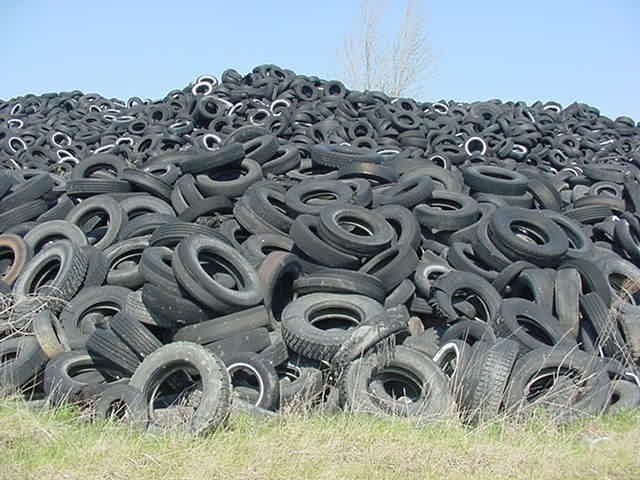
    53 million tyres are thrown out in Australia every year
    53 million tyres are thrown out in Australia every year

    The 53 million tyres thrown away in Australia each year may become a valuable source of energy thanks to a company that has developed a commercially viable process for producing diesel oil from the rubber.

    The process reduces the tyres to oil, steel, carbon black and methane gas. 100% of the material from the tyre can be resold.

    Over a billion tyres a year are disposed of globally, most are illegally dumped on the edge of cities or deposited in land fill where they take 30,000 years to break down.

    Current recycling programs mechanically reduce the tyre to create rubber particles used as playground and road surfaces.

    The new process reduces the need for fossil fuel extraction and creates a fuel with a high energy rating, less nitrous dioxide and lower particle emissions.

    Start-up company breathes new life into old tyres

    A biofuel from old rubber tyres that can run turbo-charged diesel engines while reducing emissions by 30 per cent.’We have zero waste from the tyre’

    http://www.abc.net.au/news/2016-11-28/new-life-for-old-tyres-as-biofuel/8064350

    Every year the world produces over 1 billion used tyres. Only a small portion of these tyres are recycled. In Australia only 5% of used tyres go through a recycling process. 13% are dumped illegally, and the remaining 57% of tyres go to landfill. This is by far the worst option environmentally. Without sunlight a tyre takes up to 30,000 years to degrade.

    http://www.ecoreps.com.au/tyrerecycling.html

  • Solar now cheaper than wind

    Solar now cheaper than wind

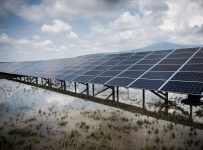
    Massive solar panel arrays are now cheaper to erect than coal plants
    Photovoltaic solar panels sit in flooded marshland at Visonta, Hungary. Photographer: Akos Stiller

    Conservative financial publisher Bloomberg reports that 70 Gigawatts of Solar energy 70 gigawatts of solar production was installed in 2016 compared to 60 gigawatts of wind and much lower amounts of gas and coal.

    Solar is the cheapest form of energy in 58 developing countries where electricity prices are high. In developed countries natural gas remains competitive with wind and solar but coal-powered electricity is becoming more expensive than all other forms of energy in all markets.

    More renewables combined with the rapid shift to electric cars is encouraging mainstream investors to join the divestment movement. Australian citizens lead the world in taking their life savings out of fossil fuels and moving it to renewables.

    https://www.bloomberg.com/news/articles/2016-12-15/world-energy-hits-a-turning-point-solar-that-s-cheaper-than-wind

    https://cleantechnica.com/2016/12/16/look-fast-solar-blowing-past-coal-gas-wind/

    http://www.aertc.org/conference2016/

    CEFC backs 270MW Sapphire wind farm, in vote of confidence for merchant market

    A consortium between Vestas and Zenviron will deliver the project, with Vestas supplying and commissioning the turbines, and Zenviron delivering the balance of plant. TransGrid will build, operate and maintain an on-site substation connecting the Sapphire project to the national energy grid.

    http://reneweconomy.com.au/cefc-backs-270mw-sapphire-wind-farm-in-vote-of-confidence-for-merchant-market-45541


    https://www.thesaturdaypaper.com.au/opinion/topic/2016/12/17/australia-leads-way-fossil-fuel-divestment/14818932004101

  • Councillor Sri homeless for a week

    Councillor Sri homeless for a week

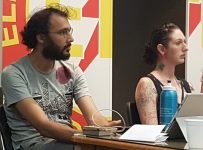
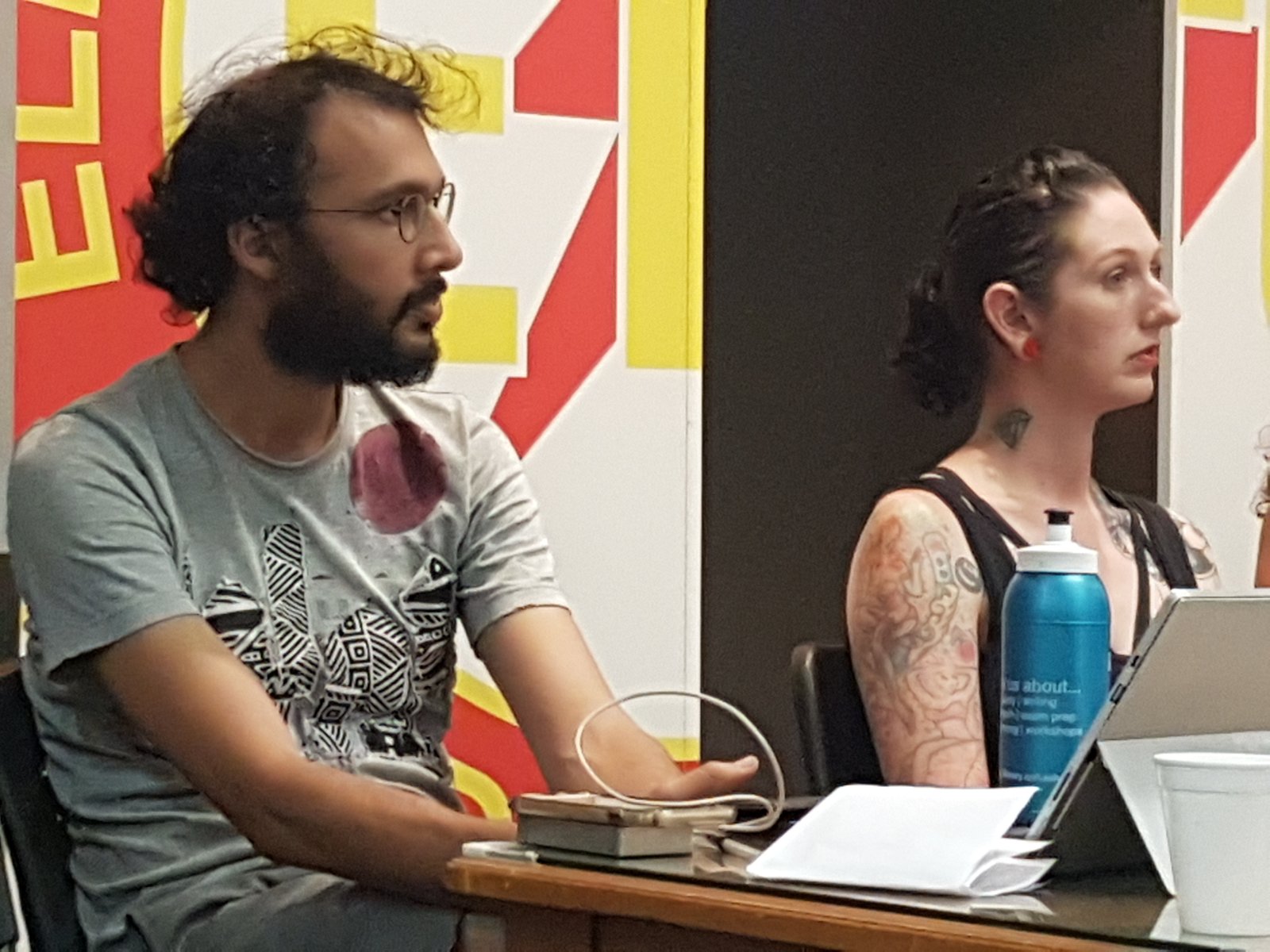
    Jonathan Sri and Jean Cameron-Cronin at Right to Space
    Jonathan Sri and Jean Cameron-Cronin at Right to Space

    At a forum held in solidarity with Brisbane’s homeless at the ETU offices in South Brisbane last night, Jonathan Sri took up the challenge of a homeless person to “walk a week in my shoes”. Starting from today, December 16th Councillor Sri will spend a week on the streets, sleeping, eating and using the toilets that the homeless have to use. The challenge was issued to the entire audience.

    Jean Cameron-Cronin talked about institutions acting to protect themselves from their clients: failing to house victims of domestic violence “in case the perpetrator destroys the property”; failing to shelter the mentally ill “in case they cannot pay the rent”.

    Billed as The Right to Space – Building solidarity with Brisbane’s Homeless People, the event was organised by Unite, an anti-capitalist, anti-colonialist, anti-racist, feminist and environmentalist organisation, based in Fortitude Valley.

    More details available through https://www.facebook.com/unitebrisbane/