Category: Uncategorized

  • The Australian Business Roundtable for Disaster Resilience and Safer Communities commissioned a fact-based, comprehensive White Paper,

    Stay Informed

    Register to receive news updates from us.

    Show Your Support

    Publicly endorse the views and findings of the Roundtable.

    White Paper

    The Australian Business Roundtable for Disaster Resilience and Safer Communities commissioned a fact-based, comprehensive White Paper, Building our Nation’s Resilience to Natural Disasters, through Deloitte Access Economics. The White Paper aims to considerably assist decision making about the allocation of scarce resources and support the development of policy around natural disaster mitigation.

    Released 20 June 2013

    Download CEO’s Statement:

    Joint CEO Statement

    Download full report:

    White Paper (Full report 3.38 MB.pdf)

    Download by section:

    Glossary and Acronyms
    Executive Summary
    1. Introduction
    2. The cost of natural disasters
    3. Roles and responsibilities in disaster management
    4. Building the case for resilience – Australian examples
    5. Recommendations
    References
    Appendix A: Resilisence – the structure of the problem
    Appendix B: Resilience – international experience
    Appendix C: National forecasting methodology
    Appendix D: Productivity Commission Report
    Appendix E: Cost benefit analysis methodology
    Appendix F: CBA Handbook

    Read about the authors of the report.

  • EU votes on crucial cap on biofuels made from food crops

    EU votes on crucial cap on biofuels made from food crops

    Campaigners fear lobbying by industry and farmers’ unions will weaken plans to limit role of food crops in biofuels production

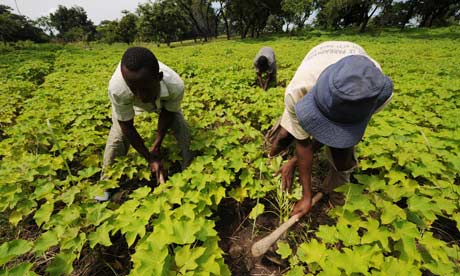
    MDG : Biofuel and food security : Employees work in a Jatropha nursery field, Ivory Coast.

    Employees work in a Jatropha nursery field in Dimbokro, Ivory Coast. Jatropha produces an oil that can be used as diesel substitute for power plants or engines. Photograph: Kambou Sia/AFP/Getty Images

    Votes taken by European parliamentary committees this week could determine the future of EU biofuels policy, which has been strongly criticised for its negative impact on developing countries.

    In response to the widespread criticism, the European commission last year proposed major policy changes, including the introduction of a 5% limit on counting food crop-based biofuels towards the target for 10% of transport fuels to be generated using renewable energy by 2020.

    The commission said the move would stimulate the development of alternative, “second generation” biofuels from non-food crops, such as waste or straw, which emit substantially fewer greenhouse gases than fossil fuels and do not directly interfere with food production.

    It also proposed for the first time to take into account the impact of deforestation, peatland drainage or other land clearance caused by biofuels in their carbon footprint. Environment and development campaigners argue this factor – indirect land-use change (ILUC) – has been missing from calculations of the green credentials of biofuels.

    But campaigners fear that MEPs, under fierce lobbying by the biofuels industry and farmers’ unions, will weaken the commission’s proposals before a full parliamentary vote in September.

    In votes on Tuesday, the transport and international trade committees voted to raise the biofuels limit to 6.5%, rather than the 5% proposed by the commission.

    Negotiations are under way before Thursday’s vote on the industry, research and energy committee, but the committee’s draft does not bode well either. The committee is seeking to remove the 5% limit and replace reporting on the impact of converting to biofuels – the ILUC element – with voluntary mitigation measures. The environment committee will vote next month, reflecting the widespread nature of the biofuels debate in the EU.

    Ahead of this week’s votes, Olivier De Schutter, the UN special rapporteur on the right to food, wrote a letter (pdf) to the commission, member states and MEPs that was highly critical of EU biofuels policy. He is concerned that EU policy creates incentives for land leases or acquisitions, particularly in sub-Saharan Africa, in which the rights of current land users are inadequately protected.

    Figures vary on the amount of land that is used to grow biofuels. The commission estimates that between 2003 and 2008 6.6m hectares (16.5 million acres) of additional arable land globally was cultivated for biofuels.

    “The land and water resources of the countries concerned should serve, in the first instance, the realisation of the right to food of the local populations; these populations should not be forced to compete against EU consumers, whose purchasing power is vastly higher,” said De Schutter.

    De Schutter said biofuels had pushed up food prices, with estimates that, by 2020, EU biofuel targets could ramp up the agricultural price of vegetable oils by 36%, maize by 22%, wheat by 13% and oilseeds by 20%. Another concern is that biofuels favour large-scale industrial models of agriculture that appear to offer limited benefits to local populations, particularly smallholder farmers.

    De Schutter argues that EU policy on biofuels contradicts its development objectives, as well as possibly contravening its legal obligations.

    “The EU member states are all state parties to the international covenant on economic, social and cultural rights, which impose a duty to abstain from measures that could threaten the realisation of economic and social rights in other countries,” said De Schutter.

    Research for the Chatham House thinktank says reaching the 5% level means UK motorists will have to pay an extra £460m a year because of the higher cost of fuel and from filling up more often as biofuels have a lower energy content. The report (pdf) says that if the UK is to meet its obligations to EU energy targets, the cost to motorists is likely to rise to £1.3bn per annum by 2020.

    The European Biodiesel Board, an industry body, said the changes proposed by the commission could lead to the “catastrophic” end of an industry worth €10bn (£8.5bn) a year.

  • Why would the ALP vote against stronger environmental protection?

    19 June 2013, 3.04pm EST

    Why would the ALP vote against stronger environmental protection?

    This week Greens Senator Larissa Waters proposed significant amendments to the Environmental Protection and Biodiversity Conservation Act. Some sought to better protect farmers and water resources from gas extraction. Others were aimed at protecting national parks and strengthening the Federal Government…

    Y2csb4fj-1371521109
    Moves to increase protection of national parks have been voted down. Flickr/Marc Dalmulder

    This week Greens Senator Larissa Waters proposed significant amendments to the Environmental Protection and Biodiversity Conservation Act. Some sought to better protect farmers and water resources from gas extraction. Others were aimed at protecting national parks and strengthening the Federal Government’s power to protect the environment. All were voted down in the Senate by the combined forces of the ALP and the Coalition. Their failure has profound significance for the protection of our critical environmental assets.

    The Environmental Protection and Biodiversity Conservation Act was passed by the Howard government. It was certainly not a radical move. The environmental NGOs and leading environmental scientists were divided at the time about whether the legislation was even worth supporting. Many argued that the new law was so weak it would achieve very little.

    The main criticisms were that the Act provided limited conditions which would allow a Commonwealth Minister to intervene and overrule state approval for a development, and that even if those strict criteria were met it would still be optional for the minister to intervene. While a responsible Minister could act if the science showed clearly that a proposed development would damage the habitat of an endangered species or do serious damage to a threatened ecosystem, the law does not require that intervention.

    One of the few instances of the Act being used by a Commonwealth Minister was Peter Garrett’s action to stop the proposed Traveston Crossing Dam on the Mary River. That dam had been proposed by Peter Beattie at the height of the drought-induced water shortages. With the change in the leadership of the Queensland government to Anna Bligh and the breaking of the drought by flooding rains, there was almost a sense of relief at the state level when Garrett canned the project. The cash-strapped Bligh government was reduced to selling public assets to fund the infrastructure demands of rapid population growth. It could not afford to pour money into a dam that wasn’t really needed. The project had also become a political embarrassment because of the evidence it would have been environmentally damaging.

    The site of the proposed Traveston Crossing Dam Flickr/Patrick McCully

    A review of the Act by experienced departmental head Alan Hawke identified several major shortcomings and recommended significant amendments. But neither the Rudd nor the Gillard government acted to strengthen the law along the lines Hawke recommended.

    There was recently a serious move to weaken still further the capacity of the Australian government to intervene to protect the environment. The calls for “cutting green tape” constituted an explicit campaign to push the Commonwealth to abdicate its responsibility and cave in to the notoriously short-sighted pro-development agenda of state administrations. The Newman government in Queensland and the Barnett government in Western Australia have demonstrated clearly why we need a Commonwealth capacity to overrule irresponsible state approvals. The possibility of an Abbott-led Coalition government has led to increasing concern that the limited Commonwealth powers will not be used.

    So the moves to tighten the EPBC Act were very important. The changes introduced by the government allow Commonwealth assessment of coal seam gas operations and large coal mines, but do not extend to shale gas and so-called “tight gas”. (While natural gas is normally extracted from relatively porous strata, “tight gas” is trapped in rocks that require extensive fracturing to release the gas.)

    The further amendments proposed by Senator Waters, who was a lawyer working for the Environmental Defenders Office before being elected as Queensland’s first Green senator, would have given landholders the right to block proposed coal seam gas developments and would have given the Commonwealth explicit power to assess the impact of shale gas mining on water systems.

    But the most fundamental change was the proposal to add national parks to the “matters of environmental significance”, which justify Commonwealth intervention.

    The move was provoked by the recent actions of state governments to allow cattle grazing, mining, logging and shooting in national parks. Senator Waters argued that most people assume that the small fraction of our land set aside as national parks – about 4% – is protected from harmful development. But the attempt by the Victorian government to allow cattle to graze in the high Alps has been followed by the Queensland government allowing grazing of cattle and proposing to go back to logging national parks, the Tasmanian government supporting mines in the Tarkine and the continuation of some logging activities, and the NSW government allowing shooting.

    The existing legislation does not give the Commonwealth power to intervene to protect a national park unless the proposed activity can be demonstrated to directly harm biodiversity. The proposed amendment would have greatly strengthened the hand of current and future Commonwealth Ministers to protect national parks from the sorts of proposals now being rolled out by state governments.

    It is hard to understand why the government would not accept the amendments, unless it is trying to distance itself from the Greens in the lead-up to the September election.

  • Federal Minister gets greater say over new CSG and coal mines

    Federal Minister gets greater say over new CSG and coal mines

    Updated 5 hours 49 minutes ago

    The Senate has agreed to give the Commonwealth Environment Minister broader approval powers over coal seam gas projects and large coal mines.

    The ‘Water Trigger’ amendment to the Environment Protection and Biodiversity Conservation Act allows the Federal Environment Minister to consider the impact of CSG projects and large coal mines on water resources, in deciding whether or not to they should be approved.

    It passed the Senate with the support of all parties, despite unsuccessful Opposition and Greens attempts to further amend the legislation.

    The bill, championed by independent NSW MP Tony Windsor, passed the House of Representatives in March.

    Mr Windsor says he’s delighted that the water trigger has become law, meaning the Commonwealth Environment Minister can now act on advice provided to him by the Independent Expert Scientific Committee, in deciding whether a project should go ahead.

    Previously, the Minister could only consider the impact of CSG extraction and coal mining on water resources where a threatened species or Ramsar wetland was involved.

    “CSG and coal mining projects can no longer be given the green light unless independent scientific advice concludes they won’t damage our precious water resources,” Mr Windsor said.

    “Federal oversight based on independent science will help protect Australia’s most productive farmland from potential damage and encourage mining companies to pursue projects with lower risk profiles.”

  • AN INTRODUCTION TO FORAMINIFERA

    Letters from Gondwana.

    Paleontology, books and other stuff.

    AN INTRODUCTION TO FORAMINIFERA

    Posted on 06/17/2013 by

    The Foraminiferida are an important group of single celled protozoa.  There are an estimated 4,000 species living in the world’s oceans today, among  the sea floor and the marine plankton and comprise over 55% of Arctic biomass and over 90% of deep sea biomass.

    The first ocurrence of forams is from the Early Cambrian and the range extend to the present day. A recent study suggest that the rise of the forams coincides with the demise of stromatolites. Those earliest forms had organic test walls or  simple agglutinated tubes and were benthics.

    The Order Foraminiferida (informally foraminifera) possesses a shell (test) of different composition, and granuloreticulose pseudopodia (extensions of ectoplasm with grains o tiny particles of various composition).

    Benthic foraminiferid in cross-section.

    At the cellular level, the cytoplasm is differentiated into an outer layer of clear ectoplasm and an inner layer of darker endoplasm. The ectoplasm forms a mobile film around the test with numerous, granuloreticulose pseudopodia whose form is ever changing. The endoplasm often contains diatoms and dinoflagellates as symbionts.

    Living species of foraminifera present various types of reproductive strategies, with alternation of sexual and asexual generation. The size range is from about 100 micrometers to almost 20 centimeters long. They also use a great variety of feeding mechanisms, as evidenced by the great variety of test morphologies that exhibit.

    The test consists of one or multiple chambers interconnected by an opening, the foramen. The composition and structure of the test wall is very important for the classification of the group. There are three basic types of wall composition: organic, agglutinated and secreted calcium carbonate.

    Allogromia laticollaris

    Allogromia laticollaris

    The suborder Allogromiina comprises all the organic-walled forms, composed  by a proteinaceous mucopolysaccharide.

    Textularia agglutinans

    Textularia agglutinans

    The suborder Textulariina encompasses forms with agglutinated tests composed of randomly accumulated grains or grains selected by specific gravity, shape or size.

    Quinqueloculina seminulum.

    Quinqueloculina seminulum.

    Secreted test foraminifera are subdivided into three major groups. First, the suborder Fusulinina, with microgranular tests.  Second, the suborder Miliolina with porcelaneous test.

    Globigerina bulloides

    Globigerina bulloides.

    In third place, the hyaline test  may be of calcite (which encompasses the suborders Spirillinina, Globigerinina, Rotaliina), or aragonite (Involutinina, Robertinina).

    The external surface of the test may bear spines, keels, rugae, granules or a reticulate sculpture.

    The morphology of foraminifera tests varies enormously, but in terms of classification two features are important: chamber arrangement and aperture style. The tests of many primitive foraminifera are unilocular, although test form varies greatly. Unilocular tests may be globose, tubular, branched, radiated or irregular. And in the case of the chambers of multilocular forms they could be globular, tubular, compressed lunate and wedge-shaped.

    Two types of chamber arrangement: single chambered and uniserial.

    Two types of chamber arrangement: single chambered and uniserial.

    In the Lower Palaeozoic, the tests were mainly agglutinated. By the late Devonian, septate periodic growth evolved and Foraminifera with hard test became more common. In the early Carboniferous first appeared the miliolids, followed in the Mesozoic by the appearance and radiation of the rotalinids and the textularinids. Also planktic forms appeared in the Mid Jurassic in the strata of the northern margin of Tethys and epicontinental basins of Europe. During the Palaeocene appeared the planktic globigerinids and globorotalids. The diversity of planktic forms has also generally declined since the end of the Cretaceous with brief increases during the warm climatic periods of the Eocene and Miocene.

    In 1835, Dujardin recognised foraminifera as protozoa and shortly afterwards d’Orbigny produced the first classification. Early data on deep-sea benthic foraminifera (and on other deep-sea groups) were collected on the 1872-1876 Challenger Expedition and E. Hackel also included forams in his master work “Kunstformen der Natur”.

    427px-Haeckel_Thalamophora_81

    Foraminifera have been widely utilised for biostratigraphy. They also have a wide  environmental range and changes in the composition of foraminiferal assemblages could be used to track changes in the circulation of water masses and in sea-water depth. They are particularly important in studies of Mesozoic to Quaternary climate history because isotopes within their CaCO3 tests record changes in temperature and ocean chemistry.

    References:

    Armstrong, H. A., Brasier, M. D., 2005. Microfossils (2nd Ed). Blackwell, Oxford.

    Gooday, Andrew J., Rothe, Nina and Pearce, Richard B. (2013) New and poorly known benthic foraminifera (Protista, Rhizaria) inhabiting the shells of planktonic foraminifera on the bathyal Mid-Atlantic Ridge,  Marine Biology Research, 9, (5-6), 447-461 (doi:10.1080/17451000.2012.750365).

    Bernhard JM, Edgcomb VP, Visscher PT, McIntyre-Wressnig A, Summons RE, Bouxsein ML, Louis L, Jeglinski M., Insights into foraminiferal influences on  of microbialites at Highborne

  • Telstra contractors untrained in asbestos

    Telstra contractors untrained in asbestos

    AAPJune 19, 2013, 8:03 pm

    Some Telstra contractors have been found to have participated only in basic asbestos awareness and competency training, the telco says.

    Telstra on Wednesday announced a number of new requirements for its three key National Broadband Network (NBN) rollout contractors in relation to asbestos handling for pit remediation.

    Telstra’s preliminary review uncovered incidents of possible non-compliance with asbestos handling guidelines by its contractors.

    Telstra has told its contractors that they must make improvements before returning to work, and warned that if they do not comply their contract will be terminated.

    “We will not allow recommencement of cement pit remediation work until we are satisfied the necessary safety measures are in place,” Telstra’s Chief Operations Officer Brendon Riley said in a statement.

    Asbestos was found at a Telstra pit in Penrith in May as part of the NBN rollout, and more problems have been discovered at telecommunications works in Ballarat, Perth, Adelaide, Tasmania and Queensland.

    Unions called for work on the NBN roll-out to stop until Telstra and NBNCo could meet demands on workplace safety.

    Telstra said contractors will have to increase supervision of sub-contractors, see that all staff complete mandatory training in asbestos management, and ensure all field staff carry adequate supplies for safe asbestos handling.

    Telstra is reviewing each contractor’s sub-contractor supply chain to ensure safety arrangements are clear.

    Mr Riley said the number of inspectors and quality specialists would near 200 as NBN volumes increase.

    “These specialists will be critical in inspecting and supervising asbestos-related remediation work by contractors and their sub-contractors,” he said.

    The majority of asbestos pit remediation and handling is being undertaken as a result of the NBN project, and Telstra said it was working with NBNCo to better engage the community.

    This includes advising affected residents about the scheduling of activity, disclosing locations, maintaining transparency on procedures and clear lines of communication to handle public issues.

    Telstra has established a hotline for any resident concerned about work in their area.

    The number is 1800 067 225.