Category: Uncategorized

  • Post Growth Institute

    Post Growth Institute

    Inbox
    x
    Hamilton, Tim (K. Thomson, MP)
    11:18 AM (5 minutes ago)

    to Tim
    Dear All,
    ‘How on Earth? Flourishing in a Not-for-Profit World by 2050’ will be the world’s first book to explore the prospect of not-for-profit enterprise becoming the central model of local, national and international business, by 2050.
    You can watch a 2 minute overview video here:
    …you can find out more, and become a backer for this project, here:
    If you are able to contribute to this campaign, as little as $25 will get you an electronic copy of the book – the funding will support two of my Post Growth colleagues to do the writing.
    If you’re not in a position to contribute financially right now, sharing this:
    Support Post Growth Institute’s crowdfunding campaign http://bit.ly/how-on-earth outlining a system beyond economic growth, grounded in not-for-profit enterprise.
    …with your networks would also be a huge help to this team of volunteers who’ve worked hard at building a track record in this area since 2010.
    The campaign runs until 27 June.
    Regards,
    Tim
    YouTube – Videos from this email
  • Alan Jones lacks wind at protest

    Alan Jones lacks wind at protest

    AAP Updated June 18, 2013, 2:30 pm
    Pro and anti-wind farming activists will hold separate protests in Canberra on Tuesday.AAP © Pro and anti-wind farming activists will hold separate protests in Canberra on Tuesday.

    Alan Jones has lost a battle of the “wind wars”, with a rally against wind farms headlined by the radio shock jock failing to draw large crowds to Parliament House.

    The lacklustre attendance at Tuesday’s protest was seized upon by supporters of clean energy, who claimed victory in the “wind wars” by staging a much larger counter rally in Canberra’s city centre.

    The anti-wind farm website stopthesethings.com had encouraged participants to bring deckchairs for the event on the front lawn of parliament.

    But only about 100 people turned up to rally against the “fraud” of wind farms, which they claim destroy rural communities and cause illness through turbine noise.

    There were signs claiming “Wind Wrecks Health and Jobs” and “Wind Power Will Cost the Earth”, but none of the “Ditch the Witch” placards that caused a stir at the last major climate protest hosted by Mr Jones.

    The Sydney radio host paid tribute to those who attended but conceded numbers were down.

    “There aren’t a lot of people here,” he told the rally on Tuesday.

    “They don’t have the time, they don’t have the resources to be able to make the kind of statement they want to make.”

    Organisers of the counter rally claimed more than 1000 attendees in support of clean energy.

    The “Rally 4 Renewables”, staged by activist groups GetUp and Friends of the Earth, was attended by Australian Greens leader Christine Milne, independent MP Tony Windsor and parliamentary secretary for climate change Yvette D’Ath.

    Liberal senator Chris Back attended the anti-wind rally but independent South Australian senator Nick Xenophon was a no-show, despite being invited to speak.

    Senator Xenophon said he remained “fully committed” to a bill he co-sponsored on wind turbine noise, and didn’t want his absence from the rally to be misinterpreted.

  • Do we need conclusive scientific proof to become concerned about an issue?

    Do we need conclusive scientific proof to become concerned about an issue?

    A weedkiller study has opened a debate on the merit of research by campaign groups versus peer-reviewed science

    Dandelion weeds

    A report found traces of weedkiller in the urine of 182 volunteers living in urban areas across Europe. Photograph: Julia Williams/Getty Images/Flickr RF

    Should we wait for conclusive scientific studies before becoming concerned about an issue? A report released last week by Friends of the Earth and GM Freeze poses this exact question.

    The campaign groups were reporting the results of their small snapshot study that found traces of glyphosate, one of the most widely used weedkillers in the world, in the urine of 182 volunteers living in urban areas across Europe. Glyphosate is known under the brand name Roundup and produced by biotech giant Monsanto.

    The study was basic, the sample size was small, the report was unpublished. But could it point to an important issue for further investigation?

    Academics denounced the findings as “not scientific”, saying the results could not be taken seriously and that campaign groups should submit their work to peer-reviewed journals to provide a “genuine contribution to the debate”.

    Other scientists refused to comment on the study, saying that without it having gone through the review process there was simply no way of commenting on the findings. There is much to be said for peer-reviewing – having been through it myself I know how rigorous it can be. Though I found the process excruciating for its rigour, ultimately the end result was a far better paper based on more solid science.

    But charities and NGOs often don’t have the resources or expertise to undertake full scientific studies and publish them in journals. Is it even their role to do so? By producing snapshot studies that simply point to an issue, as long they don’t make any grand claims based on their findings, aren’t they simply doing their job of raising awareness of issues that affect society and the environment?

    Friends of the Earth think so. Vicki Hird, said: “This was never intended to be a scientific paper for peer review – it is a snapshot only and one intended to prompt those who do have the resources to do the necessary testing.” She added: “These tests highlight a need for government authorities across Europe to carry out rigorous testing with far bigger samples to discover how widespread this issue is and whether there are any health impacts from low-level exposure.”

    Some might argue that groups like FoE are our eyes and ears, giving a voice to people, species and issues that could otherwise go unnoticed. They hold powerful companies such as Monsanto to account and stand up for justice in a world where the priority is usually profit. With no profit to be gained from studies such as testing for weedkillers and pesticides in human urine, who else would conduct them?

    The role of such organisations is to point out the failings of the regulatory process, not to act as the regulatory process. This is the role of government.

    It is also worth noting that anyone can publish studies of this nature to support their agenda, as is often seen with industry research. Research carried out by industry and campaign groups is similar in that there is always the possibility of bias and data being used to support a political position. Does it matter that the two groups are likely to differ in their motives, with one being focused on private profit, sometimes at the expense of the environment or society, and the other geared towards creating positive change for little or no private gain?

    Many other reports, figures and statistics we are fed through the media and elsewhere are not peer-reviewed – government figures, industry reports, industry regulator information and even the Office of National Statistics data.

    Campaign organisations are campaign organisations, not research organisations or thinktanks. Their job is to raise awareness of issues that affect society, so that action can be taken. However those organisations need to be very careful about what they are claiming based on their findings. And journalists need to be very careful about how they interpret the claims of organisations. But I believe they should be given a voice, not dismissed out of hand for lacking the scientific rigour demanded by professional scientists. I’d be very interested in your views.

    • Kara Moses is a freelance journalist

  • Green groups warn government of national parks hunting backlash

    Green groups warn government of national parks hunting backlash

    Labor appears to have backed away from laws granting greater federal powers to protect Australia’s national parks

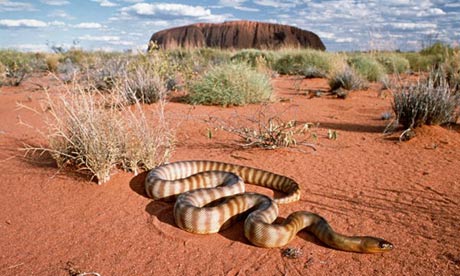
    uluru

    Environmentalists have pushed for greater federal government involvement in national parks due to pro-development decisions made by state governments. Photograph: Corbis

    Environmental groups have forecast a huge public backlash to proposed logging, shooting and prospecting within national parks, after the government backed away from adding federal oversight to conservation areas.

    The Greens put forward an amendment to a government bill – on protecting water tables from coal seam gas drilling – that would have given the commonwealth greater power to protect national parks.

    Under the current the Environment Protection and Biodiversity Conservation Act, the federal government can intervene only if an endangered species, heritage area or place of “national significance” is affected by development.

    It is understood a proposal by federal environment minister Tony Burke to include a national parks trigger was rejected at a cabinet meeting on Tuesday night.

    A spokesperson for Burke said that the government supports its bill “as it stands” and that separate 2011 proposals, which would have brought most national parks under the commonwealth’s remit, were “still under consideration”.

    Environmentalists have pushed for greater federal involvement in national parks due to their dismay at pro-development decisions made by state governments.

    Last year, the New South Wales government said it would open up 77 of its national parks and reserves to amateur hunters to shoot feral animals, despite concerns over the safety to people.

    The Queensland government is conducting a review of all protected areas put aside since 2002, with a view to allow logging in certain parks, while the Victorian government has introduced 99-year private leases for tourism development in all of its national parks.

    Lyndon Schneiders, national campaign director of the Wilderness Society, said that the public was strongly against the erosion of national parks.

    “Millions of people use national parks,” he said. “Governments that are driving these changes to realise commercial opportunities don’t really realise they are biting their constituents. Most people out there can’t really believe what is happening is real and that it is being allowed to happen. The backlash is already there and it’s only going to get bigger.

    “The individual impacts of each development are bad, but what’s most disturbing is that there is now a section of politics that has decided that national parks aren’t worth it. This is a lost opportunity because the states have shown they can’t be trusted. We’ve encouraged the government to do something on this for three years, but they’ve dragged their heels and now they are barely functioning. This is a skirmish in what will be a much longer debate around nature conservation. We are at a crossroads moment about how we best protect national parks and other areas.”

    Matt Ruchel, executive director of the Victorian National Parks Association, said he was “disappointed” by the lack of federal oversight.

    “If the states go feral and undermine the integrity of national parks, who else will provide the checks and balances but the federal government?” he asked.

    “National parks are the cornerstone of conservation. They are well respected by the Australian community, they are a major draw card every day of the year, they clean air and water and draw carbon from the atmosphere.

    “Up until recently, protecting national parks was a bipartisan issue. I don’t understand why there’s been a shift away from that approach. It’s deeply concerning.”

  • India monsoon floods kill at least 64 people, leave thousands stranded

    India monsoon floods kill at least 64 people, leave thousands stranded

    Updated 9 hours 58 minutes ago

    At least 64 people are dead and tens of thousands have been left stranded after early monsoon rains caused flooding and landslides in India.

    The rains are at least twice as heavy as usual in north-west and central India, with the Himalayan state of Uttarakhand the worst hit.

    The Indian Air Force has scrambled a dozen helicopters to reinforce a military-backed rescue mission in Uttarakhand, often referred to as the “Land of the Gods” because of its many Hindu religious sites.

    Local government officials in the state capital Dehradun say they are overwhelmed by the scale of the disaster.

    “So far, we have found 54 bodies and 17 others are still missing,” top disaster management official Piush Rautela told AFP.

    “The situation is really very bad out there. More than 600 buildings have toppled or been swept away and there are 75,000 people including pilgrims stranded at various places.”

    Among the dead in Uttarakhand state are four members of the same family, who died when their home was hit by a landslide as they slept.

    The rains have washed away bridges, roads, houses and multi-storey buildings in the state.

    Rising water levels in some towns have also swept away cars, earthmoving equipment and even a parked helicopter.

    A giant statue of Lord Shiva was submerged up to its head in the tourist hub of Rishikesh.

    Roads in many areas have been destroyed, leaving hundreds of pilgrims stranded on their way to visit shrines in remote areas.


    Authorities have cancelled pilgrimage trips, fearing further rains and landslides in the state.

    “Right now our priority is to save as many lives as possible and the scale of destruction will be assessed later,” Mr Rautela said.

    Missions underway to help thousands of stranded people

    Air Force helicopters have air-dropped commandos to help rescue some of the 50,000 people who are stranded.

    The Uttarakhand district has also set up 32 camps to provide food and water, while the state government is readying food parcels and drinking water to be dropped by helicopters to remote villages.

    In neighbouring Himachal Pradesh state, the death toll from rain-related accidents stands at 10.

    Around 1,500 people, including 150 foreign tourists, are stranded in the state.

    In the eastern state of Orissa, flash floods have destroyed at least 600 homes.

    The monsoon, which India’s farming sector depends on, covers the subcontinent from June to September, usually bringing some flooding.

    But the heavy rains arrived early this year, catching many by surprise.

    The country has received 68 per cent more rain than normal for this time of year, data from the India Meteorological Department shows.

    The weather is expected to ease next week.

    ABC/AFP

  • UNESCO postpones decision about adding Great Barrier Reef to ‘in danger’ list

    UNESCO postpones decision about adding Great Barrier Reef to ‘in danger’ list

    By environment reporter Sarah Clarke and Stephanie Smail

    Updated Tue Jun 18, 2013 9:01pm AEST

    UNESCO’s World Heritage Committee has deferred a decision to place the Great Barrier Reef on its “World Heritage in Danger” list.

    The World Heritage Committee, currently meeting for its annual session in the Cambodian capital Phnom Penh, has been tasked with determining if the Great Barrier Reef is in trouble.

    UNESCO raised concerns about the level of development along the Queensland coast and its impact on the World Heritage site, including water quality and the loss of coral.

    The committee was considering whether to adopt UNESCOs recommendations to stop new approvals for port developments along the Queensland coast.

    Kimberley Dripps from the federal Environment Department told the hearing that progress was being made to address their concerns and stated that Australia was committed to protecting the site.

    The Queensland Government has representatives in Phnom Penh as well.

    Premier Campbell Newman denies his Government is doing little to protect the World Heritage site.

    “Au contraire – that’s exactly what we are doing,” he said.

    “The former government believed in people just being able to draw a line on a map and saying we’re going to set up a new port somewhere on the Queensland coast. We’ve made it very, very clear that we’ve stopped that.

    “We also have wound back the crazy plans at Abbott Point up north of Bowen, and we will be making that case.”

    The committee agreed to adopt a draft decision to defer the matter until the next UNESCO meeting in 2014.

    The dredging involved with port development and increased shipping through the reef have sparked widespread concern among conservationists.

    Louise Mathieson from Greenpeace says the decision gives the state and federal governments a chance to wind back port developments and improve the quality of the reef.

    “We want to see both sides of politics acting to stop the industrial port developments along the Great Barrier Reef coast,” she said.


    “By giving Australia another year to act, the world community is really giving the next prime minister another chance to do better than what this Government has done.”

    Felicity Wishart from the Australian Marine Conservation Society is calling on the State Government to make its conservation plans for the reef public.

    “The Government did commit to what’s called a strategic assessment, which is sort of like a grand plan for looking at managing the reef and all the different impacts,” she said.

    “The Great Barrier Reef Marine Park Authority has done a lot of work that we’re aware of with good consultation with the community for their part of that plan, which is the marine component.

    “The Queensland Government is responsible for the coastal side of that plan, and we’ve seen less information and less consultation on that.

    “The whole report was due out in March – it’s still not out, we don’t know where it’s at. So the first thing we need to see is that put on the table.”

    Meanwhile, the UNESCO committee has decided to remove Iran’s ancient Bam citadel from the danger list.

    The citadel was almost completely destroyed by a major earthquake in 2003.

    The “remains of the desert citadel, which reached its apogee from the 7th to 11th centuries, had been sufficiently stabilised and its management was sound enough for the site to be declared safe,” UNESCO said in a statement.

    Topics: conservation, great-barrier-reef, oceans-and-reefs, environment, townsville-4810, mackay-4740, cairns-4870, qld, cambodia

    First posted Tue Jun 18, 2013 4:01pm AEST