Author: admin

  • Percentage of global population living in cities, by continent

    Percentage of global population living in cities, by continent


    Studies have shown city dwellers have smaller carbon footprints than their countries’ national averages


    Shanghai housing

    The percentage of China’s population living in cities rose from 13% to 40.4% between 1950 and 2005. It is predicted to rise to 60.3% by 2030. Photograph: Dan Chung


    Since 1950 there has been a huge worldwide increase in the percentage of population living within cities. The trend shows no sign of stopping – for the next 20 years, the flow of people is predicted to continue soaring.


    Some commentators believe this move to urban living is good for the environment because of denser housing and greater use of public transport. Studies have shown city dwellers on four continents have smaller carbon footprints than their countries’ national averages.


    In 1950, the population living in UK cities was 79% – already a large figure – but one which is set to rise to 92.2% by 2030. Elsewhere, China’s percentage rose from 13% to 40.4% between the years 1950-2005, and is predicted to rise to 60.3% by 2030. With so many migrating from rural areas, what does this mean for Chinese agriculture and its domestic food security? In all likelihood, it will look more like the UK – importing an increasing proportion of its food with the wealth generated by its urban industry and commerce.


    But it’s Botswana that has experienced the largest influx. Next year, 61.2% of its population are expected to live in urban areas, yet back in 1950 only 2.7% of Botswanans lived in cities.


    DATA: Percentage of global population living in cities, by continent 1950 to 2030


    • Can you do something with this data?
    Flickr Please post your visualisations and mash-ups on our Flickr group or mail us at datastore@guardian.co.uk


  • 1.300 Chinese children near smelter suffer lead poisoning

    1,300 Chinese children near smelter suffer lead poisoning


    • Officials close ‘unapproved’ manganese plant in Hunan
    • Second case in a month involving mass poisoning of pupils
    阅读中文 | Read this in Chinese


    Child has blood sample taken for examination of lead levels in blood at hospital in Wugang

    A child who lives near Wugang manganese smelting plant has her blood sample taken to examine the lead levels. Photograph: China Daily/Reuters


    More than 1,300 children have been poisoned by a manganese factory in central China, the state media reported today, amid growing fears about the prevalence of heavy metal pollution nationwide.


    The exposure of mass lead contamination in Wenping township, Hunan province, is the second case in as many weeks, prompting accusations that the authorities have failed to adequately regulate toxins that build up over time.


    A local government official told the Xinhua news agency that tests of children living near the smelter showed that 60-70% had unhealthy levels of lead in their blood. With tests continuing, more positive cases are expected.


    The authorities closed the factory last week and detained two executives on suspicion of “causing severe environment pollution”.


    The plant reportedly opened in May 2008 without the approval of the local environmental protection bureau within 500m of a primary school, a middle school and a kindergarten.


    Although the factory had only been operating for a year, the blood of 1,354 local children was found to have more than 100mg of lead per litre, the limit considered safe.


    A gradual build up of lead in the bloodstream can lead to anaemia, muscle weakness and brain damage.


    The plant is unlikely to have gone ahead without support from the local government. Many poor districts ignore environmental regulations to attract investment, and Hunan is notorious for its heavy metal industry. The Wugang city government said it had demanded an overhaul of more than 100 plants, including seven other smelters.


    But the problem is likely to be nationwide because authorities are not obliged to conduct expensive tests for heavy metals, which tend to accumulate over time rather than be emitted in noticeable bursts.


    In a separate case in Shaanxi, northern China, last week, 615 children tested positive for lead poisoning attributed to a nearby smelter, which is now due to cease operating this Saturday

  • Islay to be entired powered by tides

    Islay to be entirely powered by tides


    Exclusive: ScottishPower is to build turbines in the Sound of Islay that will generate enough electricity for the island’s 3,500 inhabitants – and its famous distilleries


    Islay tidal stream project

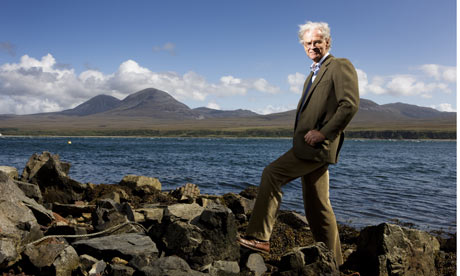
    Philip Maxwell, chairman of the Islay Energy Trust, by the Sound of Islay where the ScottishPower turbines will be sited. Photograph: Murdo MacLeod/Murdo MacLeod


    ScottishPower is planning a tidal energy project that will supply all the electricity for one of Scotland‘s most famous islands, the Guardian can reveal.


    The company is close to signing a supply contract with Diageo, the drinks group, to provide electricity from the project to eight distilleries and maltings on Islay – including the makers of the renowned Laphroaig and Lagavulin whiskies.


    The 10MW tidal project, one of the world’s largest, will provide enough electricity for Islay’s 3,500 inhabitants for 23 hours a day.


    ScottishPower will submit a planning application in the next couple of months and expects the ten 30-metre underwater turbines to be operational in 2011. The turbines will cost about £50m to install.


    The tidal waters in the Sound of Islay, the channel dividing Islay from the Jura, move at up to three metres a second.


    Energy companies and representatives from the Scottish government will publish on Wednesday a “marine energy roadmap” outlining how to reach the target of generating up to 2GW (2,000MW) of electricity from tidal and wave power by 2020. It will call for more grants and revenue support to enable developers to build commercial scale demonstration projects, such as the Islay installation, over the next two years.


    The renewable energy industry admits the techniques to generate electricity from marine energy are in their infancy. Morna Cannon, from Scottish Renewables, said: “This makes it very hard to pin down the costs of the technology at the moment.”


    Alan Mortimer, head of renewables at ScottishPower, admitted tidal energy is more expensive than offshore wind, which costs up to £3m for each megawatt built and itself is only barely economic. Tidal developers earn more subsidies under the Renewable Obligation Scheme than offshore wind, but only once schemes are operational.


    Marine energy developers such as Martin Wright, managing director of start-up company MCT, complain that few investors want to risk their money. But the Islay project has heavyweight backers. ScottishPower is owned by Spanish group Iberdrola and has teamed up with Norwegian oil firm StatoilHydro to develop and finance the project.


    There is also strong support on the island, although it is by no means universal. Kevin Sutherland, manager of the Islay group of Diageo distilleries, works at the Caol Ila distillery, which overlooks the Sound. The distillery, like the rest of the island, gets the majority of its electricity from the Hunterston nuclear reactor on the mainland. But the reactor is being decommissioned in 2016 and the distillery suffers frequent power cuts in stormy weather when pylons are blown over.


    When the tidal project is built, the distilleries on the island will enjoy a much more secure electricity supply, confounding critics of renewable energy – primarily wind power – who say it is intermittent and unreliable.


    One of the biggest obstacles for renewables in Britain has been planning permission. Onshore wind applications are frequently rejected because locals object to the visual impact. Because the Islay generators will be on the seabed, no one can see them and the Scottish government will have the final say on planning.


    Operating underwater brings its own problems, says Cannon from Scottish Renewables. George J Gillies is a local fisherman who fishes for crab and lobster at either end of the channel in winter. He complains that his lobster nets could get tangled in the turbines and says the project threatens the livelihood of eight local fishing families. But he seems resigned: “If it’s going to generate money, it will get the go-ahead.”


    The Islay Energy Trust, a community organisation chaired by Philip Maxwell, has been helping to lobby local politicians and opponents of the project. In return, it will receive a small slice of the revenue to fund community projects on the island, such as a swimming pool

  • Wind farms and polluted skies: the great paradox of China

    Wind farms and polluted skies: the great paradox of China


    China is on its way to becoming the world’s largest producer of renewable energy, yet it remains one of the most polluted countries on earth. From Yale Environment 360, part of the Guardian Environment Network


    Pollution in Beijing

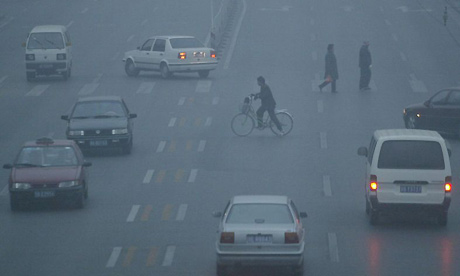
    Pedestrians, cars and a bicycle make their way through thick pollution in Beijing. Photograph: Peter Parks/AFP/Getty Images


    This month, on the first anniversary of the opening of the 2008 Summer Olympic Games, Beijing’s skies were a hazy gray. Walking down the street, one was left with a tickle in the throat and burning eyes. A recent study published in the Journal of Environmental Science and Technology, conducted jointly by Peking University and Oregon State University, found that Beijing’s $20 million investment to scrub the skies for the Olympics in fact had little impact on air quality. The U.S. embassy in Beijing now maintains a Twitter feed posting data from an air-quality monitoring station on the embassy compound; readings of large particulates in the air in recent weeks have ranged from “unhealthy” to “very unhealthy” to “hazardous.”


    The experience of daily life in Beijing hardly gives the impression that the last year has been a watershed for the environment in China. Being in the capital, one can’t help but feel a little quizzical glancing at recent headlines from newspapers in Washington, New York, and London announcing China’s green-tech revolution. (This is what an eco-friendly revolution feels like?) It’s tempting to shrug and wonder whether the legacy of new green initiatives will be as lackluster as the “green Olympics” – or to feel blue at the lack of promised “blue skies.”


    Yet for an entirely different perspective on China’s recent environmental progress, take the ultra-modern bullet train a half-hour southwest of Beijing to the port city of Tianjin. In just a little over four years, a mix of government and foreign investment has transformed this mid-sized Chinese city into the global manufacturing hub of the world’s wind power industry. China’s installed wind capacity has doubled in each of the past four years. Many experts seem reasonably optimistic that China could meet its ambitious renewable energy plans to derive at least 15 percent of all energy from renewable sources by 2020. The country also is striving to reduce energy intensity per unit of GDP by 20 percent over a five-year period.


    These two targets represent some of the most ambitious green goals in the world, and are expected to make China — in just over a decade — the world’s largest producer and consumer of alternative energy.


    China watchers worldwide have taken note. Earlier this month, a prominent American venture capitalist and the CEO of General Electric published a joint op-ed in The Washington Post, enthusing, “China’s commitment to developing clean energy technologies and markets is breathtaking” — even outpacing the U.S. and putting Beijing “in the lead today.”


    • This article was shared by our content partner Yale Environment 360, part of the Guardian Environment Network
    From the outside, China is seen as passing spectacular new renewable energy goals, building massive wind farms and hydropower stations overnight and perhaps one day even giving American and European companies a run for their money in the global green-tech market. But from the inside, what emerges is a more muddled picture. The daily experience is that the air and water quality is bad, in some places getting marginally better or staying the same, in some cases getting worse.


    “How do you reconcile these different pictures of China?” asks Barbara Finamore, founder and director of the Natural Resources Defense Council’s China Program. “Both are true at once. It’s something we struggle with all the time.”


    Indeed, China may soon be simultaneously the greenest and the blackest place on earth. The country is poised to be at once the world’s leader in alternative energy — and its leading emitter of C02. Alternative energy as a percentage of the total energy mix is increasing, but it will complement — not replace — growth in coal power. In fact, in a decade coal is expected to supply about 70 percent of China’s energy. Because of the sheer scale, diversity, and complexity of China, it is possible for the country to take some great green leaps forward, in particular progress toward its alternative energy and energy efficiency targets, while at the same time having its rivers remain black and its air quality a health hazard.


    To some extent this varied picture is to be expected. As Deborah Seligsohn, a senior fellow at the World Resources Institute’s China Program, explains: “I think the government is trying very hard, and they’re a developing country with huge challenges — different things will move forward at different speeds.”


    But there may also be another pattern at work. As Beijing-based political commentator Zhao Jing — who writes in the English-language press under the name of Michael Anti — puts it: “There are really two sets of ‘green’ issues in China, the global and the domestic — those where economic interests align with green targets, and those where they don’t.” In his estimation, China has made striking progress on the former set of issues, and rather less on the second.


    For example, China has made impressive gains in quickly developing its alternative energy industry, in part because large new investments benefit everyone — from wind turbine manufacturers to local governments (which gain tax revenue from new industry) to future consumers. Yet, on domestic air and water pollution — where what is needed is stricter regulatory enforcement, potentially limiting industry — Chinese environmental groups believe the picture may be getting worse. And the environmental lawyers and advocates who would bring these issues to the attention of authorities are facing tougher crackdowns than ever.


    At the same time, China is pouring billions of dollars into alternative energy — a commitment that, when taken as a percentage of GDP, is 10 times that of the United States. “China’s biggest green achievement has been to develop alternative energy,” says Jin Jiamin, founder and executive director of Global Environmental Institute, a Chinese NGO based in Beijing. “In the U.S., it takes time for ideas to become reality. But in China, it’s different. It’s easy for any new policies to be implemented quickly.”


    Julian L. Wong, founder of the Beijing Energy Network and now a Senior Policy Analyst at the Center for American Progress, says that the outlook and reported figures so far look good. He points to government statistics indicating that energy consumption per unit of GDP dropped by 10 percent between 2006 and 2008. One reason for rapid progress, he explains, is that these key energy initiatives are backed by China’s powerful National Development and Reform Commission, the ministry responsible for economic development.


    “Using energy more efficiently makes good economic sense,” he says. And diversifying China’s energy portfolio also appeals to Beijing, which has been concerned with energy security since the 1980s.


    Of course, there are some important caveats. In China, “alternative energy” includes both hydro and nuclear power, which are often not classified as such elsewhere. “Please remember, there are negative environmental consequences for dams and nuclear,” says Hu Kanping, editor of the Beijing-based Environmental Protection Journal. “I do not think those are really ‘clean’ energy sources.” This month China announced plans to increase nuclear energy capacity tenfold over the next decade.


    While the installation of wind turbines has proceeded at a furious pace in China, not all of the newly installed capacity is actually available to consumers through the grid. “Renewable energy providers often can’t always get access to the market,” says Ray Cheung, a senior associate at the World Resources Institute. “If you’re a solar or wind energy company in China and you can’t gain access to the grid, nobody’s going to buy your power.”


    Forbes recently reported that as many as 30 percent of “wind power assets” are not adequately connected to the grid. The obstacles are in part technical (the existing grid has not been designed for the fluctuating energy production from wind power), and in part political (the powerful companies that control access to the grid often have cozy relationships with coal energy suppliers and can block green newcomers).


    Finally, while progress is almost certainly being made on both alternative energy and energy efficiency in China, it’s worth noting that most data for quantifying that progress has been supplied by the government itself. For instance, the state-owned People’s Daily publishes the quarterly figures on energy efficiency that are in turn cited by both domestic and international press. “There’s still the question of how can we verify figures,” says Wong.


    Overall, however, on these emerging fronts the trends seem positive. But on domestic environmental issues — those that impact the daily lives of the Chinese people — the picture is less rosy.


    “Water quality is probably deteriorating,” says Jin Jiamin, of the Global Environmental Institute. “The reason is industrial pollution.” Indeed, the Ministry of Environmental Protection’s most recent annual report on the state of the environment acknowledges that cleanup efforts failed to make improvements in the water quality of China’s seven major rivers. Mortality from cancers linked with pollution — including stomach cancer and liver cancer — continues to rise, according to Ministry of Health statistics. Smog blankets large Chinese cities. The toxic industry of importing dangerous “e-waste” (used electronics and computer parts containing hazardous chemicals) continues to flourish in Guizhou, as documentary photographer Alex Hofford has demonstrated, despite laws in place to shut down the profitable trade.


    The reality is that, even as investment to stimulate new green industries is thriving in China, enforcement of green regulations that may limit industrial and economic activity is not. As Charles McElwee, a Shanghai-based environmental lawyer, explains: “Most actions aimed at energy will have some impact on local environment, but China has not shown willingness to commit the same level of resources to enforce existing environmental laws, which would have the most immediate impact on citizens.”


    And as The Washington Post has reported, tough economic times have brought even laxer environmental enforcement for factories in southern China. Peng Peng, research director of the Guangzhou Academy of Social Sciences, a government-affiliated think tank, told the Post: “With the poor economic situation, officials are thinking twice about whether to close polluting factories, whether the benefits to the environment really outweigh the dangers to social stability.”


    While China’s national priorities have shifted, its politics haven’t. When economic and environmental priorities align, astoundingly rapid transformation is possible. But when interests compete, the economy still trumps the environment.


  • South-east chosen as wind-power hub

    South-east chosen as wind-power hub


    ABC August 26, 2009, 9:09 am


    The New South Wales Government plans to fast-track renewable energy projects in the state’s south-east.


    The Far South Coast and Monaro are among six areas to be included in a green energy planning initiative.


    Benefits include a four-month planning turn-around, access to staff dedicated to regional projects and a moratorium on fees until June 2011.


    Member for Monaro Steve Whan says the region has been selected because of dependable wind patterns.


    “The key thing about wind energy is that you need a steady supply of the basic ingredient, natures wind,” he said.


    “That’s certainly something we’ve got and … we seem to have almost too much of it right at the moment.


    “We’ve got a terrific wind resource in the area.


    “We’ve also got strong community grass roots support for clean energy.”

  • The Business and Politics of Carbon

    August 13, 2009
    The Business and Politics of Carbon
    by Alison Wise, National Renewable Energy Lab
    The activity around making markets for carbon continues to grow as climate issues gain more traction in the policy realm under a new administration. For those who are not up to speed on the ins and outs of carbon markets in general, I would refer them to the last time I wrote about the issue, a link to which can be found at the end of this article.


    This time around I will focus on the business case for carbon offsetting and on the treatment of carbon in the Waxman-Markey legislation currently being debated in Congress. Broadly speaking, voluntary carbon markets refer to the markets for carbon credits outside the scope of regulated carbon reduction. They are driven by businesses and organizations that pay a third party to make a measurable reduction in greenhouse gas emissions (usually CO2) though they have no legal requirement to do so. This reduction “offsets” the organization’s current carbon footprint, “crediting” it with the equivalent reduction.
    Until legislation mandates some sort of action towards carbon mitigation, whether a cap and trade mechanism or a carbon tax, there is no compliance market for carbon nationally in the United States. According to a recent report by New Energy Finance, the value of the transactions in the voluntary carbon market globally has doubled in the past two years, increasing from US $335 million in 2007 to $705 million in 2008.
    It is interesting to dig a bit deeper into why these voluntary markets are growing despite having no compliance mechanisms. Ultimately, a regulated market for carbon based on mandatory parameters may be the most effective, but in the interim there has been increasing involvement with voluntary carbon markets, with the drivers coming from the private sector. The New Energy Finance report outlines some interesting findings for the “business case” for carbon off-setting:
    First, New Energy Finance identified 3,000 organizations that were end-buyers of voluntary carbon offsets. This number was seen as “significant” given the industry’s common characterization as a “fringe” entity.
    The greatest business benefit from carbon offsetting is the protection or enhancement of corporate reputation, according to those surveyed in the New Energy Finance report. This is interesting in light of the fact that one of the drivers for sustainability measures within corporations in general is risk mitigation. Companies have reported that a motivating factor for adopting sustainability principles is the protection or enhancement of brand value, an intangible asset that all companies need to protect. It seems that this motivation applies to carbon offsetting as well.
    While a business case can be made for carbon offsetting, it was not the only reason for engaging in that activity. According to their respondents, 15% of those companies New Energy Finance surveyed said that offsetting their emissions was driven by the desire to be a good corporate citizen (that said, one could argue that being a good corporate citizen inherently protects your brand’s reputation, which is good for the bottom line).
    Surprisingly, carbon offsetting activity did not positively impact employee morale in any significant way. In fact, employees were confused about how carbon offsets worked and why it was beneficial to engage in this activity.
    Finally, given the “scale and diversity” of offset users, New Energy Finance predicted that the voluntary carbon market will continue to grow, once the global recession is over.
    While the voluntary carbon market is an important transitional step toward an economy that captures the true cost of a carbon intensive energy system, it will most likely take some sort of regulatory approach to accelerate the internalization of carbon externalities in the marketplace. So, let’s turn to the most prevalent legislative mechanism that is seeking to accomplish that end: The Waxman-Markey Clean Energy Bill (H.R.2454), otherwise known as the American Clean Energy and Security Act of 2009 (ACES Act).
    According to many spectators and participants, this bill represents a demonstrable move towards the United States adopting clear, identifiable carbon reductions. That said, according to those involved with the clean energy industry, there are many challenges to be met in terms of decision-makers crafting a piece of legislation that would effectively address the carbon issue, in turn accelerating the markets for energy efficiency and renewable energy.
    Tim Greeff, political director at the Clean Economy Network, puts it this way, “While there are many important provisions in the legislation that will help facilitate a more rapid transition to the deployment of cleaner technologies, the legislation faces a substantial hurdle in the Senate. As it stands now, there are well over a dozen Senators who have significant concerns with different provisions of the bill and are not convinced of its benefits for clean energy, jobs and the economy. ”
    The bill outlines a cap and trade mechanism for greenhouse gas emissions reduction, aiming to decrease emissions by 17% by 2020. However, the cap and trade program being designed within this legislation would give away 81% of allowances for free, as opposed to the cap and trade program advocated by the White House which would auction off the allowances and use the proceeds for clean energy investments and a tax cut for the underprivileged. Other aspects of the legislation:
    The bill allocates 36% of allowances to the power generation sector through 2025
    Auctioned volumes would increase dramatically after 2025, rising from 19% to 65% by 2030. Beginning at a low auction rate would allow covered entities (the power sector) time for the technological transition they will need to make in a carbon constrained economy
    The legislation would ease restrictions on offset usage to reduce compliance costs. After 2017, it would remove an 80% offset discount factor for international offsets and allow increased international offset usage to compensate for domestic shortages of offsets when domestic prices are less than or equal to allowance prices
    The bill relaxes criteria for inclusion in the early offset supply pool to broaden the scope of eligible programs beyond the Climate Action Registry and the Regional Greenhouse Gas Initiative (this may address some of the shortage issues of domestic offsets)
    Getting the program and the price right in this new approach to carbon mitigation will be key to making sure that we are creating the right landscape for accelerating markets for renewables, efficiency services and technology. The internalization of carbon costs into our economic infrastructure will be important for creating the right market environment for the uptake of renewables, perhaps as important as the creation of a smart grid to be able to integrate distributed generation beyond niche applications. But that’s a story for another day.