Author: Neville

  • The $18 Trillion Energy-Efficiency Opportunity

    Fast Company logo

    Exist
    Design
    Create
    Labs

    Video
    Features
    Emails
    Issues
    Subscribe

    The $18 Trillion Energy-Efficiency Opportunity

    It isn’t just a climate change fix–it could also be a enormous boost to the economy.

    0 Notes
    /
    0 Pin
    /
    6 Plus
    /
    117 Tweet
    /
    232 Like
    /
    145 Share

    Energy efficiency is the no-brainer solution to climate change. In many cases, savings are relatively cheap to achieve. Everyone benefits (aside from, perhaps, utilities who depend on selling more units). And it’s non-controversial. While debates about the future of energy tend to get ideological, most people can see the logic of doing more with less.

    It’s also a huge opportunity. According to a new report from the International Energy Agency, investments could reap total returns of $18 trillion worldwide–or the equivalent of all of North America’s economies combined.
    State Farm Flickr

    The IEA reaches such a high number by reconceptualizing what energy efficiency means. Instead of treating it simply as energy not used, it calls energy efficiency a “first fuel” with many social and environmental benefits.

    “This publication demonstrates how often overlooked, and even intangible, outcomes can be captured, offering the possibility to send better socio-economic signals to complement market signals,” the report says.

    These include the impact on employment and energy prices, on public budgets (jobs in energy efficiency could reduce the need for government benefits, for example), health and wellbeing (weatherization improves conditions for building occupants and cuts health care costs), and industrial productivity. Research shows that every dollar invested in efficiency can bring 2.5 times as much in productivity gains.

    “Applying a multiple benefits approach to energy-efficiency policy should enable a fuller understanding of the potential of energy efficiency,” the report says.

    The IEA isn’t the first come up with big numbers for efficiency’s potential. McKinsey identified $1.2 trillion in possible savings across the U.S economy. There’s plenty of low hanging fruit. In a recent ranking, we were far behind other countries, leaving plenty more to be done.

    [Top photo: AppStock via Shutterstock]

  • Congratulations NEVILLE, your application was successful

    Ad50% Off Enrich Milesmalaysiaairlines.com/EnrichPromo – Redeem Your Miles on Your Next Flight. Offer Ends Soon. Book Now!

    Congratulations NEVILLE, your application was successful

    Inbox
    x

    Nat – GetUp!

    5:23 PM (28 minutes ago)

    to me
    Last month, GetUp members applied for an ambitious job: helping Employment Minister Eric Abetz to rethink his ’40 jobs per month’ requirement for Newstart benefits.

    Together, we flooded Senator Abetz’s office with more than 7000 ‘cover letters’ — some were funny, some heartfelt, but all demonstrated that 40 job applications a month was punitive for jobseekers and an administrative nightmare for employers. And guess what?

    This morning, Senator Abetz announced that the Abbott Government would abandon its plans to up the job application target, after noting a “degree of community reaction” to the idea.

    Your application was successful!

    The Abbott Government has backed down in the face of powerful collective action by GetUp members, community groups, academics and the business community. Congratulations to all who took part!

    Prime Minister Abbott is playing down the move, saying his party is “fair dinkum” when it comes to listening to feedback.[1] But he can’t hide what is an obvious retreat on a deeply unpopular proposal, due to sustained, creative community outcry. Crucially, his language of consultation and compromise is a marked shift, opening the door for more backdowns on the worst parts of Mr Hockey’s budget, but only if we keep up the pressure.

    That’s why GetUp members are kicking up a storm on university fee deregulation this month, rallying at senate hearings this week, hitting the streets for the Student National Day of Action on 16 October, and chipping in to a brand new ‘$100K fees’ TV ad campaign. If you haven’t yet seen our new ad, you can check it out and chip in to put it on the air here: https://getup.org.au/at-what-price

    We’ll be heaping it on in coming weeks to keep the compromises coming. But in the meantime, thanks for being a part of this campaign and helping to ensure that jobseekers won’t have to jump through 40 impractical hoops to receive income support.

    Let the Abbott Government’s budget backdown begin,
    Nat, Sal and Mark, for the GetUp team

    References
    [1] ‘PM plays down job application backdown’, SBS, 7 October 2014

  • Solar energy: a sunflower solution to electricity shortage A new piece of solar technology from IBM not only provides electricity – it can desalinate water for sanitation and drinking

    The Guardian home
    The Observer home

    News
    World
    Sport
    Comment
    Culture
    Business
    Environment
    Science
    Travel
    Technology
    Life & style
    Data
    TV
    Video

    Environment
    Solar power

    Solar energy: a sunflower solution to electricity shortage
    A new piece of solar technology from IBM not only provides electricity – it can desalinate water for sanitation and drinking

    Share 10416
    inShare339
    Email

    Robin McKie
    Robin McKie
    The Observer, Sunday 28 September 2014
    Jump to comments (93)

    ibm solar airlight energy ‘Game changer’: IBM and Airlight Energy’s 30ft concrete ‘sunflower’ was inspired by the branched blood supply of the human body.

    Computer giant IBM last week revealed the prototype of its advanced solar electricity generators: a 30ft-high concrete “sunflower” fitted with wafer-thin aluminium mirrors and a maze of tiny tubes for carrying coolant through the heart of each device. The machines, which will be built in conjunction with the Swiss company Airlight Energy, can convert 80% of the sun’s radiation into electricity and hot water, it is claimed, with each generating 12 kilowatts of electricity and 20kW of heat on a sunny day, enough to supply several homes.

    At the device’s official unveiling in Zurich, executives for both companies said they hoped that by 2017, when their sunflower generators should be ready for the market, they could be manufactured for half to one-third of the cost of comparable solar converters today. According to IBM, the machine’s secret lies with the microscopic tubes that carry water through the cluster of photovoltaic chips at the heart of each device. This system has already been adopted by IBM to cool its high-performance supercomputers. “We were inspired by the branched blood supply of the human body,” said Bruno Michel, from the IBM Research laboratories in Zurich.

    The sunflower operates by tracking the sun so that it always points in the best direction for collecting its rays; these are then focused on to a cluster of photovoltaic cells that are mounted on a raised platform. The cells convert solar radiation into electricity. However, without the microchannel cooling system, which carries distilled water through the chips, temperatures would reach more than 1,000C. With the microcooling system, which carries water to within a few millimetres of the back of each chip, temperatures are kept down to 90C – a far safer, and far more efficient, operating level. Electricity is generated while the system also produces large amounts of hot water from the cooling system. “That hot water is a game changer,” added Michel. “Electricity is obviously vitally useful but so is the heat – for we can use it for desalinating water.”

    At present, about 1.3 billion people have no access to electricity. However, that figure is dwarfed by the number – 2.5 billion – who have no access to proper sanitation. And according to figures supplied by Airlight Energy, that latter number is currently increasing at a rate of 9% a year. However, the IBM-Airlight sunflower is designed to tackle both problems. The electricity will have numerous uses while the hot water can be pumped through desalinators that use porous membranes to boil salt water and distil the result into pure, drinkable water. A large installation made up of several generators could provide enough fresh water for an entire town, it was claimed at last week’s launch.

    Apart from sites in Africa, the Middle East and Australia, it is hoped the sunflower system will be used for remote hospitals, hotels and holiday resorts. IBM says it will instal its first two devices for free in 2016 and has asked towns around the world to put their names forward to be the first to have a solar sunflower erected on their land.

  • Fwd: What a year  Climate Council

    Click here to enable desktop notifications for Gmail.   Learn more  Hide
    Ad350% + Investment Returnsprivate-client-investments.com – High Yield Recession Proof Products -Minimal Risk- Special Tax Credits!

    Fwd: What a year

    Inbox
    x

    Amanda McKenzie – Climate Council via sendgrid.info 

    3:04 PM (5 minutes ago)

    to me

    Hi Inga,

    Our team recently put together this video message celebrating what we’ve achieved together in our first year, following the biggest crowd-funding campaign in Australian history.

    I wanted to make sure you received it and let you know that any contribution you can chip in to keep climate science in the media will go far – and will help us keep giving you the information you need.

    Keep us going for another year.

    Thank you for your support,

    Amanda McKenzie
    Climate Council CEO

    ———————————————-

    Dear Inga

    One year ago, I was out of a job.

    The Climate Commission was established to communicate climate change impacts, science and solutions to the public – to provide an expert, independent and trustworthy voice on climate change. Yet the incoming Abbott Government evidently felt we were no longer needed when, in the Government’s first act, we were abolished.

    Apparently, you did not agree with them.

    After we were axed, I was stunned when 20,000 Australians like you dug into their pockets to personally ensure we could continue our work. The successful seed funding of the new Climate Council became the largest crowdfunding campaign in Australian history.

    We’ve made a special video to share what we’ve achieved together and say thank you: watch the highlights of our first year below, and donate today to help us continue for another year.

    Video

    In one remarkable year, we’ve:

    • put 14,000 major climate change stories in the news – many responding to harmful misinformation campaigns – reaching a total of more than 135 million people;

    • published 16 landmark scientific reports on vital information: from the important progress being made on renewable energy to the grave risks bushfires and sea level rise pose to our communities;

    • busted myths and exposed dangerous misinformation in the public debate, like when the government’s top business advisor Maurice Newman bizarrely claimed the world was cooling… at least three times; and

    • put the people who are on the front line in front of the cameras, like health expert Fiona Stanley, firefighter Jim Casey, and farmer Jane Vincent.

    From a groundswell of 20,000 Founding Friends, the Climate Council has grown to a supporter community of more than 130,000 people. I’m so proud of what we’ve achieved, but I don’t imagine for a minute that we can afford to rest on our laurels. Which is why I’m asking for your help to keep going.

    Can you make sure the Climate Council is funded for a second extraordinary year?

    It was your generosity and sheer belief in the importance of this work that got us this far. And we have some big plans for our future: to really ramp up our communication of information about the best solutions we can and must implement. We want to bring out high-profile international speakers and keep providing opportunities for other prominent and trusted leaders to speak out (which, believe me, can be daunting in this highly-politicised environment). And we plan to keep being the most vocal non-government group, playing an essential role in leading the public discussion.

    The way I see it, our founding story is so unlikely, and our calling so urgent – that frankly we have everything to give and nothing to lose.

    Will you help make this happen?

    We all want to see a common sense, science-based debate responding to the huge risks we face from climate change. Whether you’ve donated, shared information with friends or marched on the streets – you’ve helped us succeed against some pretty remarkable odds so far. With your continued commitment to this work, we will continue to offer the strongest, most authoritative independent voice on climate change in Australia.

    Thank you,

    Prof. Tim Flannery

    Chief Councillor

    PS: What independent government funded body gets axed only to re-launch itself from public support, funded in increments of $20, $50 or $100 donations? I will never forget our founding story – your commitment and sheer audacity in ensuring a strong, independent and authoritative voice on climate change isn’t lost in our debate. Make sure our work can continue.

  • Daily update: How battery storage costs could plunge to below $100/kWh

    1 of 1
    Ad3 Best Solar Power Quotessolarquotes.com.au/_Get_Free_Quotes – 1 Form – 2 Minutes – 3 Free Quotes. We Use 8,000 Reviews To Hand-Pick 3

    Daily update: How battery storage costs could plunge to below $100/kWh

    Inbox
    x

    Renew Economy editor@reneweconomy.com.au via mail12.atl111.rsgsv.net 

    2:50 PM (9 minutes ago)

    to me
    How battery storage costs could plunge to below $100/kWh; SA hits 100% for a whole working day; Chinese coal consumption down 23% as more funds dump fossil fuels; Melbourne colliege to install solar to supply 50% of power; RE sets new readership record; Royal Mint launches tender for solar array; Total global solar heads for 200GW, 50GW in 2014; 11 charts to help you understand climate change; Drought dries up hydropower in Cali; Wind & solar catching up with nuclear; and Making sense of contrasting views on climate change.
    Is this email not displaying correctly?
    View it in your browser.
    RenewEconomy Daily News
    The Parkinson Report
    New research shows battery storage costs falling to below $100/kWh within years. That makes storage attractive for homes, businesses, for grid operations and to replace gas peaking plant. And there will be no need to “over produce”, or for back-up reserves.
    Wind energy provided more than 100% of electricity for South Australia during working day last Tuesday. And that didn’t include rooftop solar.
    China coal power consumption falls 23%, as Australia’s $8bn Local Government Super Fund joins global march to fossil fuel divestment.
    Mazenod College to install Australia’s biggest school solar system – a 270kW PV array that will supply 50% of power needs of its Mulgrave campus.
    After reaching 173,500 unique visitors in August, RE sets new daily record of page views.
    Royal Australian Mint publishes tender for big solar PV system – that it doesn’t want anyone to see – to top its heritage nominated Canberra building.
    Latest data shows cumulative global solar on track for 200GW, with PV added in 2014 forecast to hit record 19.5GW for Q4, 50GW for whole year.
    Every year a disparate collection of 88 wonks from 68 organisation in 12 countries work tirelessly to produce the Global Carbon Budget.
    As California’s historic drought dries up the state’s water supplies and withers its crops, it’s also shaking up the way electricity is produced there.
    Renewables are capturing a larger and larger portion of the total global energy infrastructure pie.
    Given the complexity of climate change as a social problem it is possible for competing narratives about its social implications and solutions to exist.
  • Oceans getting hotter than anybody realised

    Oceans getting hotter than anybody realised

    Print Friendly

    Climate Central

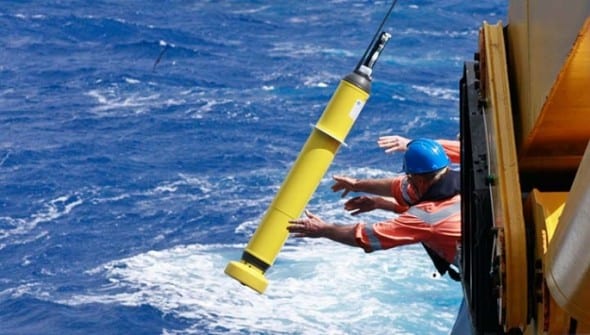
    The RV Kaharoa motored out of Wellington, New Zealand on Saturday, loaded with more than 100 scientific instruments, each eventually destined for a watery grave. Crewmembers will spend the next two months dropping the 50-pound devices, called Argo floats, into the seas between New Zealand and Mauritius, off the coast of Madagascar. There, the instruments will sink and drift, then measure temperature, salinity and pressure as they resurface to beam the data to a satellite. The battery-powered floats will repeat that process every 10 days — until they conk out, after four years or more, and become ocean junk.

    Under an international program begun in 2000, and that started producing useful global data in 2005, the world’swarming and acidifying seas have been invisibly filled with thousands of these bobbing instruments. They are gathering and transmitting data that’s providing scientists with the clearest-ever pictures of the hitherto-unfathomed extent of ocean warming. About 90 percent of global warming is ending up not on land, but in the oceans.
    oceansResearch published Sunday concluded that the upper 2,300 feet of the Southern Hemisphere’s oceans may have warmed twice as quickly after 1970 than had previously been thought. Gathering reliable ocean data in the Southern Hemisphere has historically been a challenge, given its remoteness and its relative paucity of commercial shipping, which helps gather ocean data. Argo floats and satellites are now helping to plug Austral ocean data gaps, and improving the accuracy of Northern Hemisphere measurements and estimates.

    “The Argo data is really critical,” said Paul Durack, a Lawrence Livermore National Laboratory researcher who led the new study, which was published in Climate Nature Change. “The estimates that we had up until now have been pretty systematically underestimating the likely changes.”

    Durack and Lawrence Livermore colleagues worked with a Jet Propulsion Laboratory scientist to compare ocean observations with ocean models. They concluded that the upper levels of the planet’s oceans — those of the northern and southern hemispheres combined — had been warming during several decades prior to 2005 at rates that were 24 to 58 percent faster than had previously been realized.

    “We continue to be stunned at how rapidly the ocean is warming,” said Sarah Gille, a Scripps Institution of Oceanography professor. Gille was not involved with this paper, nor was she involved with a similar one published Sunday that examined the role of ocean warming in rising sea levels. She described both of them as “tremendously interesting” studies.That rapid ocean warming has consequences for the Earth’s climate and its shorelines.

    “Even if we stopped all greenhouse gas emissions today, we’d still have an ocean that is warmer than the ocean of 1950, and that heat commits us to a warmer climate,” Gille said. “Extra heat means extra sea level rise, since warmer water is less dense, so a warmer ocean expands.”

    Ocean warming is exacerbating flooding caused by the melting of glaciers and other ice. Seas have risen 8 inches since the industrial revolution, and they continue to rise at a hastening pace, worsening floods and boosting storm surges near shorelines around the world. Another 2 to 7 feet of sea level rise is forecast this century, jeoparizing the homes and neighborhoods of the 5 million Americans who live less than 4 feet above high tide, as well as those of thehundreds of millions living along coastlines in other countries.

    The other ocean temperature study, also published Sunday in Climate Nature Change, used Argo and other data to tentatively conclude that all of the ocean warming from 2005 to 2013 had occurred above depths of 6,500 feet. During the same period, the Jet Propulsion Laboratory scientists who wrote the paper concluded, the expansion of those warming waters caused a third of the planet’s 2.8 millimeters of annual sea-level rise.

    Sunday’s papers joined more than 1,000 others published so far that have used Argo float data to improve science’s understanding of waterways that are climatically influential but difficult to measure manually. “This research covers a very broad range of topics including ocean circulation, water mass formation and spreading, mesoscale eddies, interannual variability such as El Niño, decadal variability, and multi-decadal climate change,” said Scripps Institution of Oceanography professor Dean Roemmich, who was in New Zealand last week preparing Argo floats for deployment by the RV Kaharoa’s crew. “The program has revolutionized large-scale physical oceanography.”

    Steve Rintoul, a researcher at Australia’s Commonwealth Scientific and Industrial Research Organisation, or CSIRO, said findings of ocean warming above 6,500 feet in the Jet Propulsion Lab’s study explain the recent slowdown in warming at the Earth’s surface, which is sometimes called global warming hiatus, or warming pause.

    “An important result of this paper is the demonstration that the oceans have continued to warm over the past decade, at a rate consistent with estimates of Earth’s net energy imbalance,” Rintoul said. “While the rate of increase in surface air temperatures slowed in the last 10 to 15 years, the heat stored by the planet, which is heavily dominated by the oceans, has steadily increased as greenhouse gases have continued to rise.”

    That extra heat isn’t expected to swim with the fishes forever. Some of it will eventually rise from the deep, raising temperatures in places that more directly affect us landlubbers.

    Just how rapidly the oceanic heat will resurface to warm the land is “something that we struggle with,” said Scripps’s Gille. But she said heat is constantly shifting between oceans and the atmosphere. “A warmer ocean will mean a warmer atmosphere.”

    First published at Climate Central. Reproduced with permission.