Author: Neville

  • What Goes Into A Tesla Model S Battery–And What It May Cost

    What Goes Into A Tesla Model S Battery–And What It May Cost

    2,838 views Jun 11, 2013
    Tesla Motors - Model S lithium-ion battery packTesla Motors – Model S lithium-ion battery pack

    Related Photo Galleries

    See more photos »

    In his recent interview with Barron’s, Tesla Motors CEO Elon Musk hung up on the reporter who was interviewing him.

    He said he had “no interest in an article that debates what we consider to be an obvious point — which is that there is a dramatic reduction in battery costs,” then went on to tell the reporter, “You clearly do not understand the business,” before apologizing and ending the interview.

    The resulting Barron’s story argued that Tesla’s stock price was overvalued, because the lithium-ion cells used to power Tesla’s vehicles cost a great deal.

    Reading the story, it becomes clear that the author believes Tesla has to spend $400 per kilowatt-hour to build the battery pack for its Model S electric luxury sport sedan.

    The figure is widely cited by journalists who write about Tesla–The New York Times last year, for instance.

    This “price” may come from the $10,000 price difference between the 60-kWh and 85-kWh versions of the Model S, since $10,000 divided by 25 kWh produces a per-kWh figure of $400.

    Quick market test

    To test that notion, I contacted one wholesaler and offered to purchase a small number of the ‘18650’ lithium-ion cells Tesla uses in its packs.

    That company offered to sell them to me at a price of roughly $350 per kWh, including the attached circuit boards used to group battery cells into larger assemblies, which can retail for almost $4 each.

    Considering the small number of cells, and the free offer of attached (or unattached, my choice) circuit boards, it seems clear Tesla’s price in great volume could be much lower.

    Nevertheless, the $400-per-kWh “price” seems to have been widely accepted without further inquiry–perhaps because it is still much less than what competing automakers appear to be paying.

    2013 Tesla Model S2013 Tesla Model S

    Tesla: thousands of cells

    In contrast to every other automaker, which use specialized large format Li-Ion cells, Tesla’s battery pack is made up of thousands of inexpensive commodity cells similar to those found in laptops.

    Unlike automotive cells, these cells are produced in the billions, subject to the fierce competitive pressures that are a signature characteristic of the computer and consumer electronics industries.

    Even including the overhead of the pack enclosure, connections between cells in modules (and modules in the pack), sensors, and circuitry, Tesla likely has lower pack costs than any other maker of plug-in electric cars.

    Simplifying a cheap cell

    But for the Model S, Tesla  redesigned what was already a relatively simple cell to be much less complex, and to have a much lower manufacturing cost–largely by removing expensive safety systems built into each individual cell.

    When used as a laptop battery, each cells requires a safety mechanisms to prevent fires. But in a large, electronically-controlled, liquid-cooled battery pack like the one used in the Tesla Model S, having certain safety features on each cell would be redundant.

    2012 Tesla Model S body-in-white2012 Tesla Model S body-in-white

    In this case, the company’s cell design eliminates the relatively complicated battery cap of the commercial cell, and replaces it with a simple aluminum disk.

    Intumescent goo

    Having radically simplified the cells, Tesla then designed simple and inexpensive fireproofing systems into its battery pack.  Among many innovations, Tesla appears to have incorporated a form of intumescent goo that it sprays onto the interior of the pack to aid in fireproofing.

    When exposed to heat, a chemical reaction occurs in the goo that helps cool the heat source, while simultaneously forming a fireproof barrier to protect the rest of the pack.

    In testing by Tesla, this material often cooled cells experiencing a runaway reaction–to the point that many failed to ignite at all–and provided a fireproof barrier surrounding those that ignited.

    The potential safety advantages of Tesla’s small-cell approach were highlighted during the Boeing Dreamliner battery-fire fracas.

    'Revenge of the Electric Car' premiere: Tesla Motors CEO Elon Musk on red carpet‘Revenge of the Electric Car’ premiere: Tesla Motors CEO Elon Musk on red carpet

    As Elon Musk pointed out, it can be quite difficult to cool large-format cells efficiently, and even harder to contain them once they do ignite.

    Thus far, Tesla has never experienced a battery fire in a production pack.

    Tesla’s price advantage

    But even without the simplified design Tesla created, the standard Panasonic NCR18650A 3100mAh cells that Tesla uses probably don’t come close to costing it $400 per kWh.

    Panasonic is an investor in Tesla Motors, so there could be an incentive to work hard on lowering the price for specially-developed cells to a company it partially owns.

    And for years now, people associated with Tesla have said its battery packs would cost under $200 per kWh–it’s a figure that’s hardly news.

    Yet that’s the price that prestigious consulting firm McKinsey suggests will be reached in 2020 by the industry at large.

    Page 1 of 2

    1. 1
    2. 2
  • Peak soil: industrial civilisation is on the verge of eating itself

    Peak soil: industrial civilisation is on the verge of eating itself

    New research on land, oil, bees and climate change points to imminent global food crisis without urgent action

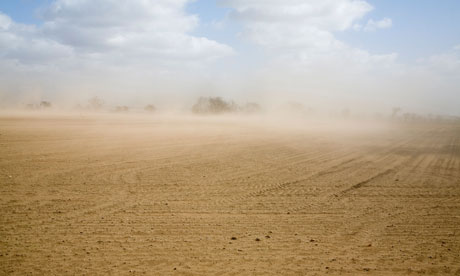
    Nafeez Blog on Peak soil : Wind causing soil erosion in fields, Suffolk Sandlings

    Wind causing soil erosion in agricultural fields, Suffolk, on 18 April 2013. Photograph: Alamy

    A new report says that the world will need to more than double food production over the next 40 years to feed an expanding global population. But as the world’s food needs are rapidly increasing, the planet’s capacity to produce food confronts increasing constraints from overlapping crises that, if left unchecked, could lead to billions facing hunger.

    The UN projects that global population will grow from today’s 7 billion to 9.3 billion by mid-century. According to the report released last week by the World Resources Institute (WRI), “available worldwide food calories will need to increase by about 60 percent from 2006 levels” to ensure an adequate diet for this larger population. At current rates of food loss and waste, by 2050 the gap between average daily dietary requirements and available food would approximate “more than 900 calories (kcal) per person per day.”

    The report identifies a complex, interconnected web of environmental factors at the root of this challenge – many of them generated by industrial agriculture itself. About 24% of greenhouse gas emissions come from agriculture, encompassing methane from livestock, nitrous oxide from fertilisers, carbon dioxide from onsite machinery and fertiliser production, and land use change.

    Industrial agriculture, the report finds, is a major contributor to climate change which, in turn is triggering more intense “heat waves, flooding and shifting precipitation patterns”, with “adverse consequences for global crop yields.”

    Indeed, global agriculture is heavily water intensive, accounting for 70 per cent of all freshwater use. The nutrient run off from farm fields can create “dead zones” and “degrade coastal waters around the world”, and as climate change contributes to increased water stress in crop-growing regions, food production will suffer further.

    Other related factors will also kick in, warns the report: deforestation from regional drying and warming, the effect of rising sea levels on cropland productivity in coastal regions, and growing water demand from larger populations.

    Yet the report points out that a fundamental problem is the impact of human activities on the land itself, estimating that:

    “… land degradation affects approximately 20% of the world’s cultivated areas”.

    Over the past 40 years, about 2 billion hectares of soil – equivalent to 15% of the Earth’s land area (an area larger than the United States and Mexico combined) – have been degraded through human activities, and about 30% of the world’s cropland have become unproductive. But it takes on average a whole century just to generate a single millimetre of topsoil lost to erosion.

    Soil is therefore, effectively, a non-renewable but rapidly depleting resource.

    We are running out of time. Within just 12 years, the report says, conservative estimates suggest that high water stress will afflict all the main food basket regions in North and South America, west and east Africa, central Europe and Russia, as well as the Middle East, south and south-east Asia.

    Unfortunately, though, the report overlooks another critical factor – the inextricable link between oil and food. Over the last decade, food and fuel prices have been heavily correlated. This is no accident.

    Last week, a new World Bank report examining five different food commodities – corn, wheat, rice, soybean, and palm oil – confirmed that oil prices are the biggest contributor to rising food prices. The report, based on a logarithm designed to determine the impact of any given factor through regression analysis, concluded that oil prices were even more significant than the ratio of available world food stocks relative to consumption levels, or commodity speculation. The Bank thus recommends controlling oil price movements as a key to tempering food price inflation.

    The oil-food price link comes as no surprise. A University of Michigan study points out that every major point in the industrial food system – chemical fertilisers, pesticides, farm machinery, food processing, packaging and transportation – is dependent on high oil and gas inputs. Indeed, 19% of the fossil fuels that prop up the American economy go to the food system, second only to cars.

    Back in 1940, for every calorie of fossil fuel energy used, 2.3 calories of food energy were produced. Now, the situation has reversed: it takes 10 calories of fossil fuel energy to produce just one calorie of food energy. As food writer and campaigner Michael Pollan remarked in the New York Times:

    “Put another way, when we eat from the industrial-food system, we are eating oil and spewing greenhouse gases.”

    But high oil prices are here to stay – and according to a UK Ministry of Defence assessment this year, could rise as high as $500 per barrel over the next 30 years.

    All this points to a rapidly approaching convergence point between an increasingly self-defeating industrial food system, and an inexorably expanding global population.

    But the point of convergence could come far sooner due to the wild card that is the catastrophic decline in honeybees.

    Over the last 10 years, US and European beekeepers have reported annual hive losses of 30% or higher. Last winter, however, saw many US beekeepers experiencing losses of 40 to 50% more – with some reporting losses as high as 80 to 90%. Given that a third of food eaten worldwide depends on pollinators, particularly bees, the impact on global agriculture could be catastrophic. Studies have blamed factors integral to industrial methods – pesticides, parasitic mites, disease, nutrition, intensive farming, and urban development.

    But the evidence specifically fingering widely used pesticides has long been overwhelming. The European Food Safety Authority (EFSA), for instance, has highlighted the role of neonicotinoids – much to the British government’s chagrin – justifying the EU’s partial ban of three common pesticides.

    Now in its latest scientific warning put out last week, the EFSA highlights how another pesticide, fipronil, poses a “high acute risk” for honeybees. The study also noted large information gaps in scientific studies preventing a comprehensive assessment of risks to pollinators.

    In short, the global food predicament faces a perfect storm of intimately related crises that are already hitting us now, and will worsen over coming years without urgent action.

    It is not that we lack answers. Last year, the Commission on Sustainable Agriculture and Climate Change chaired by former chief government scientist Prof Sir John Beddington – who previously warned of a perfect storm of food, water and energy shortages within 17 years – set out seven concrete, evidence-based recommendations to generate a shift toward more sustainable agriculture.

    So far, however, governments have largely ignored such warnings even as new evidence has emerged that Beddington’s timeline is too optimistic. A recent University of Leeds-led study found that severe climate-driven droughts in Asia – especially in China, India, Pakistan and Turkey – within the next 10 years would dramatically undermine maize and wheat production, triggering a global food crisis.

    When we factor into this picture soil erosion, land degradation, oil prices, bee colony collapse, and population growth, the implications are stark: industrial civilisation is on the verge of eating itself – if we don’t change course, this decade will go down in history as the beginning of the global food apocalypse.

    Dr Nafeez Ahmed is executive director of the Institute for Policy Research & Development and author of A User’s Guide to the Crisis of Civilisation: And How to Save It among other books. Follow him on Twitter @nafeezahmed

  • Australia’s large casual workforce masking real unemployment rate

    Australia’s large casual workforce masking real unemployment rate

    By Simon Palan, ABC Updated June 12, 2013, 10:01 pm

    Economists are warning an increase of casual and part-time work means Australia’s unemployment rate is higher than we think.

    The unemployment rate is currently 5.5 per cent, but official figures show another 7 per cent of workers in casual or part-time roles are willing and able to work more hours.

    It is estimated that 35 per cent of Australia’s workforce is now employed on a casual or contract basis.

    AMP Capital economist Shane Oliver says that figure is too high.

    “To have this situation where you are locked into part-time work for a long period can be debilitating,” he said

    Unions have recently aired a television commercial outlining their concerns.

    Australian Council of Trade Unions president Ged Kearney says the trend is costing workers’ entitlements.

    “You lose sick leave and you lose annual leave,” Ms Kearney said. “You lose carers leave – you also lose things like superannuation and it becomes difficult to get a loan.”

    Philippa Barr is among those looking for more work.

    She has been searching for a full-time job since the start of the year, but all she can find are three casual positions.

    Ms Barr says the financial impact is high.

    “It’s meant that I’m in a very precarious situation at the moment,” Ms Barr said.

    “I’m not even renting a house, I’m house-sitting because I can’t afford to commit to paying rent from week to week.”

    Employment uncertainty is a growing issue. During the global financial crisis many employers replaced full-time jobs with part-time roles, and they are yet to change them back.

    Meanwhile, more older workers are also returning to the workforce part-time because their superannuation savings have taken a hit.

    Employers say casual and part-time contracts have advantages

    But employer groups say workplace flexibility is needed to achieve economic growth.

    They suggest there are also growing numbers of Australians who are choosing casual and part-time jobs.

    There are even job websites dedicated entirely to them.

    Recruitment specialist Don Robertson recently launched jobflex.com.au to tap into the demand.

    “What we’ve found is Generation Y job seekers are more inclined, are more interested to test a market if you will, in terms of potentially looking at different employment ideas before settling on one career,” Mr Robertson.

    But Mr Oliver believes the casualisation of Australia’s workforce is hurting the broader economy.

    “If we fully utilise the resources available to us in the labour market, then we could be having a higher level of economic activity and better living standards flowing from that.”

  • Coal dust is harming the health of Queenslanders

    Coal dust is harming the health of Queenslanders

    Qld-Coal-dust

    A Greens-initiated Senate Inquiry into the health impacts of air quality is holding a hearing in Brisbane to hear evidence from experts and local groups. The Australian Greens say that not enough is being done to protect the community from the health impacts of air pollution such as coal dust.

    “There is very clear evidence that coal dust is a very serious threat to the health of Queenslanders,” said Dr Richard Di Natale, Australian Greens health spokesperson.

    “The mining, transportation and combustion of coal all pollute the air with fine particles that can exacerbate diseases like asthma and lead to very serious conditions such as lung cancer.

    “Air pollution has been responsible for twice as many annual fatalities as the national road toll and it has been ignored by the old parties for too long.

    “Protecting the health of Australians should be of paramount importance to the parliament. We need to be looking at strengthening enforceable standards for air quality around the country and we also need to increase how much we monitor those standards.”

    Australian Greens lead Senate candidate for Queensland, Adam Stone, said that Queensland felt the impacts of air pollution very acutely.

    “Queensland residents are particularly at risk because there is a lot of coal mined, stockpiled and transported around the state every day and often basic precautions to protect public health are not taken, such as covering coal wagons,” said Mr Stone.

    “The Greens put this issue on the agenda because we care about protecting the health of the community.”

  • Coal kills 22,000 Europeans a year

    Burning coal also costs companies and governments billions of pounds in disease treatment and lost working days

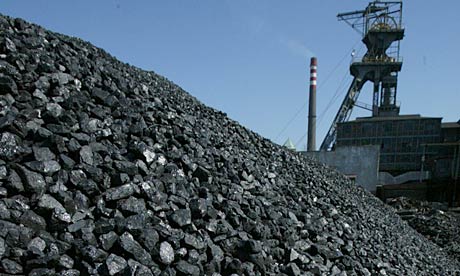
    Freshly mined, high quality coal awaits transport in Katowice, Poland
    Coal awaits transport in Katowice, Upper Silesia. According to the study, Polish coal power plants have the worst health impact in the European Union. Photograph: Sean Gallup/Getty Images
    Air pollution from Europe‘s 300 largest coal power stations causes 22,300 premature deaths a year and costs companies and governments billions of pounds in disease treatment and lost working days, says a major study of the health impacts of burning coal to generate electricity.

    The research, from Stuttgart University’s Institute for energy economics and commissioned by Greenpeace International, suggests that a further 2,700 people can be expected to die prematurely each year if a new generation of 50 planned coal plants are built in Europe. “The coal-fired power plants in Europe cause a considerable amount of health impacts,” the researchers concluded.

    Analysis of the emissions shows that air pollution from coal plants is now linked to more deaths than road traffic accidents in Poland, Romania, Bulgaria and the Czech Republic. In Germany and the UK, coal-fired power stations are associated with nearly as many deaths as road accidents. Polish coal power plants were estimated to cause more than 5,000 premature deaths in 2010.

    The cumulative impact of pollution on health is “shocking”, says an accompanying Greenpeace report. A total of 240,000 years of life were said to be lost in Europe in 2010 with 480,000 work days a year and 22,600 “life years” lost in Britain, the fifth most coal-polluted country. Drax, Britain’s largest coal-powered station, was said to be responsible for 4,450 life years lost, and Longannet in Scotland 4,210.

    According to the study, Polish coal power plants have the worst health impact in the European Union. The Polish government and Polish utilities are planning to build a dozen new power plants. The utility companies with the worst estimated health impacts, according to the report, are PGE (Poland), RWE (Germany and UK), PPC (Greece), Vattenfall (Sweden) and ČEZ (Czech Republic).

    Acid gas, soot, and dust emissions from coal burning are, along with diesel engines, the biggest contributors to microscopic particulate pollution that penetrates deep into the lungs and the bloodstream. The pollution causes heart attacks and lung cancer, as well as increasing asthma attacks and other respiratory problems that harm the health of both children and adults.

    “Tens of thousands of kilogrammes of toxic metals such as mercury, lead, arsenic and cadmium are spewed out of the stacks, contributing to cancer risk and harming children’s development,” says the Greenpeace report, which does not emphasise the impact of coal burning on climate change.

    The 300 plants produce one-quarter of all the electricity generated in the EU but are responsible for more than 70% of the EU’s sulphur dioxide emissions and more than 40% of nitrogen oxide emissions from the power sector. The Greenpeace report notes that coal burning has increased in Europe each year from 2009 to 2012.

    “The results are staggering. The only way to eliminate the health impacts associated with burning coal in Europe is to phase out these dirty power plants and replace them with clean renewable energy. The current EU renewable energy target has been proven to boost renewable energy and help modernise energy systems and the economy. Europe must continue down the path of clean renewable energy by setting an ambitious, binding 2030 renewable energy target,” said Greenpeace International energy campaigner Lauri Myllyvirta.

    The air pollution from coal burning comes on top of transport emissions that are still increasing despite attempts by the EU to force reductions. According to the European Environmental Agency, more than 90% of urban population in the EU is exposed to fine particle (PM2.5) and ozone pollution levels above the World Health Organisation guidelines.

    Greenpeace International is calling on the European commission to come forward with proposals for a binding renewable energy target of 45% and a greenhouse gas reduction target of at least 55% by 2030

  • New York lays out $20 bn plan to adapt to climate change

    New York lays out $20 bn plan to adapt to climate change

    A USD 20 billion plan to prepare for rising sea levels and hotter summers expected as a result of climate change in the coming decades was announced on Tuesday by New York Mayor Michael Bloomberg.

    Source: Reuters
    1
    3
    inShare
    Share on Tumblr
    Like this story, share it with millions of investors on M3
    New York lays out $20 bn plan to adapt to climate change
    A USD 20 billion plan to prepare for rising sea levels and hotter summers expected as a result of climate change in the coming decades was announced on Tuesday by New York Mayor Michael Bloomberg.
    Post your opinion here
     
    Like this story, share it with millions of investors on M3
    New York lays out $20 bn plan to adapt to climate change
    A USD 20 billion plan to prepare for rising sea levels and hotter summers expected as a result of climate change in the coming decades was announced on Tuesday by New York Mayor Michael Bloomberg.
    Post your opinion here
     

    Share  .  Email  .  Print  .  A+A-

    To download current article in Word format, click here.
    New York lays out $20 bn plan to adapt to climate change

    New York Mayor Michael Bloomberg on Tuesday announced a USD 20 billion plan to prepare for rising sea levels and hotter summers expected as a result of climate change in the coming decades.
    The ambitious proposal – which could become the benchmark for other cities dealing with climate change – could reshape Lower Manhattan’s waterfront, with the possible addition of a “Seaport City” out of the East Side.
    The more than 400-page plan, which follows widespread destruction wreaked by Superstorm Sandy last year, included about 250 recommendations ranging from new floodwalls and storm barriers to upgrades of power and telecommunications infrastructures.
    The plan also contained prosaic ideas, such as building up beaches and using sand dunes and plantings as natural buffers to storm surges flooding.
    Also read: Honolulu, Oslo most expensive cities for summer travel
    While some smaller provisions of the complex, long-term plan are already underway, others would require approval or action from the state or federal government.
    A report commissioned by the city and issued alongside the proposals found that over the next 40 years, the number of sweltering summer days could double or even triple, making New York City as hot by mid-century as Birmingham, Alabama, is now.
    By then, the sea level surrounding New York City could also rise by 2 feet (60 cm) or more.
    Bloomberg’s plan aims to ensure that the subway, transit, sewer and water, healthcare, energy and food distribution systems would continue to function for the city’s 8 million people well into the future.
    New York City could “do nothing and expose ourselves to an increasing frequency of Sandy-like storms that do more and more damage,” Bloomberg said in remarks at the Brooklyn Navy Yard.
    “Or we can make the investments necessary to build a stronger, more resilient New York – investments that will pay for themselves many times over in the years go to come” he said.
    New York City is surrounded by 520 miles (835 km) of coastline – more than Miami, Boston, Los Angeles and San Francisco combined – and even a small rise in sea level would endanger lower-lying homes and businesses.
    Sandy killed more than 100 people in New York, New Jersey and Connecticut, knocked out power to millions and cost New York City an estimated $19 billion in damages and lost economic activity. Bloomberg said a storm of Sandy’s strength would cost nearly five times that amount if it hit the city in the middle of this century because of rising sea levels.
    The implementation of the plan would be “an important step toward improved resilience for the City,” said Mark Way, head of Sustainability Americas Swiss Re, whose catastrophe model was the basis for the city’s analysis.
    FLOODWALLS, DUNES AND TIDAL BARRIERS
    In addition to new walls, dune systems and tidal barriers, the plan envisaged  USD 1.2 billion in loans and grants to help owners make buildings more resilient to floods and proposed changes to the building code.
    The plan also proposed the creation of new rules for how soon utility companies must restore power after a natural disaster. And the city would devise a plan to provide fuel when supplies are disrupted and to diversify energy sources.
    Some elements of the plan are likely to be implemented this year, but others would stretch out in to decades – well beyond the 200 days that Bloomberg will remain in office.
    “This is a call to the next administration and the next administration after that,” said Chris Ward, former executive director of the Port Authority of New York & New Jersey.
    To fund the plan the city would draw on money that has already been allocated for capital improvements and on post-Sandy federal relief funds approved by the US Congress.
    But the funds may fall at least USD 4.5 billion short, and the city will have to delay, scale back or eliminate some proposals if it can’t fill the gap, the plan’s authors said.
    Some thought the plan was more expensive than needed.
    Jeroen Aerts, a professor of environmental risk management at the VU University in Amsterdam and an adviser to New York City who last month co-authored a study on New York’s flood defense options, had expected the mayor to propose a plan estimated at $11.6 billion.
    “I think Bloomberg chose a more expensive solution because he wants to add value to the city. He wants to involve developers and private companies” Aerts said.