Author: Neville

  • Farewell to Bill 350 org

    to me

    Dear Friend,

    With your help, over this past week, we have reached hundreds of thousands of Australians through Bill’s Do the Maths Tour – both through the media and at the events. 
    From Brisbane, Sydney, Canberra, Melbourne, Hobart, Adelaide, Perth, Burnie to Byron Bay, we couldn’t have done it without you! So we wanted to send you this special thank you and next steps video. Click here or on the image to watch it!
     
    We particularly want to thank our network of magnificent volunteer coordinators across the country – Georgia, Amanda, Joce, Norman, Adam, Simon, Vanessa, Gina, Todd, Josh W, Mike, Mark, Chantelle, Shaun, Louis, Tom, Josh C, Lexi, Claire and Jaime. You guys are truly amazing!
    As we’ve toured the country, it’s been clear that there’s a groundswell of divestment enthusiasm building. Now we need to translate that enthusiasm into action.
    So, it is time to step it up. Whether it’s donating to our Go Fossil Free Australia campaign, volunteering your time, starting a local divestment campaign or simply promoting our work, every contribution counts.
    Head to: gofossilfree.org/Australia to get involved or 
     
    Donate to us at: startsomegood.com/350ppm
    If you’re already involved, thank you for everything you’ve done so far and, if you’re about to come on board, welcome to this most exciting and important campaign!
    We’re rather tired, but very very excited, and as Bill says, Onwards!
     
    Blair, Tim, Aaron, Bill and Charlie
    PS – If any of those links don’t work for you, copy and paste them into a new window – that should work! And here is the video link: www.youtube.com/watch?v=zQkGehJpFV8


    350.org is building a global movement to solve the climate crisis. Connect with us on Facebook and Twitter, and sign up for email alerts. You can help power our work by getting involved locally, sharing your story, and donating here.To stop receiving emails from 350.org, click here.

  • Is a Sleeping Climate Giant Stirring in the Arctic?

    Is a Sleeping Climate Giant Stirring in the Arctic?

    Permafrost zones occupy nearly a quarter of the exposed land area of the Northern Hemisphere. Permafrost zones occupy nearly a quarter of the exposed land area of the Northern Hemisphere. NASA’s Carbon in Arctic Reservoirs Vulnerability Experiment is probing deep into the frozen lands above the Arctic Circle in Alaska to measure emissions of the greenhouse gases carbon dioxide and methane from thawing permafrost – signals that may hold a key to Earth’s climate future. Image credit: Hugo Ahlenius, UNEP/GRID-Arendal
    › Larger view

    • 1
    •  311

    June 10, 2013


    Flying low and slow above the wild, pristine terrain of Alaska’s North Slope in a specially instrumented NASA plane, research scientist Charles Miller of NASA’s Jet Propulsion Laboratory, Pasadena, Calif., surveys the endless whiteness of tundra and frozen permafrost below. On the horizon, a long, dark line appears. The plane draws nearer, and the mysterious object reveals itself to be a massive herd of migrating caribou, stretching for miles. It’s a sight Miller won’t soon forget.

    “Seeing those caribou marching single-file across the tundra puts what we’re doing here in the Arctic into perspective,” said Miller, principal investigator of the Carbon in Arctic Reservoirs Vulnerability Experiment (CARVE), a five-year NASA-led field campaign studying how climate change is affecting the Arctic’s carbon cycle.

    “The Arctic is critical to understanding global climate,” he said. “Climate change is already happening in the Arctic, faster than its ecosystems can adapt. Looking at the Arctic is like looking at the canary in the coal mine for the entire Earth system.”

    Aboard the NASA C-23 Sherpa aircraft from NASA’s Wallops Flight Facility, Wallops Island, Va., Miller, CARVE Project Manager Steve Dinardo of JPL and the CARVE science team are probing deep into the frozen lands above the Arctic Circle. The team is measuring emissions of the greenhouse gases carbon dioxide and methane from thawing permafrost — signals that may hold a key to Earth’s climate future.

    What Lies Beneath

    Permafrost (perennially frozen) soils underlie much of the Arctic. Each summer, the top layers of these soils thaw. The thawed layer varies in depth from about 4 inches (10 centimeters) in the coldest tundra regions to several yards, or meters, in the southern boreal forests. This active soil layer at the surface provides the precarious foothold on which Arctic vegetation survives. The Arctic’s extremely cold, wet conditions prevent dead plants and animals from decomposing, so each year another layer gets added to the reservoirs of organic carbon sequestered just beneath the topsoil.

    Over hundreds of millennia, Arctic permafrost soils have accumulated vast stores of organic carbon – an estimated 1,400 to 1,850 petagrams of it (a petagram is 2.2 trillion pounds, or 1 billion metric tons). That’s about half of all the estimated organic carbon stored in Earth’s soils. In comparison, about 350 petagrams of carbon have been emitted from all fossil-fuel combustion and human activities since 1850. Most of this carbon is located in thaw-vulnerable topsoils within 10 feet (3 meters) of the surface.

    But, as scientists are learning, permafrost – and its stored carbon – may not be as permanent as its name implies. And that has them concerned.

    “Permafrost soils are warming even faster than Arctic air temperatures – as much as 2.7 to 4.5 degrees Fahrenheit (1.5 to 2.5 degrees Celsius) in just the past 30 years,” Miller said. “As heat from Earth’s surface penetrates into permafrost, it threatens to mobilize these organic carbon reservoirs and release them into the atmosphere as carbon dioxide and methane, upsetting the Arctic’s carbon balance and greatly exacerbating global warming.”

    Current climate models do not adequately account for the impact of climate change on permafrost and how its degradation may affect regional and global climate. Scientists want to know how much permafrost carbon may be vulnerable to release as Earth’s climate warms, and how fast it may be released.

    CARVing Out a Better Understanding of Arctic Carbon

    Enter CARVE. Now in its third year, this NASA Earth Ventures program investigation is expanding our understanding of how the Arctic’s water and carbon cycles are linked to climate, as well as what effects fires and thawing permafrost are having on Arctic carbon emissions. CARVE is testing hypotheses that Arctic carbon reservoirs are vulnerable to climate warming, while delivering the first direct measurements and detailed regional maps of Arctic carbon dioxide and methane sources and demonstrating new remote sensing and modeling capabilities. About two dozen scientists from 12 institutions are participating.

    “The Arctic is warming dramatically – two to three times faster than mid-latitude regions – yet we lack sustained observations and accurate climate models to know with confidence how the balance of carbon among living things will respond to climate change and related phenomena in the 21st century,” said Miller. “Changes in climate may trigger transformations that are simply not reversible within our lifetimes, potentially causing rapid changes in the Earth system that will require adaptations by people and ecosystems.”

    The CARVE team flew test flights in 2011 and science flights in 2012. This April and May, they completed the first two of seven planned monthly campaigns in 2013, and they are currently flying their June campaign.

    Each two-week flight campaign across the Alaskan Arctic is designed to capture seasonal variations in the Arctic carbon cycle: spring thaw in April/May, the peak of the summer growing season in June/July, and the annual fall refreeze and first snow in September/October. From a base in Fairbanks, Alaska, the C-23 flies up to eight hours a day to sites on Alaska’s North Slope, interior and Yukon River Valley over tundra, permafrost, boreal forests, peatlands and wetlands.

    The C-23 won’t win any beauty contests – its pilots refer to it as “a UPS truck with a bad nose job.” Inside, it’s extremely noisy – the pilots and crew wear noise-cancelling headphones to communicate. “When you take the headphones off, it’s like being at a NASCAR race,” Miller quipped.

    But what the C-23 lacks in beauty and quiet, it makes up for in reliability and its ability to fly “down in the mud,” so to speak. Most of the time, it flies about 500 feet (152 meters) above ground level, with periodic ascents to higher altitudes to collect background data. Most airborne missions measuring atmospheric carbon dioxide and methane do not fly as low. “CARVE shows you need to fly very close to the surface in the Arctic to capture the interesting exchanges of carbon taking place between Earth’s surface and atmosphere,” Miller said.

    Onboard the plane, sophisticated instruments “sniff” the atmosphere for greenhouse gases. They include a very sensitive spectrometer that analyzes sunlight reflected from Earth’s surface to measure atmospheric carbon dioxide, methane and carbon monoxide. This instrument is an airborne simulator for NASA’s Orbiting Carbon Observatory-2 (OCO-2) mission to be launched in 2014. Other instruments analyze air samples from outside the plane for the same chemicals. Aircraft navigation data and basic weather data are also collected. Initial data are delivered to scientists within 12 hours. Air samples are shipped to the University of Colorado’s Institute for Arctic and Alpine Research Stable Isotope Laboratory and Radiocarbon Laboratory in Boulder for analyses to determine the carbon’s sources and whether it came from thawing permafrost.

    Much of CARVE’s science will come from flying at least three years, Miller says. “We are showing the power of using dependable, low-cost prop planes to make frequent, repeat measurements over time to look for changes from month to month and year to year.”

    Ground observations complement the aircraft data and are used to calibrate and validate them. The ground sites serve as anchor points for CARVE’s flight tracks. Ground data include air samples from tall towers and measurements of soil moisture and temperature to determine whether soil is frozen, thawed or flooded.

    A Tale of Two Greenhouse Gases

    It’s important to accurately characterize the soils and state of the land surfaces. There’s a strong correlation between soil characteristics and release of carbon dioxide and methane. Historically, the cold, wet soils of Arctic ecosystems have stored more carbon than they have released. If climate change causes the Arctic to get warmer and drier, scientists expect most of the carbon to be released as carbon dioxide. If it gets warmer and wetter, most will be in the form of methane.

    The distinction is critical. Molecule per molecule, methane is 22 times more potent as a greenhouse gas than carbon dioxide on a 100-year timescale, and 105 times more potent on a 20-year timescale. If just one percent of the permafrost carbon released over a short time period is methane, it will have the same greenhouse impact as the 99 percent that is released as carbon dioxide. Characterizing this methane to carbon dioxide ratio is a major CARVE objective.

    There are other correlations between Arctic soil characteristics and the release of carbon dioxide and methane. Variations in the timing of spring thaw and the length of the growing season have a major impact on vegetation productivity and whether high northern latitude regions generate or store carbon.

    CARVE is also studying wildfire impacts on the Arctic’s carbon cycle. Fires in boreal forests or tundra accelerate the thawing of permafrost and carbon release. Detailed fire observation records since 1942 show the average annual number of Alaska wildfires has increased, and fires with burn areas larger than 100,000 acres are occurring more frequently, trends scientists expect to accelerate in a warming Arctic. CARVE’s simultaneous measurements of greenhouse gases will help quantify how much carbon is released to the atmosphere from fires in Alaska – a crucial and uncertain element of its carbon budget.

    Early Results

    The CARVE science team is busy analyzing data from its first full year of science flights. What they’re finding, Miller said, is both amazing and potentially troubling.

    “Some of the methane and carbon dioxide concentrations we’ve measured have been large, and we’re seeing very different patterns from what models suggest,” Miller said. “We saw large, regional-scale episodic bursts of higher-than-normal carbon dioxide and methane in interior Alaska and across the North Slope during the spring thaw, and they lasted until after the fall refreeze. To cite another example, in July 2012 we saw methane levels over swamps in the Innoko Wilderness that were 650 parts per billion higher than normal background levels. That’s similar to what you might find in a large city.”

    Ultimately, the scientists hope their observations will indicate whether an irreversible permafrost tipping point may be near at hand. While scientists don’t yet believe the Arctic has reached that tipping point, no one knows for sure. “We hope CARVE may be able to find that ‘smoking gun,’ if one exists,” Miller said.

    Other institutions participating in CARVE include City College of New York; the joint University of Colorado/National Oceanic and Atmospheric Administration’s Cooperative Institute for Research in Environmental Sciences, Boulder, Colo.; San Diego State University; University of California, Irvine; California Institute of Technology, Pasadena; Harvard University, Cambridge, Mass.; University of California, Berkeley; Lawrence Berkeley National Laboratory, Berkeley, Calif.; University of California, Santa Barbara; NOAA’s Earth System Research Laboratory, Boulder, Colo.; and University of Melbourne, Victoria, Australia.

    For more information on CARVE, visit: http://science.nasa.gov/missions/carve/ .

    Alan Buis
    Jet Propulsion Laboratory, Pasadena, Calif.
    818-354-0474
    Alan.buis@jpl.nasa.gov

    2013-197

  • Water Levels Fall in Great Lakes, Taking a Toll on Shipping

    Water Levels Fall in Great Lakes, Taking a Toll on Shipping

    PREV
    • Nathan Weber for The New York Times
    • Nathan Weber for The New York Times
    • Nathan Weber for The New York Times
    • Nathan Weber for The New York Times
    • John Schwartz/The New York Times
    • Nathan Weber for The New York Times
    • Nathan Weber for The New York Times
    NEXT

    The Joseph L. Block, carried iron ore pellets to a steel mill at Indiana Harbor in East Chicago, Ind.
    Numbers on the hull indicate how deep the ship sits in the water.
    The crew prepared the mooring lines before the Block unloaded its cargo.
    The block uses both traditional paper maps and digital maps.
    The tug Dorothy Ann and its barge, the Pathfinder, on the Grand River near Fairport Harbor, Ohio.
    The most recent causes of low water were the mild winters in 2011 and 2012 that left too little snow to feed the lakes.
    Some advocate the need for more dredging of the harbors, which could help compensate for the low water.
    By
    Published: June 10, 2013
    • Facebook
    • Twitter
    • Google+
    • Save
    • E-mail
    • Share
    • Print
    • Reprints

    Aboard the Dorothy Ann, in Lake Erie near Fairport Harbor, Ohio — As Capt. Jeremy R. Mock steered this 711-foot combination of tug and barge toward a harbor berth, a screen of red numbers indicated the decreasing depth of water under the vessel: 6 feet, 3.6 feet, 2 feet.

    Suddenly the numbers gave way to a line of red dashes: — — — — .

    It was a signal that there was not enough water to measure.

    Drought and other factors have created historically low water marks for the Great Lakes, putting the $34 billion Great Lakes-St. Lawrence Seaway shipping industry in peril, a situation that could send ominous ripples throughout the economy.

    Water levels in the Great Lakes have been below their long-term averages during the past 14 years, and this winter the water in Lakes Michigan and Huron, the hardest-hit lakes, dropped to record lows, according to the Army Corps of Engineers. Keith Kompoltowicz, the chief of watershed hydrology with the corps’s Detroit district, said that in January “the monthly mean was the lowest ever recorded, going back to 1918.”

    While spring rains have helped so far this year, levels in all five Great Lakes are still low by historical standards, so getting through the shallow points in harbors and channels is a tense affair.

    The combination of low water and infrequent dredging is annoying to recreational boaters, but the biggest impact is economic: shippers, carriers and the industries that rely on the bulk materials like limestone, iron ore, coal and salt are hugely dependent on lake travel.

    Lakers can move products at prices that beat rail or road by as much as $20 per ton of cargo, using much less fuel. Given those advantages and an improving economy, about 30 ships are being built this year to run cargo on the Great Lakes, according to Craig H. Middlebrook, the deputy administrator of the St. Lawrence Seaway Development Corporation.

    But for now, low water is “hammering our industry,” said Glen G. Nekvasil, communications director for the Lake Carriers’ Association, a trade group. To cope, shipowners have had to lighten the loads on their boats, making hauling less efficient and profitable.

    “When the water level drops as it has, we’re ripping tons out of the boat,” said Mark Barker, the president of the Interlake Steamship Company, which owns the Dorothy Ann.

    In the Dorothy Ann pilothouse, 70 feet above the water, the sudden appearance of dashes on the screen was a moment of tight shoulders and held breath. The boat had already been lightened by dropping off thousands of tons of cargo earlier in its journey to float at this depth, and the boat glided the last few hundred feet over the soft bottom.

    A large laker, 1,000 feet long, will lose 250 to 270 tons for every inch the water level drops, Mr. Nekvasil said. That can add up to 324,000 tons a season per boat, he said.

    The impact does not stop with shippers. “The aggregate impact over time will be to raise the cost of commodities, which in turn will raise the price of manufacturing goods, which in turn raises the price to the consumer,” said Richard D. Stewart, the director of the Transportation and Logistics Research Center at the University of Wisconsin-Superior.

    The American Society of Civil Engineers estimates that inadequate harbor maintenance increased the cost of traded products by $7 billion in 2010 and that this cost would increase to $14 billion by 2040 if the work was not stepped up.

    The most recent causes of low water were the mild winters in 2011 and 2012, which left too little snow to feed the lakes, traditionally “the largest source of water to the Great Lakes,” Mr. Kompoltowicz of the corps said. Last spring, the water level rose just 4 inches instead of the usual 12 in Michigan and Huron, he said, and that was followed by an unusually dry summer and above-average evaporation in the fall — 12 inches more than average. The water level currently stands at 577.20 feet, 22 inches below the long-term average.

    A measure of the drop in water levels can also be attributed to the engineering that makes Great Lakes shipping possible. The 1962 dredging of the St. Clair River may have lowered the water in Lake Huron and Lake Michigan by five inches, said John Nevin, a spokesman for the International Joint Commission, founded by the United States and Canada nearly 100 years ago to study issues pertaining to boundary waters.

    Other dredging projects may have emptied 16 inches in all from the lakes, Mr. Nevin said. Ways to slow water flowing down the St. Clair, including water gates or turbines that could generate power, have been discussed for years, but any changes would have to be weighed against factors like environmental impact on aquatic life.

    Anything that puts more water in Lake Michigan could, in the long run, affect lower-lying areas, he said. “You don’t want to do something that would, ultimately, flood Chicago in 50 or 100 years,” Mr. Nevin said. Climate change is expected to reduce water levels still further in the long run.

    The owners of the big lake boats like the Dorothy Ann and its barge, the Pathfinder, contend that the federal government has fallen down on the job of dredging these harbors, which could help compensate for the low water. “If we had the dredging, we wouldn’t have the dashes,” said Mr. Barker, president of the Interlake Steamship Company.

    He said the Great Lakes ports could be properly dredged for $200 million. “Pretty much all we’re asking for is the cost of a highway interchange,” he said.

    The federal government has a trust fund for harbor dredging, based on taxes on cargo. The fund is supposed to receive $1.8 billion in the 2013 fiscal year, but the Army Corps of Engineers requested to spend only $850 million of the fund, a situation that led Senator David Vitter, Republican of Louisiana, to hold up a piece of paper that read “I.O.U. $6.95 Billion,” the surplus in the fund since it was established in 1986, in a hearing with Jo-Ellen Darcy, the assistant secretary of the Army for civil works. The Water Resources Development Act, which was drafted to address many of these issues, has passed the Senate and is under consideration in the House.

    Don T. Riley, a former official with the Army Corps of Engineers who works with a Washington lobbying and consulting firm, Dawson & Associates, acknowledged that the extra money could seem absurd. “You’ve got this major surplus — that just sounds so dumb not to spend at least what you take in because that’s what you’re paying for,” he said. But the corps spends only what Congress appropriates, he said, and tapping the fund is not necessarily easy: even if money has been collected, ordering it to be spent increases the appropriation for the corps, and that can be politically troublesome in times of budget cutting.

    The ability of humans to fix the situation is limited, said Mr. Nevin of the International Joint Commission. “We can’t make it rain.”

    A version of this article appeared in print on June 11, 2013, on page A10 of the New York edition with the headline: Water Levels Fall In Great Lakes, Taking a Toll On Shipping.

    • Save
    • E-mail
    • Share
    Get Free E-mail Alerts on These Topics
    Great Lakes Ships and Shipping
    Drought Freight (Cargo)
  • CO2 – EARTH “GREENING” AND THE SHIFT IN CLIMATE ZONES

    CO2 – EARTH “GREENING” AND THE SHIFT IN CLIMATE ZONES

    Inbox
    x
    Andrew Glikson
    12:50 PM (15 minutes ago)

    to geospec


    CO2 – EARTH “GREENING” AND THE SHIFT IN CLIMATE ZONES


    Enclosed


    Dr Andrew Glikson

    Earth and Paleo-climate science

    Affiliations:

    ANU School of Anthropology and Archaeology,

    ANU Planetary Science Institute,

    ANU Climate Change Institute,
    Honorary Professor, Geothermal Energy Centre of Excellence

    The University of Queensland


    E-mail:   W  Andrew.Glikson@anu.edu.au
    Geospec@iinet.net.au

    Ph       W  02 6125 7476; Mobile 0439085833
    Ph/fax    H 02 6296 3853
    mail:     P.O. Box 3698 Weston A.C.T. 2611

    http://cci.anu.edu.au/researchers/view/andrew_glikson/
    http://archanth.anu.edu.au/staff/dr-andrew-glikson
    http://www.mso.anu.edu.au/PSI/PSI_People.html


    CO2 – SHIFT IN CLIMATE ZONES.pdf
    258K   View   Download
  • Behavioural disturbances in a temperate fish exposed to sustained high-CO2 levels

    Behavioural disturbances in a temperate fish exposed to sustained high-CO2 levels

    Published 10 June 2013 Science Leave a Comment
    Tags: , , , ,

    As atmospheric CO2 levels rise, the CO2 concentration in ocean surface waters increases through a process commonly referred to as ocean acidification. Recently, surprising behavioural modifications has been detected in the early life stages of tropical coral reef fish exposed to ocean acidification-relevant CO2 concentrations, but it has been unclear if this effect could occur in temperate waters. Here we show several severe behavioural disturbances, including effects on boldness, exploratory behaviour, lateralisation, and learning in a temperate fish, the three-spined stickleback (Gasterosteus aculeatus). The behavioural effects were consistent throughout the exposure period and increased in effect size with exposure time. We observed the effects on adult sticklebacks, a species known to be tolerant to other environmental stressors. Our findings suggest that behavioural abnormalities that stem from CO2 exposure are not restricted to sensitive tropical species or early life stages and may therefore affect fish on a global scale. The severity of disturbances and the possibility of a serious behavioural problem for fish across the globe is cause for concern.


    Jutfelt F., Bresolin de Souza K., Vuylsteke A. & Sturve J., 2013. Behavioural disturbances in a temperate fish exposed to sustained high-CO2 levels. PLoS ONE 8(6): e65825. doi:10.1371/journal.pone.0065825. Article.

    Rate this:

    Rate This

    Share this post!

    0 Responses to “Behavioural disturbances in a temperate fish exposed to sustained high-CO2 levels”

    1. Leave a Comment

    Leave a Reply

    Subscribe to the RSS feed

    Subscribe to Ocean acidification by

  • Waiting on new climate deal ‘will set world on a path to 5C warming’

    Waiting on new climate deal ‘will set world on a path to 5C warming’

    International Energy Agency chief economist says rising emissions make limiting increase to 2C ‘extremely challenging’

    Fukushima nuclear plant

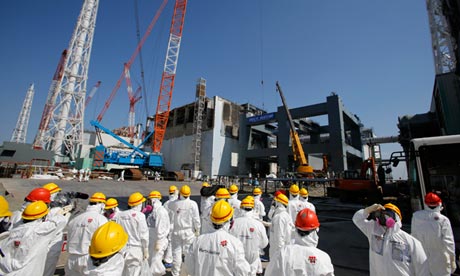
    Decommissioning work at the Fukushima nuclear plant. There has been a 6% rise in emissions from Japan following its phase-out of nuclear power. Photograph: Issei Kato/AP

    The world cannot afford to wait for a new global climate change agreement to come into force in 2020, because doing so will mean an end to hopes of limiting global warming to moderate levels, one of the world’s foremost authorities on energy has warned.

    Carbon dioxide emissions from energy rose by 1.4% in 2012 to a record high of more than 31bn tonnes, according to a report from the International Energy Agency on Monday, driven in part by a striking 6% rise in emissions from Japan following its phase-out of nuclear power and continuing growth in emissions from China.

    Fatih Birol, chief economist at the IEA, and one of the world’s most respected energy experts, told the Guardian that greenhouse gas emissions were continuing to rise so fast that pinning hopes on a replacement for the Kyoto protocol would set the world on a path to 5C of warming, which would be catastrophic.

    Birol urged governments to take urgent action on improving energy efficiency, replacing fossil fuels with low-carbon power, stopping the construction of inefficient power plants and phasing out fossil fuel subsidies, as low or no-cost ways of reducing emissions quickly. “This will not harm economic growth, and they are policies that can be taken in a fragile economic context,” he said.

    The IEA has calculated that making clean energy investments sooner would be cheaper than leaving them until after 2020. About $1.5 trillion should be spent before 2020 to meet climate targets, it found, but if the investments are left until after 2020 it will take $5tn to achieve the same results.

    Governments are negotiating under the United Nations to forge a global deal on emissions that would be signed in 2015 but not come into force until 2020. Until then, most countries have their own voluntary goals to curb carbon, but these fall well short of the cuts scientists say are needed to limit temperature rises to no more than 2C above pre-industrial levels, which is regarded as the limit of safety beyond which warming is likely to become catastrophic and irreversible.

    Birol said: “I am very worried about the emissions trends. The chance of keeping to 2C is still there, technically, but it is not very great. It is becoming extremely challenging.”

    Officials are meeting in Bonn this week in the next round of the ongoing UN talks, and Birol urged “a change in political mood” in the run-up to the 2015 deadline. He noted that there were a few positive trends among the rising carbon levels identified by the IEA, the gold standard on energy and emissions data. Emissions from energy in the US are now at levels not seen since the mid 1990s, having dropped by 3.8% in 2012 due to the effects of the shale gas boom that has led to gas replacing coal.

    But Birol warned that this could not be replicated globally: “Shale gas is not a panacea. It can only be helpful if we see these other low-carbon technologies also [coming into widespread use] if we are serious about 2C.”

    Birol also saw positive trends in China, the world’s biggest emitter. Although China’s emissions rose by more than 300m tonnes, this was one of the smallest annual increases in two decades, Birol said. “The Chinese government has made huge efforts in energy efficiency, and a major effort on renewable energy such as hydroelectricity and wind.”

    Lord Stern of Brentford, author of the landmark Stern review of the economics of climate change, said the IEA report showed the importance of making investments quickly in cleaner energy. He said: “Government-induced policy risk from lack of clarity on energy and climate policy is, in many parts of the world, a major deterrent to long-term investment. This is surely unacceptable at a time of idle resources, low interest rates, strong liquidity within much of the private sector, attractive medium-term prospects for low-carbon growth and a climate at great risk.”

    He added: “The IEA has also warned of the dangers of locking in fossil fuel infrastructure, which would need to be retired early, at great additional cost, in order to meet the 2C target. The IEA’s message is crystal clear: dither and delay in making the transition to a low-carbon energy system will be risky and expensive.”