|
5:28 PM (38 minutes ago)
 |
|
||
|
||||
 |
|
|
|
|
|
|
|
|
5:28 PM (38 minutes ago)
|
|
||
|
||||
|
|
|
|
|
|
|
|
• Interactive – which fossil fuel companies are most responsible?
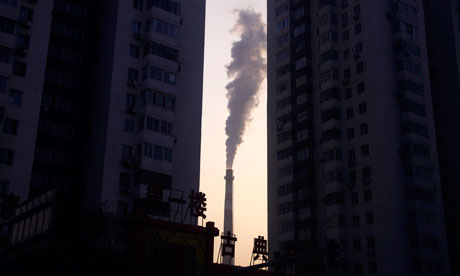
The climate crisis of the 21st century has been caused largely by just 90 companies, which between them produced nearly two-thirds of the greenhouse gas emissions generated since the dawning of the industrial age, new research suggests.
The companies range from investor-owned firms – household names such as Chevron, Exxon and BP – to state-owned and government-run firms.
The analysis, which was welcomed by the former vice-president Al Gore as a “crucial step forward” found that the vast majority of the firms were in the business of producing oil, gas or coal, found the analysis, which has been accepted for publication in the journal Climatic Change.
“There are thousands of oil, gas and coal producers in the world,” climate researcher and author Richard Heede at the Climate Accountability Institute in Colorado said. “But the decision makers, the CEOs, or the ministers of coal and oil if you narrow it down to just one person, they could all fit on a Greyhound bus or two.”
Half of the estimated emissions were produced just in the past 25 years – well past the date when governments and corporations became aware that rising greenhouse gas emissions from the burning of coal and oil were causing dangerous climate change.
Many of the same companies are also sitting on substantial reserves of fossil fuel which – if they are burned – puts the world at even greater risk of dangerous climate change.
Climate change experts said the data set was the most ambitious effort so far to hold individual carbon producers, rather than governments, to account.
The United Nations climate change panel, the IPCC, warned in September that at current rates the world stood within 30 years of exhausting its “carbon budget” – the amount of carbon dioxide it could emit without going into the danger zone above 2C warming. The former US vice-president and environmental champion, Al Gore, said the new carbon accounting could re-set the debate about allocating blame for the climate crisis.
Leaders meeting in Warsaw for the UN climate talks this week clashed repeatedly over which countries bore the burden for solving the climate crisis – historic emitters such as America or Europe or the rising economies of India and China.
Gore in his comments said the analysis underlined that it should not fall to governments alone to act on climate change.
“This study is a crucial step forward in our understanding of the evolution of the climate crisis. The public and private sectors alike must do what is necessary to stop global warming,” Gore told the Guardian. “Those who are historically responsible for polluting our atmosphere have a clear obligation to be part of the solution.”
Between them, the 90 companies on the list of top emitters produced 63% of the cumulative global emissions of industrial carbon dioxide and methane between 1751 to 2010, amounting to about 914 gigatonne CO2 emissions, according to the research. All but seven of the 90 were energy companies producing oil, gas and coal. The remaining seven were cement manufacturers.
The list of 90 companies included 50 investor-owned firms – mainly oil companies with widely recognised names such as Chevron, Exxon, BP , and Royal Dutch Shell and coal producers such as British Coal Corp, Peabody Energy and BHP Billiton.
Some 31 of the companies that made the list were state-owned companies such as Saudi Arabia’s Saudi Aramco, Russia’s Gazprom and Norway’s Statoil.
Nine were government run industries, producing mainly coal in countries such as China, the former Soviet Union, North Korea and Poland, the host of this week’s talks.
Experts familiar with Heede’s research and the politics of climate change said they hoped the analysis could help break the deadlock in international climate talks.
“It seemed like maybe this could break the logjam,” said Naomi Oreskes, professor of the history of science at Harvard. “There are all kinds of countries that have produced a tremendous amount of historical emissions that we do not normally talk about. We do not normally talk about Mexico or Poland or Venezuela. So then it’s not just rich v poor, it is also producers v consumers, and resource rich v resource poor.”
Michael Mann, the climate scientist, said he hoped the list would bring greater scrutiny to oil and coal companies’ deployment of their remaining reserves. “What I think could be a game changer here is the potential for clearly fingerprinting the sources of those future emissions,” he said. “It increases the accountability for fossil fuel burning. You can’t burn fossil fuels without the rest of the world knowing about it.”
Others were less optimistic that a more comprehensive accounting of the sources of greenhouse gas emissions would make it easier to achieve the emissions reductions needed to avoid catastrophic climate change.
John Ashton, who served as UK’s chief climate change negotiator for six years, suggested that the findings reaffirmed the central role of fossil fuel producing entities in the economy.
“The challenge we face is to move in the space of not much more than a generation from a carbon-intensive energy system to a carbonneutral energy system. If we don’t do that we stand no chance of keeping climate change within the 2C threshold,” Ashton said.
“By highlighting the way in which a relatively small number of large companies are at the heart of the current carbon-intensive growth model, this report highlights that fundamental challenge.”
Meanwhile, Oreskes, who has written extensively about corporate-funded climate denial, noted that several of the top companies on the list had funded the climate denial movement.
“For me one of the most interesting things to think about was the overlap of large scale producers and the funding of disinformation campaigns, and how that has delayed action,” she said.
The data represents eight years of exhaustive research into carbon emissions over time, as well as the ownership history of the major emitters.
The companies’ operations spanned the globe, with company headquarters in 43 different countries. “These entities extract resources from every oil, natural gas and coal province in the world, and process the fuels into marketable products that are sold to consumers on every nation on Earth,” Heede writes in the paper.
The largest of the investor-owned companies were responsible for an outsized share of emissions. Nearly 30% of emissions were produced just by the top 20 companies, the research found.
By Heede’s calculation, government-run oil and coal companies in the former Soviet Union produced more greenhouse gas emissions than any other entity – just under 8.9% of the total produced over time. China came a close second with its government-run entities accounting for 8.6% of total global emissions.
ChevronTexaco was the leading emitter among investor-owned companies, causing 3.5% of greenhouse gas emissions to date, with Exxon not far behind at 3.2%. In third place, BP caused 2.5% of global emissions to date.
The historic emissions record was constructed using public records and data from the US department of energy’s Carbon Dioxide Information and Analysis Centre, and took account of emissions all along the supply chain.
The centre put global industrial emissions since 1751 at 1,450 gigatonnes.


 Ayatollah Khamenei warned the P5+1 not to “ratchet up the pressure on Iran”
Iran’s Supreme Leader has warned his country will not step back “one iota” from its nuclear rights, as it resumes talks with world powers in Geneva.
Ayatollah Ali Khamenei said he would not intervene directly in the negotiations, but that he had set “red lines” for Iran’s representatives.
President Barack Obama meanwhile urged US senators not to impose new sanctions on Iran to allow time for diplomacy.
He was unsure if it would be possible to reach an interim agreement soon.
“We don’t know if we’ll be able to close a deal with Iran this week or next week,” he told a Wall Street Journal (WSJ) forum in Washington on Tuesday.
Iran stresses that its nuclear programme is for peaceful purposes only, but world powers suspect it is seeking to develop nuclear weapons.
‘Way forward’In a televised speech on Wednesday, Ayatollah Khamenei said Iran’s negotiators had been set clear limits before they travelled to Switzerland for two days of meetings with representatives of the P5+1 – the US, UK, France, China and Russia, plus Germany.
They failed to agree a deal at a previous round of talks earlier this month mainly because of what diplomats said was Iran’s insistence on formal recognition of its “right” to enrich uranium and France’s concerns about the heavy-water reactor being built at Arak.

Javid Zarif’s YouTube message: “Nuclear energy is not about joining club or threatening others”
“We do insist that we will not step back one iota from our rights,” Ayatollah Khamenei said.
But he added: “We do not intervene in the details of these talks. There are certain red lines and limits. These have to be observed. They are instructed to abide by those limits.”
The Supreme Leader, who has final say in Iran’s nuclear matters, warned the P5+1 not to “ratchet up the pressure”.
“They should know that the Iranian nation respects all nations of the world, but we will slap aggressors in the face in such a way they will never forget it.”
P5+1 wants Iran to:
Iran wants the P5+1 to:
The talks in Geneva will be led in the first instance by the EU’s foreign policy chief, Baroness Catherine Ashton, and Iran’s Foreign Minister Mohammad Javad Zarif.
In a video message posted on YouTube on Tuesday, Mr Zarif urged the P5+1 to deal with Iran on an “equal footing” and stressed that for his country nuclear energy was “about securing the future of our children, about diversifying our economy, about stopping the burning of our oil, and about generating clean power”.
“There is a way forward, a constructive path towards determining our destiny,” he said.
Meanwhile, UK Prime Minister David Cameron spoke to Iran’s President Hassan Rouhani by telephone. It was the first such conversation between British and Iranian leaders for more than a decade.
‘Open the spigot’Mr Obama told the WSJ forum that any interim agreement – expected to last six months – would see the bulk of international and US sanctions targeting the Islamic Republic’s nuclear programme remain in place.
“We are not doing anything around the most powerful sanctions. The oil sanctions, the banking sanctions, the financial services sanctions, those are the ones that have really taken a big chunk out of the Iranian economy,” he added.
 One contentious issue at the talks has been Iran’s heavy-water reactor at Arak
Mr Obama explained that the “essence of the deal” would be that Iran would halt advances of its nuclear programme – including rolling back elements that might “get them closer to what we call breakout capacity, where they can run for a weapon before the international community has a chance to react”, and agreeing to “more vigorous inspections”.
“In return, what we would do would be to open up the spigot a little bit for a very modest amount of relief that is entirely subject to reinstatement if, in fact, they violated any part of this early agreement. And it would purchase a period of time,” he said.
On Sunday, French President Francois Hollande said Iran would have to agree to halting its enrichment of uranium to a medium level of purity, or 20%; reducing its existing stockpile of enriched uranium, and stopping the construction of the Arak heavy-water reactor.
Experts say Iran’s 20%-enriched uranium could be enriched to weapons-grade, or 90%, in a relatively short time, while spent fuel from the Arak reactor will contain plutonium suitable for use in nuclear weapons.
 First 100 days
BBC Persian’s Amir Paivar assesses the first 100 days in office of Iranian President Hassan Rouhani
All posts are reactively-moderated and must obey the house rules.
musictechguy
Just now
There will be lots of dancing around, maybe for another year or 2, and then the US will invade.

KirstyKaye
3 Minutes ago
Yes, we know that you are hell bent on destruction and would love a nuclear arsenal to facilitate this. Thank you for confirming this Mister Ayatollah. A lot of very silly delusional types are going to know exactly what Iran’s intentions are sooner or later. Then they are going to have to grow up, stop shouting at their parents and face the big bad wolf outside the door.
Dave Jones
3 Minutes ago
@2 hagishead
Whilst I agree in principle that you cant punish for what might happen in the future, what might happen will be irreversable and could forsee pretty much the downfall of the world we know.
Better to be safe then sorry in this instance.
Again though, a heavy wiff of Religion stinking out common sense again. Religion – Together we will find a cure.
hagishead
9 Minutes ago
Firstly I find it ironic that the nuclear program of Iran was launched in the 1950s with the help of the United States. Is it not completely unfair and undemocratic to punish, vilify and impose policital and economic sanctions on a country based on what they might do in the future? guilty until proven innocent?
hashtag1
9 Minutes ago
Iran warns now but once they’ve got the bomb it’ll be threats!
All posts are reactively-moderated and must obey the house rules.
 Egyptian troops die in Sinai attack
Ten people have been killed and many more wounded in a car bomb attack on Egyptian soldiers near the North Sinai city of el-Arish.
 City on edge
Beirut waits nervously for reaction to bombings
 Dealing with dictators
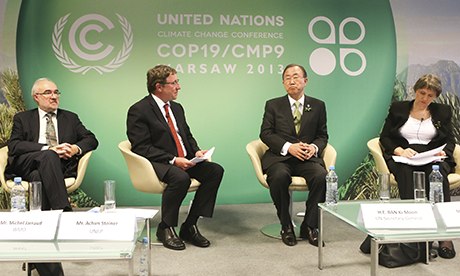
Representatives of most of the world’s poor countries have walked out of increasingly fractious climate negotiations after the EU, Australia, the US and other developed countries insisted that the question of who should pay compensation for extreme climate events be discussed only after 2015.
The orchestrated move by the G77 and China bloc of 132 countries came during talks about “loss and damage” – how countries should respond to climate impacts that are difficult or impossible to adapt to, such as typhoon Haiyan.
Saleemul Huq, the scientist whose work on loss and damage helped put the issue of recompense on the conference agenda, said: “Discussions were g oing well in a spirit of co-operation, but at the end of the session on loss and damage Australia put everything agreed into brackets, so the whole debate went to waste.”
Australia was accused of not taking the negotiations seriously. “They wore T-shirts and gorged on snacks throughout the negotiation. That gives some indication of the manner they are behaving in,” said a spokeswoman for Climate Action Network.
Developing countries have demanded that a new UN institution be set up to oversee compensation but rich countries have been dismissive, blocking calls for a full debate in the climate talks.
“The EU understands that the issue is incredibly important for developing countries. But they should be careful about … creating a new institution. This is not [what] this process needs,” said Connie Hedegaard, EU climate commissioner.
She ruled out their most important demand, insisting: “We cannot have a system where we have automatic compensation when severe events happen around the world. That is not feasible.”
The G77 and China group, which is due to give a press conference on Wednesday to explain the walkout, has made progress on loss and damage, which it says is a “red line” issue. It claims to be unified with similar blocs including the Least Developed Countries, Alliance of Small Island States and the Africa Group of negotiators.
Hedegaard poured cold water on last week’s related proposal by Brazil, that the Intergovernmental Panel on Climate Change be asked to find a way to quantify each country’s historical emissions of greenhouse gases in order to help countries establish the level of future emission cuts.
Debate on the issue has been rejected by rich countries, which fear it could lead to unacceptable costs.
Hedegaard conceded that rich countries had a special responsibility to cut emissions. “The whole financing discussion reflects that the developed world knows it has special responsibility. Most of what has been emitted has been done by us,” she said.
Harjeet Singh, ActionAid Internatonal’s spokesman on disaster risk, said: “The US, EU, Australia and Norway remain blind to the climate reality that’s hitting us all, and poor people and countries much harder. They continue to derail negotiations in Warsaw that can create a new system to deal with new types of loss and damage such as sea-level rise, loss of territory, biodiversity and other non-economic losses more systematically.”


The most important debate and discussion from around the world delivered every fortnight.


Related
Climate talks: wealthy countries urged to foot bill for weather-related disasters
Yeb Sano surfaces at UN climate talks and thanks supporters of fast





 Five small steps to greener technology and travel
 Life in the green lane

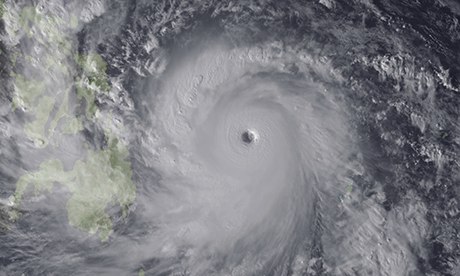
Typhoon Haiyan may have been the strongest storm ever recorded; a fact that has triggered an array of stories discussing its possible links to climate change.
Climate scientists are confident in three ways that climate change will make the impacts of hurricanes worse. First, global warming causes sea level rise, which amplifies storm surges and flooding associated with hurricanes. As a paper published in the Proceedings of the National Academy of Sciences by Aslak Grinsted and colleagues concluded,
“we have probably crossed the threshold where Katrina magnitude hurricane surges are more likely caused by global warming than not.”
Second, as climate scientist Kevin Trenberth has noted, global warming has also increased the amount of moisture in the air, causing more rainfall and amplifying flooding during hurricanes.
Third, warmer oceans are fuel for hurricanes. Research has shown that the strongest hurricanes have grown stronger in most ocean basins around the world over the past several decades, and climate models consistently project that this trend will continue. Chris Mooney recently documented the past decade’s worth of monster hurricanes around the world, and Jeff Masters estimates that 6 of the 13 strongest tropical cyclones on record at landfall have happened since 1998.
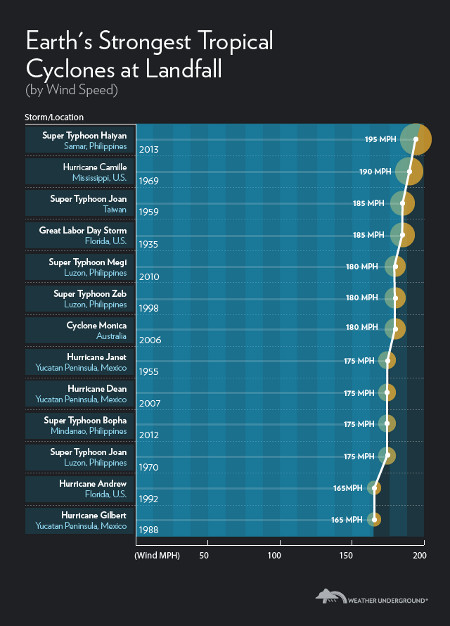 The 13 strongest tropical cyclones at landfall. 6 have happened since 1998. Source: wunderground.com
Chapter 2.6.3 of the 2013 IPCC report notes,
“Time series of cyclone indices such as power dissipation … show upward trends in the North Atlantic and weaker upward trends in the western North Pacific since the late 1970s”
The hurricane intensity trend in the western North Pacific (where the Philippines are located) isn’t crystal clear. One recent paper finds that over the past few decades their intensity has slightly fallen (but has grown for the planet as a whole), while others suggest it’s slightly risen, or that there are fewer but stronger hurricanes in that western North Pacific region.
However, a paper published earlier this year in the Proceedings of the National Academy of Sciences by MIT hurricane expert Kerry Emanuel found that future “Increases in tropical cyclone activity are most prominent in the western North Pacific.” So while we’re not certain about the trend over the past few decades, the evidence indicates that hurricanes near the Philippines will both become stronger and form more frequently in a warmer world.
The frequency of hurricane formation overall is another story. To this point the evidence does not indicate that hurricanes are forming or making landfall more often than in the past, nor are climate scientists confident how global hurricane frequency will change. Thus it’s not a surprise that climate contrarians have focused on hurricane frequency while ignoring hurricane intensity. This is a clear sign of bias by writers like the Mail on Sunday’s David Rose, who even went as far as to once again repeat the myth of a global warming ‘pause’ (a myth that was comprehensively debunked by a new study last week).
Similarly, in a piece published in The Guardian Political Science section, Roger Pielke Jr. criticized President Obama, climate scientist Michael Mann, and others for linking extreme weather to climate change. Pielke lamented that those he criticized didn’t reference the 2012 IPCC special report on extreme weather (SREX). However, Pielke’s reading of that report was very selective.
The IPCC SREX emphasizes that hurricane data include significant uncertainties. However, it’s important to note that absence of evidence is not the same as evidence of absence. For example the fact that the data aren’t good enough to confidently link rising hurricane intensity to human greenhouse gas emissions so far doesn’t mean there isn’t a link. It means we need better data to make a conclusive determination.
However, the report does note that several types of extreme weather will intensify as climate change continues:
“Heavy rainfalls associated with tropical cyclones are likely to increase with continued warming.”
“Average tropical cyclone maximum wind speed is likely to increase.”
“There is medium confidence that some regions of the world have experienced more intense and longer droughts … There is medium confidence that droughts will intensify in the 21st century in some seasons and areas … This applies to regions including southern Europe and the Mediterranean region, central Europe, central North America, Central America and Mexico, northeast Brazil, and southern Africa.”
“It is virtually certain that increases in the frequency and magnitude of warm daily temperature extremes and decreases in cold extremes will occur in the 21st century at the global scale. It is very likely that the length, frequency, and/or intensity of warm spells or heat waves will increase over most land areas.”
When considering all the available evidence, most of the comments about climate change and extreme weather criticized by Pielke were on solid scientific footing. It’s important that we face up to not just the changes in extreme weather that we’ve seen so far, but those which are soon to come if we continue on our current path. It’s not so much the climate change we’ve seen so far that we’re worried about; it’s what’s yet to come.
Some climate contrarians have claimed that climate realists are exploiting the victims of Haiyan by discussing the link between hurricanes and climate change. But it was Yeb Saño, the Philippines’ lead negotiator to this year’s United Nations climate talks who pleaded that we stop procrastinating in addressing climate change.
As Michael Mann noted, we can’t say for sure what impact climate change had on Haiyan because we only have one planet, and we’re running a dangerous experiment with it. But it’s important to ask the right questions when it comes to extreme events like Haiyan. Asking if global warming caused Haiyan is the wrong question.
Human-caused climate change makes the impacts of these storms and many other types of extreme weather worse. It fuels hurricanes such that we’ll see superstorms like Haiyan more frequently in the future. Eventually we’ll have to stop denying that reality and start doing something to address it, or these types of extreme weather events will become the new norm.
|

 Email
Email
 Email
Email